











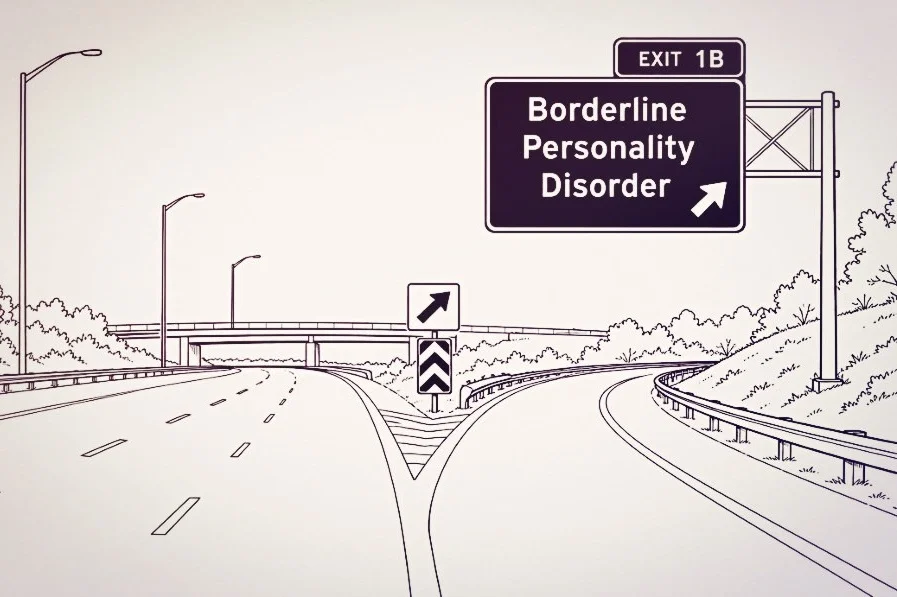
In the modern psychiatric landscape, a diagnosis is intended to be a compass—a tool to guide clinicians toward effective treatment and patients toward recovery. However, for a growing number of individuals, the diagnostic process has morphed into a bureaucratic "off-ramp," used more to manage caseloads and budgets than to heal human suffering.
The following report examines a harrowing case of medical gaslighting and therapeutic abandonment, where a patient’s recovery from Complex Post-Traumatic Stress Disorder (CPTSD) was derailed by a series of conflicting, unvetted labels. Her experience highlights a systemic crisis: the weaponization of diagnostic categories like Borderline Personality Disorder (BPD) and Attention Deficit Hyperactivity Disorder (ADHD) to discharge "difficult" patients from public health systems.
Main Facts: The Intersection of Trauma and Bureaucracy
The core of this crisis lies in the profound overlap between various mental health and neurodevelopmental conditions. Symptoms such as emotional dysregulation, hypervigilance, and interpersonal difficulties are hallmarks of CPTSD, but they are also central to the clinical profiles of ADHD, Autism, and Emotionally Unstable Personality Disorder (EUPD/BPD).
In the case under review, a patient undergoing successful trauma therapy for CPTSD was abruptly diverted into a year-long wait for ADHD medication based on a cursory assessment. When that diagnosis was later questioned and replaced with a suggestion of Autism, and eventually a non-assessed diagnosis of EUPD, the patient was effectively barred from the very trauma therapy that had been working.
This trajectory reveals three critical systemic failures:
- Diagnostic Volatility: The tendency of clinicians to prioritize new, often convenient labels over established trauma histories.
- Therapeutic Abandonment: The practice of discharging patients without a transition plan or "step-down" care once a specific treatment window (often dictated by insurance or public health budgets) has closed.
- Label Weaponization: The use of the "Borderline" label to characterize patients as treatment-resistant or manipulative, thereby justifying their exclusion from services.
Chronology: A Descent into the Cracks
The patient’s journey through the mental health system began following a severe assault. Initially, the system functioned as intended: she was diagnosed with CPTSD and referred for trauma-focused intervention.
Phase I: The Promise of Progress
Under the care of a psychologist, the patient began trauma therapy. For the first time, she reported significant progress in mapping triggers and understanding the somatic (body-based) impact of her trauma. This period represented a stabilization phase where the patient felt seen and supported.
Phase II: The ADHD Diversion
Midway through her trauma work, her psychologist pivoted. He hypothesized that the patient had ADHD. Following an assessment that the patient felt was "pre-decided," he terminated her trauma therapy entirely. Despite the patient’s protests that her trauma remained unresolved, she was told that ADHD medication would be a "magic pill" for all her symptoms. This began a year-long period of "watchful waiting"—a year in which she received no therapeutic support.
Phase III: The Deterioration
During this year of waiting, the patient’s condition worsened. The abandonment by her clinical team acted as a secondary trauma, aggravating her existing CPTSD. Flashbacks returned with increased intensity, and the hypervigilance she had worked to calm became a permanent state. When she finally saw a psychiatrist for the ADHD medication, the diagnosis was dismissed; the new clinician suggested she might instead be autistic.
Phase IV: The EUPD "Weapon"
Returning to her original clinic to plead for the reinstatement of trauma therapy, the patient was met with a bureaucratic wall. The consultant psychiatrist informed her that trauma therapy was capped at one year. When the patient pushed back, the psychiatrist—without a formal assessment—issued a "clinical diagnosis" of Emotionally Unstable Personality Disorder (EUPD). This label was used to justify her discharge, effectively ending her access to the clinic’s resources.
Supporting Data: The Science of Overlapping Symptoms
The patient’s experience is not an anomaly; it is a documented risk in clinical psychiatry. The overlap between CPTSD, BPD, and neurodevelopmental conditions is so significant that even seasoned clinicians struggle to distinguish them without longitudinal study.
The CPTSD vs. BPD Conflict
The ICD-11 (International Classification of Diseases, 11th Revision) distinguishes CPTSD from BPD through the presence of "Disturbances in Self-Organization" (DSO), which include affective dysregulation, negative self-concept, and disturbances in relationships. However, these same traits are the pillars of a BPD diagnosis.
A 2023 clinical guide published in the British Journal of Psychiatry (Karatzias et al.) emphasizes that while the conditions look identical on a chart, they require vastly different approaches. Labeling a trauma survivor with BPD can be counterproductive if the underlying cause is a specific, unresolved traumatic event rather than a pervasive personality structure.
The "Wastebasket" Diagnosis
Research highlights a disturbing trend of clinicians using BPD as a "wastebasket" category. A 2024 study by Sarr et al. confirmed that CPTSD, Autism, and EUPD share nearly identical profiles regarding social difficulties and emotional regulation. Without deep, careful assessment, a rushed clinician will often reach for the EUPD label because it shifts the "problem" onto the patient’s personality rather than the system’s failure to provide long-term care.
Clinician Bias and Stigma
The impact of these labels is measurable. Research by Lam et al. (2015) found that clinicians rate a patient’s prognosis more negatively the moment a BPD label is applied, even if the symptoms remain unchanged. Further studies (Baker & Beazley, 2022; Black et al., 2011) show that healthcare providers often view patients labeled with BPD as "difficult" or "manipulative," leading to a subconscious or conscious effort to avoid treating them.
Official Responses and Systemic Incentives
While individual clinicians make these diagnoses, they do so within a system that incentivizes certain labels over others. In many public health frameworks, there is a "dark logic" to diagnostic shifts:
- The Neurodevelopmental Off-Ramp: Labeling an adult as "autistic" in a system that lacks specific adult neurodevelopmental resources allows the state to claim they are "unable" to provide care. This effectively pushes the patient toward the private sector, "cleaning the books" for the public clinic.
- The Time-Limited Model: Many clinics operate on a "one-and-done" model, where trauma therapy is a time-bound commodity (e.g., 12 to 20 sessions). When a patient’s needs exceed this limit, a personality disorder diagnosis provides a convenient clinical justification for discharge, framing the patient’s continued suffering as "treatment resistance."
- The Power Imbalance: In many public clinics, the head of the clinic holds absolute diagnostic authority. As seen in this case, when the patient requested a second opinion, it was denied. This creates a closed loop where the provider’s "clinical intuition" overrides the patient’s lived experience and the need for standardized assessment tools.
Implications: The Human Cost of Diagnostic Gaslighting
The implications of this case extend far beyond a single patient. They point to a fundamental crisis of trust in the mental health profession.
The Erosion of Safety
For a trauma survivor, the therapeutic relationship is intended to be a "secure base." When a clinician uses a patient’s vulnerability—their difficulty regulating emotions or their fear of abandonment—as evidence of a "disordered personality" to justify discharging them, it constitutes a form of institutional betrayal. This "systemic gaslighting" can leave patients more traumatized than they were before seeking help.
The Stigma of the "Borderline" Label
Once a patient is labeled with EUPD/BPD, that label follows them through every level of the healthcare system and often into their professional lives. It creates a "credibility deficit" where the patient’s complaints about their care are dismissed as symptoms of their "disorder." As the patient noted, "Once you are labeled as Borderline, what you say doesn’t matter."
The Need for Accountability and Reform
To prevent the weaponization of diagnoses, several shifts are required:
- Mandatory Assessments: No "personality disorder" label should be applied without a standardized, multi-session assessment process that specifically rules out CPTSD and neurodivergence.
- Continuity of Care: The "cold-turkey" discharge of trauma patients must be recognized as a violation of clinical ethics. Transition plans should be a mandatory requirement for any clinic closing a case.
- Trauma-Informed Diagnostics: Clinicians must be trained to recognize that "difficult" behaviors in patients are often adaptive responses to trauma or systemic neglect, not inherent character flaws.
Conclusion
The patient who shared her story has filed a formal complaint, a rare move in a system designed to silence the "disordered." Her struggle is a clarion call for a mental health system that values compassion over bureaucracy. Until clinicians are held accountable for the labels they deploy and the care they withdraw, the most vulnerable patients will continue to fall through the cracks—not because of their own "instability," but because of the instability of the system itself.
The goal of psychiatry must return to its roots: witnessing the patient’s pain and providing a path to healing, rather than providing the system with an off-ramp from its responsibilities.