








If you have felt a collective sense of sticker shock while navigating the aisles of your local supermarket this summer, you are not alone. The simple act of hosting a neighborhood barbecue—the quintessential American tradition—has become a barometer for the broader economic malaise gripping the household budget. New data from The Economist has finally quantified what many consumers have felt anecdotally: the price of a standard Fourth of July spread is climbing at a rate that far outstrips general inflation and median wage growth.
The Main Facts: A 12% Spike in One Year
According to a recent analysis by The Economist, the average cost of a basket of staple barbecue items across 25 major cities has reached $81. This represents a staggering 12% increase over the previous year, marking the fastest annual surge in a decade.
While the general grocery-price inflation rate remains relatively contained—hovering at just under 3%—the “barbecue basket” is acting as an outlier. This disparity suggests that the cost of living crisis is not uniform; rather, it is concentrated in specific categories that define our social gatherings. The “unappetizing conclusion,” as the report puts it, is that the price of our leisure and celebration is being disproportionately impacted by supply chain volatility, commodity costs, and shifting market dynamics.
Chronology of a Price Surge
To understand how we arrived at this point, one must look at the five-year trajectory of food pricing. Since 2020, the cost of the standard barbecue basket has surged by over 40%. When measured against median pay across the surveyed cities, this increase is particularly alarming.
- 2020–2021: The initial shock of the global pandemic disrupted food supply chains, leading to initial price hikes in meat and processed goods.
- 2022–2023: As global inflation took hold, the "barbecue basket" saw incremental increases. However, these were often masked by broader economic trends.
- 2024–2025: The current period marks a pivot. While headline inflation has cooled in many sectors, the prices of specific luxury or staple items—such as premium cuts of beef and branded beverages—have decoupled from the general market, climbing sharply to reach the current $81 average.
The most sobering statistic remains the labor-cost ratio: the typical American worker must now labor 16 minutes longer than they did in 2020 to afford the same spread of food. This represents a tangible erosion of the American standard of living, where an hour of work buys significantly less nutritional value than it did half a decade ago.
Supporting Data: The Winners and Losers of the Grocery Aisle
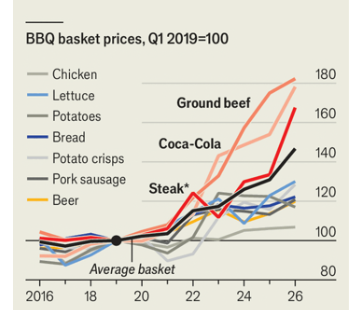
The data reveals a bifurcated market. Not every item in your shopping cart is contributing equally to the rising costs. The analysis highlights a stark divide between "stable" goods and "inflationary" culprits.
The Stable Goods
The smallest price increases were observed in the following items:
- Potatoes and Potato Crisps: Perhaps the most resilient items in the basket, keeping the cost of sides relatively stable.
- Bread and Sausage: While these staples have seen minor fluctuations, they have largely avoided the double-digit price spikes affecting other categories.
- Beer: Surprisingly, this social staple remains somewhat shielded from the dramatic shifts seen elsewhere, perhaps due to high competition among major breweries.
- Lettuce: Consumers looking to trim their budget might find solace in the salad aisle, as lettuce prices have remained relatively moderate.
The Inflationary Culprits
Conversely, some items have seen, in the words of market analysts, "unusually sharp increases." These include:
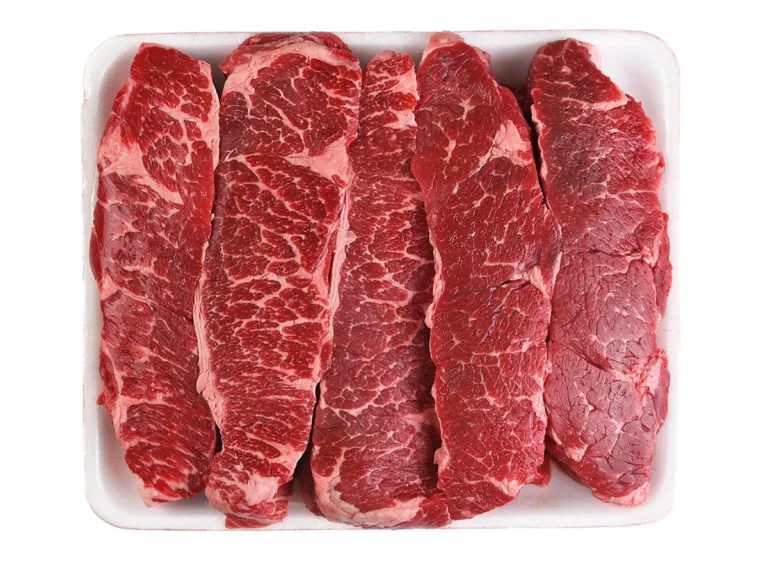
- Steak: The centerpiece of the American cookout has become a luxury item. The cost of premium cuts has soared, likely due to feed costs and logistics.
- Ground Beef: Despite being a more economical choice than steak, the price of ground beef has risen significantly, putting pressure on families looking for cost-effective protein.
- Coca-Cola: The inclusion of name-brand soda in the "sharp rise" category is notable. It suggests that brand-name loyalty is becoming increasingly expensive, as processed beverage costs are driven by sugar prices and aluminum supply issues.
Official Responses and Economic Implications
Economists and industry analysts are pointing to a confluence of factors to explain this trend. The primary driver appears to be the "input cost" squeeze. Manufacturers and producers are grappling with higher labor costs, increased transportation expenses, and the rising cost of raw agricultural commodities.
The Wage-Price Disconnect
A critical implication of this report is the widening gap between the price of food and the growth of median pay. If the price of a basic basket of goods increases at twice the rate of the average paycheck, households are forced to make binary choices: either cut back on the quality of their food or reduce the frequency of their social gatherings. This has a ripple effect on the economy; when consumers spend more on basic sustenance, they spend less on discretionary services, retail, and entertainment.
The "Shrinkflation" and Brand Loyalty Factor
While The Economist’s data focuses on price, it does not explicitly account for "shrinkflation"—the practice of reducing the size of a package while maintaining the same price. Many shoppers have reported that while the price on the sticker remains consistent for some items, the quantity inside the box has dwindled. This adds a hidden layer of complexity to the true cost of the barbecue.
The Broader Societal Impact
The rise in the cost of a Fourth of July barbecue is not merely a matter of economics; it is a cultural issue. The barbecue represents a communal space where Americans gather to celebrate. When this becomes a source of financial stress, it impacts the social fabric.
Industry analysts suggest that we are entering a new era of "conscious consumption." Consumers are increasingly pivoting away from name-brand items toward store brands and generic alternatives. The shift toward salad-heavy menus—or, more accurately, "lettuce-friendly" menus—is a humorous but pointed indicator of how families are adapting their culinary habits to survive the current climate.
Future Outlook: Can We Expect Relief?
Looking ahead, there is little indication that the prices will return to pre-2020 levels. The "new normal" suggests that food security and the cost of essential goods will remain a top priority for policy makers.
For the average consumer, the advice from financial experts remains consistent: track your spending, explore local farmers’ markets for seasonal produce, and be willing to substitute high-inflation items for more stable alternatives. The data from The Economist serves as a wake-up call that the grocery store is no longer a place of predictable spending, but rather a volatile marketplace that requires strategic planning.
Book Announcement: A Deeper Look at Our Food System
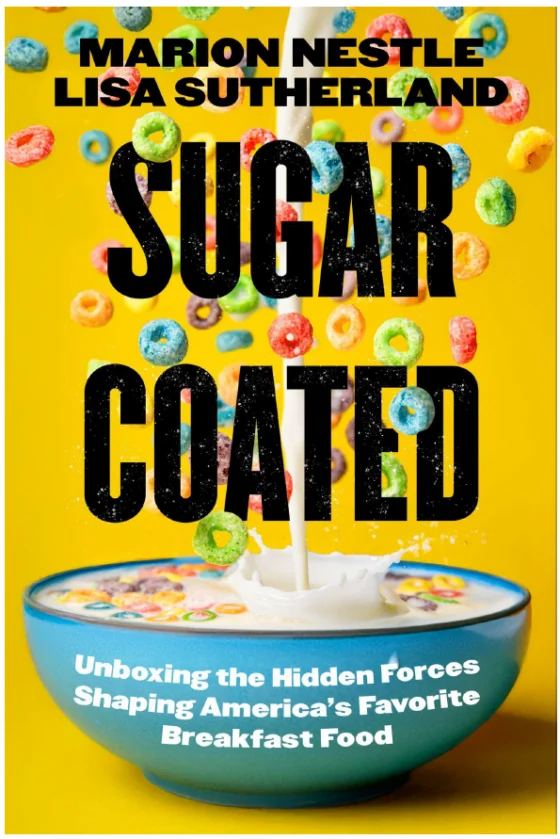
For those interested in understanding the structural forces behind what we eat and why it costs what it does, a new resource is on the horizon. The upcoming publication, Sugar Coated, provides an in-depth examination of the food industry’s influence on the American diet and economy.
The book, set for release on September 8, promises to peel back the layers of the agricultural and retail sectors, exploring how policy and profit margins dictate the availability and affordability of our food. Readers interested in a scholarly yet accessible breakdown of these issues can pre-order the volume through the University of California Press.
Special Offer: Use the promo code UCPSAVE30 at checkout to receive a 30% discount on your pre-order.
As we continue to navigate the rising costs of our daily lives, staying informed is the first step toward reclaiming control over the household budget. Whether it’s choosing to swap steak for sausages or opting for store-brand sodas, the modern consumer must be as strategic as the market itself.
For more information on the methodology of The Economist’s grocery survey, visit their official portal or follow their ongoing tracking of the "Barbecue Basket Index."