









The announcement, made on June 12, 2026, marks a pivotal shift in how mental health support is delivered, moving away from reactive clinical models toward a proactive, youth-led advocacy framework. By integrating digital safety with mental health literacy, the partnership aims to create a sustainable blueprint for community wellbeing in 154 high schools nationwide.
Main Facts: A $5 Million Investment in the Future of Digital Wellbeing
The core of this initiative is the "Mobilizing a Movement" campaign, which seeks to reach a milestone of 100,000 empowered young leaders by 2028. The $5 million grant from Google.org is specifically earmarked to scale existing Active Minds programs and launch new digital-first initiatives that address the unique stressors of the mid-2020s, including the pervasive influence of Artificial Intelligence (AI) and the social pressures of digital connectivity.
The program focuses on three primary pillars:
- Foundational Digital Safety: Equipping students with the skills to identify and mitigate online risks, from cyberbullying to the psychological impacts of algorithmic content.
- Peer Support Networks: Strengthening the "student-to-student" model of mental health support, which has proven more effective in reaching Gen Z and Gen Alpha than traditional top-down interventions.
- Community Advocacy: Bridging the gap between youth voices and policy-makers, ensuring that the students most affected by digital trends have a seat at the table when safety regulations and educational curricula are designed.
A significant portion of the funding will be channeled through the Active Minds Program Fund. This fund is specifically designed to eliminate financial barriers for under-resourced schools, rural districts, and communities of color, ensuring that mental health equity remains at the forefront of the expansion.
Chronology: From Local Resilience to National Strategy
The path to this national expansion is rooted in local action and the recognition of compounding community traumas.
The 2025 Eaton Fire Catalyst
The initiative’s official launch in Altadena, California, was no coincidence. In 2025, the region was devastated by the Eaton Fire, a catastrophic event that displaced families and disrupted the educational lives of thousands of students in the Pasadena Unified School District (PUSD). In the aftermath, educators and community leaders noticed a sharp rise in anxiety and depression among youth, exacerbated by the constant stream of disaster-related content on social media.
Early 2026: Developing the "Digital Safety" Curriculum
Recognizing that mental health cannot be separated from digital life, Active Minds spent the early months of 2026 collaborating with clinical experts at Google and youth advisors to develop the "Being Young in the Age of AI" resource. This curriculum was piloted in a handful of California schools, focusing on how emerging technologies can be harnessed for community connection rather than isolation.
June 12, 2026: The Altadena Launch
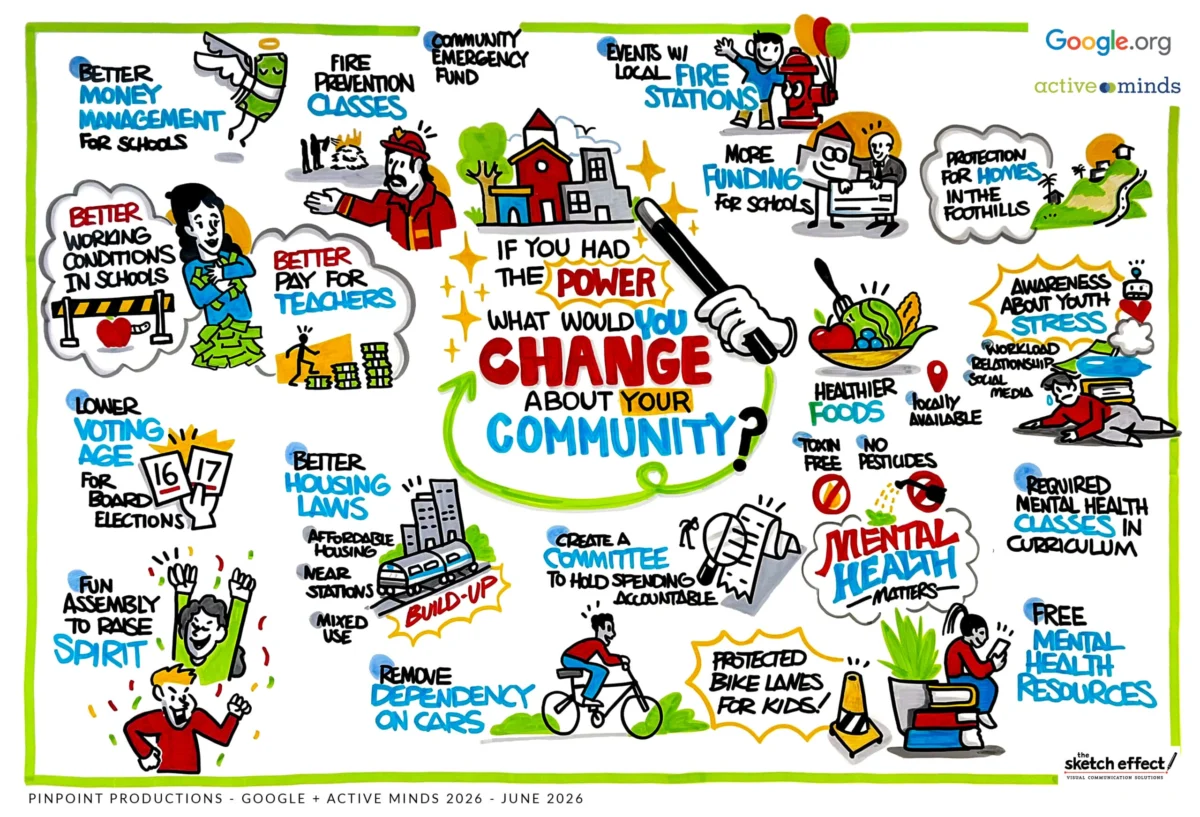
The formal announcement took place at a community event featuring a cross-section of political, industry, and youth leaders. The event was characterized by an interactive "Self-Advocacy Workshop," where students didn’t just listen to speeches but actively brainstormed the changes they wanted to see in their schools. These ideas were captured in real-time by a mural artist, providing a visual representation of youth needs that was later presented to state officials.
Supporting Data: Addressing the Scale of the Crisis
The necessity for this $5 million expansion is underscored by several alarming trends in youth mental health and digital engagement recorded over the last several years.

- The Reach: The expansion into 154 high schools is projected to impact not just the students directly involved in Active Minds chapters, but an estimated 1.2 million students through "ripple effect" advocacy and peer-led awareness campaigns.
- Digital Literacy Gaps: Recent studies cited by Active Minds suggest that while 95% of teens have access to a smartphone, fewer than 30% have received formal education on the psychological impacts of social media algorithms or the responsible use of generative AI tools.
- Equity in Access: Data from the Active Minds Program Fund indicates that schools in low-income zip codes are 60% less likely to have dedicated mental health programming compared to their more affluent counterparts. The Google.org funding aims to close this gap by providing 100% subsidized access to program materials and training for these districts.
- The Power of Peer Support: Internal metrics from Active Minds show that students are four times more likely to seek help for mental health challenges when the suggestion comes from a peer rather than an adult authority figure.
Official Responses: Voices from the Frontlines
The collaboration has drawn praise from a wide range of stakeholders, each emphasizing different facets of the program’s potential impact.
Alison Malmon, Founder and Executive Director of Active Minds, highlighted the evolution of the organization’s mission. "Youth and young adults are navigating an increasingly complex world where mental health, technology, and connection are deeply intertwined," Malmon stated. "This support from Google.org allows us to significantly expand our work, ensuring that more young people have access to the stories, resources, and peer connections that help them feel seen and supported."
Dr. Megan Jones Bell, Senior Director of Clinical at Google, focused on the tech industry’s responsibility toward the next generation. "At Google, we believe that child safety and digital wellbeing warrant unique, proactive protections," Bell said. "By putting youth at the center of this movement, we are championing student-led leadership that shifts the paradigm toward proactive empowerment. This gives the next generation the tools they need to confidently navigate and shape a healthy digital future."
Assemblymember John Harabedian (D-Pasadena), who represented the state at the launch, connected the initiative to legislative goals. "The youth of Pasadena Unified have shown immense resilience in the wake of the Eaton Fire, but we cannot overlook the compounding pressures they face," Harabedian noted. "I am proud to see the future leaders of California at the forefront of this movement, using their voices to inform the policies that govern our state."
Implications: Shifting the Culture of Mental Health
The long-term implications of this partnership extend far beyond the $5 million grant. This initiative represents a fundamental shift in how society approaches the "digital native" experience.
From Consumption to Creation
By teaching youth to "co-create" digital safety solutions, Active Minds is moving students away from being passive consumers of technology. This agency is critical in an era where AI can often feel like an overwhelming, external force. When students are empowered to design the safety protocols themselves, the resulting environments are more likely to be effective and culturally relevant.
A Model for Community Resilience
The integration of local disaster recovery (like the Eaton Fire) with national mental health strategy provides a reproducible blueprint for other regions. Whether a community is dealing with environmental disasters, economic downturns, or social unrest, the "Active Minds model" suggests that localized peer support systems are the most effective way to build long-term emotional resilience.
Corporate Responsibility in the AI Era
Google’s involvement signals a growing trend of "proactive philanthropy" in the tech sector. Rather than simply reacting to criticism regarding digital safety, the company is investing in the educational infrastructure required to make the internet a safer place from the ground up. This includes not only funding but the development of robust parental controls and "intentionally built" products designed with the next generation’s mental health in mind.
The Legislative Horizon
As students in these 154 schools begin to advocate for their wellbeing, their voices are expected to influence state and federal legislation. The initiative aims to create a pipeline of informed advocates who can speak to the realities of digital life, potentially leading to more nuanced laws regarding data privacy, algorithmic transparency, and mental health funding in schools.
In conclusion, the partnership between Active Minds and Google.org is more than a financial transaction; it is a strategic mobilization. By investing in the agency of 100,000 young leaders, the initiative seeks to ensure that as technology evolves, the human element—our mental health and community connection—remains the highest priority. As these programs roll out across the country, the eyes of educators, tech leaders, and policymakers will be on these 154 schools to see how the next generation reclaims its digital and emotional future.