








By [Your Name/Journalistic Staff]
In the complex landscape of obstructive sleep apnea (OSA) management, the patient-device interface—the CPAP mask—remains the single most critical factor in treatment adherence. While manufacturers continue to push the boundaries of design with sleek aesthetics and high-tech materials, a recent Peer Pulse survey of sleep technologists, respiratory therapists (RTs), and lab managers reveals a pragmatic truth: the clinical community is less concerned with "innovation for innovation’s sake" and deeply focused on the foundational reliability of the equipment.
As the industry grapples with evolving safety guidelines and the potential integration of digital health, this comprehensive report explores what truly matters at the bedside, the challenges of fitting difficult patient profiles, and why the human element of DME (durable medical equipment) support remains irreplaceable.
The Hierarchy of Needs: Why Sealing Remains King
For the clinicians responsible for titrating therapy and ensuring long-term compliance, the "ideal" mask is not defined by its color or its digital connectivity; it is defined by its performance under pressure. According to the latest Peer Pulse survey, the ability to maintain a consistent, comfortable seal is the primary metric by which masks are judged.
When asked to identify the features that have had the greatest positive impact on their practice, 57% of respondents unequivocally selected "better sealing technologies." This priority underscores the physiological reality of PAP therapy: if the mask leaks, the therapy fails. A broken seal leads to noise, ocular irritation, and, most importantly, a drop in therapeutic pressure that can cause sleep fragmentation and treatment abandonment.
Following the demand for reliable seals, the survey highlights a clear preference for comfort and ergonomics:
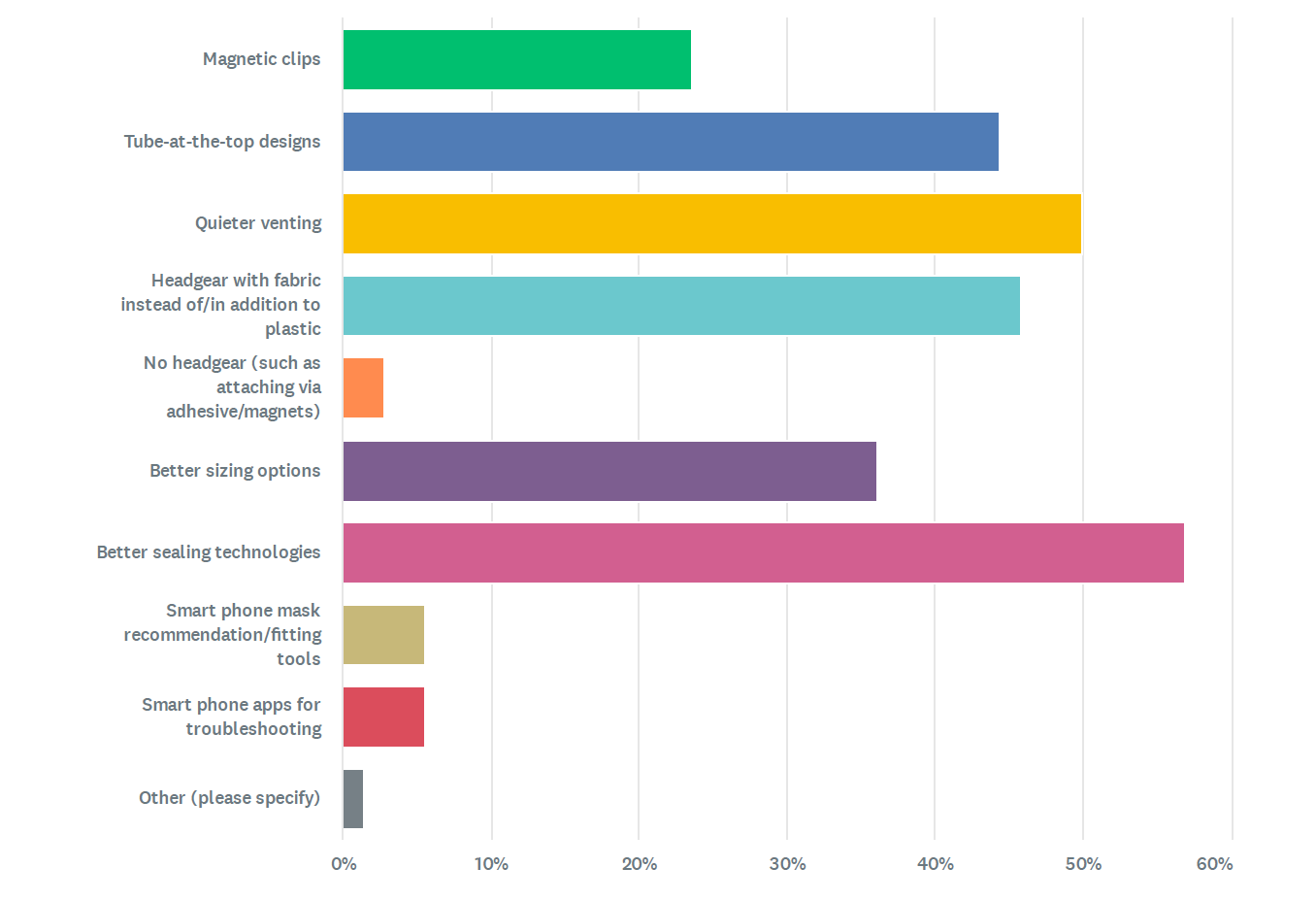
- Quiet Venting (50%): Noise remains a significant barrier to bed-partner acceptance.
- Fabric Headgear (46%): A shift away from traditional plastic-heavy designs toward softer, more breathable materials that reduce skin irritation.
- Tube-at-the-Top Designs (44%): A design evolution that allows for greater freedom of movement for active sleepers.
These data points illustrate a clinical consensus: practitioners value innovations that solve the daily friction points of therapy, rather than those that add complexity without tangible performance gains.
The "Hard-to-Fit" Dilemma: Beyond the Average Patient
Despite decades of engineering progress, the "one-size-fits-all" model remains a myth. The Peer Pulse survey identified the specific patient populations that continue to challenge even the most experienced sleep technicians.
The Facial Hair Barrier
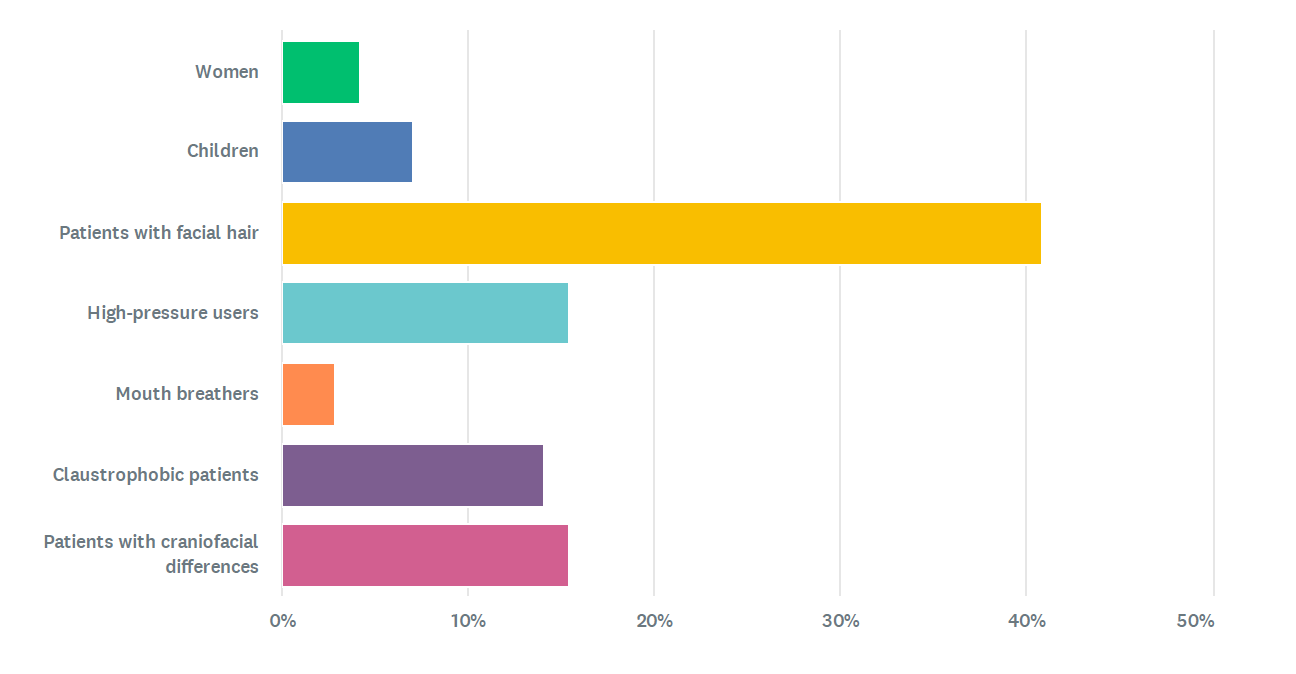
At the top of the list, 41% of respondents identified patients with facial hair as the most difficult group to fit successfully. Beards and mustaches create irregular surface geometries that make the standard silicone seal inherently unstable. For these patients, the gap between the mask and the skin is a perpetual source of leaks, forcing higher pressure settings and frequent mask adjustments that rarely yield a permanent solution.
Secondary Challenges
While facial hair presents the most common struggle, other groups present unique, albeit less frequent, hurdles:
- High-Pressure Users (15%): Patients requiring high titration pressures (often above 15–20 cm H2O) exert significant stress on mask seals, often requiring rigid frame structures that can cause pressure sores.
- Craniofacial Differences (15%): Patients with unique facial structures, such as retruded chins or narrow nasal bridges, often find that mass-market designs simply do not align with their anatomy.
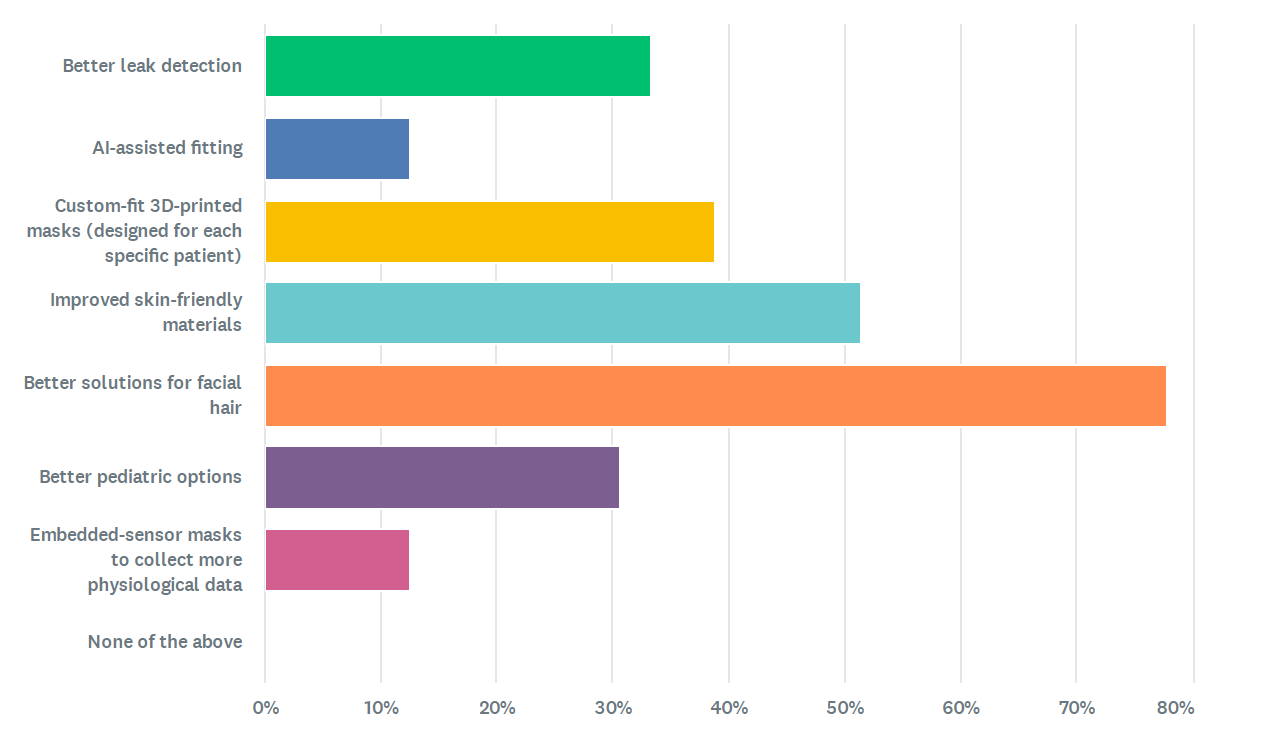
The clear desire from the field is for manufacturers to stop focusing solely on the "average" face and instead invest in specialized, high-performance sealing solutions for these outliers. When asked what innovation they want most, a resounding 78% of clinicians cited "better solutions for facial hair."
Navigating the Magnetic Mask Controversy
A significant shift in recent years has been the introduction of magnetic clips for headgear attachment. While these magnets simplified the daily routine for patients with dexterity issues, they also triggered safety warnings regarding potential interference with medical implants, such as pacemakers and ICDs.
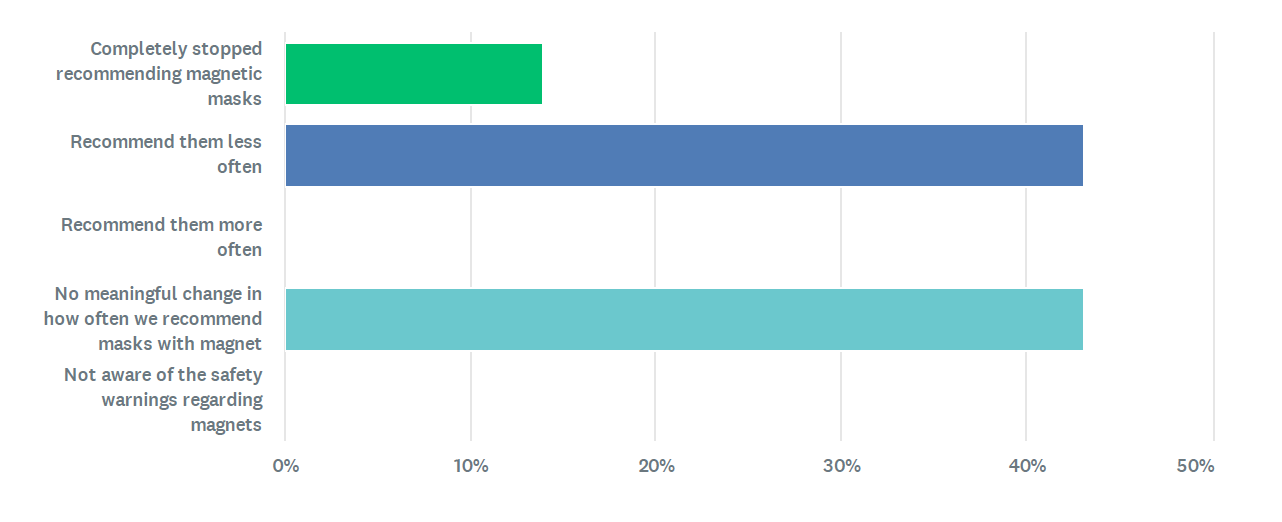
The Peer Pulse data reveals a polarized response to these warnings:
- 43% have decreased their recommendations for magnetic masks.
- 14% have completely removed them from their recommendation list.
- 43% have made no change at all.
This statistical split suggests that while the industry is aware of the risks, the clinical benefits—namely ease of use and adherence—often outweigh the perceived danger in the eyes of many practitioners. The "no change" cohort likely relies on rigorous patient screening protocols, ensuring that individuals with contraindicating implants are excluded from magnetic options, while the general population continues to benefit from the convenience.
The Digital Disconnect: AI and Virtual Fitting
The broader healthcare industry is currently obsessed with artificial intelligence and digital transformation. However, in the realm of CPAP mask fitting, this excitement is conspicuously absent.
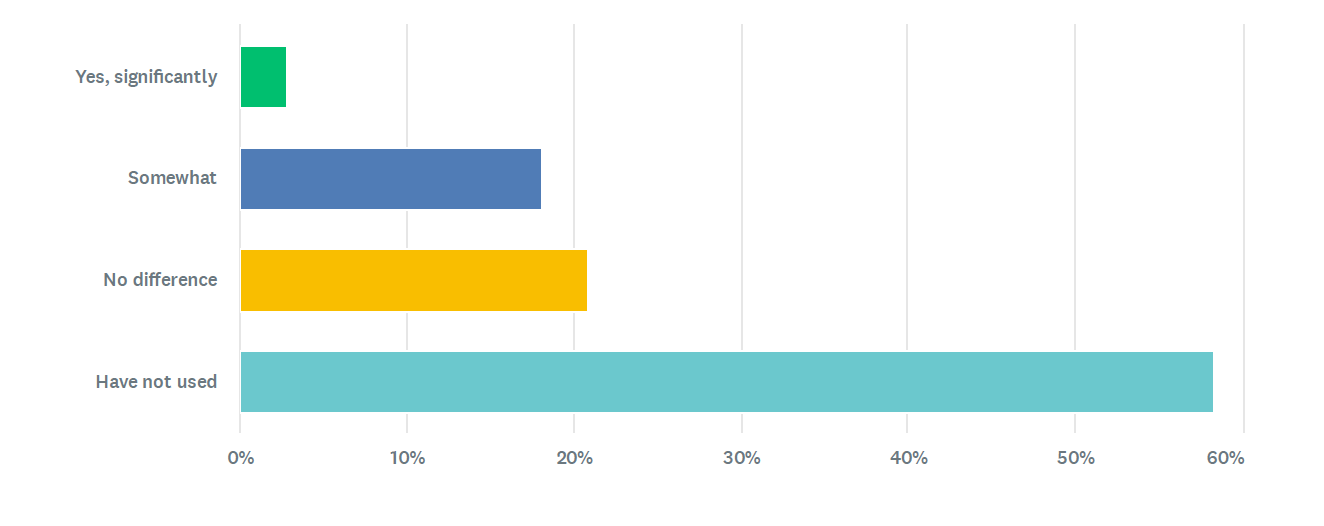
The survey indicates that virtual mask fitting tools and AI-driven selection software have gained very little traction. A staggering 58% of clinicians have never used these tools. Among those who have, the results were underwhelming:
- 21% saw no difference in patient outcomes.
- 18% reported only a "somewhat" improvement.
- 3% reported a significant improvement.
The implication is clear: in the high-stakes environment of sleep medicine, the "eye test" and the physical "hands-on" trial are still considered the gold standard. Clinicians seem skeptical that an algorithm can account for the nuance of skin elasticity, personal comfort preferences, or the psychological reaction a patient has when a mask is placed on their face. Only 13% of respondents expressed interest in seeing further AI development, suggesting that the industry should focus its R&D budget on physical material science rather than virtual interfaces.
The Role of the DME: A Crucial Partnership
Perhaps the most revealing finding in the survey is the relationship between patients, clinicians, and DME providers. There is a common misconception that patients are increasingly coming to their appointments with "pre-decided" preferences based on online forums and Reddit threads. The data suggests otherwise.
Only 11% of clinicians report that patients "frequently" arrive requesting a specific mask. The vast majority of patients still look to the sleep lab for guidance. However, the titration night is only the beginning. Once the patient is sent home, the responsibility for ongoing mask adjustments shifts to the DME provider.
As one respondent noted, the titration lab can only do so much. The "mask journey" is a long-term process, and the DME representative acts as the frontline for troubleshooting. The survey underscores that for long-term adherence, the referral network of high-quality, responsive DME providers is just as important as the clinical diagnosis itself.
Implications for the Future of Sleep Medicine
The data collected in this survey paints a clear picture for manufacturers and healthcare providers. The future of CPAP technology should not be defined by "smart" connectivity or virtual gimmicks, but by the following three pillars:
- Material Innovation: There is a strong, unmet need for skin-friendly materials and, specifically, specialized interfaces for patients with facial hair. This is the "holy grail" for current practitioners.
- Physical Simplicity: The industry must prioritize the "hands-on" experience. Features like tube-at-the-top designs and quiet venting should become the baseline, not the premium.
- The Human-Centric Model: Because digital fitting tools have failed to impress, the focus must return to supporting the DME ecosystem. Training, robust fitting sessions, and the ability to trial multiple masks in person remain the most effective tools in the clinician’s arsenal.
Ultimately, sleep technology is a service-heavy industry. As the prevalence of OSA continues to rise globally, the winners in the marketplace will be the companies that listen to the sleep techs and RTs—the people who actually have to put the masks on the patients—rather than those chasing the latest digital trends. The "perfect seal" remains the goal, but it is the combination of thoughtful engineering and skilled, in-person support that will keep patients on therapy and, ultimately, asleep.