










For nearly twenty years, the divide between medical sleep physicians and dental sleep practitioners has been a persistent hurdle in the effective treatment of obstructive sleep apnea (OSA). While both disciplines aim to alleviate the same chronic condition, silos in business structure, clinical methodology, and communication often result in fragmented patient care.
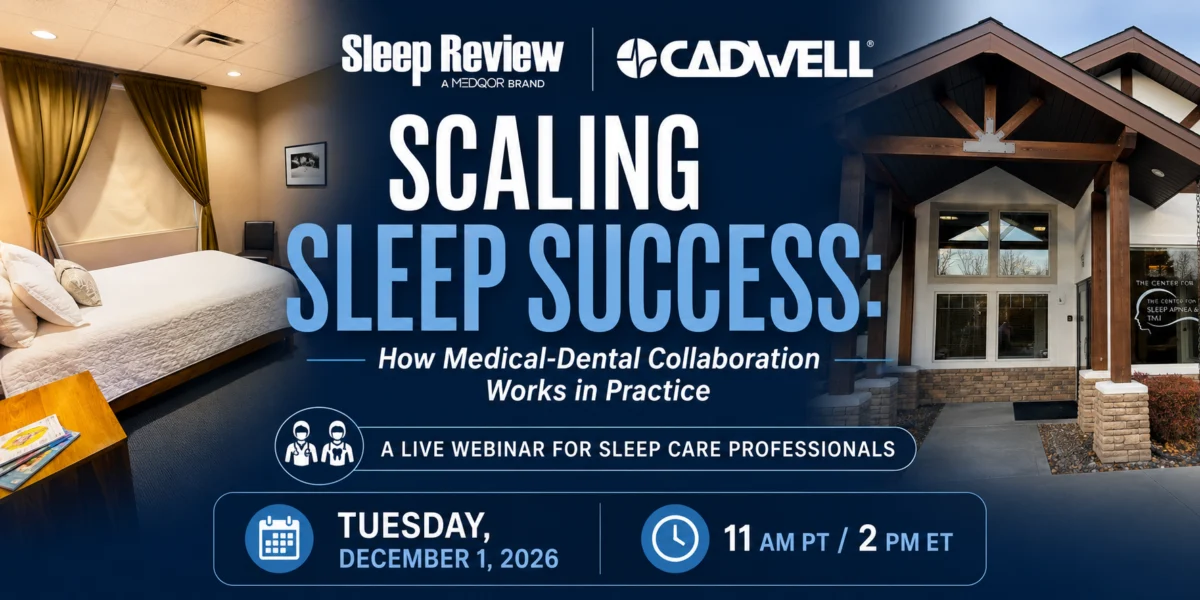
However, a proven, collaborative model pioneered by sleep physician Mark Rasmus, MD, and dental sleep medicine practitioner Jamison Spencer, DMD, MS, is providing a blueprint for success. By maintaining independent business structures while synchronizing clinical operations, the pair has demonstrated that the medical-dental divide is not a wall, but a gateway to better outcomes. On December 1, these industry veterans will host an exclusive webinar to deconstruct their partnership, offering attendees a masterclass in building sustainable, patient-centric referral networks.
The Main Facts: A Partnership Built on Synergy
The core challenge in sleep medicine is not a lack of treatment options, but a lack of coordination. Patients often bounce between primary care, pulmonologists, and dentists without a unified treatment strategy. Dr. Rasmus and Dr. Spencer recognized this inefficiency nearly two decades ago.
Their model is unique because it avoids the complexity of merging business entities. Instead, they have cultivated a "co-management" philosophy. In this arrangement, the medical provider oversees the diagnosis and physiological monitoring, while the dental provider manages the oral appliance therapy (OAT) titration and maintenance. The result is a seamless patient journey where the transition from Positive Airway Pressure (PAP) therapy to OAT—or a combination of both—is guided by data rather than professional ego.
The upcoming webinar serves as a comprehensive guide for providers looking to replicate this success. It will cover:
- Trust Architecture: How to build professional credibility across vastly different medical disciplines.
- Referral Logistics: Establishing standardized pathways that ensure no patient falls through the cracks.
- Care Coordination: Implementing objective testing and longitudinal follow-ups that bridge the gap between the sleep lab and the dental chair.
A Chronology of Collaboration: Two Decades of Evolution
The story of the Rasmus-Spencer partnership began long before the current era of "integrated care" became a buzzword in healthcare marketing.
The Formative Years (Early 2000s): At the turn of the millennium, sleep medicine was still finding its footing. Dr. Rasmus was navigating the limitations of PAP therapy—specifically, the high non-compliance rates among his patients. Simultaneously, Dr. Spencer was exploring the burgeoning field of dental sleep medicine. Their early interactions were rooted in a simple, mutual goal: finding a solution for patients who were failing traditional treatment.
The Middle Years (2010–2015): As the body of research supporting Oral Appliance Therapy (OAT) grew, the duo formalized their referral pathway. This period was characterized by the development of shared protocols. They moved away from informal hand-offs toward a structured data-sharing model, ensuring that Dr. Rasmus received objective feedback from Dr. Spencer’s dental office regarding the efficacy of appliances.
The Current Era (2015–Present): Today, their partnership has expanded into a mentorship model. They have moved beyond the "pilot" phase, having managed thousands of patient cases together. Their current focus is on the integration of tele-health and remote monitoring, ensuring that the "medical-dental" bridge is supported by real-time data rather than periodic check-ins.
Supporting Data: The Clinical Imperative for Integration
The necessity of this collaboration is backed by clinical data suggesting that the "one-size-fits-all" approach to sleep apnea is insufficient.
According to the American Academy of Sleep Medicine (AASM), non-compliance with PAP therapy remains a significant public health issue, with rates of non-adherence ranging from 29% to 83%. When patients fail to tolerate CPAP, they are often left without a secondary plan. This is where the medical-dental collaboration becomes vital.
Studies presented by practitioners like Rasmus and Spencer suggest that when patients have access to a coordinated OAT option through a trusted dental partner, they are significantly more likely to continue treatment than those who simply abandon their PAP machine.
Key Clinical Pillars for the Webinar:
- Patient Selection: Utilizing the AHI (Apnea-Hypopnea Index) and anatomy-based screening to determine who is an ideal candidate for OAT versus PAP.
- Complementary Roles: Understanding that PAP and OAT are not competitive, but synergistic. Some patients benefit from "Combination Therapy," where the pressure of a PAP machine is reduced through the use of an oral appliance.
- Objective Testing: The reliance on home sleep apnea testing (HSAT) post-titration to ensure the appliance is achieving the desired therapeutic outcome.
Official Responses: Insights from the Presenters
Ahead of the December 1 webinar, both Dr. Rasmus and Dr. Spencer emphasize that the biggest hurdle to this collaboration is not clinical—it is cultural.
"Too many physicians view the dentist as an outsider to the medical team," says Dr. Rasmus. "And too many dentists approach sleep medicine as a sales opportunity rather than a medical service. The goal of this webinar is to shift that mindset. We want to show how a physician can trust a dental partner as much as they would a cardiologist or a pulmonologist."
Dr. Spencer adds, "The dental chair is often the first place a patient expresses concerns about snoring or fatigue. If that dentist doesn’t have a reliable, high-quality medical partner to refer to, the patient often ends up untreated. We are teaching providers how to build a bridge that stands the test of time, rather than a temporary fix."
Implications: Building the Future of Sleep Care
The implications of the Rasmus-Spencer model extend far beyond their own practices. As the healthcare industry moves toward value-based care, providers are being incentivized to reduce costs and improve patient outcomes. Fragmented care is expensive and ineffective. A well-integrated medical-dental model directly addresses these issues by:
- Improving Compliance: Patients feel supported by a team rather than a single provider.
- Reducing Economic Burden: Effective treatment of sleep apnea leads to a reduction in secondary health conditions, such as hypertension, diabetes, and cardiovascular disease.
- Empowering Local Networks: The strategies shared in this webinar allow providers to create "micro-networks" in their own communities, effectively creating a local standard of care that can compete with large, impersonal corporate sleep centers.
Webinar Details and Logistics
The live event, scheduled for Tuesday, December 1, at 11 am PT/2 pm ET, is designed to be interactive. Unlike traditional academic lectures, this session focuses on "in the trenches" problem-solving. Attendees will have the opportunity to participate in an extended Q&A session, allowing them to ask specific questions about the legal, ethical, and clinical hurdles they face in their own regions.
Professional Development Credits
For those seeking continuing education, the webinar application has been submitted for approval by the Board of Registered Polysomnographic Technologists (BRPT). This ensures that the content meets the high standards required for professional certification and recertification.
Who Should Attend?
This webinar is essential for:
- Sleep Physicians looking to expand their referral network and improve patient compliance.
- Dentists and Dental Sleep Practitioners seeking to elevate their clinical standards and strengthen their relationship with the medical community.
- Practice Managers and Clinical Coordinators interested in the operational logistics of interdisciplinary care.
Final Thoughts: The Path Forward
The journey to integrated care is not without its challenges. It requires patience, humility, and a willingness to step outside of one’s traditional comfort zone. However, as demonstrated by the nearly two-decade partnership between Dr. Rasmus and Dr. Spencer, the rewards are immense. By prioritizing the patient’s needs over disciplinary boundaries, they have not only built successful practices but have also contributed to the maturation of sleep medicine as a whole.
For providers struggling to connect with their counterparts across the street, this webinar offers more than just theory—it offers a roadmap. It is an opportunity to learn from two experts who have already navigated the obstacles and emerged with a blueprint that works.
Registration Information:
Interested parties are encouraged to register early to secure their spot in the live Q&A. This is a rare opportunity to gain direct insight from two of the most respected voices in medical-dental sleep collaboration. As the landscape of sleep medicine continues to evolve, those who embrace integration will be the ones leading the way in patient outcomes and practice sustainability.
For more information on the webinar or to register, please visit the official event portal.