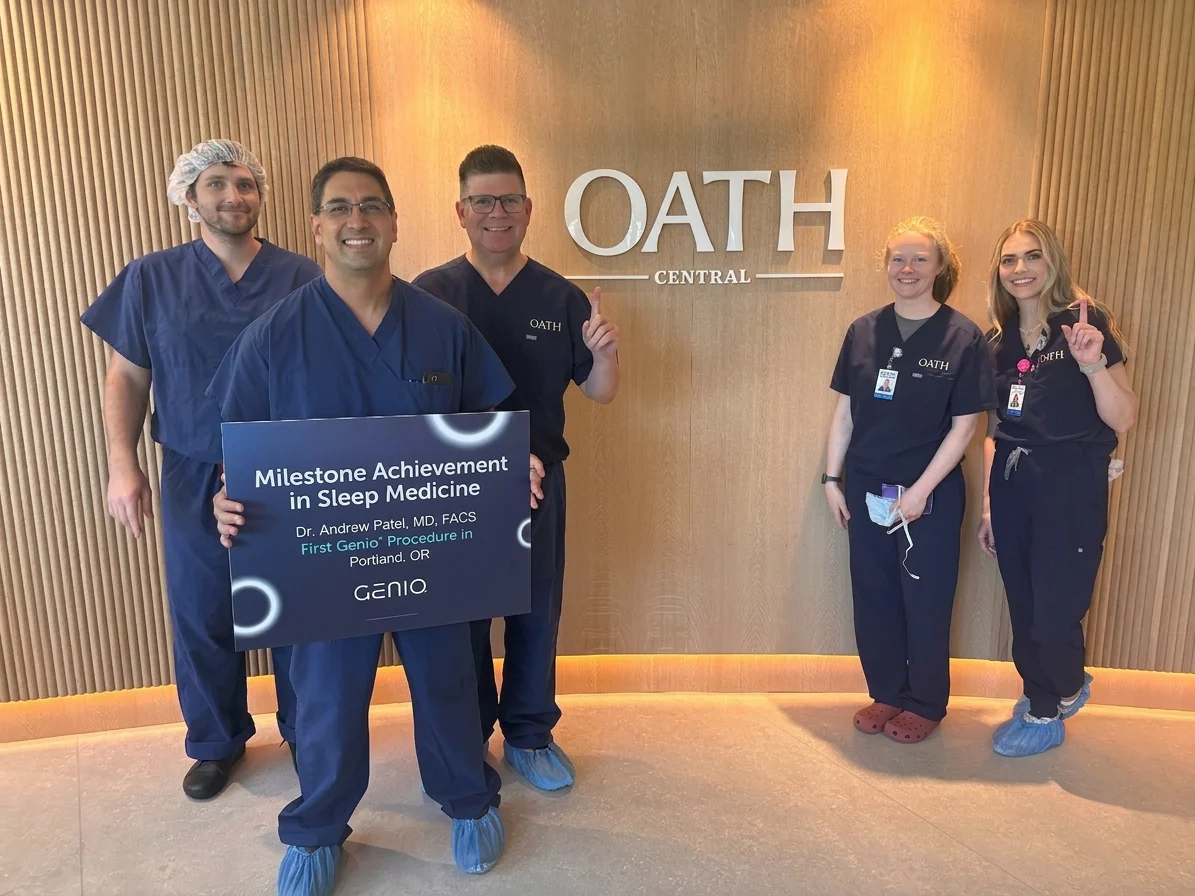
In a significant development for sleep medicine in the Pacific Northwest, Oath Surgical—a Portland-based, AI-native ambulatory surgery center (ASC)—has successfully completed the region’s first outpatient bilateral hypoglossal nerve stimulation (HGNS) procedure. This milestone marks a transition in how advanced obstructive sleep apnea (OSA) treatments are delivered, moving high-acuity care out of traditional hospital settings and into specialized, technologically integrated surgical environments.
The procedure, performed by head and neck surgeon Dr. Andrew Patel, utilized the Genio system by Nyxoah. This FDA-approved therapy represents a paradigm shift in neurostimulation, offering patients a battery-free, bilateral approach to airway management.
The Main Facts: A New Standard for OSA Treatment
Obstructive Sleep Apnea is a chronic condition characterized by repetitive airway collapse during sleep, which significantly impacts cardiovascular health, cognitive function, and quality of life. For decades, the gold standard for treatment has been Continuous Positive Airway Pressure (CPAP) therapy. However, patient compliance rates remain notoriously low due to discomfort, mask leaks, and general intolerance of the apparatus.
The Genio system, now being implemented at Oath Surgical, addresses these challenges through a unique mechanism. Unlike traditional unilateral stimulators, the Genio device provides bilateral stimulation of the hypoglossal nerve. This is critical because it triggers the contraction of both sides of the tongue, effectively preventing it from collapsing into the pharyngeal airway.
Key Technical Features of the Genio System:
- Bilateral Stimulation: Coordinates the body’s natural airway control system for more comprehensive results.
- Battery-Free Architecture: Eliminates the need for future revision surgeries typically required to replace exhausted neurostimulator batteries.
- Full 3T MRI Compatibility: Ensures patients retain access to advanced diagnostic imaging without the fear of device interference.
- Minimally Invasive: The procedure requires only a single incision, reducing recovery time and aesthetic impact.
Chronology of the Milestone
The successful execution of this procedure is the result of years of planning, surgical innovation, and the integration of the OathOS clinical intelligence system.
- Pre-Operative Phase: The surgical team at Oath Surgical conducted rigorous patient screening to identify candidates who were CPAP-intolerant and met the anatomical criteria for bilateral neurostimulation.
- Integration Phase: The center utilized its proprietary OathOS platform to streamline the patient’s journey. This software architecture connects referral streams, scheduling, pre-surgical education, and long-term data tracking.
- The Procedure: Under the clinical leadership of Dr. Andrew Patel, the surgical team performed the implantation in an outpatient setting, demonstrating that the procedure could be completed with the same safety standards as a hospital but with the efficiency and patient-centered focus of an ambulatory center.
- Post-Operative Monitoring: The patient was transitioned to a recovery protocol managed by the OathOS system, which ensures consistent follow-up and monitoring of stimulation parameters.
Supporting Data and the Burden of Sleep Apnea
The necessity for this advancement is underscored by the prevalence of OSA and the limitations of current care pathways. According to the American Academy of Sleep Medicine, millions of Americans suffer from moderate to severe sleep apnea, with a significant portion remaining undiagnosed or unsuccessfully treated.
In the Pacific Northwest, the demand for alternatives to CPAP has consistently outpaced the available surgical infrastructure. Previously, patients requiring advanced implants were often forced to navigate complex hospital systems or travel to distant urban centers.
The shift to an ambulatory setting is supported by data suggesting that "high-acuity" surgeries—procedures that are complex but do not require prolonged inpatient hospitalization—have better outcomes when performed in specialized centers. By focusing solely on these procedures, Oath Surgical creates an environment where surgeons like Dr. Patel can optimize their technique, reduce operating room turnover times, and maintain higher standards of post-operative follow-up.
Official Responses and Clinical Vision
The introduction of this therapy to the Portland region is viewed as a foundational moment by the clinical and administrative leadership at Oath Surgical.
"For too long, patients in Oregon who struggled with CPAP had limited options and often had to travel outside the region to explore surgical alternatives," says Dr. Andrew Patel. "This new procedure is a real step forward. It is bilateral, requires only a single incision, and has no implanted battery, which makes it an easier conversation to have with patients who have been hesitant about surgery. My focus now is on building a consistent, high-quality program here that puts patient outcomes and long-term follow-up at the center."
Dr. Oliver Keown, founder and CEO of Oath Surgical, emphasized that this milestone validates the company’s AI-native approach to healthcare. "Bringing higher acuity care like this to Oregon is exactly the kind of milestone our platform was built to support," Dr. Keown noted. "Oath’s surgical centers are designed for advanced outpatient procedures, and Dr. Patel and the team have shown that bilateral HGNS therapy can be delivered safely and efficiently outside of a hospital setting. We think this is the beginning of a much broader shift in how sleep apnea care is accessed across the region."
Implications for the Future of Sleep Medicine
The success of this procedure carries several profound implications for the medical community and the patient population in the Pacific Northwest.
1. The Democratization of Advanced Care
By successfully performing bilateral HGNS in an outpatient center, Oath Surgical has proven that expensive and complex neurostimulation therapies do not necessarily require the overhead of a large hospital system. This potentially lowers costs for insurers and patients while increasing the availability of appointments.
2. The Role of Clinical Intelligence
The use of "AI-native" systems like OathOS is likely to become the benchmark for surgical centers. By automating the tracking of patient outcomes and integrating clinical data directly into the surgical pathway, the center can proactively identify patients who may need adjustments to their stimulation settings, thereby increasing the success rate of the therapy.
3. A Shift in Referral Patterns
Traditionally, the "siloed" nature of medicine meant that a sleep specialist might struggle to coordinate with a surgeon. The model now being championed in Portland encourages a multidisciplinary ecosystem. Dr. Patel is currently accepting referrals from a wide spectrum of providers—including primary care physicians, cardiologists, and dental sleep medicine practitioners—creating a more cohesive, patient-centered network.
4. Patient-Centric Innovation
The decision to adopt the Genio system specifically reflects a trend toward patient-friendly surgical design. The removal of the implanted battery is a major selling point for patients, as it addresses the "battery anxiety" associated with other implantable devices. For an aging population or those with active lifestyles, the ability to avoid repeat surgeries is a significant driver of patient satisfaction and long-term adherence to therapy.
Conclusion
The successful implementation of bilateral hypoglossal nerve stimulation at Oath Surgical is more than just a localized medical success; it is a signal of the future of surgical delivery. By marrying advanced, battery-free hardware with a data-driven, outpatient clinical model, Portland’s medical community has set a new standard for OSA treatment.
As the program grows, the impact will likely be measured not just in the number of implants performed, but in the improved sleep quality and cardiovascular outcomes for patients throughout the Pacific Northwest. The center’s commitment to building a "consistent, high-quality program" suggests that this is only the first of many technological advancements to find a home in Oregon’s evolving surgical landscape. For the patient struggling with the suffocating reality of untreated sleep apnea, this development offers a path toward a safer, more sustainable, and technologically empowered recovery.