











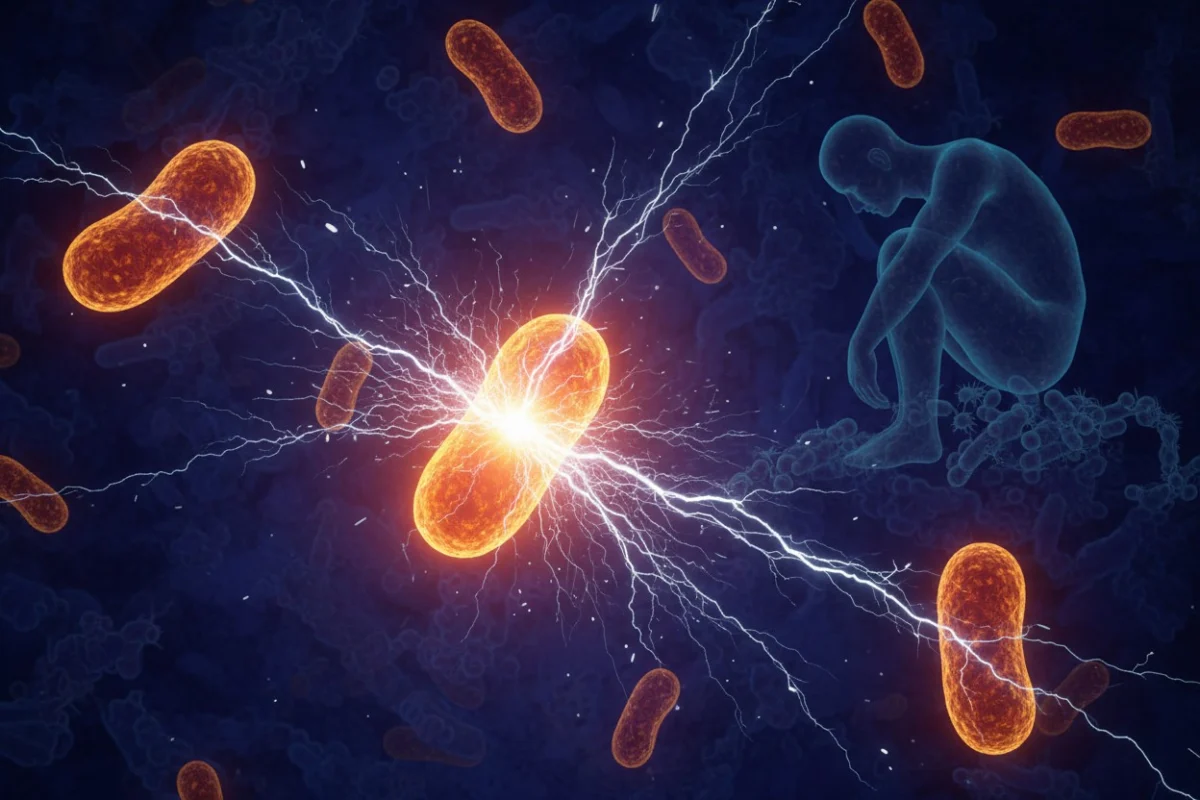
In an era where chronic illness and persistent exhaustion have become the "new normal" for millions, a startling consensus is emerging from the frontiers of biological research: the modern epidemic of fatigue may not be a series of disconnected ailments, but a systemic failure of the human body’s most fundamental energy-production engines—the mitochondria.
The recent docuseries, "The Human Shutdown," aired on BrightU, has brought this critical conversation to the forefront. By assembling 30 world-renowned experts, the series explores the thesis that the pervasive "energy crisis" within our cells is the primary driver behind a vast array of degenerative conditions, from Chronic Fatigue Syndrome (CFS) and depression to complex, multi-system disorders.
The Core Problem: When Cellular Engines Fail
At the microscopic level, the human body is powered by mitochondria, the specialized organelles within our cells responsible for generating adenosine triphosphate (ATP). ATP is the universal currency of energy in biological systems; without a consistent supply, cellular repair, immune response, and cognitive function grind to a halt.
As highlighted in "The Human Shutdown," when mitochondrial efficiency drops, the body enters a state of metabolic crisis. This is not merely a feeling of being "tired"; it is a systemic inability to maintain homeostasis. According to data cited by Mercola.com, CFS alone impacts up to 2.5 million Americans, a figure that experts argue is likely a conservative estimate when considering the sub-clinical manifestations of mitochondrial dysfunction in the broader population.
The implications are staggering. As emphasized by ANH International, the decline in ATP production does not exist in a vacuum. It is a foundational contributor to the cascade of oxidative stress and systemic inflammation that characterizes almost all chronic and degenerative diseases, including cancer and cardiovascular decline.
Chronology of Discovery: From Niche Biology to Mainstream Concern
The recognition of mitochondrial health as a pillar of wellness has evolved significantly over the last decade:
- Pre-2015: Mitochondrial research was largely confined to rare, genetic "mitochondrial diseases" that affected a small percentage of the population.
- 2015–2020: The publication of works like Lee Know’s “Mitochondria and the Future of Medicine” shifted the narrative. Researchers began linking mitochondrial impairment to common age-related conditions, including neurodegeneration and metabolic syndrome.
- 2021–2025: The environmental impact on cellular health took center stage. Discussion surrounding the role of ubiquitous toxins, such as the herbicide glyphosate, highlighted how modern industrial chemicals might be directly interfering with the mitochondrial electron transport chain.
- March 2026: A landmark study published in Translational Psychiatry provided empirical evidence linking depression to measurable deficiencies in cellular energy production, bridging the gap between psychiatry and metabolic biology.
Supporting Data: The Science of Cellular Exhaustion
The scientific evidence connecting ATP production to overall health is robust and growing.
The ATP-Depression Connection
Researchers at the University of Queensland and the University of Minnesota recently conducted a comparative analysis of depressed patients versus healthy cohorts. The findings were clear: individuals suffering from clinical depression exhibited a significantly lower output of ATP. This discovery suggests that for many, depression may be a biological manifestation of cellular "energy starvation" rather than purely a psychological or neurotransmitter-based issue.
The Role of CoQ10 and Oxidative Stress
Coenzyme Q10 (CoQ10) serves as a vital spark plug in the mitochondrial electron transport chain. Without adequate levels of this coenzyme, the electron flow required to generate ATP is interrupted, leading to a surplus of reactive oxygen species (ROS). These ROS molecules damage the very mitochondrial membranes they inhabit, creating a vicious cycle of further dysfunction. Dr. Richard Horowitz, author of “Why Can’t I Get Better?”, has pioneered the use of high-dose CoQ10 and other mitochondrial support protocols to help patients recover from chronic inflammation and complex conditions like cardiomyopathy.
Environmental Toxins as Mitochondrial Inhibitors
A critical focal point of the current discourse is the impact of environmental pollutants. Dr. Stephanie Seneff and Dr. Alex Vasquez have documented how glyphosate—the world’s most widely used herbicide—may disrupt the shikimate pathway in gut bacteria and interfere with cellular metabolism. This environmental pressure is suspected of being a primary "hidden" cause of the widespread mitochondrial damage observed in the modern population.
Official and Expert Perspectives: A New Medical Paradigm
The medical community is gradually shifting its focus from symptomatic management to metabolic restoration.
Dr. Frank Shallenberger, a leading authority on energy-focused medicine and author of “Bursting with Energy,” advocates for a clinical approach that moves beyond treating blood markers. He suggests that practitioners should actively assess mitochondrial function by measuring the anaerobic threshold—the point at which the body can no longer produce enough ATP to meet physical demand. By identifying this threshold, physicians can tailor interventions, including nutritional support and lifestyle adjustments, to "reset" the body’s energy production capacity.
The experts featured in “The Human Shutdown” argue that the current healthcare model, often dominated by pharmaceutical interventions aimed at suppressing symptoms, has largely ignored the underlying energetic collapse. This failure has left millions of patients trapped in a cycle of worsening health, as they treat the effects of the shutdown (e.g., pain, mood swings, fatigue) rather than the cause (mitochondrial failure).
Implications for Future Health and Recovery
The implications of these findings are profound. If mitochondrial health is the "central thread" of human vitality, then the path to recovery must be built on three pillars:
- Nutritional Foundation: Providing the body with the precursors required for ATP production, such as CoQ10, magnesium, and B-vitamins, while eliminating processed foods that deplete energy reserves.
- Environmental Stewardship: Minimizing exposure to known mitochondrial toxins, such as glyphosate, synthetic pesticides, and heavy metals, which are increasingly viewed as the primary environmental stressors forcing the "human shutdown."
- Metabolic Conditioning: Utilizing exercise protocols and intermittent stressors (like heat or cold exposure) to stimulate "mitophagy"—the process of clearing out damaged mitochondria and encouraging the production of new, efficient ones.
As Robert Verkerk, PhD, of ANH International suggests, the goal is to build a "buffer" of energy reserves. In a world where environmental and psychological stressors are high, a robust mitochondrial system acts as the ultimate insurance policy against premature aging and the onset of chronic disease.
Conclusion: The Path Forward
The evidence is mounting: we are experiencing a systemic, energy-based crisis that demands a fundamental re-evaluation of how we approach health. The "Human Shutdown" is not an inevitable consequence of aging; it is a measurable, and potentially reversible, state of cellular dysfunction.
While the medical establishment continues to debate the best course of action, the data points toward a future where "mitochondrial health" becomes the standard by which we measure wellness. By prioritizing cellular energy production, individuals may be able to reclaim their vitality, move beyond the limitations of chronic fatigue, and build a defense against the degenerative diseases that have defined the 21st-century health landscape.
For those seeking to understand the mechanics of this recovery, the resources provided by platforms like BrightU offer a deep dive into the work of those on the front lines of this metabolic revolution. As we continue to decode the biology of our cells, the ability to "reignite" the body’s innate healing capacity may well be the most significant medical advancement of our time.
For more information on the mechanisms behind the "Human Shutdown" and to access the full interviews from the series, readers are encouraged to explore the comprehensive materials and expert presentations available through the BrightU platform.
Sources & References:
- Mercola.com – Analysis on Chronic Fatigue Syndrome and mitochondrial impact.
- ANH International – Reports on energy deficiency and chronic/degenerative disorders.
- Mercola.com – Studies on CoQ10 and ATP generation.
- Know, L. – "Mitochondria and the Future of Medicine."
- Smith, J. & Vasquez, A. – Analysis on environmental toxins and mitochondrial damage.
- Translational Psychiatry (March 2026) – Research on ATP production and depression (via NaturalNews.com).
- Brighteon Broadcast News – Reports on oxidative stress and metabolic impairment.
- Horowitz, R. – "Why Can’t I Get Better?" clinical perspectives.
- Annals of Neurology – Research on muscle fatigue and mitochondrial myopathy.
- Shallenberger, F. – "Bursting with Energy: The Breakthrough Method to Renew Youthful Energy and Restore Health."