








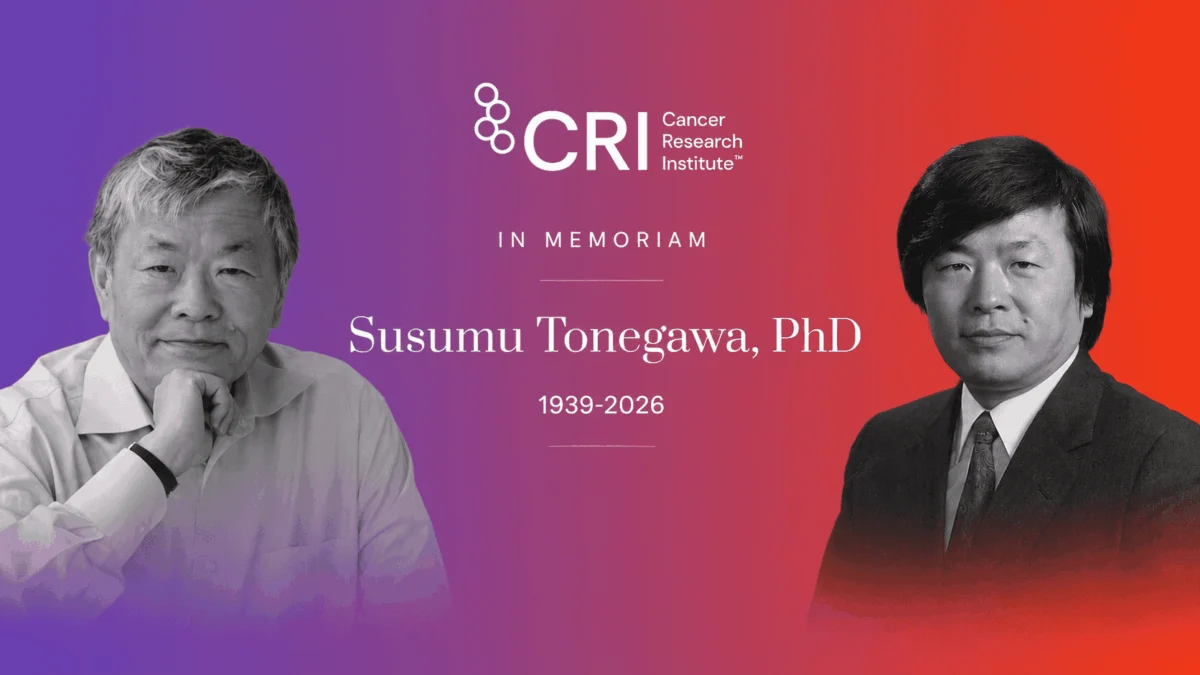
The scientific community is in mourning following the passing of Dr. Susumu Tonegawa, a titan of molecular biology and a Nobel laureate whose work fundamentally altered our comprehension of the human immune system. Dr. Tonegawa, a long-standing and cherished member of the Cancer Research Institute’s (CRI) Scientific Advisory Council, passed away on July 11, 2026, at the age of 86. His departure marks the end of an era for both immunology and neuroscience—two fields he redefined through his unparalleled curiosity and intellectual rigor.
A Fundamental Mystery Solved: The Genetic Basis of Immunity
To understand the magnitude of Dr. Tonegawa’s impact, one must look back to the scientific landscape of the 1970s. At that time, a central biological mystery loomed over immunology: How could the human body produce a virtually infinite variety of antibodies to defend against an endless array of pathogens, despite possessing a finite number of genes? Standard genetic theory suggested that one gene produced one protein; if that were true, the body would need millions of genes to account for the diversity of the immune response—a biological impossibility.
In a series of landmark experiments, Dr. Tonegawa provided the answer. He demonstrated that immune cells do not rely on static genetic instructions. Instead, they perform a sophisticated "genetic reshuffling." By rearranging specific DNA segments, immune cells—specifically B cells—can create unique genetic sequences that produce an astonishing diversity of antibodies. This discovery, described by peers as an elegant solution to a profound riddle, effectively solved the problem of antibody diversity.
For this paradigm-shifting revelation, Dr. Tonegawa was awarded the 1987 Nobel Prize in Physiology or Medicine. His work did more than earn accolades; it provided the foundational "how-to" guide for the adaptive immune system, explaining how the body distinguishes between "self" and "non-self" with such lethal precision.
Chronology of a Scientific Life
Dr. Tonegawa’s journey was defined by a restless intellectual spirit that refused to be confined by the boundaries of a single discipline.
- 1939: Born in Nagoya, Japan.
- 1963: Earned his B.S. in Chemistry from Kyoto University.
- 1968: Completed his PhD at the University of California, San Diego, focusing on molecular biology.
- 1971–1981: Conducted his most transformative research at the Basel Institute for Immunology in Switzerland. It was here that he conducted the experiments that would win him the Nobel Prize.
- 1981: Joined the faculty at the Massachusetts Institute of Technology (MIT), where he would spend the remainder of his illustrious career.
- 1987: Awarded the Nobel Prize in Physiology or Medicine.
- 1994: Established the Picower Institute for Learning and Memory at MIT, signaling a shift toward his second great passion: neuroscience.
- 2000s–2020s: Served with distinction on the Scientific Advisory Council for the Cancer Research Institute, helping to bridge the gap between basic immunology and clinical cancer immunotherapy.
- 2026: Passed away on July 11, leaving behind a legacy that continues to influence modern medical breakthroughs.
The Bridge to Modern Immunotherapy
The implications of Dr. Tonegawa’s work extend far beyond the laboratory notebooks of the 1970s. Today, his discovery is the bedrock upon which the entire field of cancer immunotherapy is built.
By mapping the mechanics of how the immune system recognizes foreign targets, Dr. Tonegawa provided the blueprint for how we might "teach" the immune system to recognize cancer cells. Modern therapies—such as checkpoint inhibitors, CAR-T cell therapy, and cancer vaccines—all rely on the fundamental principle that immune cells can be programmed or stimulated to identify and destroy diseased cells with the same specificity that the body uses to fight a virus.
Every time a patient receives an immunotherapy treatment that leads to remission, they are, in a very real sense, benefiting from the mechanisms first elucidated by Dr. Tonegawa. His work transformed immunology from a descriptive science into a predictive and actionable one, enabling the development of treatments that have turned once-fatal diagnoses into manageable conditions.
A Seamless Transition: From Immunology to Neuroscience
Perhaps the most remarkable aspect of Dr. Tonegawa’s career was his willingness to reinvent himself. After reaching the pinnacle of immunology, he turned his sights toward the "final frontier" of biology: the human brain.
At MIT, he applied the same molecular rigor he had used to study antibodies to the study of memory. He pioneered the use of optogenetics and transgenic mouse models to map the "engram"—the physical trace of a memory in the brain. His lab was the first to demonstrate that it was possible to artificially activate specific memories in the brain, a discovery that pushed the boundaries of what we understand about consciousness, learning, and neurological disease.
This transition demonstrated a rare intellectual courage. While many scientists spend their careers refining a single discovery, Dr. Tonegawa sought to apply his scientific philosophy to the most complex organ in the body. His ability to move between fields without losing his focus—or his impact—remains a model for interdisciplinary research.
Official Responses and Reflections
The loss of Dr. Tonegawa has prompted an outpouring of grief and gratitude from the global scientific community. At the Cancer Research Institute (CRI), where he served as a guiding voice on the Scientific Advisory Council, his absence is deeply felt.
"The history of cancer immunotherapy rests on a handful of discoveries that fundamentally changed how we think about the immune system," said Alicia Zhou, PhD, CEO of the Cancer Research Institute. "Dr. Tonegawa’s discovery of the genetic mechanism that creates antibody diversity is one of them. His work revealed the remarkable adaptability of the immune system and forever changed how scientists study immunity, disease, and cancer. We were honored to benefit from his wisdom, and his legacy will continue to inspire generations of scientists working to improve the lives of patients."
Colleagues remember him not just as a brilliant researcher, but as a mentor who demanded rigor while fostering creativity. He was known for challenging the status quo, often telling his students that the most interesting scientific questions were not those that confirmed what we already knew, but those that forced us to discard our previous assumptions.
Defining Creativity: The Tonegawa Doctrine
Later in his life, Dr. Tonegawa was asked to define the essence of scientific creativity. His answer was characteristic of a man who valued simplicity and courage. He outlined three core principles:
- Embrace the Unknown: Do not be afraid to tackle problems that others consider impossible or "unsolvable."
- Foster Intellectual Diversity: Science thrives when different perspectives collide. Collaboration is not just about sharing resources; it is about challenging one another’s blind spots.
- Maintain Radical Openness: Be willing to abandon your own theories the moment the data demands it. Ego is the enemy of discovery.
This philosophy was captured in his final years through his engagement with the public, including his video reflections on the nature of scientific inquiry. His humble, measured approach to the "big questions" served as a reminder that science, at its best, is an act of profound curiosity rather than an ego-driven endeavor.
A Lasting Legacy
The impact of Susumu Tonegawa’s life cannot be measured by the Nobel medal alone. It is measured in the lives saved by immunotherapy, in the students he mentored who now lead laboratories across the globe, and in the fundamental shift in how we understand the plasticity of the human body.
As we look toward the future of medicine, we find ourselves standing on the shoulders of the giant he was. His research into the immune system provided the tools to fight cancer, and his research into the brain provides the tools to understand ourselves.
We extend our deepest condolences to Dr. Tonegawa’s family, his colleagues at MIT and the Cancer Research Institute, and the countless researchers who were touched by his vision. While the scientific community has lost a luminary, the path he cleared for future generations remains illuminated by his work. His discovery of the genetic basis of immunity did not just solve a biological puzzle; it unlocked a new way for humanity to heal itself.
Dr. Tonegawa’s journey, from a young student in Japan to a world-renowned pioneer in Cambridge, stands as a testament to the power of the human intellect to penetrate the deepest mysteries of the natural world. He taught us that the immune system is not a rigid barrier, but a dynamic, creative force—a description that, in many ways, serves as a fitting epitaph for the scientist himself.