







Maintaining physical independence as we age is a primary goal for many, and the secret to long-term mobility often lies in one of the most powerful muscle groups in the human body: the glutes. While the modern fitness industry often steers individuals toward high-impact gym equipment or complex yoga flows, there is a quieter, more accessible, and highly effective revolution taking place in living rooms across the country. Chair-based exercises are emerging as the gold standard for rebuilding glute strength, offering a stable, safe, and scientifically sound approach to functional fitness for those over 60.
The Science of Strength: Why Glutes Matter
The gluteal muscles—comprised of the gluteus maximus, medius, and minimus—are the engines of human movement. They are responsible for hip extension, abduction, and rotation, and they act as the primary stabilizers for the pelvis and lower spine. As we age, these muscles are susceptible to "disuse atrophy," often exacerbated by sedentary lifestyles.
Preserving muscle strength is not merely an aesthetic endeavor; it is a critical health intervention. Strong glutes directly correlate to improved balance, reduced lower back pain, and the ability to perform activities of daily living (ADLs) without assistance. When glute strength wanes, the body compensates by over-relying on the lower back and knees, leading to chronic discomfort and an increased risk of falls.
Bridging the Gap: Chair Workouts vs. Traditional Fitness
Many adults over 60 are wary of traditional gym environments, citing concerns about joint impact or the complexity of machine settings. Furthermore, while yoga is an excellent practice for flexibility and mindfulness, it operates on a different physiological principle than pure strength training.
Terry Tateossian, a Certified Lifestyle Medicine Coach, Trainer, and Nutritionist for Women 40+ at THOR (The House of Rose), emphasizes that while yoga is a vital component of a healthy lifestyle, it is not a direct substitute for the progressive overload required to rebuild lost muscle.
"Yoga is one of the most beneficial physical practices for adults over 60, and I recommend it to almost every client," says Tateossian. "However, traditional yoga is not designed to build strength through progressive overload. Chair exercises are different; they deliberately concentrate the load on the glutes. While yoga sustains and gently stresses the muscle—like in a warrior pose—chair exercises allow us to isolate and overload the gluteal fibers progressively, which is essential for rebuilding."
The Anatomy of the Chair Routine
The effectiveness of chair-based exercises lies in their ability to provide a stable base of support. By removing the need for extreme balance, the user can focus entirely on the mind-muscle connection, ensuring that the glutes are doing the work rather than the momentum of the body. This isolation is key to "waking up" muscles that have become dormant due to prolonged sitting.
1. The Sit-to-Stand: The Gold Standard for Independence
The "sit-to-stand" movement is, according to Tateossian, the single most important exercise for anyone looking to maintain their independence as they age.
- The Rationale: This movement mirrors the exact mechanical pattern required to get out of a chair, a car, or off the toilet. By performing this without arm assistance, you are forcing the glutes to generate the necessary force to lift your body weight.
- The Execution: Sit at the edge of a sturdy chair with feet hip-width apart. Lean forward slightly at the hips, keeping your spine neutral. Drive through your heels to stand up, engaging your glutes at the top of the movement. Slowly lower yourself back down with control.
2. Chair-Supported Standing Hip Extensions
This movement is designed to target the gluteus maximus specifically. Unlike compound movements that involve the quads, this exercise allows for pure hip extension.
- The Rationale: By isolating the gluteus maximus, you can build endurance and strength in the primary muscle responsible for walking, running, and climbing stairs.
- The Execution: Stand behind a sturdy chair, holding the back for balance. Keeping one leg straight, squeeze your glute to lift that leg backward, being careful not to arch your lower back. Hold for a second at the peak, then slowly return to the starting position.
3. Chair-Supported Standing Side Leg Lifts
Lateral movement is often neglected in standard exercise routines, leading to a "waddling" gait as we age. This exercise restores lateral hip stability.
- The Rationale: The gluteus medius is the primary stabilizer for the pelvis. When this muscle is weak, the hips drop during each step of a walk. Strengthening this muscle promotes a smoother, more confident stride.
- The Execution: Standing behind the chair, keep your body upright and core engaged. Lift one leg out to the side while maintaining a neutral torso. Avoid leaning away from the working leg; the movement should come entirely from the hip.
4. Seated Glute Squeeze Hip Abductions
For many, the glutes are "asleep" from hours of sitting. Isometric contractions are the perfect way to "re-wire" the connection between the brain and the gluteal muscles.
- The Rationale: This is an activation exercise. By performing high-tension, isometric squeezes, you remind your body how to fire the glutes before moving on to heavier resistance work.
- The Execution: Sit tall in the chair. Place your hands on the outsides of your knees and push your knees outward while providing resistance with your hands. Focus on squeezing your glutes as hard as you can for 10-15 seconds at a time.
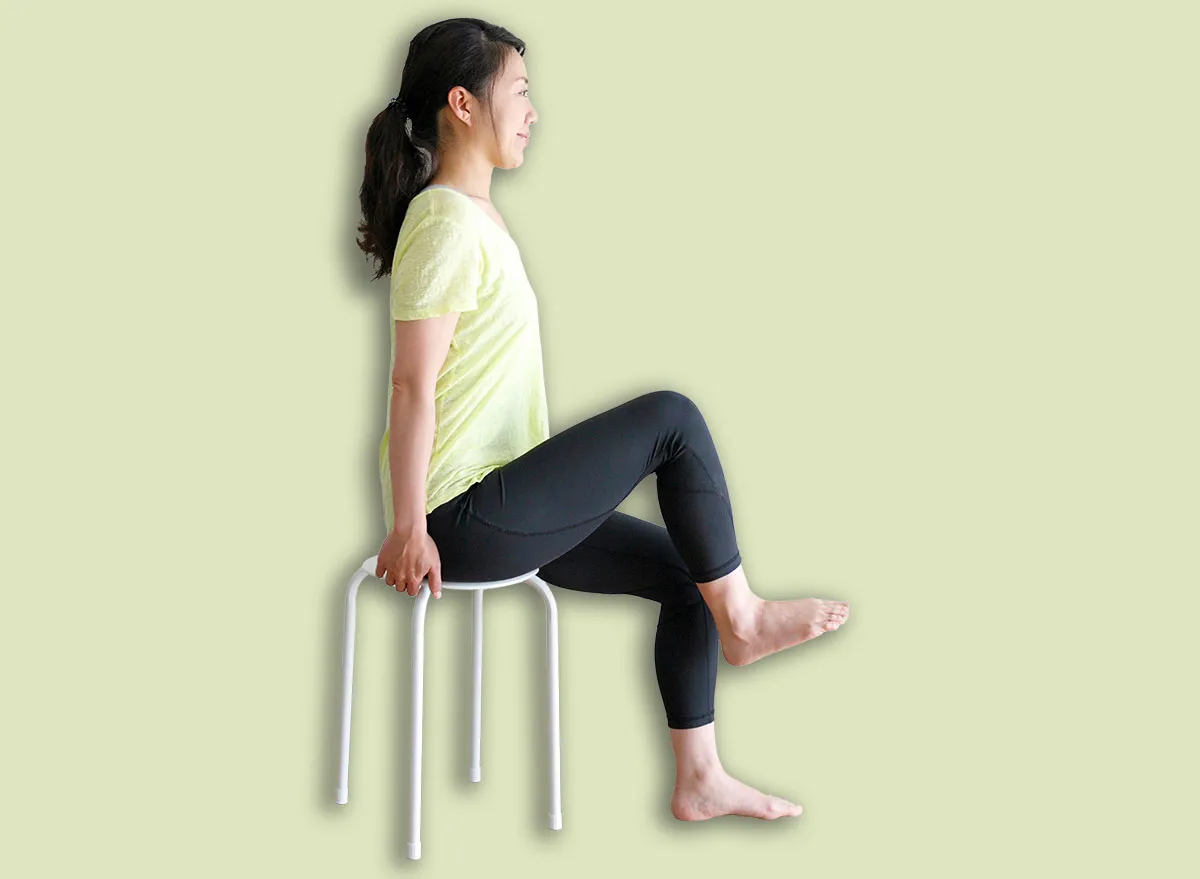
5. Seated Pilates Chair Marches
Walking is a complex coordination of alternating glute firing and hip flexion. This exercise mimics that pattern in a seated, low-impact environment.
- The Rationale: This builds the coordination necessary for a stable gait. By firing the glute on one side while lifting the opposite leg, you are training the body to stabilize the pelvis during the swing phase of a stride.
- The Execution: Sit with your back straight. Engage your core and glutes. Slowly lift one knee toward your chest, focusing on the gluteal contraction on the supporting side, then switch.
Implications for Long-Term Health
The implications of adopting a consistent chair-based glute program extend far beyond the immediate goal of "toning." For the aging population, these exercises represent a defensive strategy against the loss of mobility.
When you strengthen the posterior chain, you are effectively "bulletproofing" the lower body. This reduces the load on the lumbar spine, which is a common source of chronic pain in seniors. Furthermore, the metabolic impact of muscle maintenance cannot be overstated; muscle tissue is metabolically active, meaning that even at rest, a person with more muscle mass burns more calories, which supports weight management—a key factor in reducing the burden on joints.
The Roadmap to Implementation
The beauty of this modality is its accessibility. You do not need a gym membership, expensive equipment, or hours of free time.
- Start Slow: Begin with two sets of 10 repetitions for each exercise.
- Consistency Over Intensity: It is better to perform these exercises three times a week consistently than to attempt a grueling workout once every two weeks.
- Mind-Muscle Connection: During every repetition, focus on the sensation of the glute muscles contracting. If you feel the movement in your lower back, stop, reset, and adjust your posture to ensure the glutes are doing the heavy lifting.
- Listen to Your Body: While some muscle fatigue is expected, sharp pain is not. Always consult with a physician before beginning a new exercise regimen, particularly if you have pre-existing orthopedic conditions.
Conclusion
The path to vitality after 60 is paved with intentional, functional movement. By integrating these five simple chair exercises into your daily life, you are not just exercising; you are investing in your future mobility. Whether it is the ability to walk through the park, play with grandchildren, or simply navigate your home with ease, the strength you build in your glutes today will be the foundation for the life you lead tomorrow. As Terry Tateossian notes, the goal is independence, and through the focused, progressive load of chair-based training, that goal is well within reach for everyone.