







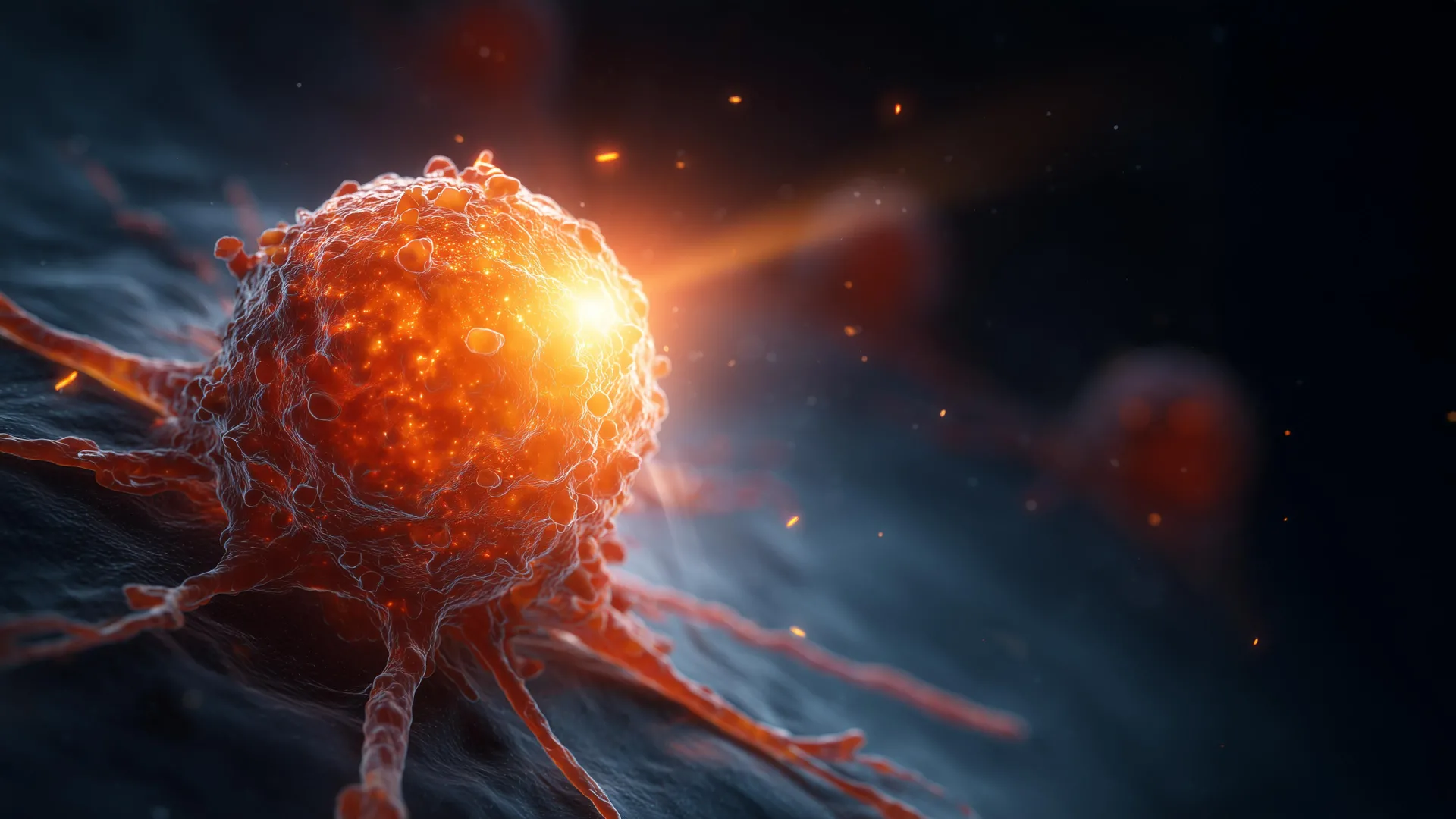
In the battle against cancer, one of the most formidable adversaries is not the speed at which a tumor grows, but rather the speed at which it stops growing entirely. Many cancer cells, particularly in lung cancers, possess a sinister survival mechanism: they can enter a state of deep, metabolic dormancy. In this "sleep-like" phase, these cells become largely inactive, effectively rendering them invisible to traditional chemotherapy and radiation, which typically target rapidly dividing cells. When treatment ends, these "sleeper cells" can wake up, leading to aggressive cancer recurrence.
Now, a team of researchers at ETH Zurich has pioneered a groundbreaking, light-controlled molecular system designed to force these cells out of hiding. By leveraging the body’s own protein-recycling machinery, scientists have created a way to "wake up" dormant cancer cells, making them vulnerable to conventional therapies once more.
The Mechanism of Dormancy: Stress Hormones and Receptors
To understand the significance of this discovery, one must first understand how these cancer cells "sleep." The process is often triggered by the body’s own stress hormones. Within the microenvironment of a tumor, specialized proteins known as glucocorticoid receptors (GRs) act as sensors for these hormones.
When a glucocorticoid hormone binds to a GR, it triggers a signaling cascade that pushes the cancer cell into a state of cellular hibernation. In this state, cell division slows to a crawl, and metabolic processes are suppressed. Because most cancer drugs are designed to kill cells that are actively replicating, these dormant cells often survive the initial onslaught of treatment. The ETH Zurich researchers identified that if they could disable these glucocorticoid receptors, they could prevent the "sleep" signal from being received, thereby keeping the cancer cells in an active, vulnerable state.
The Challenge of Precision Medicine
The primary hurdle in targeting glucocorticoid receptors is their ubiquity. These receptors are essential for healthy human function; they regulate inflammation, metabolic balance, and the immune system throughout the body. Systemically "switching off" these receptors to treat a tumor would be catastrophic, likely leading to severe immune suppression and endocrine failure.
The medical community has long sought a "surgical" strike—a way to target the receptors within the tumor mass while leaving the healthy tissues of the host untouched. The solution developed by the ETH Zurich team, led by Professor Katharina Gapp of the Department of Health Sciences and Technology, represents a paradigm shift in how we approach site-specific drug delivery.
Chronology of the Breakthrough: Harnessing Protein Recycling
The development of this technology did not happen overnight; it is the culmination of years of collaborative research involving experts in epigenetics, neuroendocrinology, and organic synthesis.
The Foundation (The Recycling Pathway)
The team looked to the cell’s natural "trash disposal" system: the ubiquitin-proteasome pathway. In a healthy cell, the body flags defective or misfolded proteins by attaching a small molecular tag called ubiquitin. Once tagged, these proteins are ferried to the proteasome, where they are broken down and recycled. The researchers decided to hijack this system to dispose of the glucocorticoid receptors that drive cancer dormancy.
Designing the Molecular Switch
Working alongside the research group of Professor Erick Carreira, an expert in organic synthesis, the team designed a synthetic "molecular switch." This switch consists of three distinct parts:
- The Receptor Anchor: A binding agent that attaches specifically to the glucocorticoid receptor.
- The Tagging Enzyme Recruiter: A component that binds to the enzyme responsible for labeling proteins for destruction.
- The Photosensitive Connector: A flexible bridge connecting the two.
The "magic" lies in the connector. Under ambient or dark conditions, the connector is extended, holding the enzyme and the receptor in close proximity. This allows the enzyme to tag the receptor, which is then promptly destroyed by the cell.
The Light-Activated "Off" Switch
The brilliance of the system is its reversibility. When exposed to light of a specific wavelength, the photosensitive connector undergoes a structural change—it bends. This physical reconfiguration pulls the enzyme away from the receptor, breaking the link and stopping the disposal process. By simply shining light on healthy tissues surrounding a tumor, doctors can "deactivate" the destruction mechanism, ensuring that only the receptors within the tumor are recycled and removed.
Supporting Data and Laboratory Findings
In their initial experiments, the team tested the system on cultures of human lung cancer cells. The results were consistent and encouraging.
- Rapid Degradation: Upon the introduction of the molecular switch, the researchers observed a rapid decline in the concentration of glucocorticoid receptors within the cancer cells.
- Transcriptional Re-activation: Gene expression analysis confirmed that the cells were shifting out of a dormant state. The genetic markers associated with cellular quiescence were replaced by markers of active proliferation.
- Precision Control: The team demonstrated that they could toggle the system on and off with high fidelity. By switching the light source, they could dictate exactly when the receptor-degradation process occurred, proving that the system is not only effective but highly controllable.
"This system is based on existing medical technology and therefore offers a realistic prospect of localized therapies," notes Robin Scheuplein, a doctoral student and joint first author of the study.
Implications for Clinical Oncology
The potential applications of this technology extend far beyond the treatment of lung cancer. While the current proof-of-concept focused on glucocorticoid receptors, the modular nature of the system means it could be re-engineered to target virtually any receptor involved in disease progression.
Treating Hormone-Dependent Cancers
The researchers have already identified several immediate targets:
- Estrogen Receptors: Often the driver in hormone-dependent breast cancers.
- Androgen Receptors: The primary target in advanced prostate cancer.
By applying this light-activated recycling system, clinicians could theoretically strip these cancer cells of the very receptors they need to thrive and remain dormant, effectively "priming" them for chemotherapy or immunotherapy.
Clinical Delivery and Future Hurdles
While the laboratory results are promising, the team acknowledges the significant hurdles that remain before this reaches the clinic. The most significant is the penetration depth of light. Currently, light can only penetrate a few millimeters into biological tissue.
For superficial tumors or those accessible via endoscopy—such as lung tumors or certain skin cancers—the system could potentially be used today. However, for deep-seated tumors, the team is exploring the use of longer-wavelength light, such as near-infrared (NIR) light, which can travel much deeper through human tissue.
"We’ve developed a modular system that we can also use to switch off other receptors," says Scheuplein. "The goal is to move from these initial laboratory studies to in-vivo models, where we can test the system’s efficacy in living organisms."
Conclusion: A New Frontier in Precision Oncology
The ETH Zurich research offers a glimpse into a future where cancer therapy is not a blunt instrument, but a finely tuned, light-controlled intervention. By turning the body’s own protein-recycling system into a weapon against dormancy, the researchers have opened a new front in the war on cancer.
While much work remains—including rigorous safety trials and the development of deep-tissue light delivery methods—the core technology is sound. By forcing cancer cells to "wake up" and face the full force of modern medicine, this light-activated switch could prove to be the key to preventing the devastating recurrence of dormant tumors, turning once-incurable cases into manageable, treatable conditions.