






In the high-stakes battle against oncology, the prevailing clinical dogma has long been rooted in a reactive framework: administer a potent therapy, monitor for tumor regression, and wait—often until the disease shows signs of resurgence—before pivoting to a secondary intervention. However, a groundbreaking study published in the journal Genetics suggests that this standard of care may be inadvertently handing the advantage to the enemy.
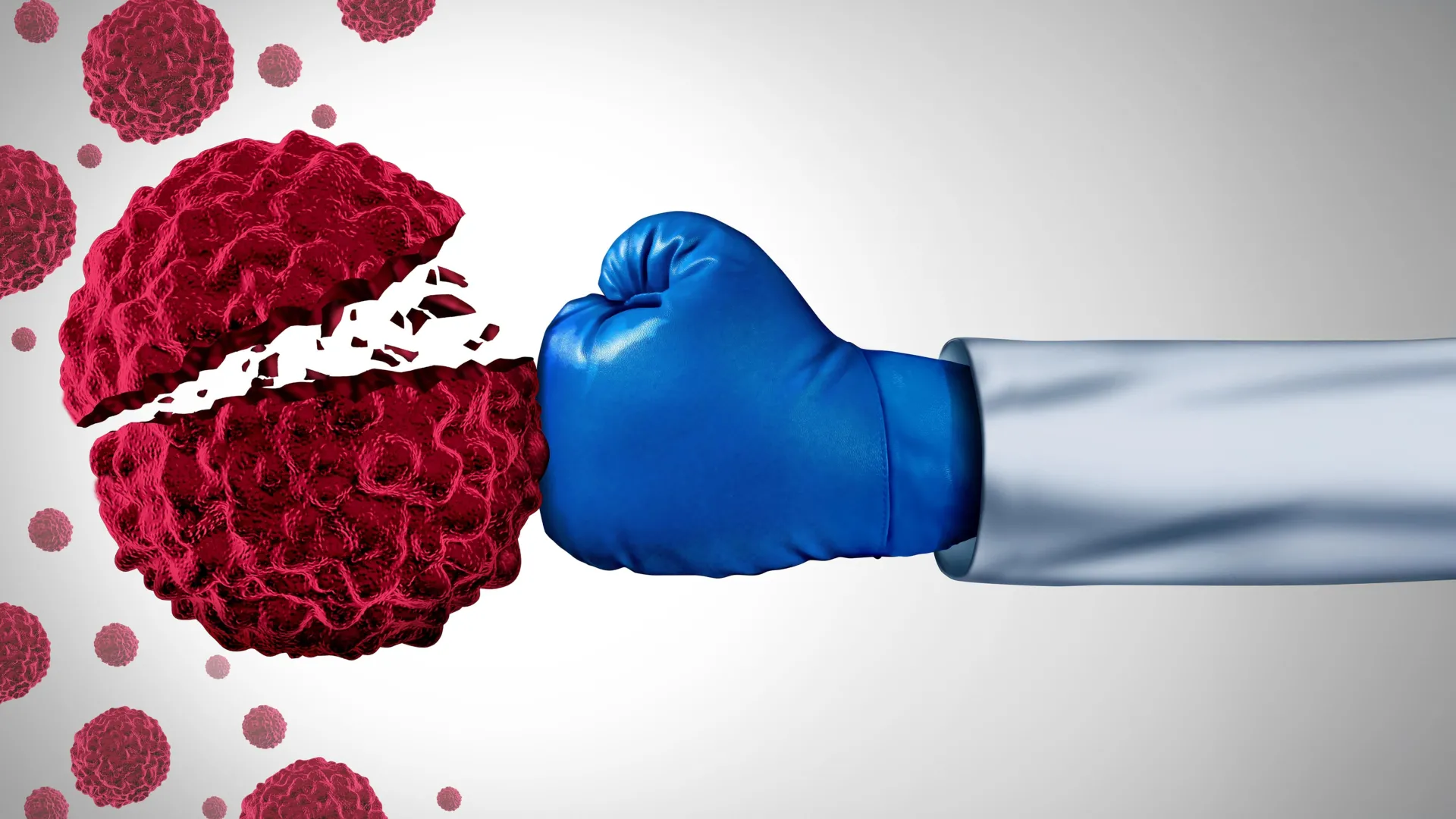
By applying the principles of evolutionary biology and sophisticated mathematical modeling, an international team of researchers, led by Dr. Robert Noble of City, St George’s, University of London, proposes a radical paradigm shift: "kick it while it’s down." Instead of waiting for a tumor to develop resistance, clinicians should proactively switch therapies while the malignancy is still in retreat. This preemptive approach aims to destabilize the tumor’s evolutionary trajectory, effectively trapping cancer cells in a cycle of shifting pressures that they cannot adapt to quickly enough to survive.
The Evolutionary Challenge: Why Tumors Outsmart Our Best Drugs
The central antagonist in cancer care is not merely the tumor itself, but its capacity for rapid, Darwinian evolution. When a patient undergoes chemotherapy or targeted therapy, the drug acts as an environmental filter. While the treatment successfully eradicates the vast majority of cancer cells, it inevitably leaves behind a small, resilient sub-population.
The Mechanics of Resistance
As Dr. Robert Noble explains, "Although tumors may at first shrink under therapy, in many cases they eventually regrow. These relapses stem from a small number of cancer cells that have gained mutations making the cells resistant to the treatment."
These mutations are not necessarily orchestrated by the cancer; they occur as stochastic errors during the process of cellular division. Under normal conditions, these variants might remain dormant or insignificant. However, in the presence of a therapeutic agent, these specific mutations confer a survival advantage. While their "sensitive" counterparts are eliminated, these resistant clones multiply, eventually repopulating the tumor with a lineage that is inherently immune to the previous drug.
The Failure of Reactive Medicine
The current "wait-and-see" approach creates a dangerous window of opportunity. By continuing a treatment until the cancer shows visible signs of progression, clinicians grant the resistant cells time to refine their defenses. By the time a second line of treatment is introduced, the tumor has not only recovered but may have also accumulated further mutations that confer cross-resistance, making it increasingly difficult to achieve a permanent remission.
Chronology of a Paradigm Shift: From Ecology to Oncology
The journey toward this new strategy began not in a clinical oncology suite, but in the realm of mathematical biology. The research team, which included contributors from the Indian Institute of Science Education and Research (IISER) Pune, Johns Hopkins University, and Université Paris Dauphine-PSL, looked to fields where evolutionary pressures are already managed with success.
Borrowing from Antibiotic Resistance
The researchers drew direct parallels to the management of infectious diseases. In the fight against antibiotic resistance, the same principles of selective pressure apply: bacteria that survive an initial dose of antibiotics are those that possess resistance. When clinicians treat viral or bacterial threats, they often use cocktails or sequential therapies to prevent the pathogen from "finding a way out."
"Evolutionary approaches have been very successful in other contexts, such as combating antibiotic resistance, or predicting what vaccines we should use in a particular flu season," says Dr. Noble. "There is every reason to suppose that similar approaches should work in tumors."
The Modeling Breakthrough
To test this hypothesis, the team adapted mathematical frameworks originally designed to track how plants and animals adapt to climate change. By treating the cancer cell population as a biological ecosystem and the therapeutic intervention as an environmental pressure, the researchers simulated various treatment schedules.
The models were clear: switching therapies before the tumor reaches a nadir—the point of maximum shrinkage—is mathematically superior to the traditional method of waiting for relapse. This suggests that the timing of a therapeutic switch is as critical as the drug choice itself.
Supporting Data: The "Kick It While It’s Down" Strategy
The study’s findings provide a compelling argument for a more proactive clinical stance. By modeling the interactions between drug-sensitive and drug-resistant cells, the team demonstrated that an early, aggressive switch forces the tumor into a "population bottleneck."
Limiting the Adaptive Window
When a second therapy is introduced while the tumor is still reeling from the first, the cancer is forced to solve two distinct evolutionary problems simultaneously. The mathematical models indicate that:
- Reduced Adaptation Time: Early switching denies the cancer the time required for secondary mutations to take hold.
- Sequential Vulnerability: Each drug places the tumor under a different form of stress, which can potentially "trap" the tumor in a state where it lacks the genetic diversity to counter the next line of defense.
Beyond Two Treatments
Perhaps the most ambitious aspect of the research is the projection that for larger, more established tumors, two treatments will not suffice. Dr. Noble notes, "Our models predict that this new approach will generally outperform the standard of care. A sequence of two treatments, even if optimally timed, is likely to succeed only in relatively small tumors. But we have reason to hope that switching between three or more treatments, following the same principle, could eliminate larger tumors."
Official Responses and Clinical Implications
While the study is currently based on mathematical modeling, the oncology community is viewing the results with significant interest. The shift from a reactive to a predictive model of cancer care represents a fundamental change in how we define "success" in the clinic.
The Transition to the Clinic
The theory is already moving out of the computer simulation and into the real world. Currently, three small-scale clinical trials are underway, investigating the effectiveness of sequential therapies in soft-tissue, prostate, and breast cancers. These trials serve as the bridge between theoretical biology and patient care.
However, Dr. Noble and his team remain cautious. "That does not mean the approach will work for every patient or every cancer," he notes. The complexity of human biology, including the patient’s overall health, the unique genetic profile of the tumor, and the availability of diverse therapeutic agents, means that this strategy will require precision implementation.
Future Outlook
The implications for future cancer care are profound. If these clinical trials confirm the modeling data, the standard of care could evolve from a series of reactionary "rescue" treatments into a sophisticated, choreographed "evolutionary therapy."
By anticipating resistance rather than waiting for it to manifest, doctors could effectively "checkmate" the tumor, preventing the regrowth that currently characterizes the terminal phases of many cancers. This research provides a roadmap for a new generation of oncology—one that acknowledges the intelligence of the disease and employs the rigor of mathematics to outmaneuver it.
Acknowledgments and Collaboration
This interdisciplinary project represents a significant international collaboration, bridging the gap between undergraduate academic inquiry and senior-level scientific research. The study was born from the master’s thesis work of Srishti Patil, who spent months working under Dr. Noble’s supervision at City St George’s, University of London. The team’s efforts highlight the importance of cross-institutional collaboration, involving experts like Dr. Yannick Viossat, whose work in mathematical biology has been instrumental in refining these complex models.
As the scientific community awaits the results of the ongoing clinical trials, the study in Genetics serves as a clarion call to re-evaluate the timelines of our current cancer protocols. The era of waiting for the tumor to tell us when to act may finally be drawing to a close, replaced by a proactive, data-driven strategy that treats cancer not just as a mass of cells, but as an evolving, adaptive, and ultimately beatable enemy.