For many adults entering their sixties and beyond, the goal of "firming up" the arms is often synonymous with endless repetitions of dumbbell curls. However, exercise science suggests that this singular focus on the biceps is not only inefficient but may actually miss the structural root of what makes arms look and feel toned. Achieving true upper-body vitality after 60 requires a paradigm shift: moving away from isolated muscle training and toward a comprehensive, integrated approach that treats the upper body as a single, functional unit.
The Science of Structural Integrity
Firming sagging arms—often a byproduct of natural muscle atrophy (sarcopenia) and shifts in skin elasticity—is best achieved when the upper body is trained as a system. While the bicep provides the "peak," the shape, support, and functional strength of the entire arm rely heavily on the triceps, the deltoids (shoulders), the latissimus dorsi (upper back), and the pectoral muscles (chest).
When you train these muscle groups in tandem, you are not just working on aesthetics; you are improving your metabolic rate, bone density, and posture. Standing exercises, in particular, provide a unique mechanical advantage. Unlike seated exercises, standing movements require the engagement of the core—the body’s central stabilizer—to maintain posture. By bracing the midsection and moving through a full range of motion against resistance, you transform a simple arm exercise into a full-body conditioning session that burns more calories and develops better functional stability.
Chronology of Change: Why Muscles Weaken After 60
The human body undergoes significant physiological changes as it enters the seventh decade. Understanding this timeline is crucial for designing a workout routine that prevents injury while maximizing results:
- Age 50–60: The onset of noticeable sarcopenia often begins here, with a gradual loss of muscle fibers, particularly Type II (fast-twitch) fibers, which are responsible for power and explosive movement.
- Age 60–70: Metabolic shifts and hormonal changes can make it harder to maintain muscle mass. Connective tissues, such as tendons and ligaments, become less supple, making joint health and range-of-motion training paramount.
- Post-70: The focus shifts toward preserving "functional independence." Exercises that mimic daily activities—pushing, pulling, and lifting—become the gold standard for maintaining the strength required for everyday tasks.
By targeting these areas now, you are not just "toning up"; you are building a biological reserve that will support your mobility and quality of life for years to come.
The Five Pillars of Arm Strength
To effectively firm the arms, one must incorporate a mix of pushing and pulling motions. The following five exercises are designed to be performed standing, ensuring that your core and stabilizers are constantly active.
1. The Standing Band Row: Building the Foundation
The row is arguably the most important exercise for anyone over 60. Most of our daily lives involve "reaching"—driving, typing, or cooking—which pulls the shoulders forward and rounds the upper back. The band row counteracts this by strengthening the upper back, rear delts, and biceps simultaneously.
- The Benefit: It corrects posture, which is the "silent partner" in arm definition. When your shoulders are pulled back, your arms naturally hang in a more aesthetically pleasing and structurally sound position.
- Execution: Anchor a resistance band at chest height. Grip the band and pull back, keeping your elbows tight to your ribs. Squeeze your shoulder blades together at the peak of the movement.
- Form Tip: Avoid shrugging. Imagine your shoulder blades sliding down toward your back pockets as you pull.
2. Dumbbell Overhead Triceps Extension
The triceps make up two-thirds of the upper arm volume. If the goal is to address sagging or "bat wings," the triceps are your primary target. The overhead position stretches the muscle, allowing for a deeper contraction.
- The Benefit: It targets the long head of the triceps, which is often neglected in standard push-ups.
- Execution: Standing tall, hold one dumbbell with both hands. Extend your arms fully overhead, then slowly lower the weight behind your head, keeping your elbows pointing forward.
- Form Tip: If your lower back arches, your core is not braced. Keep your ribs "down" and tucked toward your pelvis to maintain a neutral spine.
3. The Wall Push-Up: The Gravity-Defying Press
Floor push-ups can be daunting and hard on the wrists. The wall push-up offers an adjustable, joint-friendly alternative that builds immense pressing strength in the chest and triceps.
- The Benefit: It builds shoulder stability and creates a "shelf" of muscle in the chest, which supports the overall structure of the upper body.
- Execution: Stand facing a wall, arms length away. Place your hands on the wall at shoulder height. Lower your chest toward the wall by bending your elbows, then push back to the starting position.
- Form Tip: The further your feet are from the wall, the more load you place on your muscles. Find a distance that challenges you but allows you to keep your body in a straight line from heels to head.
4. Band Pull-Apart: Shoulder Health and Definition
The band pull-apart is a high-reward, low-risk movement. It strengthens the rear deltoids, which are crucial for shoulder health and preventing the "hunched over" look that can develop with age.
- The Benefit: It improves shoulder organization, ensuring that the arm joints are centered and stable, which makes all other arm movements feel "cleaner" and more powerful.
- Execution: Hold a light resistance band with straight arms in front of you. Pull the band apart by squeezing your shoulder blades together until the band touches your chest.
- Form Tip: Maintain a slight bend in the elbows to protect the joint, and ensure your movement is controlled—never let the band "snap" back.
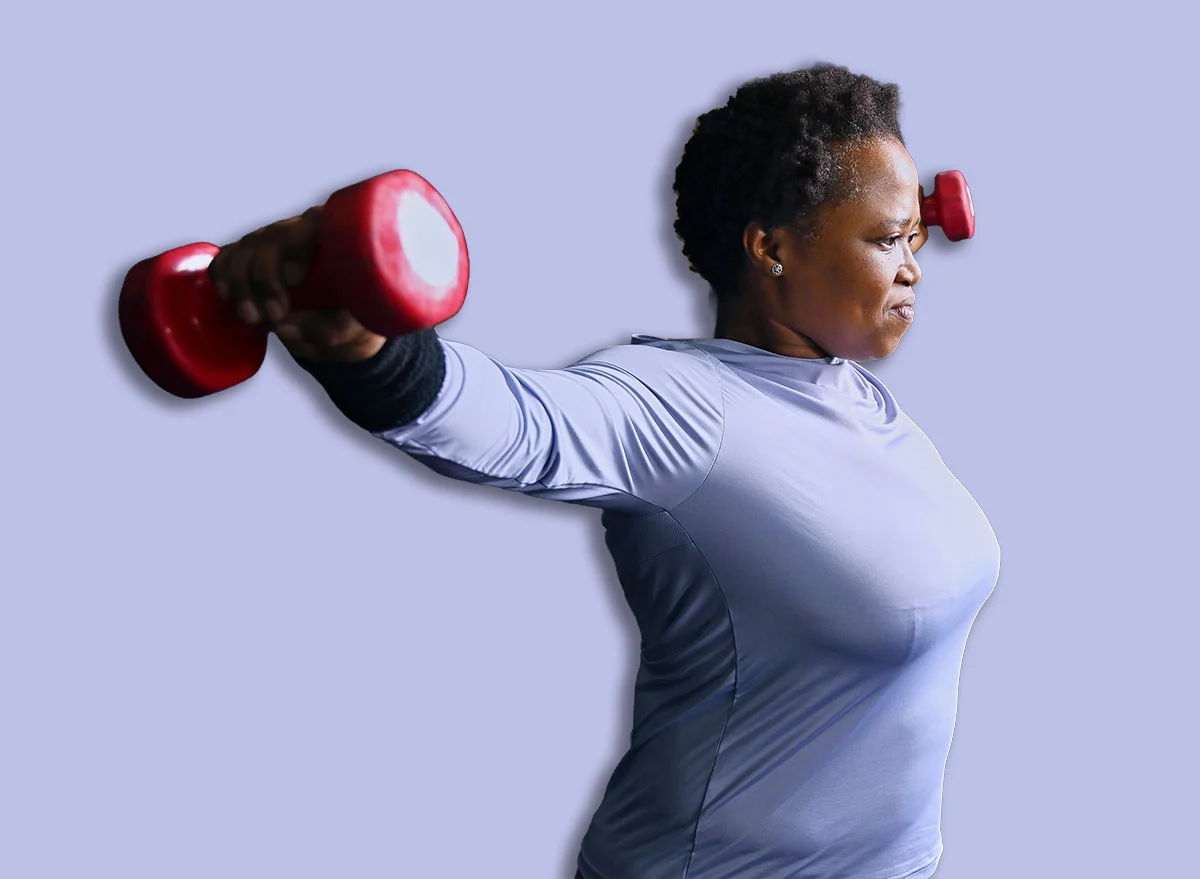
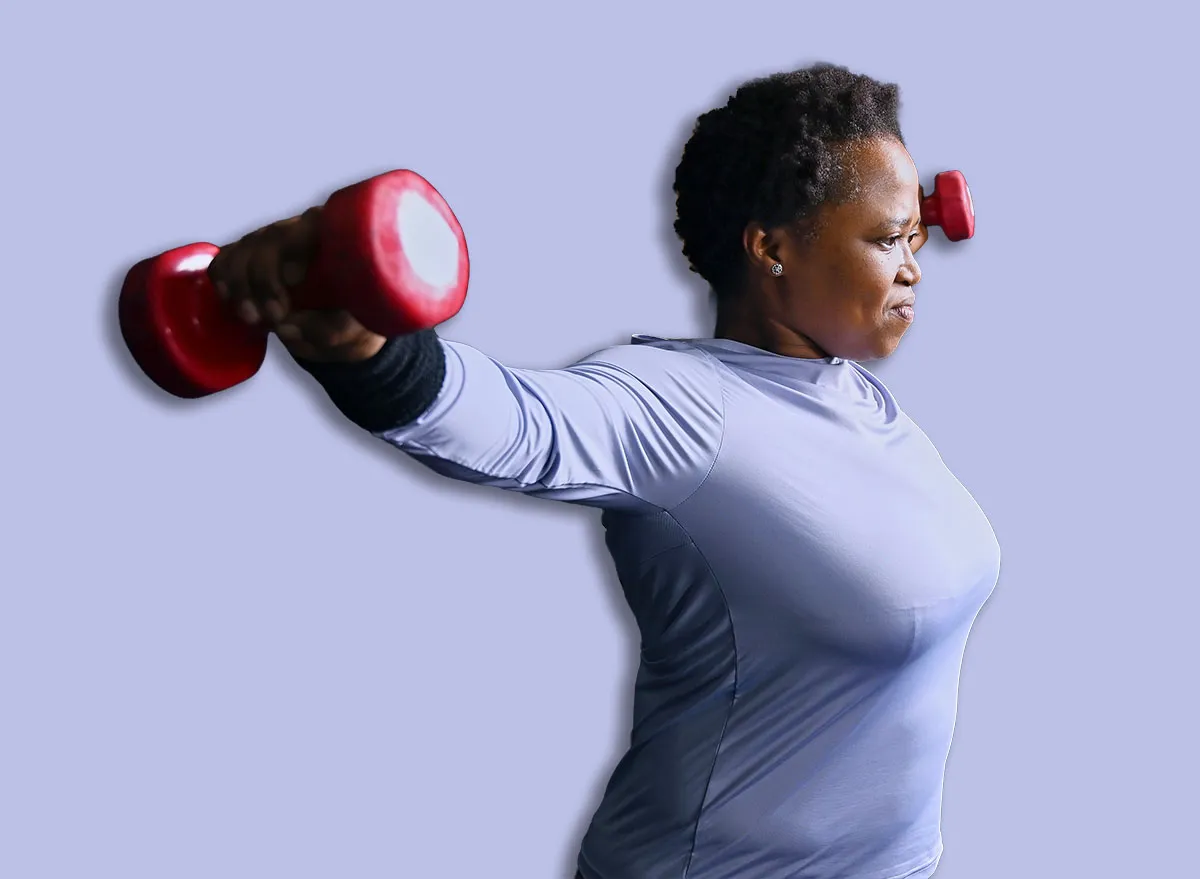
5. Lateral Dumbbell Raise: Sculpting the Delts
The lateral raise targets the side head of the deltoids. By building this muscle, you create a wider frame that can make the upper arm appear more toned by contrast.
- The Benefit: It builds the "cap" of the shoulder, providing a refined, athletic look to the entire arm.
- Execution: Stand with weights at your sides. Keeping a slight bend in your elbows, raise your arms to the side until they reach shoulder height. Lower them back down with control.
- Form Tip: Do not swing the weights. If you have to use momentum, the weights are too heavy. Focus on "leading with your elbows" to ensure the side deltoids are doing the work.
Integrating the Routine: A Professional Perspective
Consistency is the primary driver of change. For the best results, treat these five exercises as a circuit. By performing one set of each, resting for 60 to 90 seconds, and repeating the sequence for two to three rounds, you create a metabolic demand that encourages muscle growth and fat oxidation.
The Weekly Schedule
- Frequency: Perform this routine two to four days per week.
- Progression: As you become stronger, do not simply add more weight immediately. Instead, focus on increasing the "time under tension." Slow down the lowering phase of each repetition (the eccentric portion) to trigger greater muscle fiber recruitment.
- Recovery: Since you are training the upper body as a unit, ensure you allow at least 48 hours of recovery between sessions to allow the muscle fibers to repair and strengthen.
Implications for Longevity and Vitality
While the aesthetic benefits of firmer arms are what often draw people to these exercises, the implications for long-term health are far more significant. Increased upper-body strength is directly linked to better bone mineral density, which is a critical defense against osteoporosis. Furthermore, the ability to push and pull effectively is essential for maintaining autonomy in daily tasks—whether it’s lifting a suitcase into an overhead bin, gardening, or carrying groceries.
By moving away from the "bicep-only" mindset and embracing a holistic, standing-based strength program, you are investing in a future where your arms are not just firm, but capable, resilient, and ready for whatever life brings. Strength is not just about how you look in the mirror; it is about the freedom to move through the world with confidence and ease.
Final Advice
Always consult with a healthcare professional or a certified senior fitness specialist before beginning a new exercise regimen, especially if you have a history of shoulder or back pain. Start light, prioritize perfect form over heavy weight, and listen to your body. Your arms have served you well for sixty years—give them the support they deserve.