






1 July, 2026
The European Respiratory Society (ERS) has officially opened the polls for its 2026 Leadership Elections, marking a pivotal moment for the future of respiratory health on the global stage. As the society prepares to transition to a new executive leadership team, the election of the next Vice President carries significant weight. The successful candidate will embark on a four-year leadership trajectory, serving sequentially as Vice President, President-Elect, President, and finally, Past President. This long-term commitment ensures that the society’s strategic vision remains consistent and forward-thinking during a period of rapid advancement in clinical and basic respiratory science.
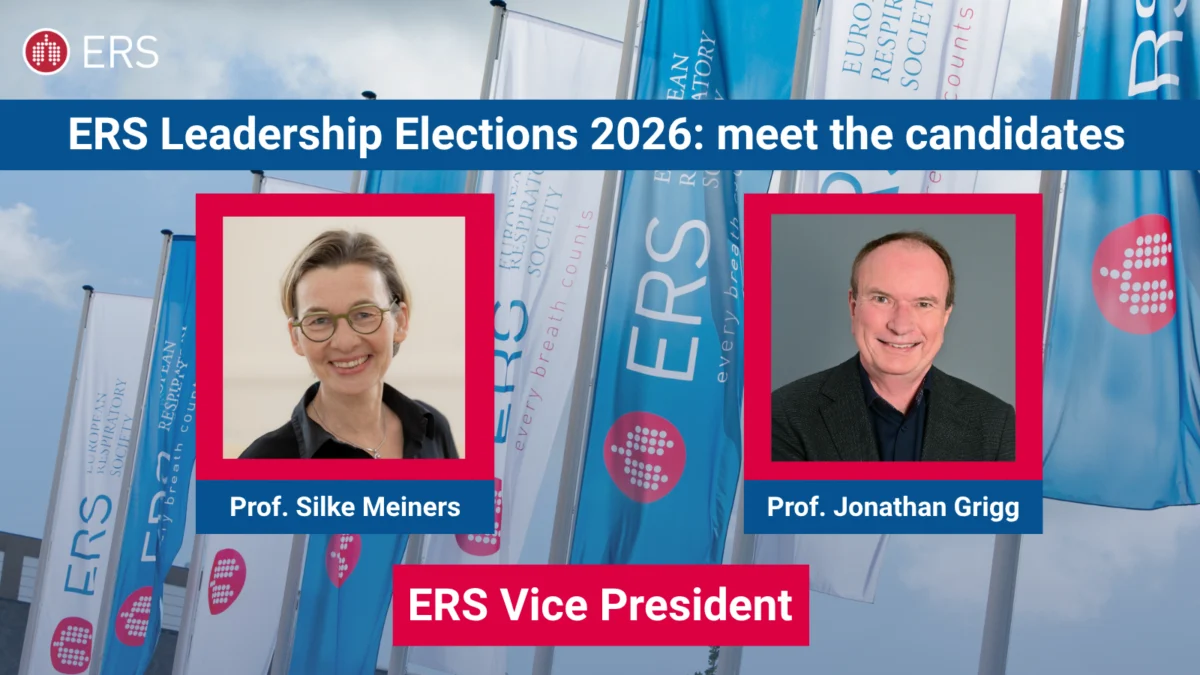
Members of the ERS now face the task of choosing between two distinguished candidates: Prof. Silke Meiners and Prof. Jonathan Grigg. Both individuals bring a wealth of experience, distinct research focuses, and unique visions for the society’s role in the coming years.
The Core Mandate: Defining the Role of the ERS Presidency
The role of the ERS Vice President is not merely an administrative appointment; it is the cornerstone of the society’s governance. The individual elected this month will play a central role in shaping the scientific agenda of the ERS for nearly half a decade.
The primary responsibilities of this role include:
- Strategic Oversight: Steering the society’s long-term scientific and clinical objectives.
- Policy Advocacy: Representing the ERS at high-level international forums, including the World Health Organization (WHO) and various governmental health bodies.
- Capacity Building: Fostering the next generation of respiratory scientists and clinicians.
- Translational Integration: Bridging the gap between laboratory discovery and patient-centered bedside care.
As the global burden of respiratory disease—ranging from the rising rates of COPD to the environmental impacts on pediatric lung health—continues to evolve, the ERS requires a leader capable of balancing rigorous academic inquiry with robust, real-world policy advocacy.
Candidate Profiles: Two Visions for Respiratory Health
Prof. Silke Meiners: The Bridge Between Discovery and Practice
Prof. Silke Meiners enters the race with a reputation as a champion of translational science. For over 15 years, the ERS has been her scientific home, and her career has been defined by a relentless drive to move basic science from the petri dish to the clinical arena.
Scientific Foundation
Prof. Meiners’ expertise is multidisciplinary, spanning oncology, cardiovascular medicine, and respiratory science. Her work has fundamentally altered our understanding of fibrosis and Chronic Obstructive Pulmonary Disease (COPD). By integrating human patient samples with sophisticated preclinical animal models, she has decoded complex disease mechanisms, creating a roadmap for precision medicine. Her experimental validation of novel therapeutic strategies for lung cancer, coupled with her leadership in multi-centre cohort studies, positions her as a data-driven leader capable of navigating the complexities of modern medical research.
A Vision for Integration
Having served as the ERS Conference and Seminars Director, Prof. Meiners has already proven her ability to execute large-scale initiatives. During her tenure, she launched the ERS translational research initiative, a program specifically designed to dismantle the silos between laboratory scientists and clinicians.
If elected, her platform centers on an "end-to-end translational science framework." This initiative aims to:
- Integrate early-stage discovery directly into clinical trials.
- Prioritize patient-centered research models.
- Empower early-career researchers by providing them with the resources to translate their findings into tangible clinical practices.
- Champion equity and diversity within the ERS, ensuring that the next generation of respiratory leaders reflects the global nature of the society.
Prof. Jonathan Grigg: The Advocate for Environmental and Global Health
Prof. Jonathan Grigg, a Professor of Paediatric Respiratory and Environmental Medicine at Queen Mary University of London, approaches the presidency with a focus on the intersection of human health and the environment. As an Honorary Consultant Paediatrician at Barts Health NHS Trust, his career is deeply rooted in clinical practice.
Scientific Foundation
Prof. Grigg’s research is characterized by its breadth, covering everything from molecular mechanisms to large-scale epidemiological studies. However, his work is arguably best defined by his focus on the "breathing environment." He is a recognized authority on the health impacts of air pollution, a field in which he has not only researched but actively advocated for policy change.
His leadership in the "Doctors against diesel" movement and his role in the landmark Ella Adoo-Kissi-Debrah case—where he provided essential evidence linking air pollution to asthma mortality—have made him a formidable figure in public health advocacy. He acts as a regular advisor to the WHO and national governments on matters of climate change and tobacco control, proving his influence extends well beyond the university lecture hall.
A Vision for Global Equity
Prof. Grigg’s platform is rooted in the belief that the ERS must break down traditional boundaries to foster interdisciplinary collaboration. His vision includes:
- Global Health Initiatives: Addressing unmet non-communicable disease (NCD) needs in the Global South, leveraging his experience leading Global Health Research Groups in Sub-Saharan Africa.
- Policy-Driven Medicine: Positioning the ERS as the definitive resource for policymakers regarding air quality and environmental health.
- Affordability: Advocating for the availability of inhaled therapies in low-resource settings.
- Global Trial Networks: Establishing international trial networks to ensure that the innovations developed in Western labs are applicable and accessible to global populations.
Chronology: The Road to the 2026 Election
- January 2026: Initial call for nominations and vetting of candidates by the ERS Nominating Committee.
- March 2026: Formalization of the candidate list, featuring Prof. Silke Meiners and Prof. Jonathan Grigg.
- 1 July 2026: Voting portal opens for all eligible ERS members.
- July 2026: Active campaigning period, including virtual town halls and dissemination of candidate manifestos.
- 2 August 2026: Voting closes at 23:59 CEST.
- Late August 2026: Announcement of the next ERS Vice President.
- September 2026: Formal induction of the new leadership team during the annual ERS Congress.
Supporting Data: Why This Election Matters
The stakes for the ERS are higher than ever. According to data from the Global Burden of Disease study, chronic respiratory diseases remain among the leading causes of death and disability worldwide.
- COPD and Lung Cancer: Both remain significant areas of focus for clinical intervention. Prof. Meiners’ expertise in precision medicine is particularly relevant here, as personalized therapeutic strategies are expected to improve patient outcomes by up to 30% in early-stage oncology trials.
- Environmental Impact: With air pollution linked to over 7 million premature deaths annually, Prof. Grigg’s focus on the environment addresses a critical, yet often underfunded, segment of respiratory health.
- Global Health Disparities: The disparity in access to inhalers and diagnostic tools between the Global North and the Global South remains a persistent barrier to health equity. Prof. Grigg’s emphasis on sub-Saharan Africa offers a potential avenue for the ERS to expand its global footprint and humanitarian impact.
Official Responses and Strategic Implications
The ERS leadership has emphasized the necessity of a high voter turnout to ensure that the chosen candidate has a clear mandate. In a statement released alongside the opening of the polls, the current ERS executive remarked: "The calibre of this year’s candidates reflects the high standards of the society. Both Prof. Meiners and Prof. Grigg offer distinct, yet equally vital, paths forward. We encourage all members to engage deeply with their platforms."
Implications for the Future of ERS
The election will effectively determine the "flavor" of the ERS for the next four years.
If Prof. Meiners is elected, the society is likely to see a heightened focus on internal scientific excellence, an expansion of translational research infrastructure, and a rigorous, data-centric approach to clinical innovation. Her tenure would likely be defined by the successful integration of bench-to-bedside research, potentially solidifying the ERS as the world leader in precision respiratory medicine.
If Prof. Grigg is elected, the society is expected to pivot toward a more outward-facing, activist role. His presidency would likely prioritize environmental policy, global health partnerships, and the aggressive pursuit of public health advocacy. This could see the ERS taking a more vocal stance on global climate policy and expanding its reach into emerging economies.
How to Participate
The ERS is committed to ensuring a transparent and democratic process. All eligible members are encouraged to review the full candidate manifestos, which are available on the society’s member portal.
Voting Instructions:
- Navigate to the myERS portal.
- Log in using your official ERS credentials.
- Locate the "Elections" tab on the dashboard.
- Review the candidate biographies and vision statements.
- Submit your ballot before the deadline of 23:59 CEST on Sunday, 2 August, 2026.
As the field of respiratory medicine stands on the precipice of significant technological and environmental shifts, the choice made by ERS members this July will reverberate for years to come. Whether the society chooses the path of translational precision or the path of global environmental advocacy, the 2026 elections represent a vital opportunity for members to shape the future of their profession and the health of their patients worldwide.