




As July 2026 unfolds, the Ehlers-Danlos (EDS) community finds itself at a significant crossroads. The Ehlers-Danlos Society’s Annual Global Learning Conference, held this year in Allen, Texas, serves as both a scientific summit and a poignant anniversary marker. As attendees gather to discuss the critical theme of "Exploring Comorbidities in EDS & HSD," the event also commemorates the ten-year milestone of the Society’s founding—a decade of progress that is simultaneously marked by triumphant breakthroughs and persistent, systemic barriers.
For those living with Ehlers-Danlos Syndrome and Hypermobility Spectrum Disorders (HSD), this month is not merely a calendar entry; it is a moment for profound reflection. The distance traveled since 2013 is vast, yet for patients, caregivers, and advocates, the journey remains fraught with the same fundamental challenges that defined the early days of the movement.
The 2013 Time Capsule: Where It All Began
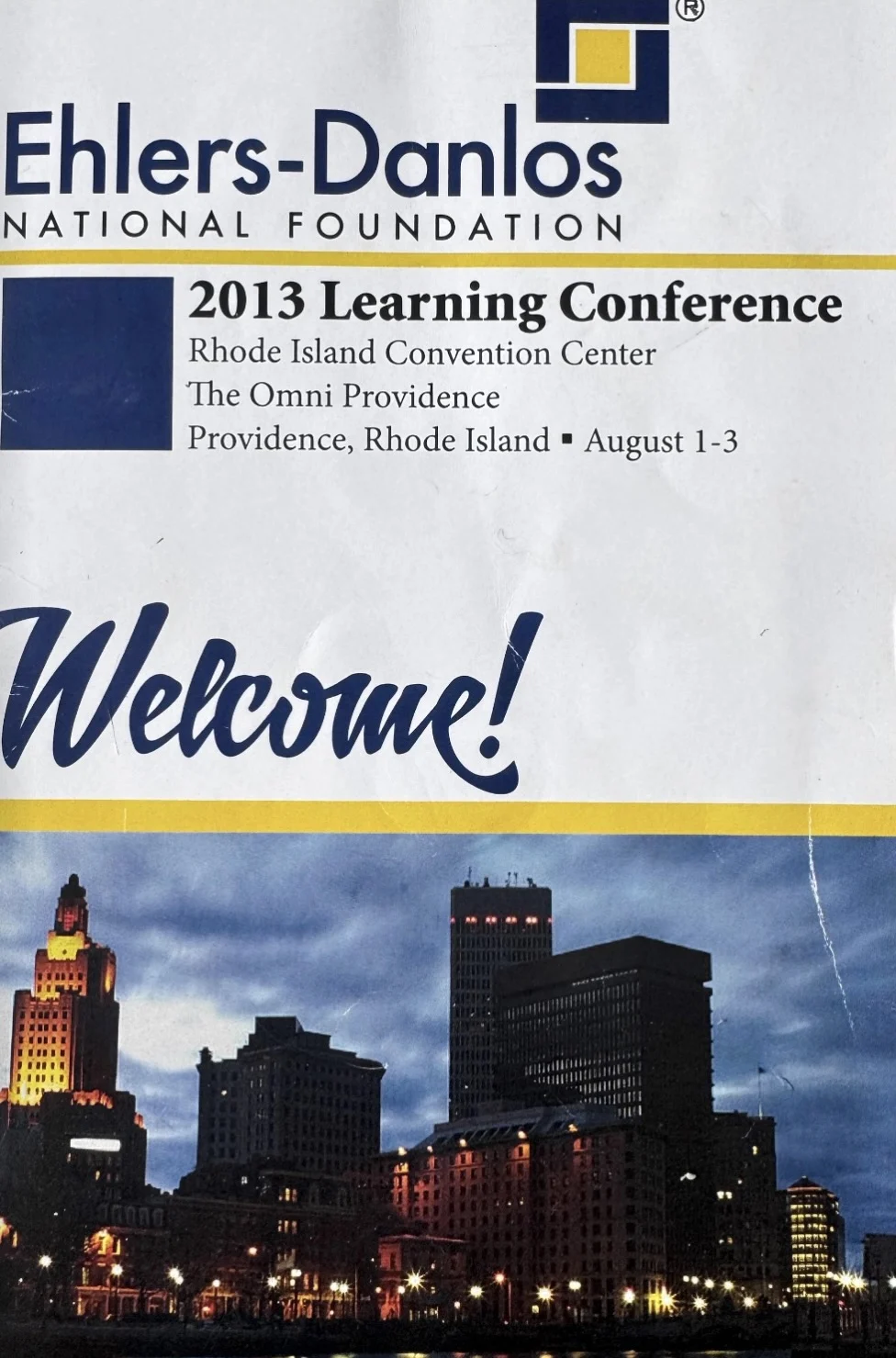
To understand the current state of EDS care, one must look backward. While clearing out a closet recently, I rediscovered the brochure from the 2013 Ehlers-Danlos National Foundation conference. Looking at that document is like peering into a medical time capsule.
In 2013, as a young mother navigating a diagnosis that my own pediatrician had never encountered, that conference was a lifeline. It introduced me to a community that validated my family’s struggles. The brochure lists sponsors that helped lay the foundation for modern advocacy, including Chronic Pain Partners, the Silver Ring Splint Company, and early innovators like YouScript/Genelex (now Invitae).
The sessions from that era remain hauntingly relevant. Dr. Rodney Grahame’s presentation, "What Should We Call Our Syndrome?" highlights a circular history; as we await potential updates in the 2026 diagnostic criteria, we are still debating the nomenclature that defines our identity. Similarly, early sessions by Dr. Alan Pocinki and Dr. Richard Barnum on "pseudopsychiatric" symptoms were groundbreaking. They were addressing the phenomenon of medical gaslighting—the dismissal of physical symptoms as psychological manifestations—long before the term became a staple of modern patient advocacy discourse.
The Comorbidity Crisis: Why Complexity Matters
The central theme of the 2026 conference—the intersection of immune, neurological, gastrointestinal, and vascular conditions—is not merely an academic exercise. It is the frontline of the patient experience. These comorbidities are where the disability associated with connective tissue disorders often originates.
When patients present with a constellation of symptoms—a racing heart from POTS, debilitating GI dysfunction, or chronic neurological pain—they are often met with a fragmented medical system. Too often, doctors specialize in individual systems, failing to see the connective tissue disorder that links them all.
Our film, Complicated, was born out of this frustration. By highlighting the stories of those navigating these overlapping conditions, we aim to illustrate why "cohesive care" is the only viable path forward. The medical world is finally beginning to "catch up" to what patients have known for decades: EDS is rarely a singular issue; it is a systemic, multi-faceted challenge that requires a holistic approach.
Chronology of Advocacy: A Decade of Change
The decade between 2013 and 2026 has seen a transformation in how EDS is perceived by the scientific community.
- 2013–2015: The Awareness Era. The focus was on basic identification and validation. Conferences were intimate, serving as primary hubs for families to find doctors who were willing to listen.
- 2016–2019: The Structural Expansion. The founding of the Ehlers-Danlos Society brought a new level of professionalization. Efforts shifted toward creating international diagnostic standards and fostering global research networks.
- 2020–2023: The Pandemic Disruption. The COVID-19 pandemic exacerbated existing vulnerabilities. Many in the EDS community faced new neurological and immune challenges, turning the spotlight toward Long COVID and its overlap with dysautonomia and connective tissue disorders.
- 2024–2026: The Data-Driven Focus. Today, the emphasis has moved toward "clinical guidance." It is no longer enough to identify the condition; the focus is now on mapping out care pathways and demanding that insurance providers and hospital systems recognize the necessity of multi-disciplinary teams.
The Human Cost: Personal Reflections on a Medical Journey
I remember meeting Dr. Frasier Henderson in a hotel lobby in 2013. I was a nervous mother holding an X-ray of my daughter’s failed spinal fusion. His willingness to stop, look, and explain the mechanical failures of her surgery provided a sense of agency that I had not previously possessed.

Similarly, meeting a 12-year-old Karen Richards—the indomitable spirit now featured in Complicated—reminds me of the resilience inherent in this community. She famously challenged the late Professor Rodney Grahame, telling him, "They hear me, but they don’t listen to me." That sentiment remains the rallying cry for patients globally.
Despite my own extensive knowledge and access to top-tier specialists over the last ten years, the struggle to find consistent, informed care remains. The "medical odyssey" has not ended; it has simply evolved. Even today, I find myself navigating the labyrinth of insurance, travel, and specialized care, highlighting that research, while critical, is insufficient without the infrastructure to implement it.
Supporting Data: The Persistent Gap
While awareness has surged, the data indicates that the "diagnostic delay" remains a significant hurdle. Studies consistently show that patients with EDS wait years, sometimes decades, before receiving an accurate diagnosis. Even once diagnosed, the transition from diagnosis to management is frequently interrupted by a lack of clinical guidelines.
Recent research underscores that psychiatric misdiagnosis remains a primary barrier. When physicians fail to understand the physiological basis of chronic pain and fatigue, they default to psychological explanations. This does not just delay treatment; it causes active harm, creating a cycle of medical trauma that forces patients to "doctor shop" until they find someone who understands the multisystem nature of their condition.
Official Responses and the Path to Reform
The Ehlers-Danlos Society and its partners are currently engaging with international health bodies to push for the "Road to 2026." This initiative aims to redefine diagnostic criteria and create standardized pathways for care.
However, the change must be bottom-up as much as it is top-down. Industry sponsors and pharmaceutical researchers are beginning to treat connective tissue disorders with the urgency they deserve, but the true change lies in care coordination. Medical schools are slowly beginning to include EDS in their curricula, and hospital networks are starting to experiment with "connective tissue clinics" that bring together rheumatologists, geneticists, neurologists, and gastroenterologists under one roof.
Implications for the Future: What Comes Next?
As I prepare to travel to Texas for this year’s conference, my hope is tempered by reality. I will, as I have done in the past, pick up a brochure and tuck it away as a record of our progress. But the true goal is for these brochures to become obsolete.
The future of EDS advocacy must focus on three pillars:
- Clinical Education: Moving beyond the "awareness" phase to intensive education for frontline physicians and ER staff.
- Accessible Care Pathways: Building models where the patient is not the primary coordinator of their own complex, multi-specialty care.
- Validation: Ensuring that the lived experience of the patient is treated as clinical evidence, not as a subjective anecdote to be ignored.
When I look back at the 2013 brochure, I see the faces of pioneers—Dr. Claire Francomano, Dr. Pradeep Chopra, and so many others—who have worked tirelessly to bring us to this point. They have provided the map. Now, the burden of advocacy is to ensure that the healthcare system follows that map, turning our collective struggle into a system that finally, truly, listens.
In ten years, when I inevitably clean out my closet again, my deepest hope is that I will find that the challenges of accessing diagnosis and care have moved from our daily reality into the annals of history. Until then, we continue to learn, we continue to advocate, and most importantly, we continue to show up.