








Published July 30, 2026
For many yoga practitioners, the sound of a teacher’s voice transitioning into Garudasana, or Eagle Pose, is met not with excitement, but with a profound sense of physical dread. It is a pose that demands deep hip internal rotation, shoulder girdle flexibility, and a level of balance that often feels elusive. For those whose anatomy—or current level of mobility—does not align with the "ideal" expression of the pose, Eagle Pose often becomes a source of frustration, leading many to simply stand still, waiting for the transition to the next asana.
However, the prevailing philosophy of modern yoga is shifting. The era of forcing the body into rigid shapes is being replaced by a more inclusive, functional approach that emphasizes individual skeletal variation and accessibility. If you find yourself avoiding the "wrap" or feeling alienated by the contortion-heavy demands of Eagle, you are not failing at yoga—you are simply discovering the need for modification.
The Anatomy of the Struggle: Why Eagle Pose is Challenging
Understanding Garudasana
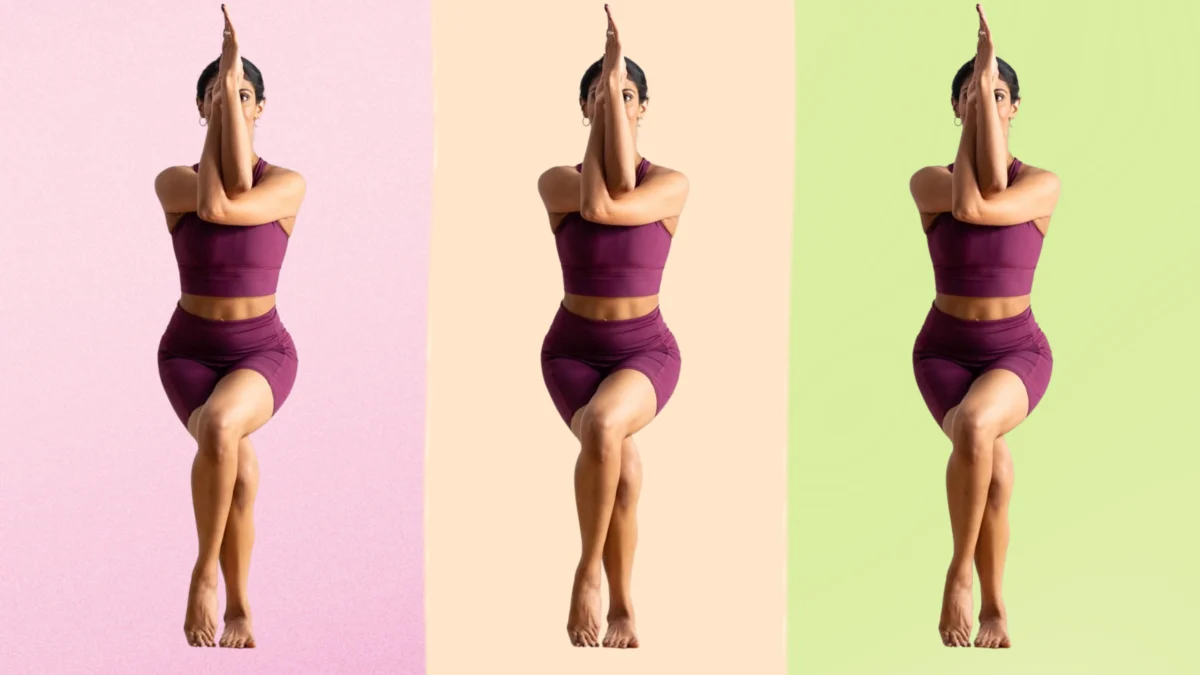
Eagle Pose is a complex balancing posture that targets the shoulders, upper back, and hips. It requires the practitioner to wrap one leg over the other, hooking the foot behind the calf, while simultaneously crossing the arms and bringing the palms together.
From an anatomical perspective, the pose is a test of:
- Hip Internal Rotation: Most standing poses in yoga emphasize external rotation (like Warrior II or Tree Pose). Eagle requires the opposite, which can feel jarring and restrictive for many hip sockets.
- Shoulder Girdle Mobility: Crossing the arms and attempting to bring palms to touch requires significant space in the thoracic spine and the ability to protract the scapulae.
- Balance and Proprioception: Because the center of gravity is significantly shifted, the vestibular system is under constant demand.
The Myth of the "Standard" Shape
For years, the yoga industry pushed a one-size-fits-all aesthetic. This often ignored the reality of anatomical differences. Factors such as the depth of the hip socket (acetabulum), the angle of the femoral neck, and individual shoulder blade structure mean that no two bodies will ever experience the same pose in the same way. When a practitioner realizes their limbs are not "long enough" or their joints feel "blocked," it is rarely a lack of effort—it is a matter of skeletal architecture.
Chronology: From Rigid Tradition to Modern Accessibility
The evolution of yoga teaching styles has undergone a significant transformation over the last decade.
- Pre-2010s: Yoga culture was dominated by "alignment-based" schools that often prioritized the visual aesthetic of the pose over the internal experience of the student. Modifications were often discouraged, seen as a "lesser" version of the practice.
- 2015–2020: The rise of functional movement and the "Yoga for All" movement began to dismantle these hierarchies. Educators started to prioritize the effect of a pose (e.g., stretching the shoulders) over the shape of the pose.
- 2020–2025: The integration of digital platforms allowed for a more diverse representation of body types in yoga media. Teachers began sharing how they modified poses for their own bodies, validating the experiences of students everywhere.
- 2026 and Beyond: We are currently in a phase of radical personalization. The focus is no longer on how to "get into" a pose, but how to "make the pose work for you."
Supporting Data: The Benefits of Modified Movement
Scientific research into biomechanics confirms that "forced" stretching can often lead to injury, particularly in sensitive areas like the knees and the labrum of the shoulder.
Reducing Tension Through Props
The use of props—such as blocks, straps, or even the wall—is not a shortcut; it is a strategic tool to increase proprioceptive feedback. When a student uses a block to support a foot in a modified Eagle, they are able to engage the gluteal muscles and core more effectively than if they were wobbling precariously, attempting a deep wrap that their body wasn’t ready for.
The Neurological Advantage
When a student feels safe and stable, the nervous system shifts from a sympathetic (fight-or-flight) state to a parasympathetic (rest-and-digest) state. By modifying Eagle, a practitioner lowers the barrier to entry, allowing the breath to deepen. Research suggests that when the breath is steady, the therapeutic benefits of the pose—such as lymphatic drainage and improved circulation—are significantly amplified.
Official Perspectives: What Yoga Educators Are Saying
We spoke with several lead instructors who emphasize that the "wrap" is merely a suggestion, not a requirement.
"When I see a student forcing their leg behind their calf, I see a missed opportunity for actual muscle engagement," says Sarah Jenkins, a lead yoga teacher and movement educator. "When we modify, we are practicing self-awareness. Yoga is about the relationship you have with your body, not the shape you can project for the person on the next mat."
Industry leaders are now advocating for "Option-Based Teaching." This means that when a teacher cues Eagle, they are expected to offer at least three variations immediately. This ensures that the student is empowered to make a choice that serves their body’s current needs rather than succumbing to the pressure of conformity.
4 Ways to Reclaim Your Practice: Practical Adjustments
If you find yourself dreading the transition to Garudasana, use these four evidence-based modifications to maintain the benefits of the pose without the unnecessary strain.
1. The "Kickstand" Leg
Instead of wrapping your lifted leg, cross your thigh over the standing leg and gently rest the ball of your foot on the mat. If the floor feels too far away, place a yoga block under your foot. This allows you to focus on the balance and the engagement of the inner thighs without the aggressive torque on the knee joint.
2. The Ankle-Cross Variation
If crossing the thighs feels overly restrictive, simplify the movement by crossing at the ankles. By keeping the legs slightly further apart, you provide more room for your pelvis to remain neutral, which can prevent the lower back pain often associated with "forcing" the wrap.
3. The "Self-Hug" Arm Variation
The primary goal of the Eagle arm wrap is to stretch the muscles between the shoulder blades (the rhomboids). You don’t need to cross your wrists to achieve this. Simply cross your arms in front of your chest and place your hands on opposite shoulders. By pulling your shoulder blades apart, you achieve the exact same therapeutic stretch with significantly more comfort.
4. The Strap-Assisted Extension
If you enjoy the aesthetic and the feeling of the full arm wrap but lack the reach, use a yoga strap. Hold a strap between your hands, providing enough tension to keep your arms engaged. As your flexibility improves over time, you can walk your hands closer together along the strap. This creates a "bridge" between where you are and where you want to be.
Implications: A New Era of Inclusive Wellness
The shift toward accessible yoga has profound implications for the industry. By normalizing modifications, yoga studios are opening their doors to a wider demographic, including individuals with limited mobility, chronic pain, or simply different anatomical structures.
Long-term Sustainability
Practicing in a way that respects your physical boundaries ensures that you can practice for decades to come. The "no pain, no gain" mentality is being replaced by a "sustainability first" model. When you modify a pose like Eagle, you aren’t quitting; you are engaging in a sophisticated form of self-care.
The Future of the Practice
As we move forward, the definition of a "good" yoga practice will continue to evolve. It will no longer be measured by the depth of a stretch or the complexity of a bind, but by the practitioner’s ability to listen to their own body and respond with compassion.
The next time your instructor cues Eagle Pose, view it as an invitation to explore your body’s unique geometry. If the full expression isn’t accessible, know that you have the tools to modify, adapt, and still reap the full rewards of the practice. Yoga is not about changing your body to fit the pose; it is about changing the pose to celebrate your body.