










"I just bought a new BPA-free Tupperware set."
This comment, delivered by my friend Anna, caught me entirely off guard. Anna is a high-powered legal professional—a woman who navigates complex litigation with a razor-sharp intellect and a well-earned reputation for cutting through corporate nonsense. She is a critical thinker, yet here she was, falling into a psychological trap that seemed to bypass her hawk-like skepticism entirely.
Anna had been expressing frustration for months regarding a 15-pound weight loss goal that felt perpetually out of reach. When I probed into her strategy, she pointed to her new kitchen storage solution. "I’ve been reading about how microplastics in food containers can disrupt hormones and cause weight gain," she explained.
I paused. This was the same woman who had recently confided in me about her erratic gym attendance, her reliance on high-calorie takeout due to a lack of planning, and her nightly ritual of "doom-scrolling" through social media until 2:00 a.m.
When I gently suggested that perhaps prioritizing consistent workouts or prepping basic meals might yield more immediate results, her response was telling: "I’ve tried that a thousand times. If it were that simple, it would have worked already."
Anna’s struggle is not unique. It is a quintessential example of the "niche magic bullet" fallacy—a phenomenon where we hyper-focus on secondary, unproven, or marginal health interventions to avoid the uncomfortable, unsexy, and foundational work that actually drives change.
The Chronology of Avoidance
The path to this psychological stalemate usually follows a predictable trajectory. It begins with a desire for change, followed quickly by the "Ambivalence Phase." We want the results (weight loss, energy, longevity), but we simultaneously want to avoid the discomfort of changing our established lifestyle.
- The Intent: We identify a goal (e.g., losing 15 pounds).
- The Confrontation: We acknowledge the "basics"—exercise, sleep, and whole-food nutrition—and realize these are difficult to sustain.
- The Distraction: We seek out a lower-friction alternative. Buying new gear or researching obscure hormonal influencers feels like "doing something." It provides a hit of dopamine, mimicking the sensation of progress without requiring the caloric expenditure of a workout.
- The Stall: We invest time, money, and emotional energy into these peripheral tactics, which eventually fail to move the needle.
- The Rationalization: When the result doesn’t manifest, we conclude that "the basics don’t work for me" or "my situation is unique."
Supporting Data: The 6% Reality
The health and fitness industry is built on the myth that everyone "knows" what to do and just needs a secret hack to get there. However, the data paints a sobering picture of our collective failure to implement foundational habits.
According to research cited by the CDC and verified by nutritional health databases, only approximately six percent of the American adult population consistently performs five basic health behaviors: regular aerobic and resistance exercise, a diet rich in whole/minimally processed foods, adequate protein intake, consistent sleep, and the avoidance of harmful substances like excessive alcohol and tobacco.
This means 94 percent of the population is failing to execute the fundamental building blocks of health. Yet, when we fall into that 94 percent, our internal narrative rarely suggests that we simply need to do more squats or eat more greens. Instead, we hunt for the next "cutting-edge" supplement or specialized kitchen gadget, believing that the reason for our stagnation must be a lack of sophisticated information rather than a lack of consistent execution.
The Three Primary Barriers to Progress
Why do otherwise brilliant, capable people like Anna get stuck in this cycle? Based on years of coaching experience, three specific barriers emerge as the most common culprits.
1. Ambition Overload
When we feel stuck, we often attempt to solve the problem by over-correcting. We declare that on Monday, we will work out for 60 minutes daily, overhaul our entire pantry, and sleep eight hours. This is a cognitive trap. We are consistently over-optimistic about our future time, energy, and willpower. When the reality of a busy work week hits, the plan collapses, and we internalize that failure as a personal character flaw.

2. The Myth of the "Industry Secret"
There is a pervasive belief that if foundational habits like sleep and exercise were truly effective, they would have already worked. We assume that because we still struggle, there must be a "missing link"—a supplement, a bio-hack, or a niche dietary restriction—that the experts are hiding. This search for the "advanced" solution is essentially a form of procrastination. It allows us to feel productive while avoiding the reality that our health is not a mystery to be solved, but a practice to be maintained.
3. The Perfectionist Trap
Many of us approach health with a binary mindset: we are either "on" (perfectly clean diet, daily gym sessions) or "off" (eating whatever we want, skipping the gym). This "all-or-nothing" mentality is a recipe for burnout. Humans are not designed for machine-like precision. By failing to account for the "messy" parts of life—work stress, family obligations, or simply the desire for a treat—we set ourselves up for an inevitable crash the moment life gets complicated.
Official Perspectives: The Power of the "Dial"
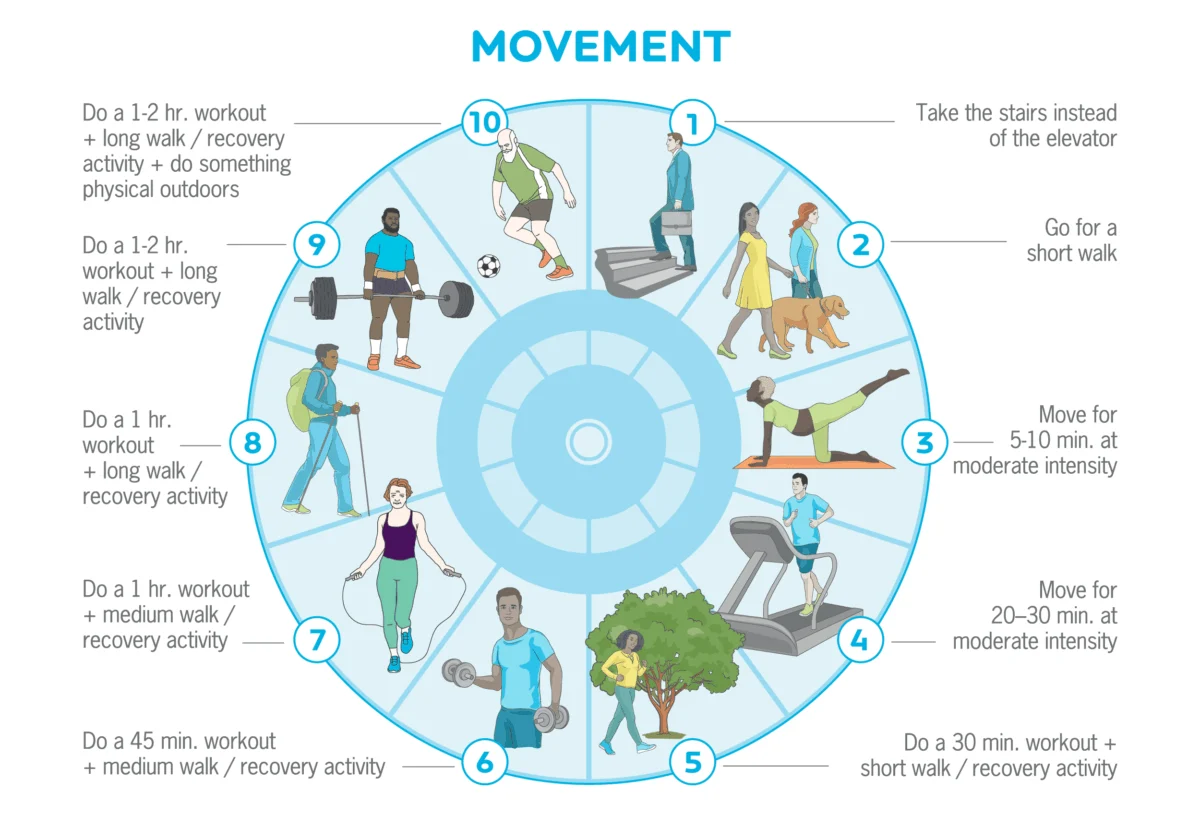
Leading health experts and behavioral psychologists increasingly argue that sustainable change requires moving away from the "on/off" switch and toward a "dial" approach.
"Your health habits aren’t a light switch," says Kate Solovieva, a prominent coach and community director. "They are a dial. When life is smooth, you can turn your exercise and nutrition dials way up. But when life gets chaotic, you don’t have to turn them off. You just turn them down."
This shift in perspective is crucial. If you have a goal to exercise for 30 minutes, but you only have five minutes because of a work crisis, doing those five minutes is not a "failure"—it is a successful maintenance of the habit. It keeps the neural pathway alive. The "all-or-nothing" person skips the workout entirely, loses momentum, and eventually gives up. The "dial" person keeps the habit intact, no matter how small the input.
Implications: Building an Ecosystem
The final, and perhaps most important, step in achieving lasting change is to stop relying on willpower and start designing an ecosystem that favors your goals.
Behavioral studies, including those published in Nature Reviews Psychology, suggest that "access" is the primary driver of behavior. If you want to eat better, you do not need more willpower; you need a kitchen where healthy food is the path of least resistance. If you want to exercise, you do not need more motivation; you need to remove the barriers that stand between you and your gym clothes.
To build this ecosystem, consider the following:
- The Kitchen Makeover: Prep your healthy foods in advance so they are the first thing you see when you open the fridge. Hide the "trigger" foods in hard-to-reach places.
- The "Floor" and "Ceiling": Define the absolute minimum effort you can give on your worst day (your "floor") and the maximum effort you can give on your best day (your "ceiling"). Success is operating anywhere between those two points.
- The 5 Whys: When you feel the urge to buy a "magic bullet," ask yourself "why" five times. You will likely find that you aren’t looking for a new tool—you are looking for a sense of control over a life that feels overwhelming.
Conclusion: Embrace the C+ Effort
If you are a perfectionist, the idea of "C+ effort" is physically painful. But in the context of long-term health, "good enough" is far superior to "perfect and temporary."
The goal is not to be a perfect specimen of health who never touches a processed food or skips a meditation session. The goal is to build a life that is flexible, resilient, and compassionate enough to accommodate your humanity. When you stop chasing the "next big thing" and start mastering the boring, unsexy, fundamental basics, you don’t just lose the 15 pounds—you gain a lifestyle that is sustainable for the rest of your life.
Stop buying the Tupperware. Start doing the push-ups. Even if it’s just one. Even if it’s just today. That is where the change actually happens.