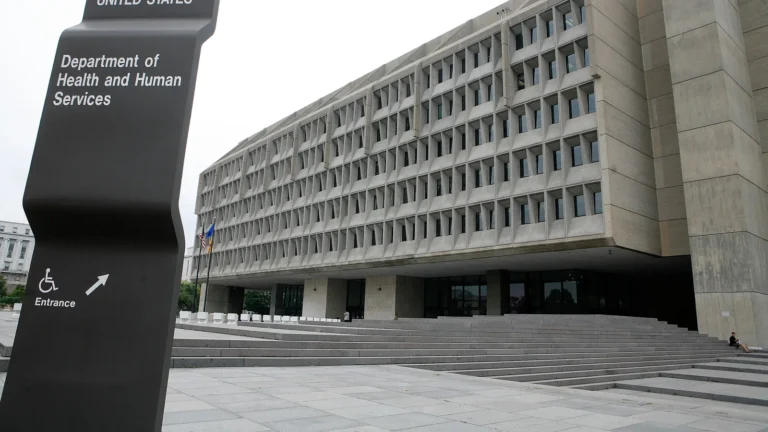











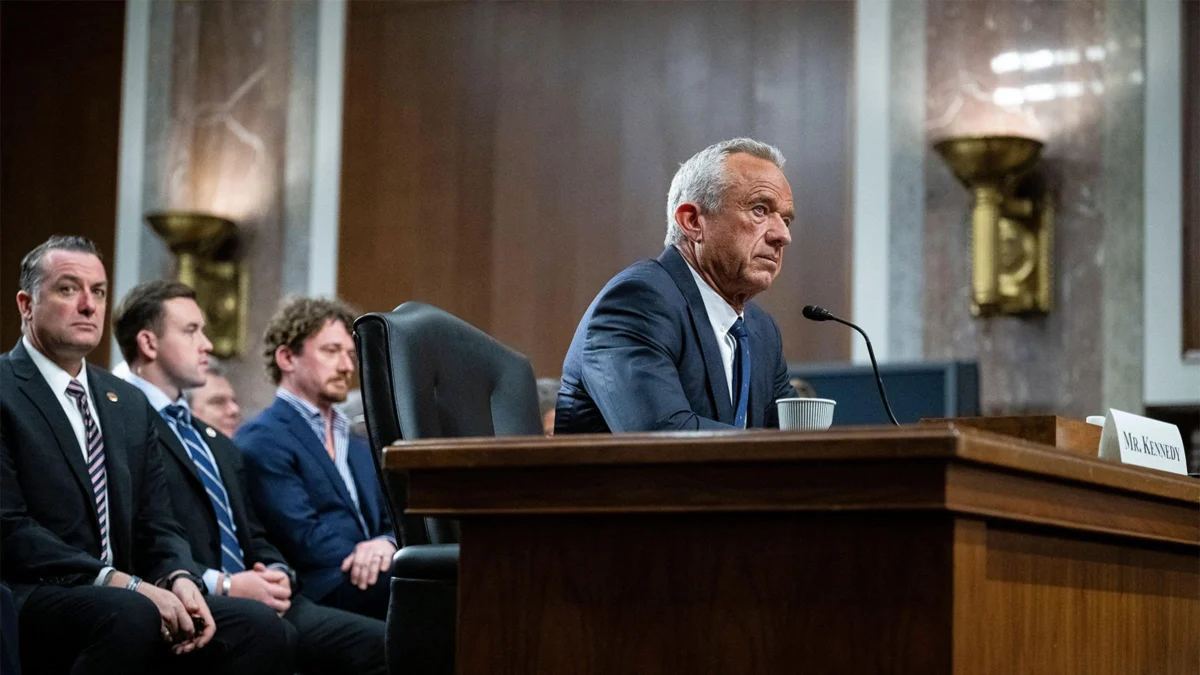
In late June, the release of internal correspondence from the Department of Health and Human Services (HHS) and the Centers for Disease Control and Prevention (CDC) provided the public with an unprecedented, real-time look at the inner workings of the current administration. The documents, spanning the first months of Robert F. Kennedy Jr.’s tenure as HHS Secretary, reveal a calculated, systematic attempt to overhaul the machinery of American public health.
While initial headlines focused on the political friction inherent in the transition, a deeper analysis of these records reveals a more profound transformation. The emails depict an administration not merely seeking to introduce new scientific perspectives, but actively dismantling the structural safeguards governing vaccine recommendations. This institutional dismantling forms the crux of American Academy of Pediatrics v. Robert F. Kennedy Jr., a landmark lawsuit that has temporarily frozen the Secretary’s reorganization of the Advisory Committee on Immunization Practices (ACIP).
The Erosion of Independence: A Chronology of Control
The timeline of these events suggests that the "shakeup" of the nation’s vaccine advisory infrastructure was not a reactive policy shift, but a pre-planned operation.
During his confirmation process, Secretary Kennedy faced intense scrutiny regarding his long-standing history of skepticism toward vaccines. To secure the support of key legislators, including Sen. Bill Cassidy (R-La.), Kennedy offered explicit assurances that he would maintain the integrity of the ACIP without disruptive changes.
However, the internal record shows that these promises were short-lived:
- T+7 Days Post-Confirmation: The scheduled meeting of the ACIP was abruptly postponed.
- T+8 Days Post-Confirmation: CDC staff were directed to begin the foundational work of restructuring the committee.
- The Charter Strategy: Internal communications highlight a shift toward utilizing a "charter update" as the primary vehicle for change. By modifying the committee’s foundational operating document, the administration sought to legally reconfigure membership and oversight protocols, effectively rewriting the rules from within to bypass established norms.
This approach reflects a pattern of institutional capture. Rather than engaging in the traditional, evidence-based discourse expected of a federal health agency, leadership moved to redefine the legal boundaries of the committee to accommodate a predetermined policy agenda.
Supporting Data: Inverting the Vetting Process
The legal legitimacy of the ACIP has historically rested upon a bedrock of independent expertise and rigorous conflict-of-interest vetting. Career officials at the CDC repeatedly cautioned that the onboarding of new members requires meticulous financial disclosures, ethics training, and lobbyist certifications to ensure the committee remains insulated from undue influence.
The emails reveal that these warnings were largely ignored or actively circumvented. In one revealing exchange, career staff discovered that a slate of preferred candidates for committee roles had been drafted directly by HHS political appointees. This process bypassed the standard protocols mandated by the Federal Advisory Committee Act (FACA).
Perhaps the most damning evidence of this philosophy is found in a workflow document detailing expert nomination reviews. Beside the standard vetting protocols—procedures designed to protect the public interest—an anonymous official had appended a telling note: "Likely not needed given HHS direction."
This six-word phrase serves as a summary of the current administration’s governing philosophy: the abandonment of administrative law in favor of top-down political directives. When the "legal machinery" of government is viewed as an obstacle to be bypassed rather than a framework to be followed, the risk to public health becomes systemic.
Abandoning the Scientific Process: The "Rigged Verdict"
The speed of the attempted reforms has had a direct, destabilizing effect on the integrity of scientific data. Ordinarily, the ACIP operates through a deliberate, peer-reviewed process where evidence is vetted by specialized workgroups before reaching a full committee vote.
Internal records from July 2025 highlight a deliberate push to force a high-stakes decision regarding the hepatitis B birth-dose vaccine onto the autumn agenda. Crucially, the correspondence notes a political "desire to open and close the case in September." This compressed timeline stands in stark contrast to the standard, methodical approach required for such consequential public health decisions.
By imposing an artificial deadline on a scientific question, the administration effectively sought to engineer a "rigged verdict." This approach ignores the reality of public health challenges—such as fluctuating birth-dose vaccination rates—which require sustained, evidence-based intervention rather than political theater.
Weaponizing "Transparency"
A recurring theme in the administration’s communications is the weaponization of the concept of "transparency." In one instance, an HHS official circulated an outside critique that leveled unsubstantiated allegations against ACIP members regarding their stance on COVID-19 vaccine effectiveness.
Rather than conducting a fact-finding mission or engaging in rigorous internal review, the official suggested that these allegations could be used to "support the story about ACIP accountability and transparency." This indicates that the administration’s focus was not on the truth of the allegations, but on their utility as a pretext for purging or discrediting independent experts who did not align with the Secretary’s personal views.
Official Responses and the Legal Battle
The Department of Health and Human Services has maintained that its actions are consistent with the Secretary’s mandate to ensure oversight and public accountability. They argue that the prior structure of the ACIP was insular and that these reforms were necessary to modernize the committee.
However, the plaintiffs in AAP v. Kennedy argue that these actions represent a clear violation of the Administrative Procedure Act (APA). The APA requires that federal agencies justify significant departures from established practice through a reasoned, evidence-based process. The plaintiffs contend that the Secretary has failed to meet this burden, choosing instead to prioritize personal ideology over the statutory requirements of his office.
The federal court’s decision to grant a stay on the reorganization has effectively halted these changes, providing a window for the judiciary to determine whether the Secretary has overstepped his authority.
Implications for Public Health
The core of the legal dispute is not whether a Secretary has the right to disagree with existing scientific consensus. Administrations are expected to debate policy. The fundamental question is whether an executive official can unilaterally dismantle the independent, evidence-based frameworks that define the American public health apparatus.
If the administration’s actions were permitted to continue, the precedent would be severe. It would transform the ACIP from a body of independent scientific advisers into a rubber stamp for executive policy. The implications for the future of childhood vaccination—and for the credibility of the institutions tasked with protecting public health—cannot be overstated.
As the litigation proceeds, the internal record serves as a stark warning. It documents a moment where the lines between scientific integrity and political power were deliberately blurred. The outcome of this case will likely define the boundaries of executive authority over scientific institutions for decades to come, deciding whether policy will be dictated by rigorous, peer-reviewed evidence or by the unchecked exercise of political will.
In the words of the legal challenge, the nation is faced with a binary choice: the preservation of a system governed by steady law and transparent, evidence-based methodology, or a transition to a regime where public health is merely a function of political power. The court’s role in this matter is not to choose the science, but to protect the process that allows the science to exist at all.