








In the landscape of modern medicine, the divide between the physical and the psychological has long been treated as a chasm. Patients with chronic back pain are sent to surgeons; patients with debilitating sadness are sent to psychiatrists. However, a growing body of neuroscience suggests that this binary is not only outdated but may be actively hindering the recovery of millions.
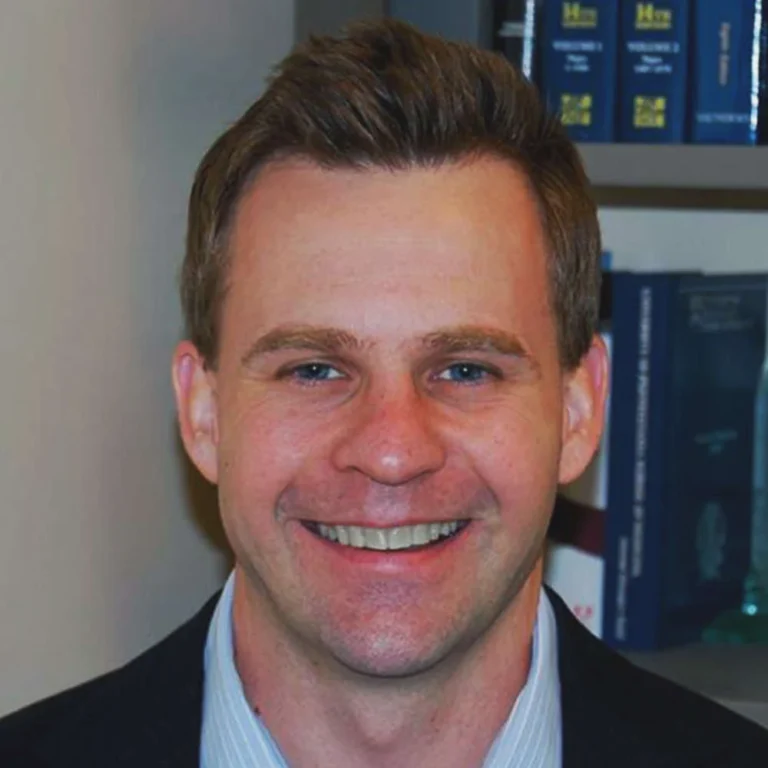
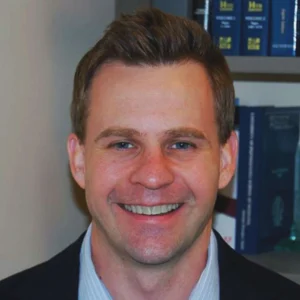
In a recent episode of the Mad in America podcast, host Brooke Siem—author of the antidepressant withdrawal memoir May Cause Side Effects—sat down with Dr. Howard Schubiner to discuss a paradigm-shifting approach to chronic illness. Dr. Schubiner, an internist and clinical professor at the Michigan State University College of Human Medicine, has spent over two decades challenging medical orthodoxies. His work suggests that a vast array of chronic conditions—from back pain and fibromyalgia to anxiety and depression—are not the result of structural damage or chemical imbalances, but are "neuroplastic" symptoms generated by a brain trapped in a state of perceived danger.
Main Facts: The "Danger Signal" Theory of Symptom Generation
The core of Dr. Schubiner’s thesis, detailed in his book Unlearn Your Pain, rests on the concept of "predictive processing." High-level neuroscience indicates that the brain does not merely passively receive information from the senses; rather, it actively constructs our reality. We do not see with our eyes or hear with our ears; our brain creates those experiences based on neural inputs and past expectations.
This constructive power extends to pain and psychological distress. Dr. Schubiner posits that the brain creates real physical symptoms automatically as a protective mechanism. These symptoms are "danger signals" originating from the subconscious, designed to alert the individual to perceived threats—whether those threats are physical injuries or suppressed emotional traumas.
"Our brain is constantly there to protect us," Schubiner explains. "High-level research studies show that emotional pain leads to the same reactions in the brain as physical pain. This is how we’re wired."
The implications of this are profound: if the brain can generate pain in the absence of a structural injury, then the treatment must shift from the body to the neural circuits of the brain. Schubiner identifies these as "neuroplastic" symptoms—patterns that have been learned and, crucially, can be unlearned.
Chronology: From Clinical Orthodoxy to Neuroplastic Pioneer
Dr. Schubiner’s journey into mind-body medicine was not a straight line. For the first 18 years of his career, he operated within the traditional frameworks of a medical school faculty member and researcher. His pivot began 23 years ago when he encountered the work of Dr. John Sarno, the late pioneer who famously linked chronic back pain to "Tension Myositis Syndrome" (TMS), a condition caused by repressed emotions.
Schubiner describes himself as a protégé of Sarno, but he has spent the last two decades grounding Sarno’s clinical observations in rigorous, modern neuroscience. While Sarno’s work was often dismissed by the medical establishment as anecdotal, Schubiner has moved the needle by conducting high-level randomized controlled trials (RCTs). These studies have consistently shown that therapies targeting the brain’s neural circuits are often superior to standard physical therapies or traditional cognitive behavioral therapy (CBT) for chronic pain and PTSD.
His evolution reflects a broader shift in the field: moving from the "structural model" (pain is always caused by a broken part) to the "biopsychosocial model," and finally to the "neuroplastic model," which views the brain as the primary architect of chronic symptom loops.
Supporting Data: The Power of Belief and the "N of 1" Trial
To support his claims, Dr. Schubiner points to the dramatic influence of the placebo and nocebo effects. These are not merely "imaginary" improvements; they are measurable changes in neural firing.
The Placebo Effect in Psychiatry
In antidepressant trials, the efficacy rate of the medication is often high, but the placebo effect—the improvement seen in the control group—is frequently nearly as high. Schubiner argues that this demonstrates the brain’s ability to harness neuroplasticity to change its own neural circuits when it believes a recovery is underway.
The Nocebo Effect and "Overdose"
Conversely, the "nocebo" effect demonstrates the brain’s power to create illness based on fear. Schubiner cites a famous case study of a participant in a clinical trial who attempted suicide by swallowing a bottle of study pills. The man arrived at the hospital with crashing blood pressure and a failing pulse—physiological symptoms of a severe overdose. However, when researchers checked the records, they discovered the man was in the placebo arm of the study; he had "overdosed" on sugar pills. Once he was informed of this, his blood pressure and heart rate returned to normal almost instantly. His brain had created a life-threatening physiological state based entirely on the expectation of toxicity.
Clinical Trials and EAET
Schubiner’s research into Emotional Awareness and Expression Therapy (EAET) provides further empirical weight. In a study involving veterans with musculoskeletal pain of over 20 years, those who suffered from coexisting anxiety, depression, and PTSD actually showed the most improvement. This contradicts the traditional medical assumption that patients with "comorbidities" are the hardest to treat. Instead, it suggests that because their pain was more clearly linked to emotional "danger signals," addressing the underlying trauma provided a direct path to physical relief.
Official Responses: Challenging the "Structural" and "Chemical" Narratives
The primary obstacle to this approach is the prevailing medical narrative. Most physicians are trained to look for structural damage—such as a herniated disc or a chemical imbalance—to explain symptoms. When a patient presents with back pain, the standard procedure involves MRIs and X-rays.
However, Schubiner points out a glaring inconsistency: a vast number of people have "degenerative changes" in their spines but experience no pain, while others have "perfect" spines and are bedridden. "Most doctors are totally unaware that the brain produces real pain in relation to stress, trauma, and emotional stuff," Schubiner notes.
In the realm of mental health, Schubiner is equally critical of the "chemical imbalance" theory of depression. He notes that there is no scientific evidence that low serotonin levels cause depression, yet the narrative persists because it justifies a purely pharmacological approach. By telling patients their brains are "broken" or "structurally damaged," the medical community may be inadvertently inducing a nocebo effect, making it harder for patients to believe in their own capacity for recovery.
Implications: Agency, Authenticity, and the Path Forward
The discussion between Siem and Schubiner touched on the specific challenges of antidepressant withdrawal. Siem noted that many patients undergoing withdrawal become terrified of every symptom, leading to a "nocebo loop" where the fear of the withdrawal creates more symptoms than the physiological tapering itself.
To combat this, Schubiner suggests an "N of 1" trial—a self-blinded experiment where a patient has a partner randomize their dose. If the symptoms occur randomly regardless of the dose, the patient gains the "evidence" needed to realize their brain is generating symptoms out of fear, rather than chemical necessity. This empowers the patient with agency.
The Two Pillars of Treatment
Schubiner’s work utilizes two primary therapeutic models:
- Pain Reprocessing Therapy (PRT): This involves "retraining" the brain to view triggers (like driving, sunlight, or physical movement) as safe rather than dangerous. It uses mindfulness and "equanimity" to break the neural loops that fire automatically.
- Emotional Awareness and Expression Therapy (EAET): This focuses on "activating" suppressed emotions—anger, sadness, guilt—that the brain has deemed "dangerous." By safely expressing these emotions in a therapeutic setting, patients can signal to their brain that the "danger" has passed, allowing the chronic symptoms to subside.
A Message of Hope
The overarching implication of Schubiner’s work is one of radical hope. If symptoms are neuroplastic rather than structural, they are reversible. The goal is to move patients from a state of "victimhood" to one of "authenticity."
"Everyone needs agency—the belief that they can change their world and have power over themselves," Schubiner concludes. By shifting the focus from "fixing a broken body" to "reassuring a protective brain," Schubiner and his colleagues are offering a new blueprint for the treatment of the chronic conditions that define 21st-century suffering.
For those trapped in the cycles of chronic pain or psychiatric distress, the message is clear: the symptoms are real, but they are not necessarily permanent. The brain that created the pain also possesses the power to unlearn it.