











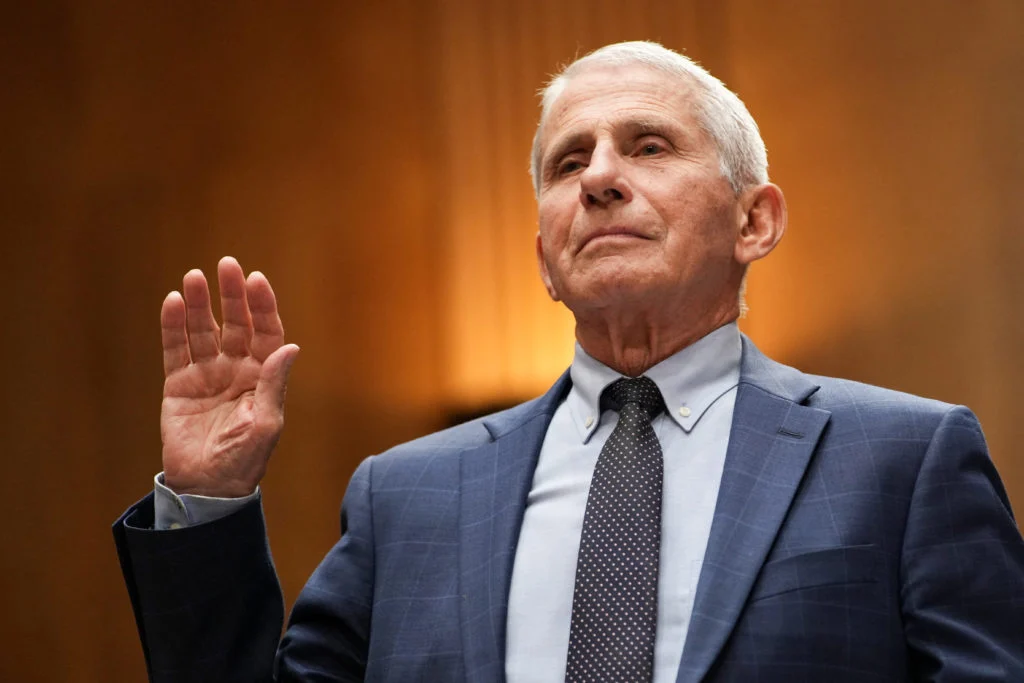
WASHINGTON — The deep-seated partisan polarization that has defined the American discourse on the COVID-19 pandemic reached a new, dramatic crescendo on Wednesday. Dr. Anthony Fauci, the former director of the National Institute of Allergy and Infectious Diseases (NIAID) and the face of the federal government’s pandemic response, appeared before a Republican-led Senate committee only to invoke his Fifth Amendment right against self-incrimination more than 50 times.
The hearing, which was characterized by shouting, legal clashes, and sharp accusations, represents the latest chapter in a yearslong campaign by conservative lawmakers to hold the retired infectious-disease expert accountable for the policies, mandates, and origins of the virus that fundamentally altered global society.
The Main Facts: A Constitutional Shield in a Political Crucible
The atmosphere inside the hearing room was electric from the moment the proceedings began. Dr. Fauci, who served as a trusted advisor to seven presidents, arrived under subpoena, forced into the spotlight by Senator Rand Paul (R-Ky.). As the questioning progressed, it became clear that the session was less an inquiry and more a collision of two irreconcilable narratives.
Fauci, acting on the explicit advice of his legal counsel, David Schertler, declined to answer questions regarding his role in NIH-funded research, his private communications, and the evolution of mask mandates. By invoking the Fifth Amendment, Fauci sought to shield himself from the potential for perjury charges—a strategic maneuver that his critics immediately labeled an admission of guilt, while his supporters viewed it as a necessary defense against a politically motivated "witch-hunt."
"The only conclusion I can reach," Fauci stated during his opening remarks, "is that the sole reason [Sen. Paul] is calling me before this committee is to get me to say something, anything, that could vindicate his repeated public pledges that I end up, in his words, ‘behind bars.’"
Chronology: From Pandemic Response to Congressional Subpoena
To understand the intensity of Wednesday’s hearing, one must trace the timeline of the growing friction between the scientific establishment and the legislative branch.
- 2020–2021: Dr. Fauci serves as the director of the NIAID, leading the U.S. response to COVID-19. His guidance on social distancing, school closures, and vaccines becomes a flashpoint for cultural and political debate.
- 2022: Fauci retires from government service, but the political pressure does not subside. Republican lawmakers begin laying the groundwork for a long-term investigation into the origins of SARS-CoV-2.
- 2024: A GOP-led subcommittee investigates the NIH’s relationship with the EcoHealth Alliance. Despite exhaustive efforts, no direct evidence linking Fauci to criminal wrongdoing is uncovered.
- Mid-2025: President Joe Biden issues a preemptive pardon for Fauci, among others, citing a desire to protect public servants from what the administration characterizes as politically motivated retribution.
- Wednesday: Under intense pressure from Sen. Rand Paul, who has released over 1,000 pages of Fauci’s private diary, the retired scientist appears before the committee, leading to the historic invocation of the Fifth Amendment.
The Evidence: The Diary and the "Gain-of-Function" Debate
At the heart of the Senate’s inquiry is a collection of private diary entries written by Fauci during the height of the pandemic. Senator Paul, who has long maintained that Fauci helped obscure the truth about the virus’s origins, used these documents to argue that the scientist held private doubts that contradicted his public messaging.
"What he wrote privately and what he told the country are two different stories," Paul asserted on social media, emphasizing discrepancies regarding early internal discussions about the possibility of a lab leak.
The core of the scientific dispute rests on "gain-of-function" research. Critics allege that the NIH, under Fauci’s leadership, funded research at the Wuhan Institute of Virology that enhanced the potency of bat coronaviruses. Fauci has consistently maintained that the research in question did not meet the specific regulatory definition of "gain-of-function" research and has described the suggestion that this research led to the pandemic as "molecularly impossible."
Despite this, the debate continues to rage. Earlier this week, the administration under President Trump—who has been an vocal critic of Fauci’s policies—announced new, stringent oversight rules for federal funding of pathogen research, signaling a permanent shift in how the government approaches high-stakes viral studies.
Official Responses and Procedural Chaos
The hearing was marked by profound volatility. In one particularly heated moment, Senator Paul ordered the removal of Fauci’s attorney, David Schertler, after Schertler attempted to interject on his client’s behalf without being recognized.
"This is outrageous and demonstrates the completely biased and baseless nature of this proceeding," Schertler said in a statement released shortly after his expulsion. He further described the allegations against his client as "false and disgraceful."
Conversely, Health Secretary Robert F. Kennedy Jr. took a hardline stance, noting that his department had cooperated with the committee by providing the diary entries. Kennedy suggested that the committee was right to probe the possibility of perjury, hinting that the government remains interested in whether any past testimony given by Fauci was intentionally misleading.
Democratic members of the committee, however, were quick to offer a spirited defense. Senator Maggie Hassan of New Hampshire characterized the entire proceeding as an "entrapment exercise" designed to create viral moments rather than find substantive answers.
The Implications: A Legacy in Question
The fallout from Wednesday’s hearing extends far beyond the walls of the Senate chamber. For the scientific community, the treatment of Dr. Fauci represents a chilling precedent. More than 150 infectious-disease experts signed a public letter decrying the hearing, warning that the harassment of public health officials undermines the nation’s ability to respond to future crises.
"We are witnessing a sustained campaign to discredit scientific expertise," the letter stated, urging Congress to pivot away from what the signatories labeled "witch-hunts."
However, for the millions of Americans who feel that pandemic-era policies—such as mask mandates and school lockdowns—infringed upon their fundamental rights, the hearing served as a long-awaited moment of confrontation. The anger regarding the economic and social destruction of the 2020–2021 period remains a potent political force, one that the Republican Party continues to tap into as they seek to define the failures of the previous administration.
Looking Ahead
The legal implications for Dr. Fauci remain uncertain. While the presidential pardon provides a significant layer of protection against federal prosecution, legal experts note that a contempt of Congress citation remains a possibility if the committee determines that his refusal to testify was legally insufficient.
As the nation looks back on the pandemic, it is clear that the divide is not merely about science or public health policy. It is a fundamental conflict over accountability, trust in institutions, and the role of the federal government in the lives of its citizens. Whether this hearing brings the country closer to the truth about the origins of COVID-19 or simply deepens the partisan trenches remains to be seen. What is certain is that the shadow of the pandemic continues to loom large over American political life, with Dr. Fauci remaining at the center of a storm that shows no sign of abating.