








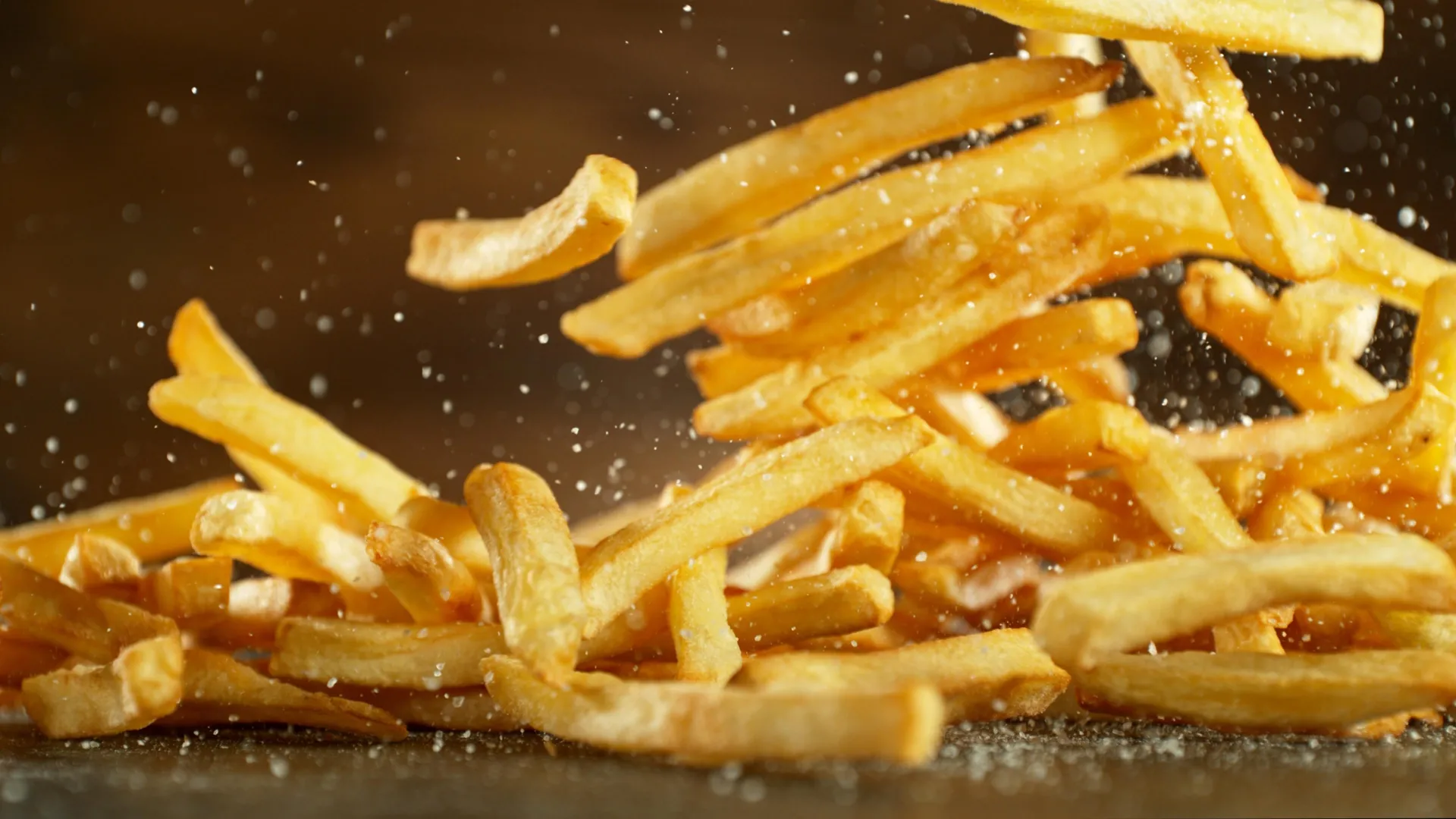
For generations, the French fry has reigned supreme as the quintessential comfort food. Whether served as a salty side at a roadside diner or a fast-food staple, its appeal lies in a delicate balance: a golden, shatteringly crisp exterior yielding to a pillowy, soft interior. Yet, this culinary icon carries a nutritional burden. The very process that creates that crave-worthy texture—deep-frying in hot oil—infuses the potato with high levels of fat and calories, contributing to long-term health crises such as obesity, hypertension, and cardiovascular disease.
Now, a team of researchers at the University of Illinois Urbana-Champaign (UIUC) may have found the "holy grail" of food engineering: a method to produce the perfect fry that retains its signature flavor and texture while significantly slashing oil absorption. By harnessing the precision of microwave energy, scientists are attempting to rewrite the physics of the deep-fryer.
The Core Conflict: Flavor vs. Health
The challenge, as identified by Pawan Singh Takhar, a professor of food engineering in the Department of Food Science and Human Nutrition at UIUC, is a battle between biological cravings and nutritional requirements.
"Consumers want healthy foods, but at the time of purchase, their cravings often take over," Takhar explains. "High oil content adds flavor, but it also contains a lot of energy and calories. My research team studies frying with the aim of obtaining lower fat content without significant differences in taste and texture."
The primary mechanism behind oil absorption is a complex thermodynamic process. When a potato strip hits 180-degree Celsius soybean oil, the water inside the potato begins to boil and escape as vapor. As this moisture leaves, it leaves behind a network of tiny pores—effectively a vacuum-sealed sponge waiting to be filled. As the potato cools or as the pressure shifts, the oil is pulled into these empty spaces. To create a "healthier" fry, the researchers had to figure out how to stop the oil from rushing in to fill the void.
A Chronology of Discovery: Tracking the Fry
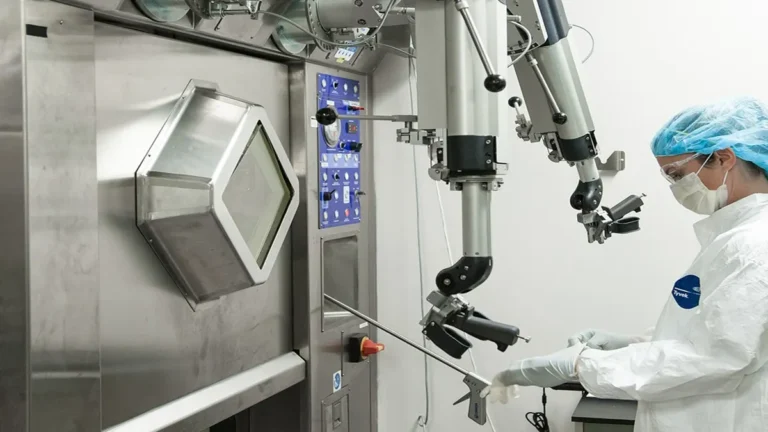
To understand the mechanics of oil uptake, Takhar and his doctoral student, Yash Shah, undertook a rigorous, multi-stage experimental process. The research was conducted in collaboration with Washington State University, utilizing a specialized microwave fryer capable of operating at both 2.45 GHz and 5.8 GHz.
Phase 1: Preparation and Baseline
The research began with a standardized preparation process. Potatoes were peeled, rinsed, and sliced into uniform strips. Each batch underwent blanching—a brief submersion in hot water or steam—which softens the cellular structure of the potato and prepares the starch for the subsequent frying process. The strips were salted and then subjected to the traditional frying environment of 180°C oil.
Phase 2: Monitoring the Micro-Environment
During the cooking process, the team employed high-precision sensors to track variables including internal pressure, temperature, moisture loss, and volume changes. By mapping these data points, the researchers gained a granular view of how the potato behaves at the molecular level.
Phase 3: Mathematical Modeling
Because direct measurement of every variable in a high-heat environment is fraught with physical limitations, the team developed complex mathematical models. These computer simulations allowed the researchers to predict how electromagnetic waves at different frequencies would interact with the potato’s water molecules, providing a predictive framework for optimizing the frying process.
The Physics of Pressure: Why Oil Enters the Potato
The breakthrough in the UIUC study came from understanding the pressure profile of the potato during frying. Takhar compares the process to drinking through a straw.
"If you push air into the straw, it creates positive pressure and any liquid will be pushed out," he explains. "But if you suck on the straw, the liquid moves upward. Now imagine food materials have lots of tiny straws. When there is positive pressure, the oil stays out. But if there is negative pressure, the oil starts moving in."
The researchers discovered that roughly 90% of a conventional fry’s cooking time occurs under negative pressure. As the water turns to steam and escapes, the potato creates a "suction" effect, drawing in the cooking oil. The team realized that if they could maintain positive internal pressure for longer, they could physically prevent the oil from entering the pores.
The Microwave Solution
This is where microwave energy becomes a game-changer. Unlike conventional frying, where heat must travel from the exterior of the potato toward the center, microwaves penetrate the entire object simultaneously.
By oscillating the water molecules inside the potato, microwaves generate vapor throughout the entire volume of the strip. This internal generation of vapor pushes against the interior walls of the potato’s pores, maintaining positive pressure. As a result, when the oil is present, the internal vapor pressure acts as a barrier, preventing the oil from soaking into the tissue.
However, there was a catch: microwave-only frying results in a "soggy" product. The crispiness that defines a French fry requires the high-heat, surface-level dehydration that only traditional immersion frying can provide.
The Hybrid Approach: Best of Both Worlds
The team’s final proposal is a hybrid system—a specialized industrial fryer that utilizes both conventional oil immersion and microwave generators.
"Conventional heating maintains the crispiness, while microwave heating lowers the oil intake," Takhar notes. By applying microwave energy to accelerate moisture removal and prevent oil uptake, and using conventional heating to brown the surface and achieve the necessary crunch, manufacturers can produce a fry that satisfies both the palate and the physician.
Supporting Data and Findings
The results of the study, published in the Journal of Food Science and Current Research in Food Science, are compelling:
- Reduced Cooking Time: The hybrid method significantly shortened the time required for the potatoes to reach a finished state.
- Lowered Fat Content: By modulating the internal pressure, the hybrid method achieved a marked reduction in the final oil content of the fries.
- Texture Preservation: Mathematical modeling and physical testing confirmed that the "crunch" factor—often lost in microwave-only attempts—was preserved through the combined heating process.
Official Responses and Industry Implications
The implications for the food industry are vast. Large-scale food processing facilities rely on "continuous fryers"—massive, conveyor-belt-style machines. Because the microwave components required for this hybrid system are widely available and relatively inexpensive, the researchers believe the technology is economically feasible for commercial implementation.
"The microwaves penetrate everywhere in the material. The microwaves oscillate water molecules, causing more vapor formation and thus shifting the pressure profile towards the positive side," says Takhar. "The higher pressure in microwaves helps reduce oil penetration."
For manufacturers, this represents an opportunity to improve the nutritional profile of one of the world’s most popular foods without the need to reformulate recipes or compromise on the taste profile that drives sales.
Future Outlook: A Healthier Fast Food Future
The integration of microwave technology into commercial frying is not just a triumph of food engineering; it is a potential public health intervention. If implemented at scale, this technology could reduce the total caloric intake of millions of consumers who eat fried potatoes regularly.
As the research moves from the laboratory to potential pilot testing in industrial settings, the focus will shift toward scaling the technology to meet the high-volume demands of global food production. The work funded by the USDA National Institute of Food and Agriculture (Awards 2020-67017-31194, ILLU-698-308, and ILLU-698-926) serves as a beacon for future food science research, demonstrating that with the right combination of physics, mathematics, and culinary intuition, we can have our fries—and eat them, too.
In the coming years, the "golden crunch" of a French fry may no longer signal an indulgence, but rather the success of a sophisticated, science-driven approach to healthier eating. The hybrid fryer, a marriage of electromagnetic innovation and traditional cooking, stands ready to reshape the landscape of the modern kitchen.