The landscape of modern oncology has been fundamentally altered by the study of the immune system, a field that has transitioned from theoretical exploration to the cornerstone of life-saving cancer therapies. Today, the Cancer Research Institute (CRI)—the world’s leading non-profit organization dedicated exclusively to advancing cancer immunotherapy—announced the recipients of its prestigious 2026 Scientific Achievement Awards.
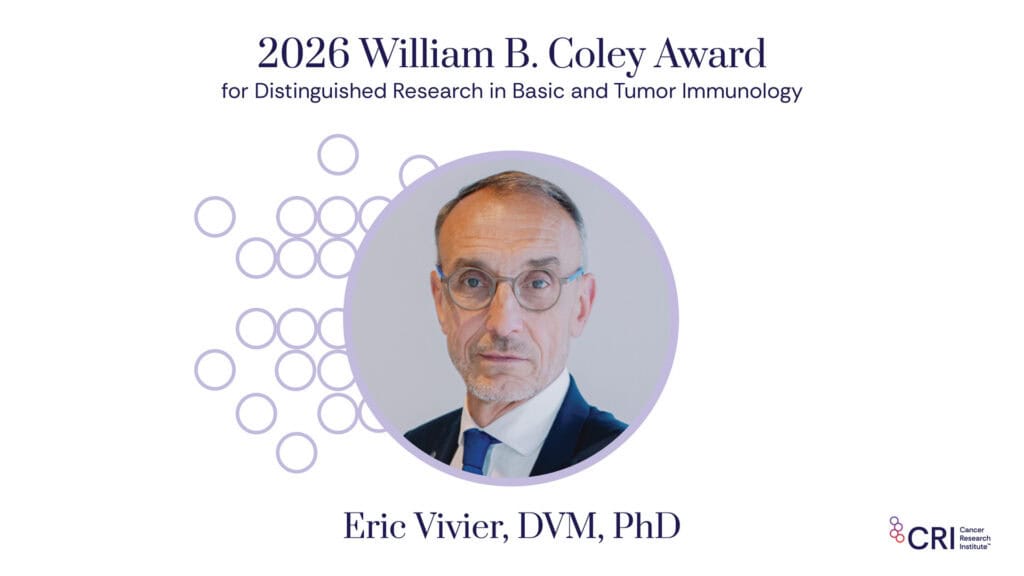
The honors celebrate two luminaries whose work has bridged the gap between basic immunology and clinical breakthrough: Dr. Eric Vivier, who will receive the William B. Coley Award for Distinguished Research in Basic and Tumor Immunology, and Dr. Joseph Sun, recipient of the Frederick W. Alt Award for New Discoveries in Immunology. These accolades represent the highest echelon of recognition for researchers who have redefined how we perceive the body’s innate ability to combat malignancy.
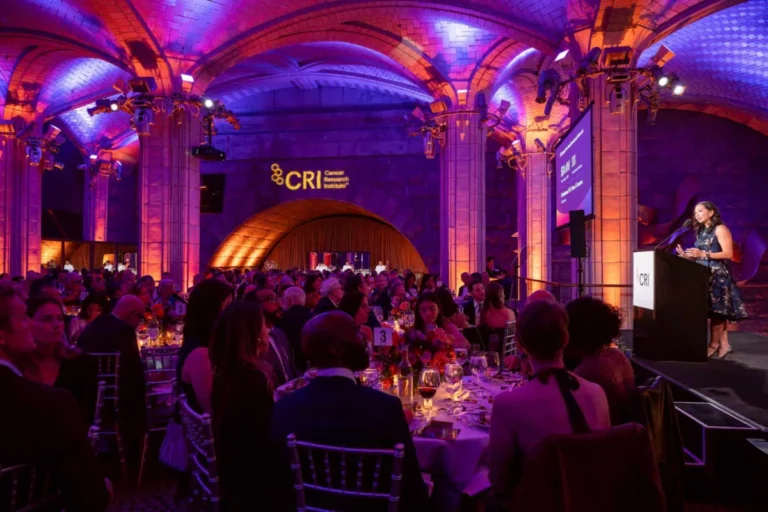
The awards will be formally presented during the CRI’s highly anticipated Annual Awards Gala on Tuesday, October 20, 2026, held at the historic Guastavinos in New York City.
The 2026 Laureates: Profiles in Scientific Excellence
Eric Vivier, DVM, PhD: A Visionary in Innate Immunity
Dr. Eric Vivier’s selection for the William B. Coley Award is a testament to his decades-long dedication to unraveling the complexities of Natural Killer (NK) cells. As a Professor of Immunology at Marseille Medical School and the head of the Innate Lymphoid Cells laboratory at the Centre d’Immunologie de Marseille-Luminy, Dr. Vivier has transformed the scientific community’s understanding of the innate immune system.
His work did not merely describe immune cells; it identified them as critical components of the body’s surveillance network against cancer. By elucidating how NK cells recognize and eliminate tumor cells, Dr. Vivier provided the mechanistic foundation for a new generation of immunotherapies. His impact extends well beyond the laboratory bench; as a co-founder of Innate Pharma, he has been instrumental in translating these biological insights into clinical applications that are currently benefiting patients globally.
A "Highly Cited Researcher" since 2015, Dr. Vivier’s career is marked by prestigious memberships, including the French National Academy of Medicine and the European Molecular Biology Organization (EMBO). His receipt of the Coley Award cements his legacy as a titan of immunology.
Joseph Sun, PhD: Redefining Immunological Memory
The Frederick W. Alt Award for New Discoveries in Immunology recognizes researchers whose early-career breakthroughs promise to define the future of the field. Dr. Joseph Sun, a Member of the Immunology Program at Memorial Sloan Kettering Cancer Center and Professor at Weill Cornell Medical College, has done exactly that by challenging the established dogma of how the immune system remembers threats.
Dr. Sun’s research has fundamentally shifted the scientific consensus regarding T cell and NK cell memory. During his time as a CRI Irvington Postdoctoral Fellow (2007–2009) in the lab of Dr. Lewis Lanier at UCSF, Dr. Sun made a series of revolutionary observations: he demonstrated that NK cells possess the capacity for adaptive-like traits, including clonal expansion and the formation of long-lived memory after viral exposure. This discovery collapsed the rigid wall that once separated "innate" and "adaptive" immunity, revealing a sophisticated, integrated defense system. Today, his work on molecular pathways continues to guide the development of next-generation therapies designed to "train" the immune system for durable anti-tumor responses.
Chronology of Impact: From Fellowship to Global Recognition
The trajectory of both researchers underscores the critical importance of sustained investment in fundamental immunology.
- 2007–2009: Dr. Joseph Sun serves as a CRI Irvington Postdoctoral Fellow. Under the mentorship of Dr. Lewis Lanier, he begins the groundbreaking work that would prove NK cells function with adaptive memory, fundamentally changing the field of immunology.
- 2015: Dr. Eric Vivier is officially recognized as a "Highly Cited Researcher," a title he has maintained consecutively, reflecting the profound global influence of his research on innate lymphoid cells.
- 2026, June: The Cancer Research Institute announces the 2026 Scientific Achievement Award winners, honoring the cumulative impact of Dr. Vivier’s work on innate immunity and Dr. Sun’s evolution of immunological memory.
- 2026, October 20: The Annual Awards Gala at Guastavinos, New York City, will serve as the venue for the presentation of the Coley and Alt awards.
- 2026, November 8: Dr. Eric Vivier is scheduled to deliver the 2026 Coley Lecture at the Society for Immunotherapy of Cancer (SITC) Annual Meeting in Phoenix, Arizona, providing a deep dive into the research that earned him this year’s highest honor.
Supporting Data: Why These Discoveries Matter
The importance of these awards lies in the tangible transition from theoretical "basic" research to clinical oncology.
For decades, immunology was categorized into two distinct branches: the "innate" system (the first responders) and the "adaptive" system (the specialized, memory-retaining force). Dr. Vivier’s work in innate lymphoid cells demonstrated that the "first responders" are far more sophisticated than once thought, capable of orchestration and direct tumor targeting.
Simultaneously, Dr. Sun’s evidence that innate cells (NK cells) can possess "memory" has introduced the possibility of creating cancer vaccines or cell therapies that don’t just act in the moment, but persist in the body to prevent cancer recurrence. This is the "holy grail" of oncology: not just shrinking a tumor, but ensuring the immune system remembers it and prevents its return.
Official Responses and Peer Perspectives
The recognition of Dr. Sun has been met with widespread acclaim from the scientific community, particularly from those who witnessed the beginning of his journey.
Dr. Lewis Lanier, a distinguished member of the CRI’s Scientific Advisory Council and Dr. Sun’s former mentor, expressed his pride in the selection: "Dr. Sun has been an absolute leader in his field, and I am so happy that we are going to acknowledge him as being one of the superstars that launched their careers with his CRI Irvington Fellowship."
The Cancer Research Institute’s leadership has emphasized that these awards serve a dual purpose: to honor the history of immunology and to inspire the next generation of researchers to tackle the "impossible" questions of cancer biology.
Implications for the Future of Immunotherapy
The implications of the 2026 awards extend to the very design of future clinical trials. By understanding the molecular mechanisms identified by Drs. Vivier and Sun, pharmaceutical companies and academic centers are now designing therapies that:
- Enhance Persistence: Leveraging the "memory" mechanisms identified by Dr. Sun to ensure CAR-T and NK cell therapies stay in the patient’s body longer.
- Broaden Reach: Utilizing the innate immunity pathways described by Dr. Vivier to activate a patient’s own natural defenses against "cold" tumors that typically evade the immune system.
- Combination Strategies: Moving toward therapies that engage both the innate and adaptive systems simultaneously, creating a multi-layered attack on malignant cells.
As we look toward the 2026 Gala and the subsequent Coley Lecture in Phoenix, the scientific community remains energized. The work of Dr. Eric Vivier and Dr. Joseph Sun serves as a powerful reminder that while the path to a cure is complex, the fundamental biology of the human immune system holds the keys to the future of medicine. Through their dedication, the Cancer Research Institute continues its mission to leave no cancer patient behind, proving that with enough curiosity and rigor, the immune system can be harnessed to change the course of human health forever.