










For millennia, our ancestors navigated the complexities of physical health through the most sophisticated biological machinery ever evolved: the human sensory system. They assessed exertion by the weight of their breath, gauged nutritional needs by the signals of hunger, and monitored recovery through the presence or absence of fatigue. Today, however, we have delegated much of this self-awareness to a new, burgeoning industry of wearable technology.
From sleek rings that track nocturnal heart rate variability to wrist-worn devices that count every step and measure the intensity of our morning jog, the "quantified self" movement has reached a fever pitch. While these gadgets offer a bridge between subjective sensation and cold, hard data, they also introduce a modern paradox: Does having more information lead to better health outcomes, or are we slowly losing our ability to listen to our own bodies?
The Evolution of Self-Assessment: From Instinct to Algorithm
The transition from purely subjective health assessment to data-driven tracking represents one of the most significant shifts in personal wellness over the last decade. Historically, elite athletes—like Canadian sprinter Ben Johnson—were celebrated for their uncanny "internal clocks," reportedly capable of predicting their 100-meter dash times within a tenth of a second. This was an outlier performance, a hallmark of extreme mastery.
For the average person, however, subjective assessment is often flawed. We are notoriously bad at quantifying our experiences with precision. A classic example involves "calorie creep." Many individuals believe they are adhering to a strict nutritional plan, only to discover through objective tracking that they are consuming an extra 500 calories daily, often hidden in seemingly benign additions like barbecue sauce or dressings. In this context, technology acts as a vital "truth teller," highlighting the discrepancies between our intentions and our reality.
The Accuracy Gap: What Can We Actually Trust?
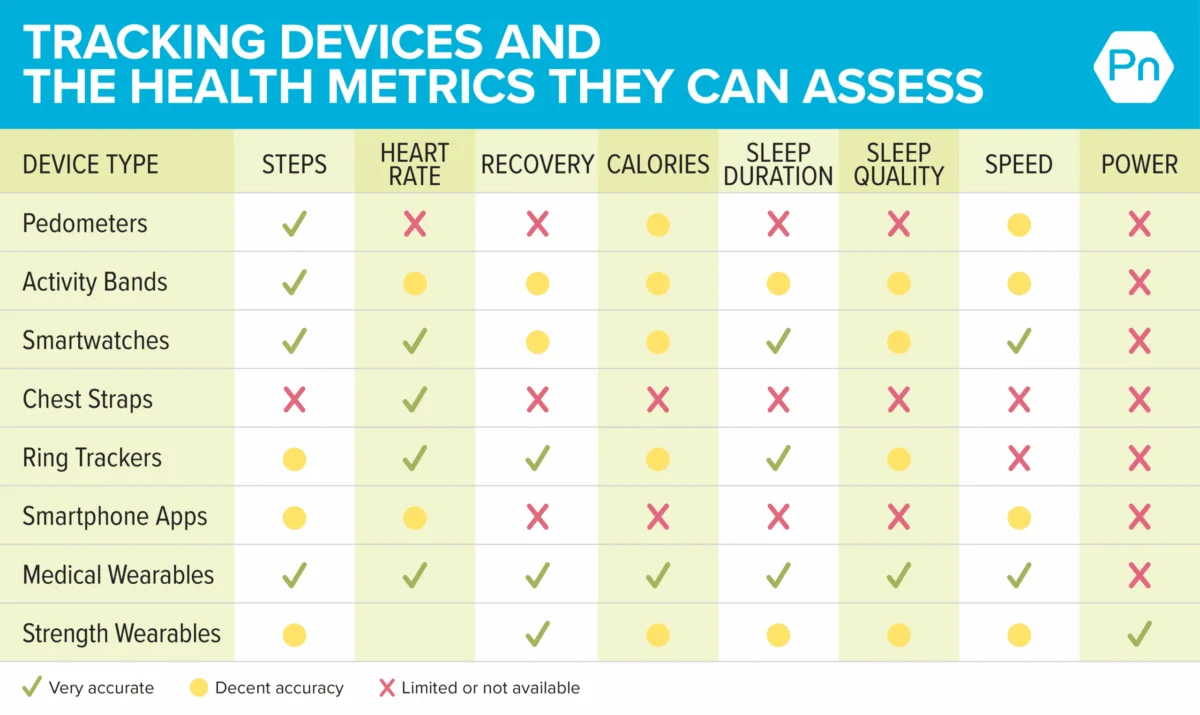
The first step in integrating technology into your health routine is acknowledging that not all data is created equal. The market is saturated with devices, but their reliability varies wildly.
The Hierarchy of Reliability
Data trackers rely on a combination of hardware sensors (accelerometers, optical heart rate sensors) and proprietary software algorithms. While heart rate monitoring and step counting have reached a high level of clinical maturity and reliability, other metrics—such as "calories burned" or "recovery scores"—often rely on estimation models that carry substantial margins for error.
When evaluating a device, users should distinguish between direct measures (what the device actually records via sensors) and inferred measures (what the device calculates using complex, often opaque, math). A chest strap, for instance, provides a far more accurate heart rate reading than a wrist-based optical sensor, which can be affected by skin tone, movement, and fit.

The Paradox of Choice: The "Sweet Spot" of Information
Perhaps the most significant finding in recent behavioral science is the inverted-U relationship between information density and decision-making quality. Computer scientist Samantha Kleinberg, who studies the intersection of health and technology, notes that even small amounts of surplus information can have a detrimental effect on our ability to act.
This is the "Paradox of Tracking." When we have too little information, we are guessing. When we have too much, we experience "analysis paralysis." The modern consumer is often bombarded with a deluge of metrics—sleep stages, blood oxygen, heart rate variability, training readiness, and metabolic markers. When these metrics contradict how we feel, the resulting confusion can lead to anxiety rather than empowerment. The goal, therefore, is to find the "sweet spot": the point where the data provides enough clarity to guide a decision without overwhelming the individual’s intuitive process.
When Tracking Becomes a Hindrance
While data can be a powerful catalyst for change, it can also become a source of profound stress. We can categorize the impact of tracking into three distinct zones of influence:
1. Validation vs. Anxiety
For many, tracking is a tool for validation. Consider an individual prescribed "Zone 2" cardio—a low-intensity training method that often feels "too easy" to the untrained mind. When an athlete sees their resting heart rate drop over several weeks, the data validates the method, reducing the anxiety that they aren’t "doing enough." However, for others, tracking creates a "bad omen" cycle. A new parent, already sleep-deprived, receiving a notification that their "sleep quality score" is poor, adds unnecessary psychological weight to a situation they cannot currently change.
2. Motivation vs. Burnout
Tracking thrives on the behavioral model of prompt, motivation, and ability. A tracker can act as the "prompt" that nudges a person toward a better decision. For example, realizing that a glass of wine correlates with a significant drop in deep sleep scores can be the prompt needed to change a nightly habit. Conversely, for the hyper-competitive user, tracking can lead to burnout. When a cyclist becomes obsessed with breaking local records on every ride, the pursuit of data destroys the joy of the activity, eventually leading to overtraining and physical decline.
3. Understanding Potential vs. Disconnection
Data can help us understand our true physiological limits. It can reveal when we are under-recovering or, conversely, when we are capable of pushing harder. However, over-reliance creates a dangerous dependency. The "MyFitnessPal Blackout" of 2019 serves as a cautionary tale: when the app went down, millions of users felt unable to make basic nutritional decisions. This is a clear indicator that the technology had replaced, rather than supported, the user’s internal signaling.
The Future: Integrating Tech with Intuition
To harness the power of wearables without losing one’s sense of self, we must shift our approach to a model of "Calibrated Intuition."

Step 1: The "Pre-Check"
Before looking at the data on your device, perform a "body scan." Ask yourself: How do I feel? How is my energy level? What is my RPE (Rate of Perceived Exertion)? By establishing your own baseline first, you use the data as a secondary verification tool rather than an authority. This allows you to calibrate your internal senses against the objective readout.
Step 2: Utilize "Mental Shortcuts"
Rather than obsessing over complex data, rely on validated, sensory-driven shortcuts. RPE is a gold standard in sports science for a reason. By asking, "How many more reps could I perform with perfect form?" you leverage your own sensory feedback. Mapping these internal estimations against objective data over time allows you to develop an incredibly accurate sense of your own capacity.
Step 3: Honor Your Biological Network
Human beings possess a vast, integrated network of sensory information—proprioception (the sense of where your body is in space), interoception (the sense of the internal state of the body), and the complex pattern-recognition machine of the nervous system. Technology cannot yet replicate the nuanced, real-time wisdom of this biological system.
Implications for Modern Wellness
The ultimate goal of health technology should not be to make us slaves to our devices, but to make us more attuned to our own biology. If a piece of technology does not contribute to your long-term well-being or performance, or if it diminishes your enjoyment of life, it is failing its purpose.
As we move forward, the most successful individuals will be those who treat fitness trackers as "advisors" rather than "directors." We should use these tools to learn our body’s language, and once that language is learned, we should have the confidence to put the device down and listen to the internal signals that have kept us alive and thriving for millennia.
In summary, the future of health is not found in the screen of a smartphone, but in the intersection of high-tech data and high-touch self-awareness. By using trackers to calibrate our senses, we don’t just gain better numbers—we gain a better, more meaningful relationship with ourselves.