










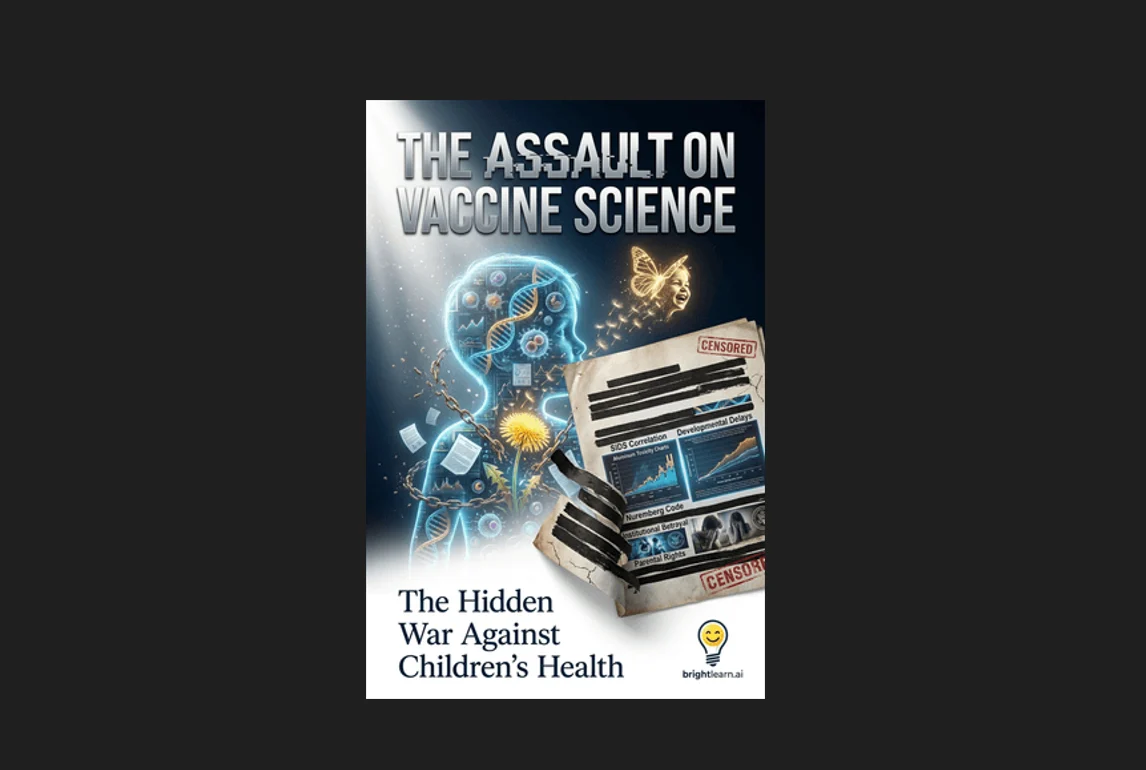
In an era defined by rapid technological advancement and unprecedented access to information, the fundamental pillars of public health—transparency, rigorous inquiry, and informed consent—have become the subjects of intense societal debate. A new, provocative publication, The Assault on Vaccine Science: The Hidden War Against Children’s Health, seeks to dismantle the prevailing institutional narrative regarding the current childhood immunization schedule. By meticulously cataloging alleged administrative failures, scientific irregularities, and the systemic suppression of dissenting data, the book positions itself as a manifesto for those seeking a radical reform of medical oversight.
For parents, medical professionals, and policymakers, this text serves as a stark invitation to reconsider the architecture of modern pediatric care. It is a work that demands intellectual courage, challenging readers to examine whether the mechanisms designed to protect public health have, in some instances, become obstacles to the very safety they claim to uphold.
The Core Thesis: A System Under Scrutiny
The central argument of The Assault on Vaccine Science is that the current scientific establishment has become "captured" by interests that prioritize institutional dogma and pharmaceutical industry stability over granular safety analysis. The book posits that the "official narrative" regarding vaccine safety is not a product of settled science, but rather a curated facade maintained by the systematic silencing of researchers, the obfuscation of adverse event data, and the marginalization of independent scrutiny.
The authors contend that the current medical-regulatory complex operates as a closed loop. When independent researchers produce data that suggests correlations between vaccination and chronic illness, the establishment reportedly shifts from scientific debate to administrative suppression. The book provides a detailed, forensic examination of how this process unfolds, framing it not as a series of isolated errors, but as a coordinated institutional strategy.
Chronology of Contention: A Pattern of Discrepancies
To build its case, the text presents a historical trajectory of scientific disputes that have, in recent years, reached a boiling point.
The Neil Miller SIDS Analysis (2020)
A focal point of the book is the 2020 paper by researcher Neil Miller, which investigated the temporal relationship between vaccinations and Sudden Infant Death Syndrome (SIDS). Utilizing data from the federal Vaccine Adverse Event Reporting System (VAERS), Miller identified a startling statistical cluster: 50% of SIDS cases reported to the system occurred within three days of vaccination, and 75% within one week.
From a statistical standpoint, these figures are presented as "thunderclaps." In a truly random distribution, one would expect only 2% to 3% of cases to fall within a three-day window. The book argues that the lack of an immediate, high-level emergency investigation by the Centers for Disease Control and Prevention (CDC) constitutes a failure of duty. Instead of scientific engagement, the paper faced a "coordinated smear campaign" on the academic platform PubPeer, ultimately leading to the journal Toxicology Reports removing the paper through an unconventional "removed" status—a maneuver the book characterizes as Orwellian.
The Hooker-Miller Developmental Delay Study
The text further highlights the case of the Hooker-Miller study, which explored links between vaccination and developmental delays, asthma, and chronic ear infections. For six years, the study remained in the public domain, garnering nearly 300,000 downloads. Only after this period of public consumption did the journal issue a "notice of concern," citing pressure that the authors characterize as ideological rather than methodological.
The book contrasts this with the treatment of Poul Thorsen, a researcher indicted for embezzling over $1 million in CDC research funds. Despite his legal history and flight from justice, his research, which remains a cornerstone of arguments regarding the safety of the mercury-based preservative thimerosal, continues to be cited as authoritative evidence. This juxtaposition is used to argue that the scientific literature is currently governed by a double standard, where politically convenient data is shielded from criticism, while inconvenient findings are systematically erased.
Supporting Data: The Chemical and Environmental Context
The Assault on Vaccine Science moves beyond individual studies to examine the broader environmental context in which modern children are raised. The authors argue that the "vaccine safety" conversation is incomplete if it fails to account for the cumulative toxic burden placed on the developing immune systems of infants.
The Glyphosate and Aluminum Nexus
The book explores the synergistic effects of environmental toxins. It highlights the ubiquity of glyphosate—the active ingredient in Roundup—in common grain products. Glyphosate is described as a chelator that strips the body of essential minerals like magnesium and zinc while disrupting the gut microbiome, leading to "leaky gut" and chronic inflammation. A child entering a pediatrician’s office with a compromised system is, the book argues, more vulnerable to the secondary effects of pharmaceutical intervention.
Furthermore, the book addresses the cumulative aluminum adjuvant burden. It notes that the CDC-recommended schedule exposes infants to over 1,000 micrograms of aluminum within their first 18 months of life. The authors emphasize a critical regulatory gap: the FDA has never established a safe maximum for injected aluminum, as the existing safety limits were derived from studies on oral ingestion. When injected directly into muscle tissue, these adjuvants bypass the body’s primary digestive defense mechanisms. The book alleges that the CDC has ceased tracking aluminum levels in infants because the findings would likely expose a significant risk factor for neurodevelopmental disorders.
Official Responses and Administrative Insubordination
Perhaps the most gripping portion of the narrative concerns the attempted reform of the Department of Health and Human Services (HHS). By documenting the experiences of leadership figures such as Robert F. Kennedy Jr., the book details what it terms the "captured state."
The accounts suggest that career officials within federal agencies frequently engaged in "shell games" regarding vaccine safety data. Instances are documented where officials allegedly bragged about withholding access to the Vaccine Safety Datalink from oversight authorities, claiming data had been erased or lost when it remained accessible. The book frames this as institutional insubordination—an administrative branch of government that acts with autonomy, often defying the directives of democratically elected officials to protect the interests of the pharmaceutical industry.
The implication here is severe: the "regulatory capture" described suggests that the agencies responsible for public health oversight have become, in effect, the marketing and protection arms of the manufacturers they are tasked with regulating.
Implications for Public Health and Medical Freedom
The final chapters of the book transition from critique to advocacy, focusing on the concepts of informed consent and the Nuremberg Code. The authors argue that vaccine mandates, by their nature, violate the ethical requirements established in the wake of World War II, as they coerce consent through the threat of exclusion from employment, education, and public life.
A Roadmap for Reform
The book provides a practical, if controversial, guide for parents:
- Navigating Legal Exemptions: Understanding how to utilize existing religious and medical exemption frameworks to protect bodily autonomy.
- Grassroots Activism: Encouraging parents to engage in local school board meetings and support organizations like Children’s Health Defense that challenge scientific censorship through the judicial system.
- Resilience Strategies: Moving the focus of health away from a dependency on injection schedules toward building a resilient immune system through nutrition, sleep, sunlight, and gut health.
The text emphasizes that the movement for medical freedom is intentionally decentralized. It rejects the idea of a top-down revolution, advocating instead for a grassroots effort that empowers individual parents to make informed decisions for their families.
Conclusion: The Burden of Knowledge
The Assault on Vaccine Science is positioned not as a final word, but as a wake-up call. It challenges the reader to look past the institutional consensus and examine the evidence that, according to the authors, is being actively suppressed. By documenting the alleged failures of federal health agencies, the environmental impacts of modern agriculture, and the ethical lapses in medical oversight, the book presents a compelling, albeit deeply unsettling, case for change.
For many, this information may feel overwhelming or fundamentally contradictory to the guidance they have received from their pediatricians. However, the core message of the book is that informed consent is an absolute right that cannot be superseded by institutional policy. As the debates surrounding medical autonomy continue to intensify, this publication provides a comprehensive, well-documented resource for those who are no longer willing to accept the status quo at face value.
The authors conclude with a sobering challenge: "You can no longer claim you did not know." Whether this information leads to a transformation in personal health choices or a broader societal movement for transparency, the book stands as a significant, provocative entry in the ongoing discourse over the future of children’s health.
For those interested in further exploration, "The Assault on Vaccine Science: The Hidden War Against Children’s Health" is available through the BrightLearn platform. Readers are encouraged to examine the provided data and engage with the broader materials available on the Health Ranger Report and Brighteon channels to better understand the arguments presented in this critical review.