








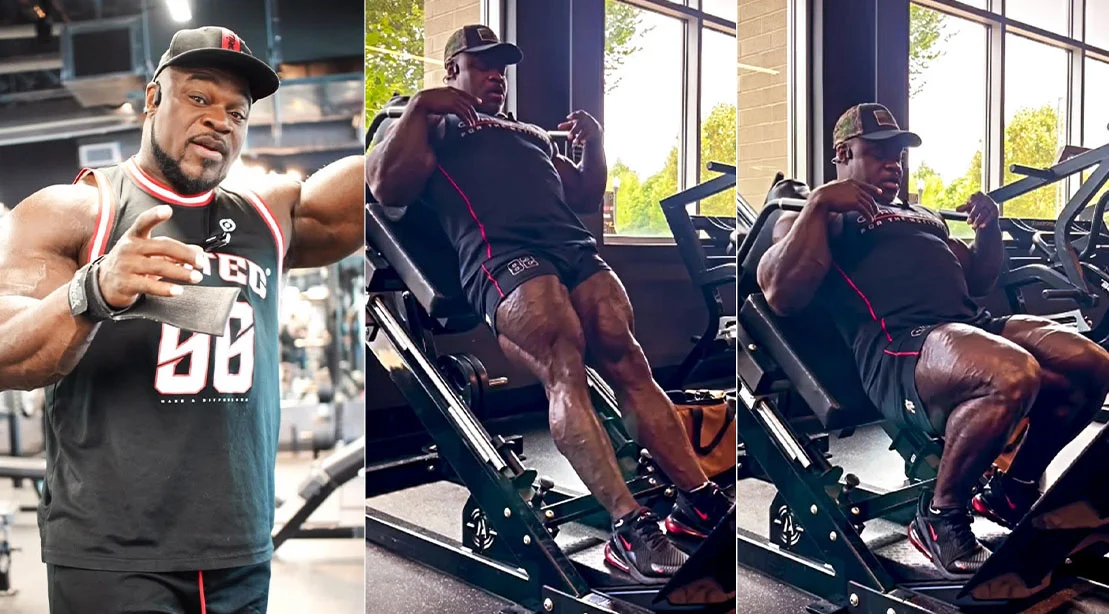
In the elite echelons of professional bodybuilding, the difference between a top-five finish and the Mr. Olympia title is often found in the margins—the specific angles, the unique mechanical stressors, and the refusal to rely solely on "ego lifting." Brandon "The Prodigy" Curry, the 2019 Mr. Olympia champion, has long been a student of the iron game. As he sets his sights on the 2026 Mr. Olympia stage in Las Vegas, Curry is eschewing traditional heavy-load volume in favor of a specialized training technique that promises to redefine quad hypertrophy: the "mechanical dropset."
By manipulating body mechanics rather than simply stripping plates from a bar, Curry is demonstrating that true intensity is not measured by the weight on the rack, but by the level of controlled metabolic distress inflicted upon the muscle fibers.
The Core Philosophy: Why Mechanical Dropsets Outperform Traditional Methods
Traditional dropsets are a staple in almost every bodybuilding repertoire. The methodology is straightforward: perform a set to failure with a heavy weight, reduce the weight by 20–30%, and immediately continue. While effective for muscle endurance and blood flow, this method often prioritizes the ability to move external mass.
Brandon Curry’s "mechanical dropset" shifts the focus from external weight to internal leverage. "In the goal of making things harder, I have used, basically, a mechanical dropset," Curry explains. "Going from the hardest exercise to the easiest exercise."
By starting with the most mechanically disadvantaged movement—where the quads are stretched to their limit—and progressing toward a more supported, stable movement, Curry ensures that the target muscles remain under extreme tension long after the point of initial failure. This approach minimizes the involvement of stabilizing muscles that might give out before the quads are fully exhausted, allowing for a deeper, more punishing stimulus that is highly conducive to fiber recruitment and growth.
A Chronology of the Torture: Breaking Down the Sequence
Curry’s recent social media demonstration, which garnered significant attention from his 1.1-million-plus Instagram followers, provides a blueprint for this specialized leg day. The routine is not designed for the faint of heart; it is a three-stage sequence performed back-to-back with minimal rest, creating a cumulative fatigue that few lifters experience in a standard workout.
Phase 1: The Full-Stretch Sissy Squat
The sequence begins with the sissy squat, an old-school movement that forces the knees to track forward and places a massive amount of stress on the distal portion of the quadriceps. Curry performs these with a deliberate, "slight pause" at the bottom of the movement. This pause is the differentiator—it eliminates the kinetic energy of the descent and forces the quads to initiate the upward drive from a dead stop in a fully lengthened position. "That pause hits you," Curry notes, urging lifters to "let those knees shift down to a deeper stretch."
Phase 2: The Partial Sissy Squat
Once the full range of motion becomes impossible due to lactic acid accumulation, Curry transitions immediately into partial sissy squats. By terminating the descent when the thighs are parallel to the floor, he removes the hip involvement that characterizes a standard squat, effectively isolating the quads and the lower calf musculature. The focus here is on the "stretch-squeeze" cycle, maintaining tension without allowing the muscles a moment of relaxation at the top of the rep.
Phase 3: The Hack Squat Finisher
The final phase utilizes the hack squat machine, but with a calculated modification. By placing a wedge on the floor against the footrest and utilizing a foam roller behind his shoulders to force a forward lean, Curry manipulates his center of gravity. This setup ensures that even on the machine, his torso remains upright, keeping the load squarely on the quads rather than the glutes or lower back. In this final stage, he aims for a deep, controlled descent followed by a vertical drive, pushing the quads to total systemic failure.
Supporting Data: The Science of Time Under Tension
While Curry’s methodology is rooted in years of intuitive bodybuilding experience, the science of hypertrophy supports his focus on the "stretch" and "time under tension" (TUT).
Modern sports science suggests that muscle growth is driven by three primary factors: mechanical tension, metabolic stress, and muscle damage. By incorporating pauses at the bottom of the movement, Curry is maximizing mechanical tension. By stringing three distinct variations together without rest, he is inducing extreme metabolic stress—the "pump" that signals an influx of nutrient-rich blood to the muscle tissue.
Furthermore, the use of a foam roller and a floor wedge to alter the angle of the hack squat is a form of "bio-feedback" training. By changing the foot position and the angle of the torso, Curry is able to target different motor units within the vastus lateralis and vastus medialis, ensuring that the entire quadriceps complex is hit from multiple angles in a single, three-minute window of intense labor.
Official Perspectives: The "Prodigy" on Ego Lifting
One of the most compelling aspects of Curry’s instruction is his explicit rejection of the "ego lifting" culture. In an industry where social media is dominated by videos of lifters struggling with heavy weight—often at the expense of proper form and joint health—Curry’s approach is a breath of fresh air.
"Does it have to be heavier? No," Curry emphasizes. His mechanical dropset proves that you can achieve a higher level of intensity by making the movement harder through biomechanics rather than just adding plates. When a bodybuilder of his stature, who has stood at the pinnacle of the sport, prioritizes form and muscle isolation over heavy-load volume, it serves as a necessary correction for amateur lifters who often hit plateaus because they sacrifice range of motion for ego.
Implications for the 2026 Olympia Stage
What does this mean for the competitive landscape? As the 2026 Mr. Olympia approaches, the focus for top athletes is shifting away from "bulk at any cost" toward detail, fullness, and muscle maturity. Curry’s quad development, already considered his "granite" signature, is clearly a work in progress.
By utilizing these mechanical dropsets, Curry is likely looking to add "pop" to his leg sweep and depth to his teardrop (vastus medialis) without adding excessive systemic fatigue that could hinder his recovery. For the average lifter, the implication is clear: you do not need a commercial gym’s worth of specialized equipment to spark growth. You need a deep understanding of your own body, the willingness to embrace the "burn," and the discipline to prioritize execution over the numbers on the plate.
How to Implement the "Prodigy" Routine
For those daring enough to replicate this routine, the protocol is straightforward but demanding.
- The Setup: Use a hack squat machine, a floor wedge, and a foam roller for back support.
- The Execution: Perform one set of full-range sissy squats (8–12 reps) with a pause at the bottom. Immediately transition to partial sissy squats (8–12 reps) until failure. Finally, move to the hack squat for a set of 8–12, maintaining a controlled, vertical posture.
- The Mindset: Forget the weight. If you can perform the full 36-rep sequence with perfect form and a deep, agonizing pause at the bottom, the weight is sufficient.
As Brandon Curry continues his march toward Las Vegas, he remains a living testament to the idea that the greatest bodybuilding advancements aren’t found in a pill or a new supplement, but in the relentless, intelligent pursuit of the perfect contraction. If you want legs forged from granite, it is time to stop lifting for the ego and start training for the muscle.