






In a groundbreaking development that bridges the gap between evolutionary biology and oncology, researchers at the Japan Advanced Institute of Science and Technology (JAIST) have uncovered a potential “silver bullet” for cancer treatment hidden within the intestines of a common Japanese tree frog (Dryophytes japonicus).
The study, published in the peer-reviewed journal Gut Microbes, details the discovery of a specific bacterial strain, Ewingella americana, which possesses an extraordinary, innate ability to seek out, infiltrate, and eliminate malignant tumors. Unlike conventional therapies that often result in systemic toxicity, this naturally occurring bacterium acts with surgical precision, offering a promising new frontier in the battle against solid tumors.
The Paradigm Shift: From Microbiome Modification to Direct Intervention
For years, the scientific community has been captivated by the gut microbiome—the vast ecosystem of bacteria residing in our digestive tracts. Most research in this field has focused on how altering the diversity of these microbes through diet or fecal microbiota transplants can influence immune function. However, the JAIST team took a radical departure from this methodology.
Instead of trying to manipulate the entire microbiome, lead researchers sought to identify individual bacterial strains capable of functioning as therapeutic agents in their own right. By screening 45 distinct bacterial strains harvested from Japanese tree frogs, Japanese fire belly newts, and Japanese grass lizards, the team looked for biological "specialists"—microbes that could survive the human circulatory system and selectively home in on cancerous tissue.
The result of this intensive screening was the identification of E. americana. Unlike previous attempts to use bacteria in cancer treatment, which often struggled with safety concerns or efficacy, this specific strain demonstrated a "100% complete response rate" in mouse models of colorectal cancer.
A Chronology of Discovery: From the Wild to the Laboratory
The journey from the humid forests of Japan to the laboratory bench was a meticulous process of biological prospecting.
Phase 1: Biodiversity Screening (The Collection)
The research began with a systematic collection of microbes from the natural hosts—tree frogs, newts, and lizards. By sampling the intestinal environments of these amphibians and reptiles, the team tapped into a reservoir of evolutionary adaptations. These animals, which live in environments teeming with diverse pathogens, often host symbiotic bacteria that provide them with heightened immune protection.
Phase 2: Identifying the Candidate
Out of the 45 strains collected, nine showed an inhibitory effect on cancer cells during initial in vitro screening. E. americana emerged as the clear frontrunner due to its rapid proliferation and its unique ability to thrive in hypoxic (low-oxygen) conditions.
Phase 3: The Mouse Model Trial
The efficacy phase involved testing the bacterium in mice with induced colorectal cancer. The team administered a single intravenous dose of the bacteria. The results were startling: the tumor burden vanished entirely in the treated subjects. When compared to standard clinical treatments—such as immune checkpoint inhibitors (anti-PD-L1) and liposomal doxorubicin—E. americana outperformed them all in terms of tumor clearance and overall survival rates.
Mechanism of Action: The Dual-Front Assault
The success of E. americana is not accidental; it is a result of a highly evolved biological strategy that allows it to act on two distinct fronts simultaneously.
1. Direct Oncolytic Action
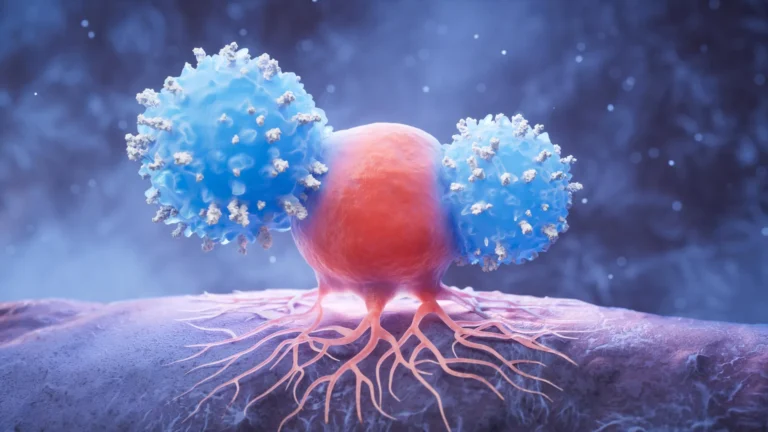
E. americana is a facultative anaerobe. In the human body, healthy tissues are typically oxygen-rich, but tumors—due to their rapid, chaotic growth—often develop deep, oxygen-deprived pockets. When the bacteria enter the bloodstream, they remain dormant in healthy, oxygenated tissues. However, upon entering the hypoxic environment of a tumor, they find the perfect conditions to thrive. Within just 24 hours of administration, the population of E. americana inside the tumor increased by a factor of 3,000, physically damaging the tumor structure from the inside out.
2. Immune System Recruitment
The bacteria do not work alone. Their presence acts as a massive "red flag" to the host’s immune system. By colonizing the tumor, E. americana triggers a localized inflammatory response. This attracts a surge of T cells, B cells, and neutrophils to the site of the malignancy. These immune cells release pro-inflammatory signaling molecules, such as TNF-α and IFN-γ, which serve to coordinate a more robust, systemic attack against the cancer cells, effectively "unmasking" the tumor to the immune system.
Safety and Bio-Distribution: The Challenge of Selectivity
One of the greatest hurdles in bacterial cancer therapy has been the risk of sepsis or systemic infection. The JAIST researchers paid meticulous attention to this, and their findings regarding safety are perhaps the most compelling aspect of the study.
The researchers tracked the distribution of E. americana throughout the mouse subjects. They found that the bacteria were rapidly cleared from the blood, with a half-life of just 1.2 hours. By the 24-hour mark, the bacteria were entirely undetectable in the bloodstream. Crucially, no colonization was observed in vital healthy organs, including the heart, lungs, kidneys, or liver.
The immune response remained localized, causing only transient, mild inflammation that resolved within 72 hours. During a 60-day observation period—a significant duration in the lifespan of a mouse—there were no signs of chronic toxicity or secondary health complications, suggesting that the body is capable of handling the therapy without lasting harm.
Official Responses and Expert Perspective
While the scientific community remains cautious, citing the inherent differences between mouse models and human biology, the reception of the JAIST study has been overwhelmingly positive.
"The precision of this mechanism is unprecedented," noted one independent observer familiar with the study. "We have seen attempts at using bacteria like Salmonella for cancer in the past, but the issue has always been balancing the ‘therapeutic dose’ against the ‘lethal dose.’ E. americana appears to solve this by being inherently self-limiting and tumor-specific."
The researchers themselves emphasize the importance of the proof-of-concept nature of their work. "We are not suggesting that this is a cure-all, but we have demonstrated that nature holds the keys to specific therapeutic agents that we have yet to fully utilize," the team noted in their official release. They stress that the jump to human clinical trials will require years of rigorous safety testing and regulatory navigation.
Implications for the Future of Oncology
The implications of this discovery extend far beyond colorectal cancer. The JAIST team is already preparing to expand their scope to investigate the efficacy of E. americana against other difficult-to-treat solid tumors, such as pancreatic cancer, breast cancer, and melanoma.
Future Research Directions:
- Dose Fractionation: Determining whether multiple, smaller doses could be more effective than a single high-impact dose.
- Synergistic Therapies: Investigating whether combining E. americana with current chemotherapy regimens could create a synergistic effect, allowing for lower doses of harsh chemicals.
- Direct Injection: Exploring whether direct intratumoral injection could be safer and more effective for localized or accessible tumors.
The Value of Biodiversity
Perhaps the most significant takeaway from this study is the reminder that biodiversity is a vital asset for human health. As pharmaceutical companies increasingly turn toward synthetic biology, this study serves as a poignant reminder that the natural world—from the intestines of a frog to the soil of a rainforest—remains the most sophisticated laboratory in existence.
Conclusion: A New Era for Bacterial Medicine?
The identification of E. americana as an anticancer agent marks a turning point in how we perceive the role of bacteria in human disease. By moving away from the idea of bacteria as mere "pathogens" to be eliminated, and toward the concept of "therapeutic symbionts" that can be guided to destroy malignant cells, the JAIST team has opened a new, exciting chapter in medicine.
While the path from the laboratory bench to the bedside is long, the results from this study offer a rare spark of hope. As we continue to decode the biological mysteries of the natural world, we may find that the solutions to our most complex health crises have been living alongside us all along, waiting to be discovered.
Glossary of Terms
- Facultative Anaerobe: An organism that makes ATP by aerobic respiration if oxygen is present, but is capable of switching to fermentation or anaerobic respiration if oxygen is absent.
- Immune Checkpoint Inhibitors: A type of immunotherapy that blocks proteins that prevent the immune system from attacking cancer cells.
- Oncolytic: A term describing an agent that preferentially infects and kills cancer cells.
- Liposomal Doxorubicin: A chemotherapy drug encapsulated in fat bubbles (liposomes) to reduce side effects and increase delivery to tumors.
- Complete Response (CR): The disappearance of all signs of cancer in response to treatment.
This research was supported by the Japan Society for the Promotion of Science (JSPS) KAKENHI Grant-in-Aid for Scientific Research (A) (Grant No. 23H00551), JSPS KAKENHI Grant-in-Aid for Challenging Research (Pioneering) (Grant No. 22K18440), the JSPS Program for Forming Japan’s Peak Research Universities (J-PEAKS) (Grant No. JPJS00420230006), the Japan Science and Technology Agency (JST) Program for Co-creating Startup Ecosystem (Grant No. JPMJSF2318), and JST SPRING (Grant No. JPMJSP2102).