






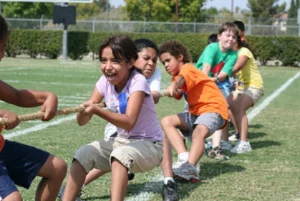
For millions of families, the arrival of summer signals a welcome departure from the rigid structure of the school year. The morning bell, the burden of homework, and the frantic pace of extracurricular schedules fade, replaced by the promise of long, sun-drenched days. Yet, beneath the veneer of summer freedom lies a paradox: while the season is visually associated with movement, many children experience a dramatic decline in physical activity once the school gates close.
As we move further into the 21st century, the definition of "youth fitness" is undergoing a critical transformation. No longer can we rely on the narrow framework that equates physical health solely with organized sports. To foster a generation of healthy adults, parents, coaches, and fitness professionals must broaden their horizons to embrace a more holistic, sustainable approach to movement.
Main Facts: The Summer Activity Gap
The assumption that children naturally become more active during summer is often disconnected from reality. While the absence of school-related obligations provides more time, the structural support systems that ensure movement—such as physical education (PE) classes, recess, and active transit—are abruptly withdrawn.
Data suggests that for many children, the school environment is a primary driver of daily activity. The simple act of navigating hallways, participating in PE, and engaging in active play during recess accounts for a significant portion of a child’s daily caloric expenditure. When this is replaced by a lack of routine, increased screen time, and, in some regions, extreme heat that restricts outdoor play, many children enter a state of summer-long sedentary behavior.
This shift presents a vital opportunity. By rethinking summer as a laboratory for physical literacy rather than just a "break" from activity, we can pivot from a performance-based model to one centered on exploration and enjoyment.
Chronology of the Modern Fitness Shift
The evolution of youth fitness has been marked by several distinct phases:
- The Era of Institutionalized Play (Mid-20th Century): Movement was largely integrated into the school day and neighborhood-based, unstructured outdoor play.
- The Rise of Specialization (1990s–2010s): The "travel team" culture took hold, prioritizing early specialization in single sports. This period saw the professionalization of youth athletics, which often led to burnout and the exclusion of children who did not fit the "athlete" mold.
- The Physical Literacy Movement (2015–Present): A global shift, supported by organizations like the World Health Organization and the International Physical Literacy Association, has refocused attention on "physical literacy"—the motivation, confidence, and competence to remain active for life.
Supporting Data and Research
Research published in the Fitness Journal (2026) and various clinical studies emphasize that the quality of movement matters as much as the quantity.
- The Impact of Unstructured Play: A 2022 review in Applied Physiology, Nutrition, and Metabolism highlights that free play is essential for developing motor competence and social skills. Without the pressure of a referee or a coach, children engage in "creative movement," which improves coordination and agility.
- The Perils of Specialization: Studies, including those by the Council on Sports Medicine and Fitness, indicate that early sports specialization can lead to increased injury rates and decreased long-term enjoyment of physical activity.
- Physical Literacy as a Determinant: Evidence consistently shows that children who develop a broad "movement vocabulary"—climbing, swimming, balancing, throwing—are statistically more likely to maintain an active lifestyle into adulthood than those who focus on a single sport.
Official Perspectives: Redefining Success
Fitness professionals and pediatric experts are increasingly calling for a move away from the "sport-only" mentality.
"The goal is not to produce professional athletes," notes Dr. Sarah Jenkins, a specialist in pediatric kinesiology. "The goal is to produce individuals who feel comfortable in their own bodies. When we view fitness exclusively through the lens of organized sports, we alienate a massive segment of the population who might not enjoy competition but would thrive in hiking, dance, or martial arts."
Professional organizations are urging coaches to incorporate "physical literacy" into their training. This means that even within a competitive sport, there should be room for games, skill-building, and movement exploration that challenges the body in ways not specific to the sport itself. This approach acknowledges that "fun" is not merely a distraction—it is a prerequisite for long-term adherence.
Implications for Parents and Professionals
The shift in philosophy carries profound implications for how we organize summer programs and family life.
For Fitness Professionals
Professionals working with youth—whether in community centers, camps, or personal training settings—must transition from being "drill sergeants" to "movement facilitators." Sessions should be designed to:
- Prioritize Variety: Incorporate activities that demand different physical capacities (e.g., endurance-based hiking vs. agility-based obstacle courses).
- Foster Autonomy: Give children a say in the movement activities they perform to build internal motivation.
- De-emphasize Competition: Focus on personal growth and the mastery of new skills rather than winning or losing.
For Parents and Guardians
For families, the summer challenge is to provide "intentional movement." This does not mean scheduling every hour of the day with structured exercise. Instead, it means:
- Environmental Design: Making movement the easiest option. This includes keeping balls, bikes, and jump ropes accessible and normalizing active family outings like nature walks or backyard games.
- Modeling Behavior: Parents who engage in movement for enjoyment—rather than just for aesthetic or competitive reasons—provide the most powerful model for their children.
- Valuing Free Play: Recognizing that a group of children building a fort or creating their own backyard game is, in fact, a high-quality physical development session.
Building a Future of Lifelong Movers
The ultimate metric of success in youth fitness is not the number of trophies on a mantle or the proficiency in a specific game; it is the child’s relationship with movement itself. If we define success as lifelong participation, we must ensure that the experiences children have during their formative years—and specifically during the long, open months of summer—are positive, inclusive, and varied.
When a child discovers they enjoy the sensation of cycling, the challenge of climbing, or the rhythm of dance, they are building a foundation that will serve them long after they graduate from organized sports. This is the essence of physical literacy.
As summer gives way to the autumn school term, the habits fostered during these months often persist. Children who have spent their summer exploring a variety of movements are better equipped to handle the demands of the school year, both physically and mentally. They arrive back in the classroom not just with improved motor skills, but with a sense of confidence and a self-identity as an "active person."
The future of youth fitness lies in moving beyond the narrow confines of the field, the court, and the gym. It lies in the parks, the trails, the living rooms, and the neighborhood streets. By embracing the diversity of human movement, we can ensure that the "summer slide" in activity becomes a thing of the past, replaced by a lifelong commitment to health, curiosity, and the simple joy of moving.
References Summary
The insights shared in this article are supported by contemporary research, including:
- Brenner, J. S. et al. (2023): On reducing burnout in young athletes.
- Cairney, J. et al. (2022): On the conceptual model of physical literacy and health.
- Hulteen, R. M. et al. (2022): On the development of foundational movement skills.
- McLoughlin, G. M. et al. (2023): On seasonal changes in children’s physical activity patterns.
- Tremblay, M. S. et al. (2022): On the vital role of unstructured play for child development.
For further exploration of these topics, please refer to the 2026 Issue 7 of the Fitness Journal.