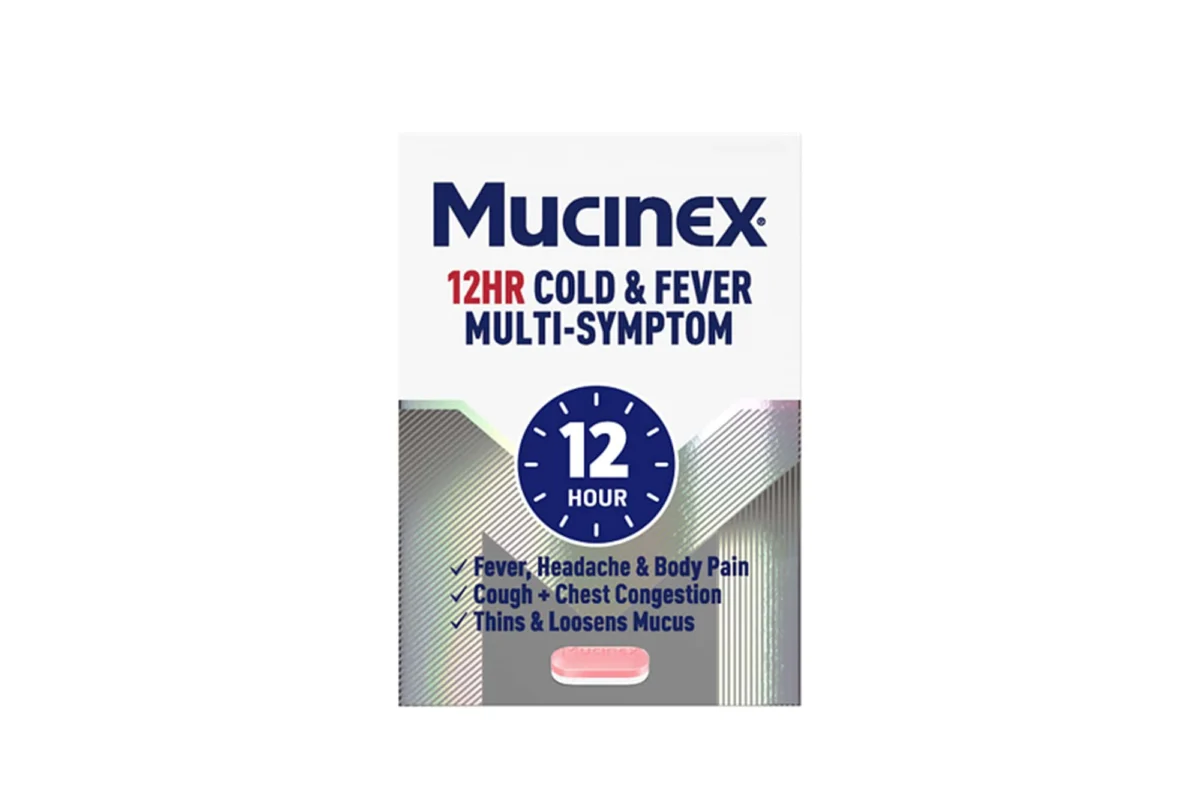
The United States Food and Drug Administration (FDA) has granted approval for a groundbreaking over-the-counter (OTC) medication: Mucinex 12hr Cold & Fever Multi-Symptom. Developed by the global health and hygiene company Reckitt, this new formulation represents a significant shift in how consumers manage the debilitating symptoms associated with seasonal respiratory illnesses. By combining long-acting relief with a unique pharmaceutical delivery system, the medication aims to alleviate the burden on both patients and the over-taxed U.S. healthcare infrastructure.
Main Facts: A Triad of Active Ingredients
The core innovation of Mucinex 12hr Cold & Fever lies in its proprietary bi-layer tablet technology. For the first time in the OTC category, this product combines three powerful active ingredients: guaifenesin, dextromethorphan HBr, and naproxen sodium.
- Guaifenesin: An expectorant that thins and loosens mucus, clearing the airways of chest congestion.
- Dextromethorphan HBr: A cough suppressant that works to quiet the persistent cough reflex.
- Naproxen Sodium: A potent non-steroidal anti-inflammatory drug (NSAID) that targets the systemic inflammation caused by viral infections, providing relief from fever, body aches, and headaches.
The bi-layer design is the hallmark of the product’s efficacy. By utilizing an immediate-release layer alongside an extended-release core, the tablet provides rapid onset of relief while maintaining therapeutic levels of the medication in the bloodstream for up to 12 hours. This marks a departure from traditional 4-hour medications, which often require frequent dosing and lead to "symptom troughs"—periods where the medication wears off before the next dose can be safely taken.
Chronology of Development
The road to this approval was neither short nor simple. Reckitt’s journey to bring this formulation to market spanned over a decade, characterized by rigorous research, clinical trials, and extensive consultation with regulatory bodies.
Phase I: Identifying the Unmet Need (2014–2016)
Reckitt’s R&D teams began by conducting deep-dive consumer research. They identified a significant gap in the market: while many products addressed individual symptoms like coughing or congestion, there was no single OTC solution that effectively managed the inflammatory response to a virus while also addressing airway clearance for a full 12-hour period.
Phase II: Formulation and Stability Testing (2017–2021)
Combining an NSAID like naproxen sodium with respiratory agents like guaifenesin presented significant chemical challenges. Ensuring the stability of these compounds in a single bi-layer tablet required extensive engineering. The team focused on the pharmacokinetics of the tablet, ensuring that the release rates of the three distinct chemicals did not interfere with one another.
Phase III: Regulatory Review and Approval (2022–2026)
Following successful safety and efficacy trials, the company submitted its New Drug Application (NDA) to the FDA. The regulatory review process focused on the safety of the long-acting NSAID component, ensuring that patients could safely manage fevers without the risks associated with excessive dosing. In early 2026, the FDA provided final authorization, paving the way for the product’s commercial debut.
Supporting Data: The Burden of Respiratory Illness
The approval of this medication comes at a critical juncture for U.S. public health. According to data provided by the Centers for Disease Control and Prevention (CDC), the impact of respiratory viruses on the American population is profound and growing.
The 2024-2025 Seasonal Snapshot
The 2024-2025 influenza season saw an estimated 51 million illnesses in the United States alone. These figures include millions of medical visits and hundreds of thousands of hospitalizations. The high volume of patients seeking care for self-limiting viral illnesses has historically contributed to the "strain" on urgent care centers and primary physician offices.
The 2025-2026 Surge
The 2025-2026 season witnessed an uncharacteristically early surge in cases across the country. Epidemiologists noted that earlier-than-expected circulation of influenza, coupled with endemic respiratory syncytial virus (RSV) and COVID-19, created a "tripledemic" scenario. In such high-pressure environments, the ability for patients to self-manage symptoms at home effectively is not merely a convenience—it is a public health necessity.
By providing 12 hours of relief, Mucinex 12hr Cold & Fever aims to reduce the "rebound" effect, where patients feel well enough to resume activities only to have symptoms return forcefully four hours later, potentially leading to increased reliance on medical services.
Official Responses and Strategic Vision
The development of this medication is viewed by Reckitt as a triumph of consumer-centric science. Angela Naef, Chief R&D Officer at Reckitt, emphasized the philosophy behind the product during the official launch announcement.
"True innovation starts with understanding consumer needs and applying science to solve them," said Naef. "This approval is the culmination of more than a decade of research and development to create a first-of-its-kind formulation that delivers long-lasting relief from multiple cold and fever symptoms. We wanted to move beyond the patchwork approach of taking three different pills at different times, and instead offer a streamlined, science-backed solution."
Reckitt’s strategy focuses on empowering the consumer. By consolidating the treatment for cough, congestion, and systemic inflammation (fever/aches) into one tablet, the company intends to simplify the complex and often confusing landscape of the OTC cold and flu aisle.
Implications for Healthcare and Consumers
The introduction of this medication has significant implications for both the individual patient and the broader healthcare ecosystem.
For the Healthcare System
The primary goal of OTC medications in this category is to manage mild-to-moderate symptoms at home. When patients can effectively manage their fever and congestion for 12 hours at a time, they are less likely to seek emergency care for manageable viral symptoms. This reduces the foot traffic in waiting rooms, allowing medical professionals to focus their resources on patients with more severe, complicated, or chronic conditions.
For the Patient
The "12-hour" promise is the most significant benefit for the average consumer. Modern life demands high levels of productivity, and being incapacitated by a cold or flu for several days can have significant economic and social consequences. The ability to take one dose in the morning and one in the evening provides a baseline of comfort that allows for rest, hydration, and recovery without the constant interruption of symptom flare-ups.
Regulatory and Market Precedent
This approval sets a new bar for the OTC industry. It demonstrates that the FDA is willing to approve more complex, multi-symptom formulations provided the manufacturer can prove safety and efficacy for each component. Other pharmaceutical companies are expected to observe the market performance of this product closely. If successful, it may trigger a wave of innovation in "all-in-one" treatments that target not just the symptoms, but the underlying physiological responses to infection.
Conclusion: A New Standard for Symptom Management
The approval of Mucinex 12hr Cold & Fever Multi-Symptom represents a convergence of pharmaceutical engineering and public health needs. As the patterns of viral outbreaks continue to evolve, the tools available to the public must evolve in kind.
By addressing the systemic inflammatory response—often the most painful part of the cold and flu experience—alongside traditional congestion relief, Reckitt has provided a robust tool for the American medicine cabinet. While no medication can cure a viral infection, the ability to mitigate the severity and duration of symptoms through advanced, long-lasting delivery systems is a victory for patient comfort and a necessary step in alleviating the seasonal pressures on our national healthcare system. As the product rolls out to pharmacies nationwide, consumers now have a sophisticated option that bridges the gap between basic symptom relief and comprehensive, 12-hour care.