




Prostate cancer remains one of the most formidable challenges in modern oncology, not merely because of its prevalence, but due to its frustrating clinical profile. While immunotherapy has revolutionized the treatment landscape for cancers like melanoma and lung cancer, prostate tumors have remained largely recalcitrant, often dubbed "immune cold." These tumors effectively cloak themselves from the body’s natural defense systems, rendering traditional checkpoint inhibitors largely ineffective.
However, a pioneering study published in the journal Nature Biomedical Engineering has unveiled a potential paradigm shift. Researchers have developed an innovative RNA-targeting CRISPR technology that effectively "unmasks" prostate cancer cells, making them highly visible and vulnerable to immune-mediated destruction. By correcting the genetic architectural defects that allow tumors to hide, this new approach could transform how clinicians treat some of the most stubborn malignancies in the human body.
The Core Challenge: Why Prostate Cancer Remains "Immune Cold"
The efficacy of modern immunotherapy—specifically immune checkpoint inhibitors—relies on a fundamental premise: the immune system must be able to "see" the cancer. This process is mediated by T cells, which patrol the body looking for antigens presented on the surface of cells via the Major Histocompatibility Complex (MHC-1).
In the case of prostate cancer, the tumor microenvironment is typically "immune cold," meaning it lacks the necessary infiltration of T cells. Without these cellular sentinels present, the cancer is essentially invisible to the immune system. For years, researchers have sought to understand how these tumors orchestrate such a sophisticated invisibility cloak.
The breakthrough lies in a phenomenon observed by Dr. Eric J. Wagner and his colleagues: the systematic shortening of messenger RNA (mRNA). In many tumor types, mRNA molecules—the blueprints used by cells to manufacture proteins—are found to be significantly shorter than their counterparts in healthy cells. Much like a biological adaptation for survival, these shortened mRNA strands are more stable and less susceptible to cellular degradation. Consequently, they allow cancer cells to produce excessive, uncontrolled quantities of specific proteins that help the tumor thrive and evade immune detection.
A Chronology of Discovery: From Brain Cancer to RNA Engineering
The roots of this discovery trace back to 2012, when Dr. Wagner, then investigating glioblastoma, noticed an anomaly: the mRNA in the brain tumor cells was consistently truncated. What began as a localized observation in neuro-oncology blossomed into a broader investigation into cancer biology.
- 2012–2015: Initial studies identified mRNA shortening as a recurring trait across multiple aggressive cancer types. Researchers hypothesized that this "compaction" served as a survival mechanism, enabling tumors to escape normal cellular regulation.
- 2016–2020: The team focused on the specific proteins upregulated by these shortened mRNAs. They identified the protein SPSB1 as a primary culprit in downregulating the MHC-1 complex, the very "signal" required for the immune system to recognize a threat.
- 2021–2023: Collaborating with researchers at the Duke University School of Medicine, the team began developing a CRISPR-based intervention. Unlike traditional CRISPR-Cas9 systems designed to cut DNA, they utilized a Cas13-based system designed to interact with RNA without severing it.
- 2024: The successful application of this tool in mouse models was published, demonstrating that forcing the re-lengthening of mRNA could restore the MHC-1 signal and sensitize tumors to immunotherapy.
The Mechanics of the "Immune Magnet"
The research team’s strategy is elegant in its specificity. By targeting the mRNA responsible for producing the SPSB1 protein, the researchers were able to "re-lengthen" the molecule back to its normal, functional state.
The CRISPR-Cas13 Approach
Traditional CRISPR tools are often viewed as "molecular scissors." However, the Cas13 system employed here acts more like a "molecular anchor." By engineering the tool to bind to a precise segment of the mRNA, the researchers prevented the cellular machinery from accessing and trimming the "tail" of the molecule.
Restoring the MHC-1 Complex
Once the SPSB1 protein levels were suppressed through this RNA-level intervention, the cell was no longer able to shut down the MHC-1 complex. With the MHC-1 signals restored on the tumor surface, the cancer cells effectively began displaying the "red flags" that the immune system looks for.
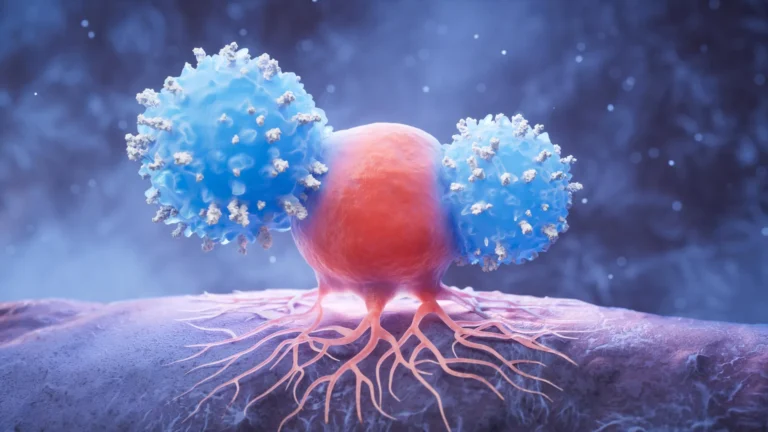
In laboratory studies, the impact was profound. Once the "immune magnet" was restored, T cells flooded the tumor site, identifying and destroying the malignant cells. Crucially, the researchers observed no off-target effects, suggesting that this targeted approach might be safe for clinical application.
Official Responses and Expert Perspective
Dr. Eric J. Wagner, professor of Biochemistry and Biophysics and co-director of the Center for RNA Biology at the University of Rochester Medicine, views this as a transformative moment for oncology.
"Immune therapy is a monumentally different way to treat cancer," says Dr. Wagner. "It is a great way because you don’t have to give patients terrible drugs that kill the cancer but harm healthy cells in the process. The problem is that some cancers respond well to immune therapy, but others develop resistance or don’t respond at all. Our tool strengthens the immune system’s ability to make the cancer go away and could be used in conjunction with existing immunotherapies in prostate and potentially other immune-cold tumor types."
The excitement within the scientific community is palpable. By shifting the focus from killing the cancer directly to enabling the body’s own immune system, the researchers are addressing the root of resistance. As Dr. Wagner notes, "Cancer is super smart at evolving, but it’s not a magician. If we can hit it with immunotherapy and another synergistic drug that pumps up the immune response, we could potentially cure it. It won’t be able to evolve fast enough."
Implications: A New Era for Cold Tumors?
The implications of this research extend far beyond the prostate. The mechanism of mRNA shortening is a common survival tactic utilized by various cancers to avoid detection and suppress immune responses.
Synergistic Treatment Models
The most immediate clinical application is the use of this CRISPR tool in combination with existing immune checkpoint inhibitors. While the CRISPR tool restores the visibility of the tumor, the checkpoint inhibitors release the "brakes" on the T cells, allowing them to initiate a full-scale attack. This two-pronged approach—the "unmasking" followed by the "activation"—could potentially provide a cure for patients who have previously exhausted all other treatment options.
Expanding to Pancreatic and Other Cancers
Pancreatic cancer is notoriously difficult to treat and is widely considered one of the most "immune-cold" cancers in existence. Recognizing the potential for a broader application, the research team has already secured pilot funding from the Wilmot Cancer Institute and Roswell Park Comprehensive Cancer Center to test the technology in pancreatic tumor models.
If the technology proves effective in pancreatic cancer, it could pave the way for a new class of "RNA-reprogramming" therapies. These treatments would not be designed to attack the cancer directly, but to "re-program" the cancer’s own genetic instructions to facilitate its own destruction.
Future Challenges
While the preclinical results are promising, the path to the clinic involves significant hurdles. Ensuring the effective delivery of the CRISPR-Cas13 system into human patients, managing potential immune responses to the therapy itself, and ensuring long-term safety remain critical priorities. The researchers are currently focusing on delivery mechanisms, such as lipid nanoparticles, which are currently the gold standard for mRNA delivery in medicine.
Conclusion
The evolution of cancer therapy has moved from the crude "slash and burn" tactics of surgery and chemotherapy toward the precision of immunotherapy. However, the limitation of "immune-cold" tumors has stood as a significant wall in our progress. By viewing cancer not just as a rogue cell, but as a system that manipulates its own RNA to hide from the immune system, Dr. Wagner and his team have found a way to bridge that gap.
This CRISPR-based technology represents more than just a new treatment; it represents a fundamental change in how we perceive the battle between the immune system and malignancy. As the researchers prepare to take this technology into new models, the hope is that we are moving toward a future where "cold" tumors are no longer the death sentence they once were, but rather a new, addressable target for the next generation of precision medicine.
The work, funded by the National Cancer Institute at the National Institutes of Health, stands as a testament to the power of basic research. By asking why cancer cells behave the way they do—and by looking at the fundamental mechanics of mRNA—scientists are uncovering the keys to unlocking the body’s most powerful defense system.