In the rapidly evolving landscape of oncology, the last decade has been defined by a paradigm shift toward precision medicine. While breakthroughs in B-cell malignancies have garnered headlines and transformed patient outcomes, a quiet, urgent crisis has persisted in the realm of T-cell lymphomas. For many patients, the prognosis remains grim, and conventional chemotherapeutic options are frequently inadequate.
Dr. Federico Mario Aletti, a physician-scientist at The University of Texas MD Anderson Cancer Center, is working to bridge this critical gap. Through his cutting-edge, foundation-supported research, Dr. Aletti is engineering a new generation of chimeric antigen receptor (CAR) T-cell therapy specifically designed to target aggressive T-cell lymphomas. His work represents a commitment to the "bench-to-bedside" philosophy, ensuring that scientific ingenuity directly translates into life-saving clinical care.
The Genesis of a Mission: A Clinical Wake-Up Call
The Italian Roots of a Global Ambition
The seeds of Dr. Aletti’s research were sown during his residency at San Raffaele Hospital at the Università Vita-Salute San Raffaele in Milan, Italy. It was here, amidst the intensity of a high-volume clinical environment, that he first confronted the limitations of existing hematological therapies.
"As I cared for individuals with T-cell lymphomas, I was struck by how limited the available treatment options remained and how often conventional chemotherapy failed to provide meaningful benefit," Dr. Aletti recalls. For a young physician, the experience was formative. He recounts the emotional weight of witnessing families struggle against an aggressive disease with almost no viable alternatives. These moments of clinical frustration served as the catalyst for his transition from a purely clinical practitioner to a translational researcher.
Chronology of Innovation: From Clinical Observation to Targeted Immunotherapy
Phase I: The Recognition of Unmet Need
During his training, Dr. Aletti observed that while CAR T-cell therapy was revolutionizing the treatment of other lymphomas, the field of T-cell malignancies lagged behind. The biological complexity of T-cell cancers—namely the challenge of creating a "fratricidal" effect, where modified T-cells mistakenly attack one another—created a major bottleneck in drug development.
Phase II: Identifying the Target (KIR3DL2)
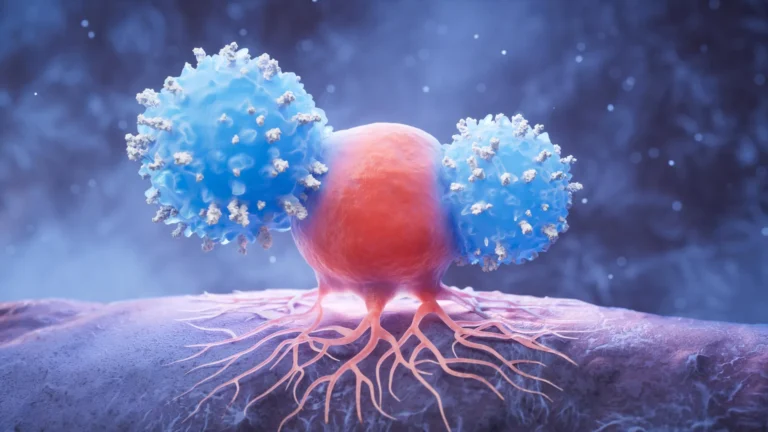
Dr. Aletti’s current research, bolstered by recent foundation grants, focuses on a novel target: KIR3DL2. Unlike generic markers, KIR3DL2 is expressed on the surface of specific lymphoma cells, offering a unique opportunity to create a "seek-and-destroy" mechanism that spares healthy tissue. This specificity is the holy grail of immunotherapy, as it promises to mitigate the systemic toxicity often associated with broad-spectrum chemotherapy.
Phase III: Engineering the Next Generation of CARs
Currently, Dr. Aletti is in the experimental design phase, constructing CAR T-cell constructs that utilize high-affinity binders to identify and neutralize KIR3DL2-positive cells. By focusing on the architecture of the CAR receptor itself, he aims to improve the persistence of these cells within the patient’s body, ensuring they remain vigilant against potential disease recurrence.
Supporting Data: The Complexity of T-Cell Malignancies
T-cell lymphomas are a heterogeneous group of cancers that arise from the transformation of T-lymphocytes. Because these cells are the very architects of the human immune system, treating them is inherently paradoxical.
- The Fratricide Problem: CAR T-cells designed to kill malignant T-cells often express the same surface markers as the targets themselves, leading to self-destruction. Dr. Aletti’s research aims to bypass this by selecting targets—like KIR3DL2—that are uniquely overexpressed in the malignant population, thereby minimizing off-target effects.
- Clinical Efficacy: Current standard-of-care treatments, such as CHOP-based chemotherapy, often yield response rates below 40% for many T-cell lymphoma subtypes. The urgency for novel therapies is substantiated by the high relapse rates observed in patients who do not achieve a deep molecular remission through initial treatment.
- Translational Potential: By integrating synthetic biology with clinical oncology, the MD Anderson team hopes to move beyond "one-size-fits-all" approaches, moving toward a bespoke immunotherapy platform that could eventually be scaled to address various subtypes of aggressive lymphoma.
Official Perspective: The Integration of Science and Care
Dr. Aletti views his role not as a researcher who occasionally sees patients, but as a clinician whose scientific inquiries are directly dictated by the needs of the people he treats.

"For me, clinical care and research are not separate paths but complementary and equally essential components of meaningful progress," says Dr. Aletti. This philosophy defines the culture of his laboratory at MD Anderson. He argues that high-quality translational research must originate from real clinical needs, just as advances in patient care depend on the rigor of the laboratory.
"My goal is to bring an innovative, safe, and highly effective therapy closer to patients who urgently need new treatment options," he notes. This approach is increasingly common at leading cancer centers, where the proximity of the laboratory to the hospital ward is seen as the primary driver of successful medical breakthroughs.
Implications for the Future of Lymphoma Treatment
A New Standard of Patient-Centered Care
The implications of Dr. Aletti’s work extend far beyond a single molecule or a single therapy. If successful, his research on KIR3DL2-targeted CAR T-cells could provide a roadmap for treating other hard-to-reach malignancies. By demonstrating that it is possible to design highly selective, potent immunotherapies, Dr. Aletti is contributing to a broader movement that seeks to replace toxic systemic treatments with intelligent, biological interventions.
The Human Element
Despite the high-tech nature of his research, Dr. Aletti remains firmly anchored in the human experience of illness. He emphasizes the need for empathy in the research process: "I aim to continuously deepen both my clinical and scientific expertise, to remain closely connected to patients and their experiences, and to foster a research environment where creativity drives the development of new therapeutic strategies."
His long-term vision is the creation of a fully integrated research program where the feedback loop between the patient’s response and the laboratory’s modifications is instantaneous. In this future, when a patient faces a treatment failure, the response is not just a change in medication, but a data-driven adjustment in the cellular therapy itself.
The Road Ahead
While the path to clinical trial approval is long and fraught with regulatory hurdles, the momentum behind Dr. Aletti’s research is palpable. By focusing on the intersection of innovation and patient advocacy, he is ensuring that the scientific community does not lose sight of the primary objective: the tangible improvement of patient lives.
As he continues his work at The University of Texas MD Anderson Cancer Center, Dr. Aletti stands as a representative of a new generation of oncologists—those who are as comfortable analyzing genetic sequences as they are sitting at the bedside of a patient. In his view, the future of medicine lies in the convergence of these two worlds.
"My ultimate goal," he concludes, "is for these elements to converge in the delivery of high-quality, patient-centered care, ensuring that scientific innovation translates into tangible benefits for individuals affected by lymphoma."
Through this dedication, Dr. Aletti is not just researching a cure; he is actively dismantling the barriers that have historically kept T-cell lymphoma patients in the dark, offering a beacon of hope for those who need it most.