










Introduction: The Post-Surgical Paradox
Lung adenocarcinoma (LUAD) remains the most prevalent histological subtype of lung cancer, presenting a formidable challenge to global oncology. While surgical resection remains the gold-standard curative intervention for patients diagnosed in the early stages, the clinical journey is often fraught with uncertainty. Statistics indicate that between 30% and 50% of these patients—despite successful initial tumor removal—will experience recurrence or aggressive metastasis within five years.
This post-surgical "blind spot" has long frustrated clinicians, who lack highly sensitive, non-invasive molecular tools to distinguish between patients who are truly cured and those harboring occult micro-metastatic disease. However, a groundbreaking study recently published in Precision Clinical Medicine suggests that the answer may lie in the overlooked architecture of the genome: extrachromosomal circular DNA (eccDNA). By analyzing the unique features of these circular DNA fragments found in both blood and tissue, researchers have unveiled a new frontier in prognostic risk assessment.
The Science of eccDNA: Beyond the Linear Genome
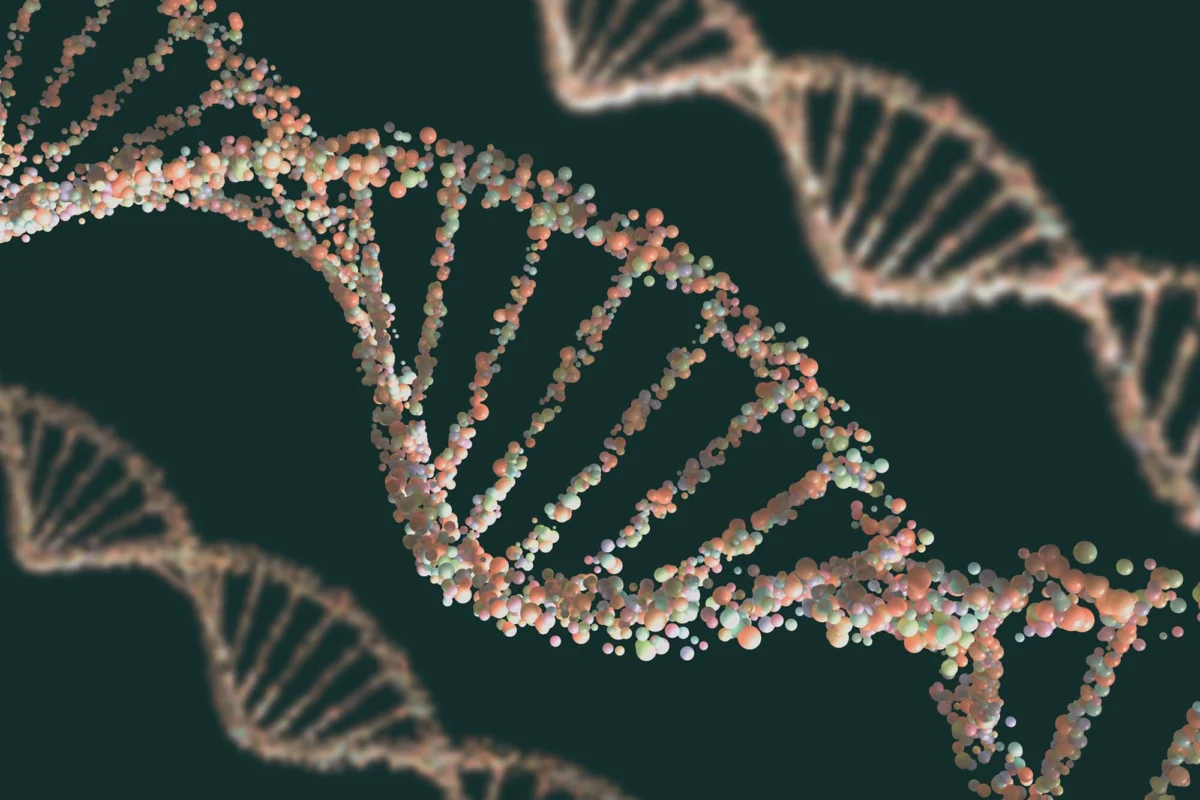
To understand the significance of this discovery, one must first look at the traditional structure of human DNA. While we typically visualize DNA as linear, double-stranded helices organized into chromosomes, the cellular landscape is far more complex. Extrachromosomal circular DNA (eccDNA) consists of small, circular loops of DNA that exist outside of the chromosomal structure.
Once considered genomic "noise" or mere cellular debris, eccDNA has recently gained traction as a pivotal player in cancer biology. Because they lack the centromeres and telomeres that regulate chromosomal division, these circular structures can replicate autonomously and undergo rapid amplification. This allows cancer cells to bypass traditional genetic regulation, accelerating the evolution of drug resistance and tumor aggressiveness. In the context of lung adenocarcinoma, these eccDNAs act as "rogue" elements that carry critical oncogenic instructions, effectively supercharging the tumor’s ability to survive and spread.
Chronology of the Research: From Chengdu to the Global Stage
The study, a collaborative effort involving researchers from Southwest Jiaotong University, The Third People’s Hospital of Chengdu, Chengdu University of Traditional Chinese Medicine, and Deyang People’s Hospital, was designed to bridge the gap between genomic research and clinical application.
Phase I: Patient Enrollment and Sample Collection
The research team initiated a longitudinal study involving 90 treatment-naïve patients diagnosed with early-stage LUAD. The criteria were stringent: participants had not yet undergone chemotherapy or radiation, ensuring that the molecular markers identified were baseline indicators of tumor biology rather than artifacts of treatment. Researchers systematically collected three distinct types of samples: tumor tissue, matched adjacent non-tumor tissue, and plasma.
Phase II: Genomic Mapping
Using advanced sequencing technologies, the team mapped the genomic distribution of eccDNA across these samples. They looked for signatures—patterns of GC content and split-read signals—that differentiated the DNA found in patients who remained disease-free from those who suffered a recurrence.
Phase III: Model Construction and Validation
After identifying specific recurrence-associated genes, the researchers performed a multi-omic integration. By synthesizing transcriptomic data with patient survival outcomes, they developed a predictive model based on seven specific genes. This model was then rigorously tested across training and validation cohorts to confirm its predictive power regarding disease-free survival (DFS).
Supporting Data: The Molecular Fingerprint of Recurrence
The data yielded by the study provides a compelling narrative for why certain lung cancers are more aggressive than others.
Genomic Features of Recurrent Tumors
The researchers observed that eccDNAs isolated from recurrent tumors possessed a distinct biochemical signature. They exhibited higher GC content and stronger split-read signals compared to non-recurrent samples. These circular molecules were not randomly distributed; they were preferentially derived from transcriptionally active genomic regions, often linked to active histone modifications.
In simpler terms, the cancer cells in recurrent cases were actively "copy-pasting" the most dangerous parts of their genome into circular, mobile loops. These loops were found to harbor genes associated with critical cancer-signaling pathways, including:
- mTOR signaling: A master regulator of cell growth and metabolism.
- Notch signaling: A pathway known for its role in cellular differentiation and tumor maintenance.
- Ras signaling: A fundamental driver of uncontrolled cell proliferation.
The Seven-Gene Risk Model
Perhaps the most clinically significant outcome was the identification of a specific gene panel in plasma that could forecast patient risk. By analyzing circulating eccDNA in the blood, the team identified 2,387 upregulated eccDNAs. From this pool, they distilled seven key biomarkers: AFAP1L2, LHX8, IL20RB, SLC12A8, EGLN3, CDH3, and PLTP.
These seven genes formed the backbone of a risk-assessment model. The researchers reported that this model consistently categorized patients into "high-risk" and "low-risk" groups with high statistical significance, providing a clear correlation between the presence of these circulating markers and the probability of recurrence.
Official Perspectives and Implications
The scientific community has reacted with cautious optimism. While the study is small, it provides a "proof of concept" that liquid biopsies—specifically those targeting circular DNA—could eventually replace or augment traditional CT scans and PET imaging for post-operative monitoring.
Clinical Utility
The primary implication is the shift toward "precision follow-up." Currently, patients undergo standardized surveillance regardless of their underlying molecular risk. If this eccDNA model can be scaled, clinicians could stratify patients post-surgery. A patient identified as "high-risk" by the eccDNA panel might be monitored more frequently or considered for adjuvant therapies that would otherwise be withheld, potentially intervening before a clinical recurrence becomes symptomatic or untreatable.
The Path Forward
Despite the success of the initial findings, the research team is clear about the limitations. As stated in their report, the current model requires validation in larger, multi-center prospective cohorts. Factors such as patient ethnicity, environmental exposure (e.g., smoking history), and different histological variants of LUAD must be accounted for to ensure the model’s robustness across diverse populations.
Furthermore, the integration of eccDNA analysis into standard laboratory workflows requires significant technological standardization. Currently, sequencing eccDNA is a complex process that demands high-depth coverage to distinguish small circular fragments from the vast amount of linear chromosomal DNA present in plasma.
Conclusion: Toward a New Era of Surveillance
The discovery of eccDNA as a prognostic biomarker represents a paradigm shift in how we view the post-surgical patient. For decades, oncologists have searched for ways to "see" the tumor before it appears on a scan. By tapping into the circular genomic landscape of lung cancer, this research offers a glimpse into a future where recurrence risk is no longer a guessing game, but a measurable, quantifiable molecular reality.
As the field of liquid biopsy continues to evolve, the integration of eccDNA profiling stands as a promising development. If subsequent studies can replicate these findings on a larger scale, we may soon reach a point where a simple blood draw can offer patients the peace of mind—or the early intervention—that they so desperately need. The "circular code" has been cracked; now, the challenge lies in translating that knowledge into clinical practice to save lives.