




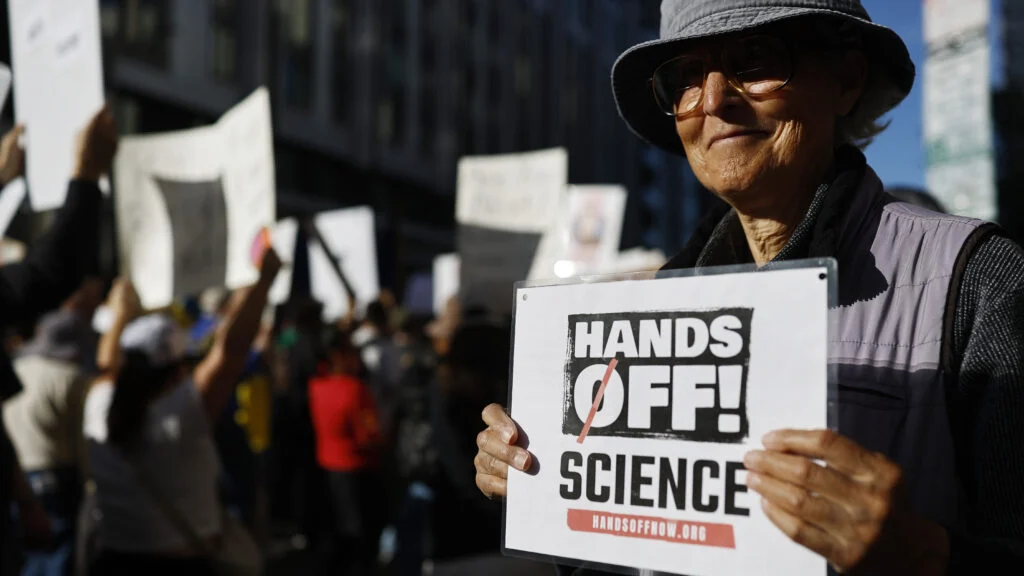
At first glance, the data appears counterintuitive. In a nation frequently characterized by high-profile debates over vaccine mandates, climate change, and public health policy, the United States remains an outlier in its perception of the scientific community. According to the 2025 Wellcome Global Monitor—an expansive survey encompassing 140,000 adults across 140 countries—Americans report significantly higher levels of trust in science than their global counterparts.
However, beneath the surface of these encouraging headline statistics lies a more complex and troubling narrative. The United States is not a country united in its appreciation for scientific advancement; rather, it is a nation experiencing a profound internal divergence. While one segment of the population has embraced science with renewed fervor, others feel increasingly alienated from the institutions that define modern life.
The Statistical Landscape: A Global Outlier
The latest edition of the Wellcome Global Monitor, a premier barometer for international scientific sentiment, paints a stark picture of American exceptionalism. When asked to rate their level of trust in science, 52% of Americans reported having "a lot" of trust. In comparison, the global average sits at a mere 26%.
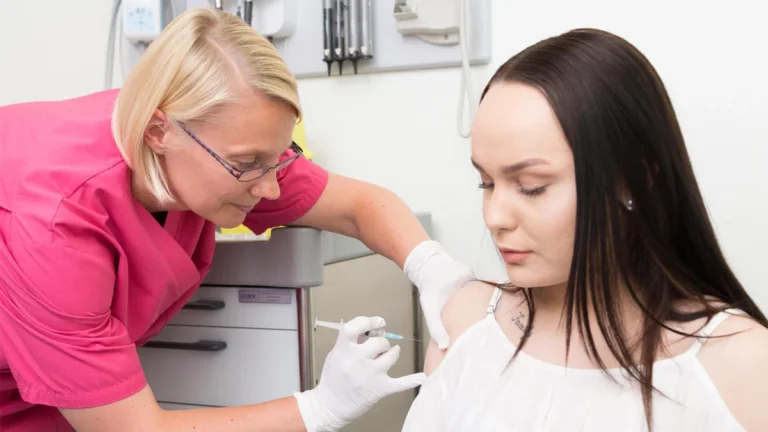
This confidence extends into practical application. When queried about their willingness to receive medical vaccinations recommended by healthcare professionals, 45% of Americans expressed a desire to get vaccinated "right away." By contrast, in Germany—a country often cited for its robust healthcare infrastructure—only 28% of respondents indicated the same level of immediate readiness.
Furthermore, the perception of science as a societal benefactor has shifted significantly over the last seven years. While the global share of people who believe that science benefits "most people" in their society has dipped from 42% in 2018 to 37% in 2025, the American trend is moving in the opposite direction. The proportion of U.S. residents who agree that science provides broad societal benefits has climbed from 48% to 57%.
Chronology of a Shifting Consensus
To understand how this divide has crystallized, one must look at the evolution of public opinion data collected by the Wellcome foundation and the Gallup World Poll between 2018 and 2025.
- 2018: The baseline year. Initial data showed a moderate level of trust, with clear distinctions emerging between demographics, but the polarization had not yet reached its current intensity.
- 2020: As the COVID-19 pandemic swept across the globe, the necessity of science became a daily, often politicized, reality. The survey data from this period reflected the initial impact of global lockdowns and the rapid development of mRNA vaccines.
- 2025: The most recent data reveals the "Great Divergence." The gap in trust between secular, college-educated Americans and their religious or non-college-educated counterparts has widened significantly, driven not by a decline in trust among the latter, but by an explosive increase in appreciation among the former.
Supporting Data: The Anatomy of the Divide
The aggregate statistics provided by Wellcome hide a granular reality: the United States is more polarized on scientific matters than virtually any other high-income peer nation.
The Religious and Rural Gap
In most high-income nations, the divide between religious and non-religious citizens regarding the benefits of science is minimal, averaging roughly 5 percentage points. In the United States, that chasm is 24 percentage points.
Geography provides a similarly sharp contrast. The gap between urban and rural Americans on the question of science’s utility is 19 percentage points. In other developed nations, that same geographical divide averages just three points. This suggests that in the U.S., one’s zip code is a far more reliable predictor of one’s relationship with science than it is in, for example, France or Japan.
Education as a Deciding Factor
Educational attainment remains the most significant predictor of scientific optimism. Only 47% of Americans without a four-year degree report believing that science benefits most people, compared to a staggering 71% of college graduates.
Crucially, the data reveals that this is not a story of the "uneducated" souring on science. In fact, non-college graduates have increased their positive outlook on science by three percentage points over the last seven years. The "divide" exists because college-educated and secular Americans have seen their trust levels skyrocket—by 13 and 15 percentage points, respectively—outpacing the growth in other sectors of the population.
Expert Analysis: Is It Just "Extreme Responding"?
One theory for the American outlier status involves the culture of surveys themselves. Matthew Motta, an associate professor at the Boston University School of Public Health, suggests that Americans are "more extreme responders" to public opinion polls.
"We tend to see more of a binary response in the U.S.," Motta noted. This is evident in the vaccine data. While 13% of Americans identify as completely anti-vaccine—higher than the 8% reported in Germany—the majority of Germans fall into a "wait-and-see" middle ground. American opinion, by contrast, tends to gravitate toward the poles of the spectrum.
Furthermore, political polarization has been a significant catalyst. Yotam Ophir, an associate professor of communication at the University at Buffalo, points to the mid-2010s as the inflection point. "The divergence became apparent during the Tea Party movement and was significantly amplified during the presidency of Donald Trump," Ophir said. This politicization turned scientific consensus—such as climate change or public health measures—into identity markers.
Implications: The Failure of Reach
Despite the high aggregate trust, the fact that a large portion of the American public feels disconnected from the benefits of science remains a critical issue for public health and policy.
Brian Castrucci, CEO of the de Beaumont Foundation, argues that the problem is one of relevance. "People are feeling left behind; they are not understanding how this benefits me," he explains. When scientific progress is concentrated in elite, urban, or academic circles, it becomes an abstraction to those living in rural or economically distressed areas.
The correlation between trust in science and trust in local healthcare systems is equally concerning. Only 40% of Americans report having "a lot" of confidence in their hospitals and clinics—a figure that matches nations like Portugal and Uruguay, which possess far fewer resources than the United States. If citizens cannot access, afford, or trust the medical care in their own backyards, they are unlikely to view the scientific innovations behind that care as a net positive.
Official Responses and the Future of Engagement
How should the scientific community respond to this data? Experts are increasingly pushing back against the traditional "deficit model"—the idea that if you just provide the public with more information, they will automatically trust the science.
"What we need to do is be better communicators, not better debaters," Castrucci emphasized. "We are not going to be able to lecture people into trusting us."
Mark Henderson, executive director of corporate affairs and engagement at Wellcome, suggests that the solution requires a fundamental shift in strategy: meeting people where they are.
"Approach people on a level with understanding, engagement, and respect, and you’re going to get a better outcome," Henderson said. "It’s not rocket science, but it often surprises me how hard people in the scientific community find it to do that."
The path forward, according to the Wellcome findings, is not to combat "anti-science" sentiment with more aggressive top-down messaging. Instead, it involves closing the accessibility gap. Until the benefits of science—whether in the form of better public health outcomes, accessible care, or economic opportunity—are tangible to every segment of the American population, the divide will continue to widen. The task for the next decade is not to convince the public that science is good, but to prove that it is for everyone.