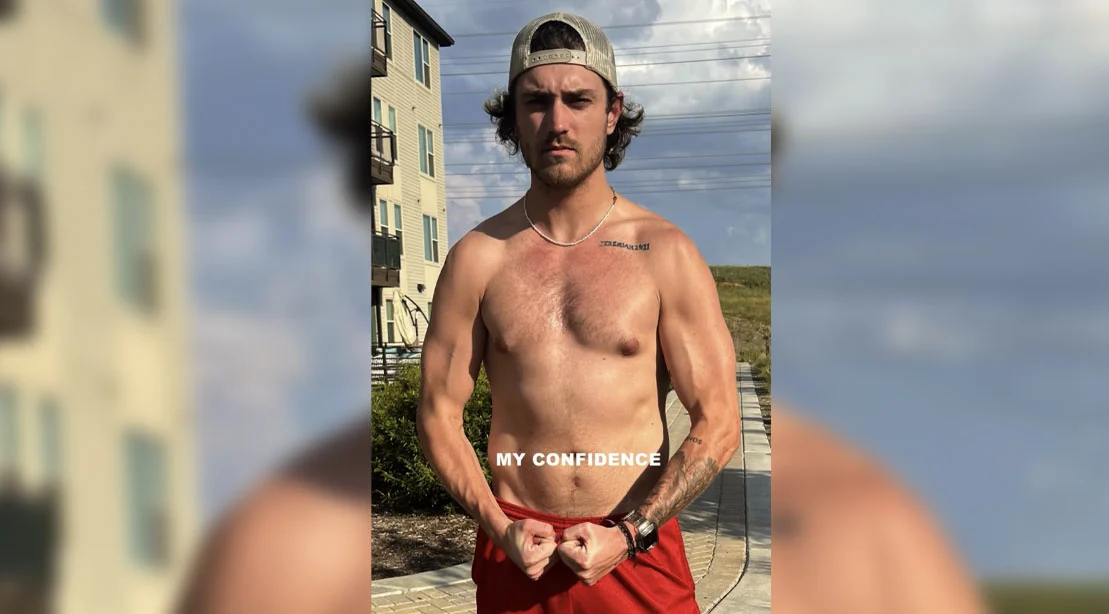
For the better part of two decades, the name JB Copeland was synonymous with physical dominance. Standing 6’3” and weighing 230 pounds, Copeland was a force of nature on the football field, a linebacker whose path seemed destined for the bright lights of the NFL. Yet, four years into a new chapter of his life, the 31-year-old has pivoted from chasing touchdowns to spearheading a vital conversation: mental health advocacy for young men.
Copeland’s journey is not one of linear success, but rather a harrowing descent followed by a redemptive climb. It is a story that serves as a cautionary tale for those who derive their entire sense of self from their performance, and a beacon of hope for those currently navigating the "darkness within."
The Making of a Linebacker: A Trajectory of Intensity
Born on December 6, 1994, in Southlake, Texas, John Byron Copeland’s life was defined by the gridiron from the age of six. As a standout at Southlake Carroll High School, his prowess was undeniable. During his junior year, he recorded 90 total tackles, proving he possessed the raw athleticism required for the collegiate level. Even when a senior-year injury cut his high school campaign short, his potential remained clear to recruiters.
He carried that momentum to Navarro College, a junior college powerhouse, where he exploded onto the scene during the 2015 season. In just 10 games, he logged 116 tackles, averaging 11.6 per game—a statistic that placed him among the elite junior college prospects in the nation. With five sacks, seven tackles for loss, and a nose for the ball that resulted in multiple forced turnovers, he was ranked as the No. 10 outside linebacker prospect in the country.
His talent earned him a Division I opportunity with New Mexico State University, where he played nine games as a freshman. By December 2015, his stock had risen high enough to earn a scholarship to the University of North Carolina at Chapel Hill. For a young man who had lived and breathed football since childhood, it felt like the final step toward his ultimate goal: the NFL.
"Football had been my life since I was 6 years old," Copeland told Muscle & Fitness. "There was no Plan B. I’d made up my mind that this is why I’m here and this is what I’m going to do."
The Fracture: When Identity Collapses
The trajectory was perfect, until it wasn’t. During his debut season with the Tar Heels in 2016, a series of back-to-back concussions shattered his dreams. The medical reality was swift and final: his football career was over.
For most athletes, retirement is a gradual transition. For Copeland, it was a sudden, violent severance from his core identity. With no "Plan B" to fall back on, he plummeted into what he describes as a "complete mental downward spiral." The loss of his daily routine—the training, the structure, the validation of being an elite athlete—left a void that he attempted to fill with silence, isolation, and, eventually, chemical dependency.
"Emotionally, years of suppressed anxiety and depression came to the surface," Copeland reflected. "I didn’t have the structure I’d had before. I was always so busy training, going to school, and reaching for my goal that when that pursuit came to an end, everything I’d been numbing came to the surface."
The physical toll was immediate. Within three months of walking away from the sport, his anxiety manifested in a 55-pound weight loss. In an attempt to manage his internal chaos, he began misusing prescription medication, specifically Xanax. When his own supply ran dry, the desperation of his addiction led him to seek out pills from teammates recovering from surgeries. The shame of his decline eventually led to him losing his scholarship and failing out of UNC, leaving him without the academic or athletic safety nets he had relied upon for years.
The Breaking Point: A Catalyst for Change
For years, Copeland treated his pain with substances, calling it his only form of "internal safety." However, as any addict knows, such a solution is inherently unsustainable. In April 2022, the facade finally crumbled. A severe, life-altering panic attack sent him to the emergency room, serving as the ultimate wake-up call.
"One day, the parts of you that you buried alive begin to revolt," Copeland shared. "The Band-Aid doesn’t work anymore, and the journey into the darkness within must begin."
Recognizing he had reached the end of his rope, Copeland made the most difficult decision of his life: he sat down with his wife and checked himself into a residential addiction treatment facility in rural Texas.
The Path to Recovery: Discipline as a Bridge
The 90 days Copeland spent in rehab proved to be the crucible of his transformation. While he engaged in standard therapeutic modalities like group counseling, he also leaned on the one language he had spoken his entire life: physical discipline.
"At the time, my mind and emotions felt out of control," he explained. "I couldn’t find balance, so I decided to focus on the one thing I knew I could control: my body."
By focusing on clean nutrition and intense workouts, Copeland built a scaffold of discipline that allowed him to begin processing his trauma. He discovered that the physical release of exercise acted as a portal to emotional clarity. "Discipline in those early weeks opened up a doorway for me to give it my all mentally and emotionally," he noted.
Advocacy and the Rise of a New Platform
Upon exiting treatment, Copeland found that his story resonated with a vast, often overlooked demographic: young men struggling with the pressures of performance and the stigma of vulnerability. He began to speak openly about his experiences, realizing that his suffering was not a weakness, but a tool for connection.
Today, Copeland is a digital titan in the mental health space, commanding an audience of over 2 million on Instagram, nearly 900,000 on TikTok, and a growing presence on YouTube. His content is characterized by a raw, unvarnished honesty that contrasts sharply with the "hustle culture" typically found on these platforms.
In 2025, he launched his podcast, MOTION, which has become a vital space for candid conversations regarding emotional intelligence, the fluidity of identity, and the process of healing. He followed this by publishing Sappy Medium: The Rough Draft, a collection of intimate letters and reflections designed to help others navigate the uncomfortable "middle ground" of life—that space between who we were and who we are becoming.
Currently, he is developing a mobile application aimed at integrating the four pillars of his philosophy: mental, emotional, spiritual, and physical health.
Lessons from the Middle: Wisdom for the Next Generation
Despite his massive platform, Copeland remains humble about his ongoing progress. He admits that he still struggles with isolation and the tendency to retreat into his own head. "I tend to isolate," he admits. "But over the last few years, I’ve realized that I can’t do it alone."
He highlights the critical importance of community and accountability, urging men to find someone they can be entirely honest with. "We need accountability, and we can’t have it when we hold secrets," he says. "Get things off your chest. What you’re feeling, struggling with, and thinking, is important. The truth will set you free."
For young athletes who currently find themselves in the position he was once in—tying their entire existence to a scoreboard or a stat sheet—Copeland offers a sobering, yet empowering piece of advice:
"When something becomes who you are, that thing will always let you down. I’m a big believer in giving it everything you have but not letting it become who you are. It’s a sport. Your life is bigger than a game. So, learn to deal with your emotions in a healthy way. Don’t let the stress of performance cause you to fall. It’s just a game, so play the game—don’t let it play you."
Implications for a Modern Crisis
JB Copeland’s journey highlights a significant systemic issue in the culture of youth and collegiate sports. When an athlete’s identity is strictly cultivated around their performance, the inevitable end of their career—whether due to injury, age, or circumstances—becomes an existential threat.
The shift from the "gridiron mentality" to the "healing mentality" represents a necessary evolution in how we support young men. By bridging the gap between physical peak performance and mental-emotional wellness, Copeland is not just sharing his story; he is building a framework for long-term health that transcends the boundaries of the field.
His advocacy underscores the reality that true strength is not found in the weight room alone, but in the courage required to admit that one is hurting. As he continues to grow his influence, Copeland remains a testament to the idea that no matter how far one falls, the only way out is through—and the journey begins with a single, honest conversation.
Resources for Support
If you or someone you know is struggling or in a crisis, call or text the Suicide & Crisis Lifeline at 988 for free, confidential, 24/7 support.
If you or someone you know is struggling with substance abuse, please contact the SAMHSA helpline at 1-800-662-HELP (4357).