Published: August 11, 2026
For millions of individuals, the quest for physical relief often leads directly to the yoga mat. However, a common paradox plagues practitioners: the more they lean into "active" hip-opening sequences like Pigeon Pose or deep squats, the more their muscles seem to resist, leading to increased tension rather than the desired release. As we navigate the complexities of sedentary modern lifestyles and high-impact fitness routines, a shift in methodology is required. The emerging consensus among physical therapists and yoga experts points toward a more nuanced approach: passive yoga.
The Shift Toward Passive Recovery
The central premise of passive yoga is the removal of active muscle contraction from the stretching equation. Unlike active stretching, which requires the engagement of muscles to hold a pose or move through a range of motion, passive poses utilize external support—such as gravity, bolsters, and straps—to facilitate a gradual, neurological release.
When the body enters a "fight or flight" state, often triggered by intense, active stretching, the muscles tighten as a protective mechanism. Passive yoga circumvents this reflex. By supporting the limbs, the nervous system is signaled that it is safe to let go, allowing for a deeper, more sustainable release of the connective tissue surrounding the hip flexors, glutes, hamstrings, and thighs.
Chronology of the Modern Hip Tension Crisis
The rise of hip-related discomfort can be traced back to the shift in global occupational patterns over the last two decades.
- The Sedentary Decade (2006–2016): As digital integration became universal, the average time spent in a seated position skyrocketed. Prolonged hip flexion—the angle formed between the torso and the thigh—began to shorten the psoas and iliacus muscles, leading to chronic tightness.
- The Fitness Explosion (2016–2024): With the rise of boutique fitness, HIIT (High-Intensity Interval Training), and heavy lifting, a new form of hip strain emerged. Athletes began over-utilizing the hip flexors without adequate recovery, leading to "over-stretched" but chronically tight tissue.
- The Era of Recovery-First (2025–Present): By 2025, health professionals began advocating for "functional recovery." This is where the integration of passive, prop-based yoga has moved from a niche practice to a standard recommended recovery protocol for office workers and elite athletes alike.
Supporting Data: Why Gravity Wins
Physiologically, the hip joint is a ball-and-socket structure surrounded by a complex web of fascia. According to recent sports science research, static, passive holding patterns lasting between three to five minutes are more effective at inducing "creep"—the process by which connective tissue gradually elongates—than short, bouncy, or highly active stretches.
Data suggests that practitioners who incorporate at least two sessions of passive, restorative hip work per week report a 30% increase in perceived mobility compared to those who exclusively rely on dynamic stretching. Furthermore, the use of props (such as blocks or bolsters) reduces the load on the lumbar spine by approximately 40%, preventing the common "compensation" injuries that occur when the body tries to force a range of motion it has not yet earned.
Expert Perspectives on Passive Methodology
"The biggest mistake practitioners make is confusing ‘sensation’ with ‘progress,’" says Michael Burke, a movement specialist. "When you force a stretch, your muscles panic. When you support the body with a bolster or a strap, you are essentially negotiating a peace treaty with your nervous system. You are asking the muscles to trust the floor, not the effort."
The official stance from restorative yoga associations is that passive practice is not a replacement for active training, but a necessary counterbalance. Without the "yin" of passive release, the "yang" of active training leads to a brittle, over-worked muscular system.
6 Essential Passive Poses for Hip Mobility
To begin a passive practice, you will need a yoga strap (or a bathrobe tie) and a bolster (or a tightly rolled blanket). These movements are designed to be performed as a standalone cool-down or as a meditative practice before sleep.
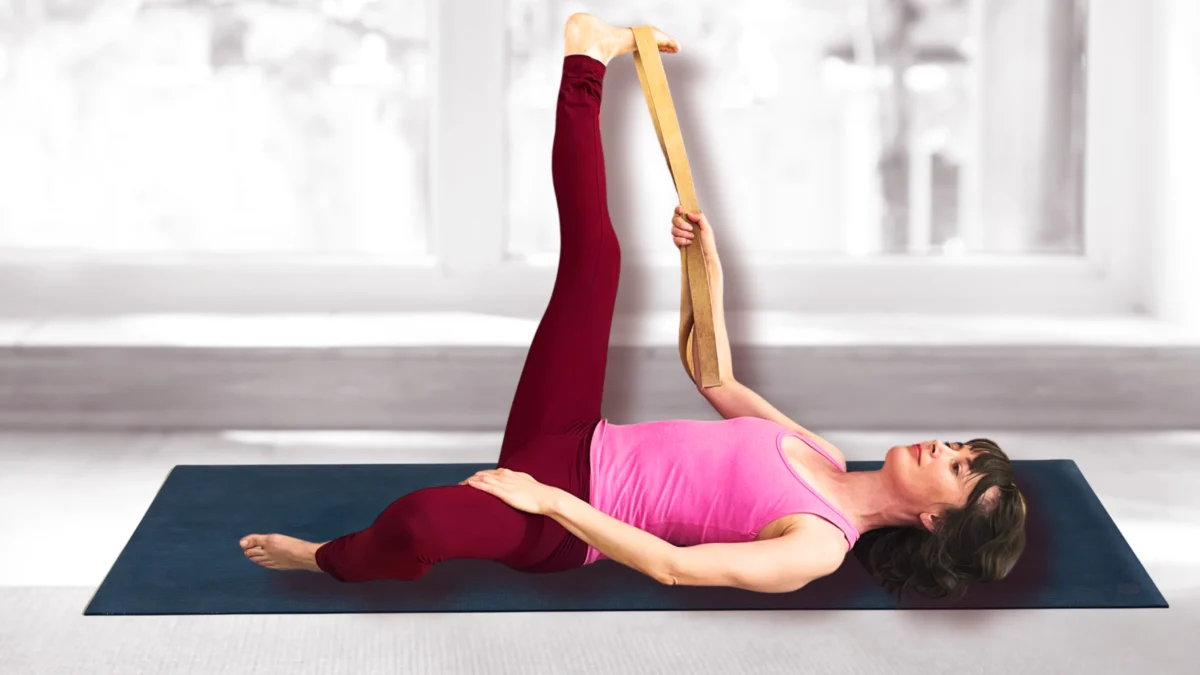
1. Reclining Hand-to-Big-Toe Pose (Variation 1)
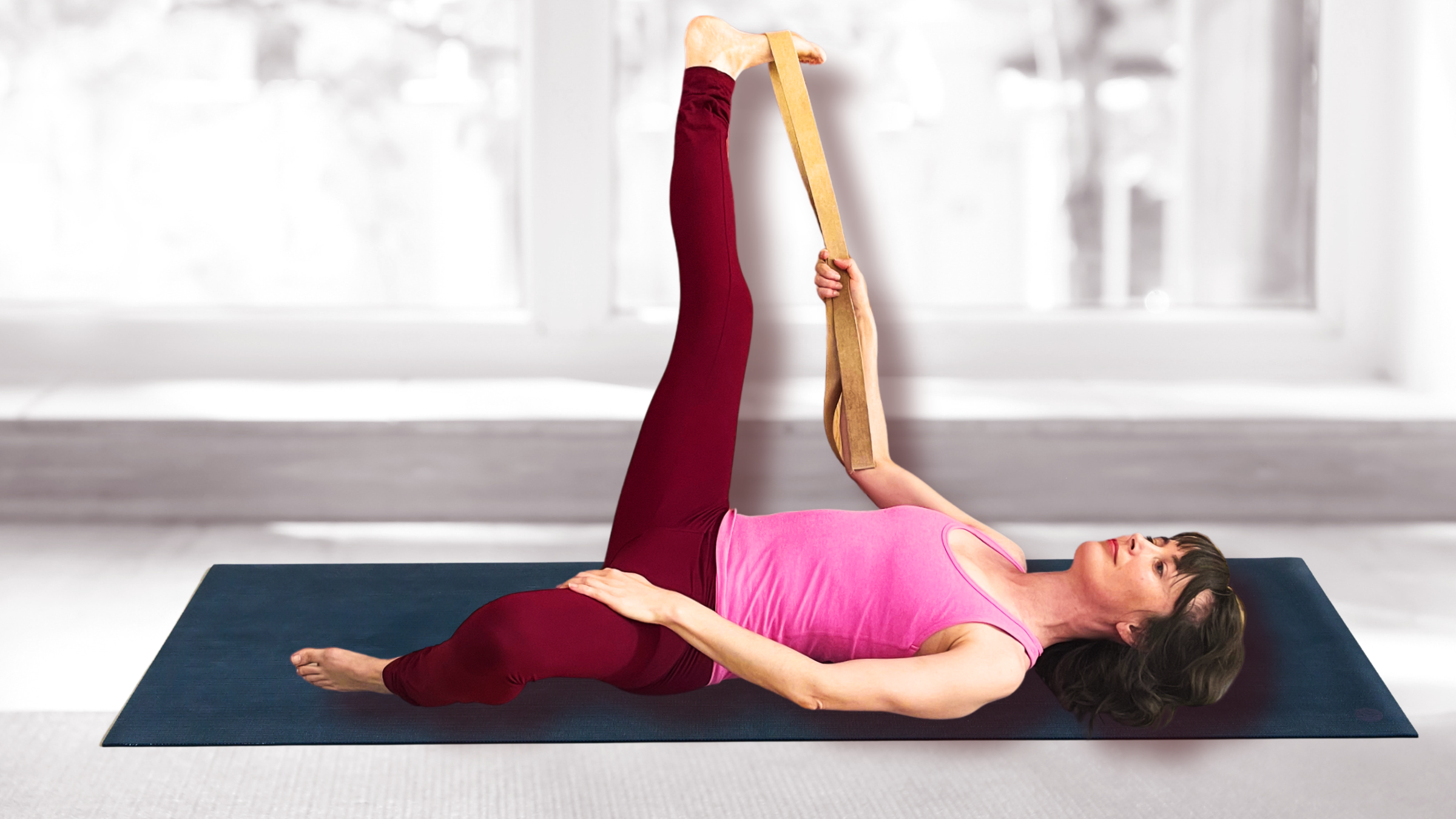
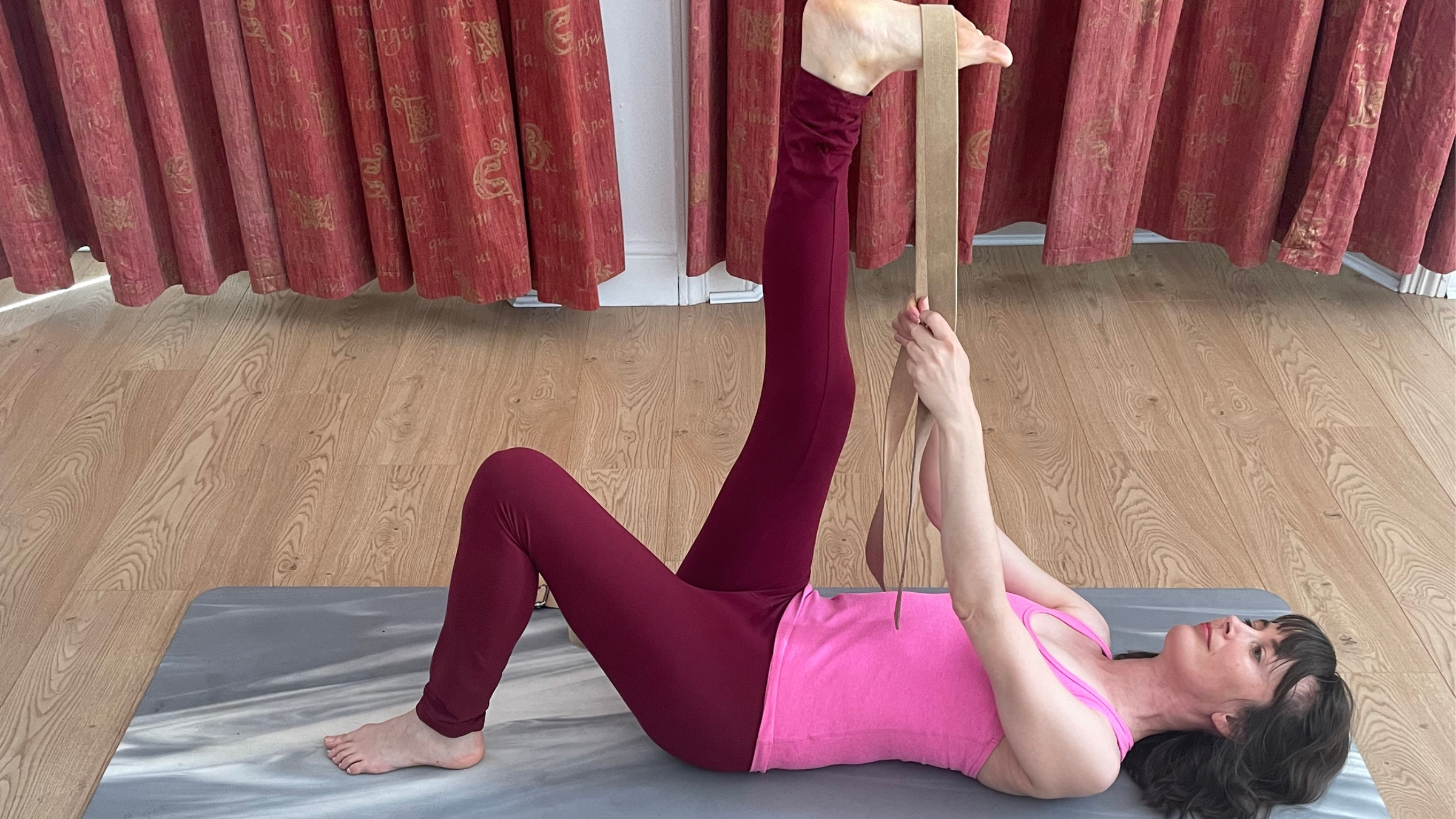
Lie supine with your knees bent. Loop your strap around the ball of your right foot. As you extend the leg toward the ceiling, focus on relaxing the shoulders into the mat. By holding the strap loosely, you allow the weight of your leg to perform the stretch. This targets the hamstrings without forcing the lower back into a rounded position.
2. Reclining Hand-to-Big-Toe Pose (Variation 2)
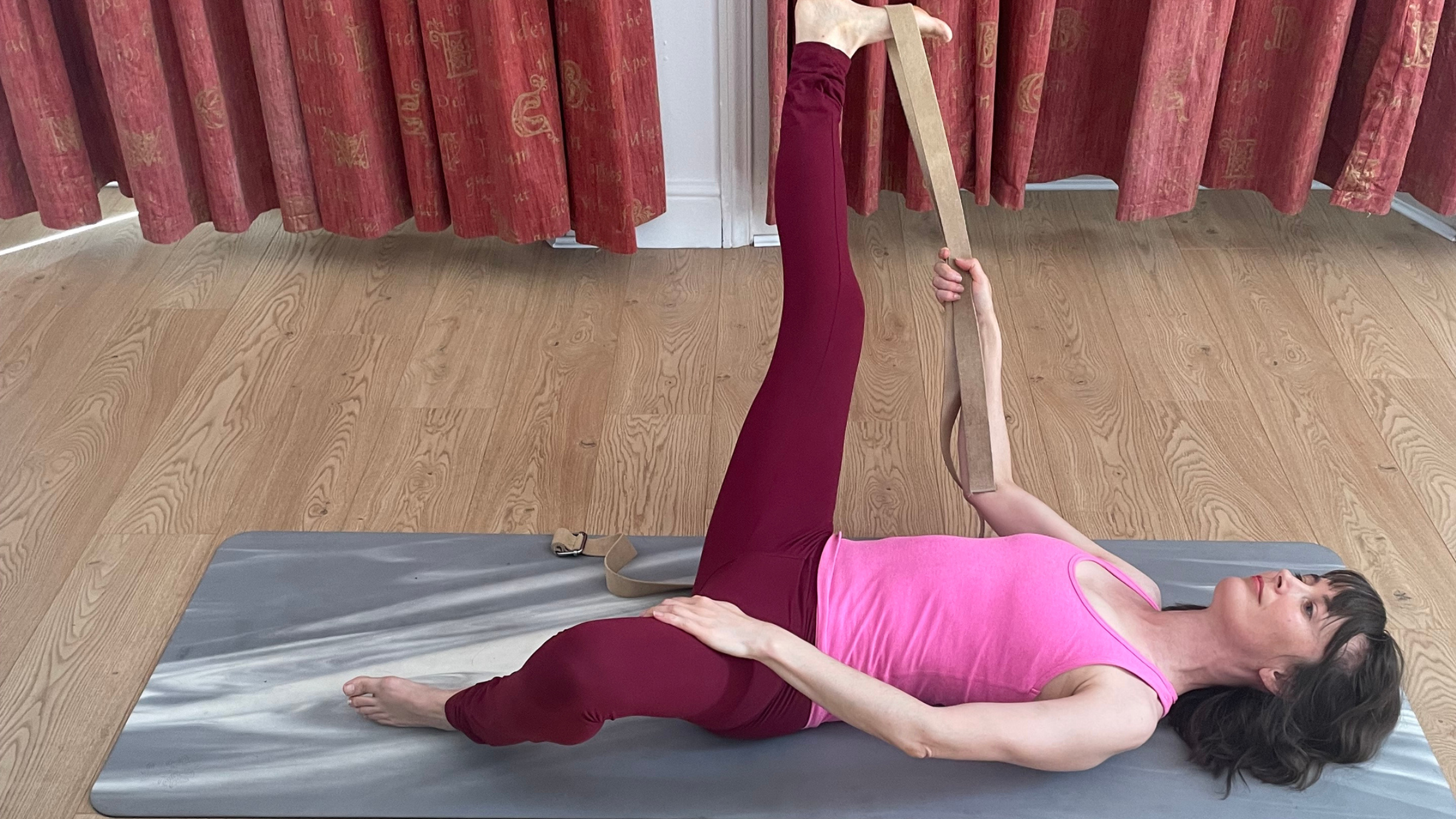
Building on the first pose, allow your left knee to open slightly as a counterbalance. Guide the right leg toward the right side. The key here is to keep the left hip firmly planted. If your inner thigh begins to cramp, ease out of the intensity. The goal is a steady, gentle release of the adductors.
3. Reclining Hand-to-Big-Toe Pose (Variation 3)
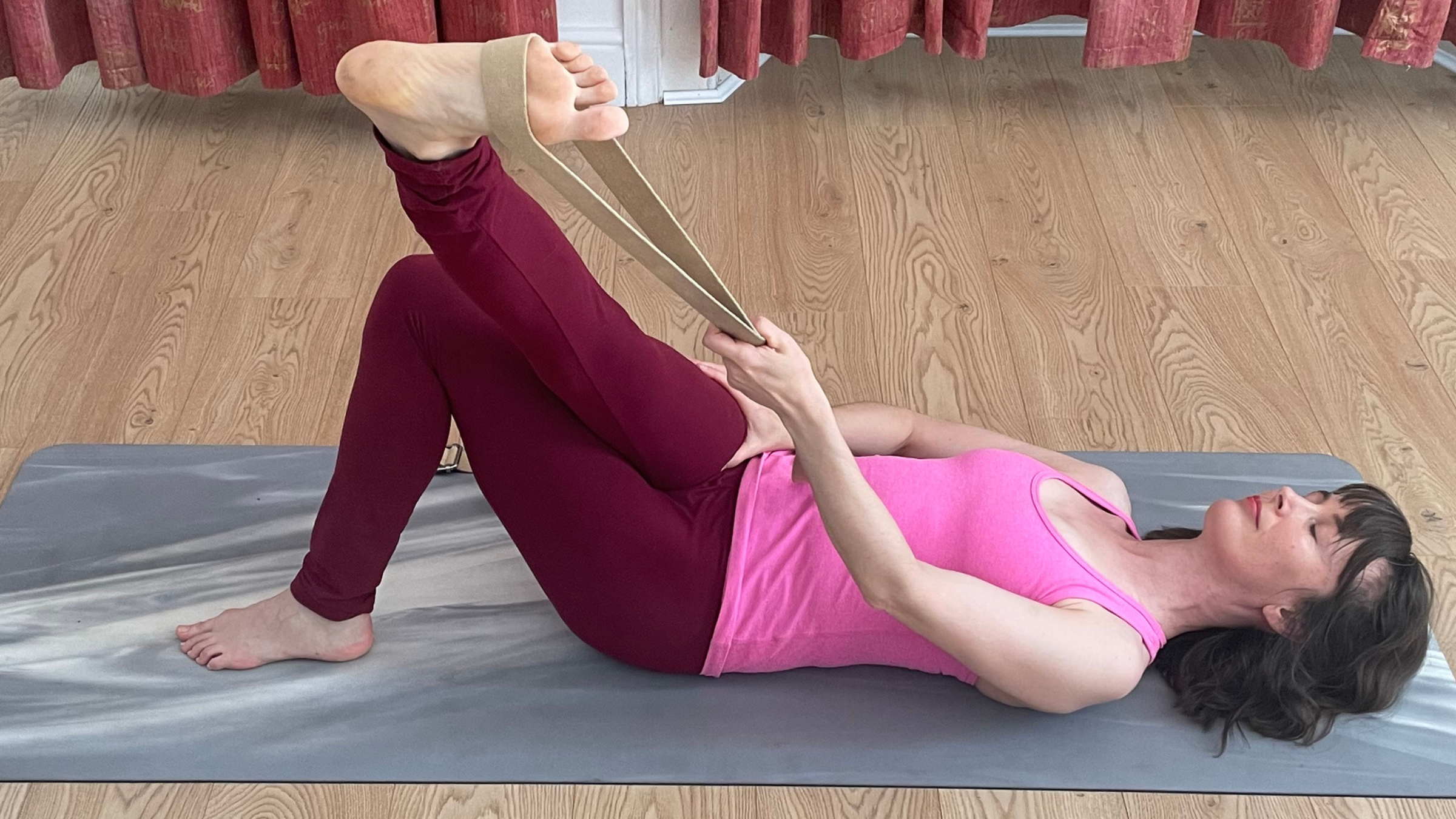
Cross the right leg over the midline toward the left. This targets the IT band and the outer glute. By resting the leg on a bolster or the opposite knee, you remove the effort of "holding" the limb up, allowing the hip to rotate passively. This is often where the most significant tension is stored for runners and cyclists.
4. Reclining Cow Face Pose
This pose addresses the deep rotators of the hip. By crossing the thighs and drawing the shins toward the chest, you engage in a gentle stretch of the piriformis. Because you are lying on your back, the spine remains neutral, shielding you from the disc pressure often associated with seated forward-folding variations.
5. Reclining Twisting Eagle Pose
This is the ultimate spinal and hip release. By dropping the crossed legs to one side, you introduce a rotational stretch that reaches the deep tissues of the hip capsule. Utilizing a bolster under the legs provides a "landing pad," which allows the muscles to completely deactivate, leading to a much deeper sense of relief.
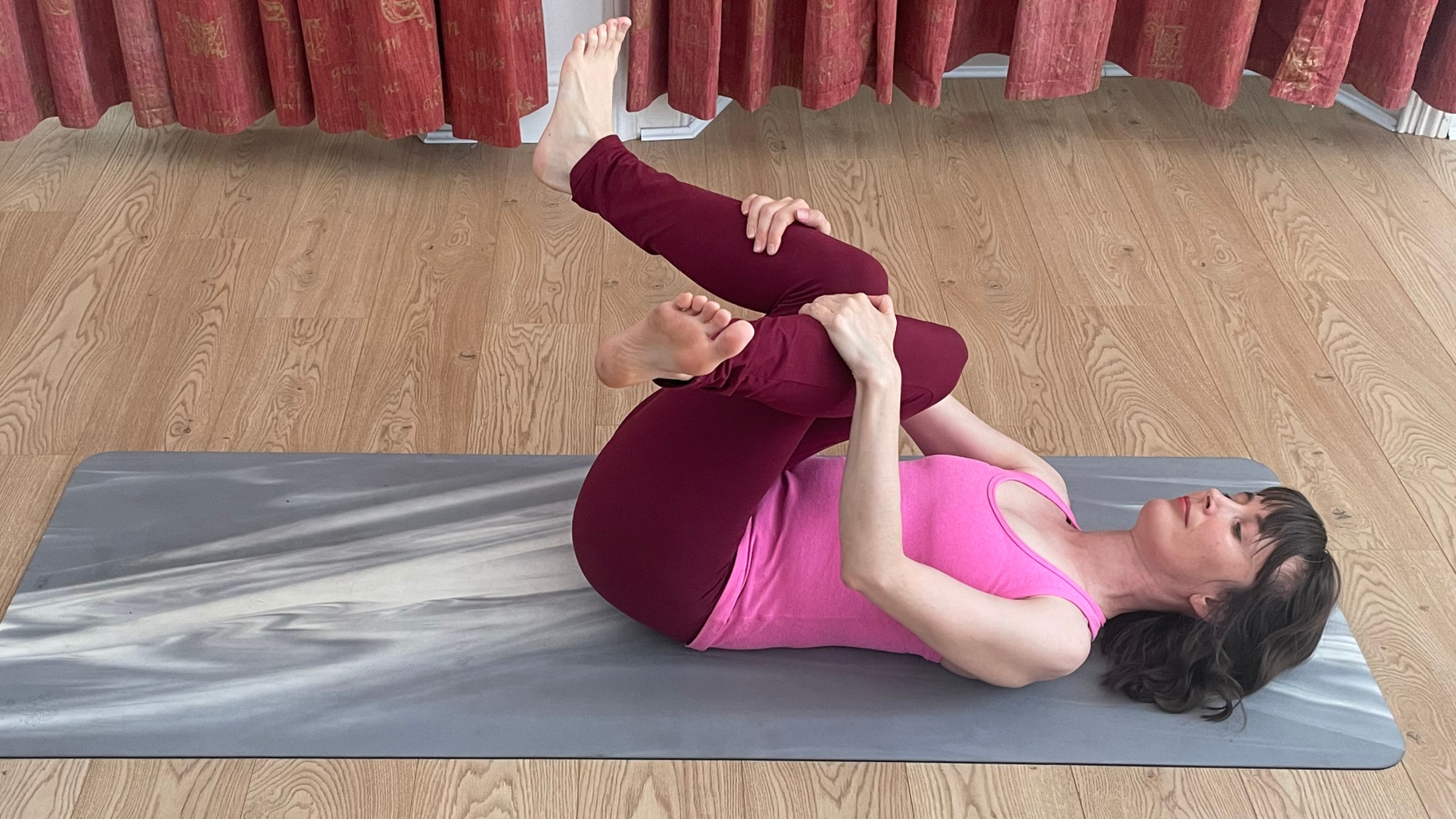
6. Half Wind-Relieving Pose Variation
By placing a block or bolster under the sacrum, you shift the pelvis into a slightly elevated position. This allows the hip flexors to lengthen simply by the weight of the extended leg resting on the floor. This is a profound "reset" for the psoas, which is frequently tight from sitting at a desk.
Implications for Future Health
The implications of adopting a passive approach to hip health extend far beyond the yoga mat. Chronic hip tightness is often the root cause of lower back pain, knee instability, and poor gait mechanics. By prioritizing passive recovery, individuals can:
- Mitigate Long-Term Injury: Reducing the "tug-of-war" between muscle groups prevents chronic inflammation and tendonitis.
- Improve Sleep Quality: Passive yoga, particularly when performed at night, triggers the parasympathetic nervous system, which is essential for deep, restorative sleep.
- Enhance Athletic Longevity: Athletes who utilize passive recovery report fewer days lost to injury, as the muscles remain pliable and responsive rather than stiff and reactive.
Final Reflections
In a world that prizes "more" and "harder," the hardest thing to do is often to stop, breathe, and let gravity do the work. By integrating these six passive poses into your weekly routine, you are not just stretching muscles; you are cultivating a sustainable relationship with your body. Whether you are an elite athlete or someone who spends eight hours a day in a desk chair, the path to hip mobility is found not in the intensity of the push, but in the intelligence of the surrender.
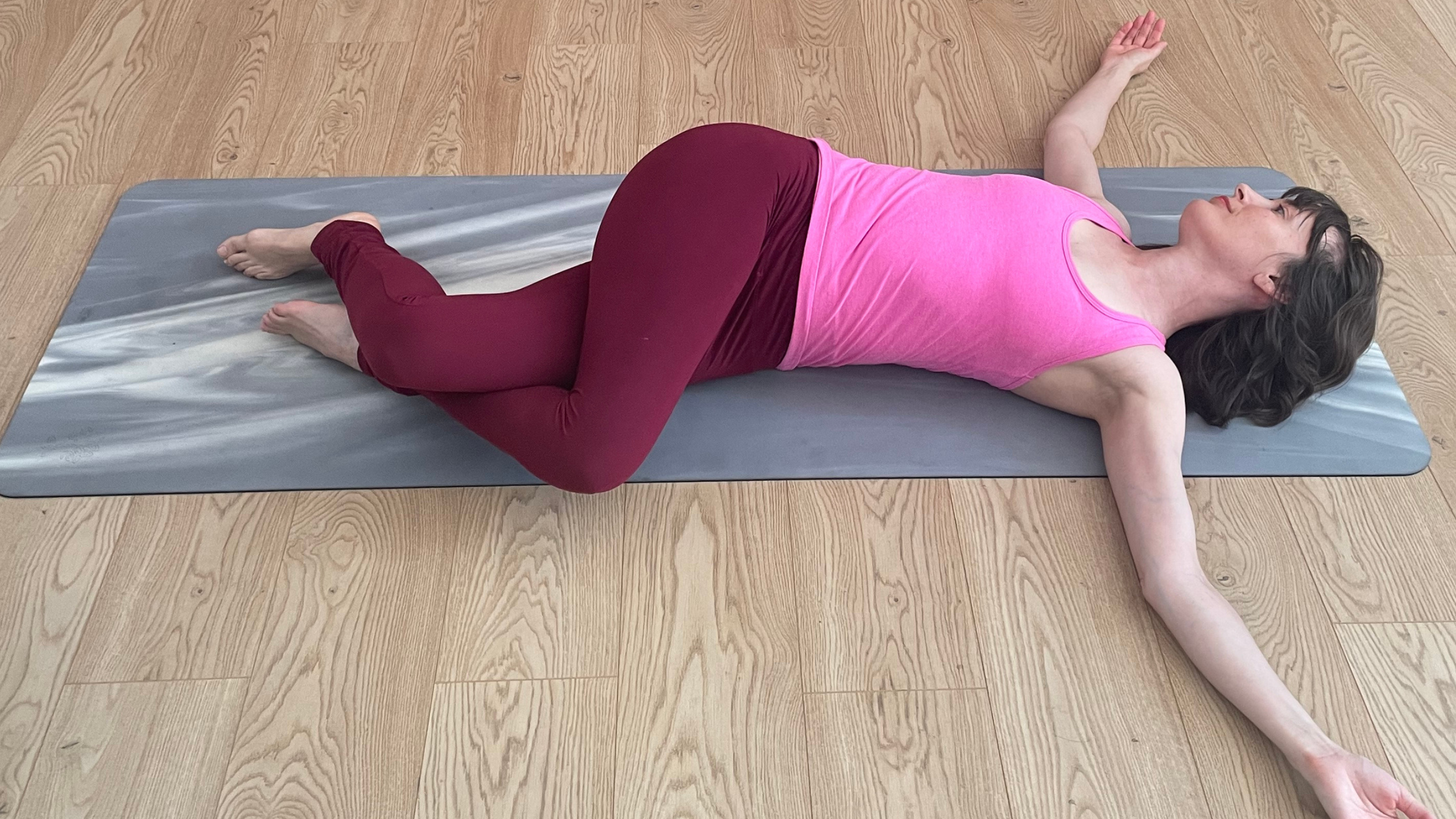
After completing your practice, spend at least five minutes in Savasana. Close your eyes, release the props, and allow the body to integrate the newfound space. If you notice a softening in your hips, allow that sensation to ripple upward through your spine and outward through your limbs, carrying the ease of your practice into the rest of your day.