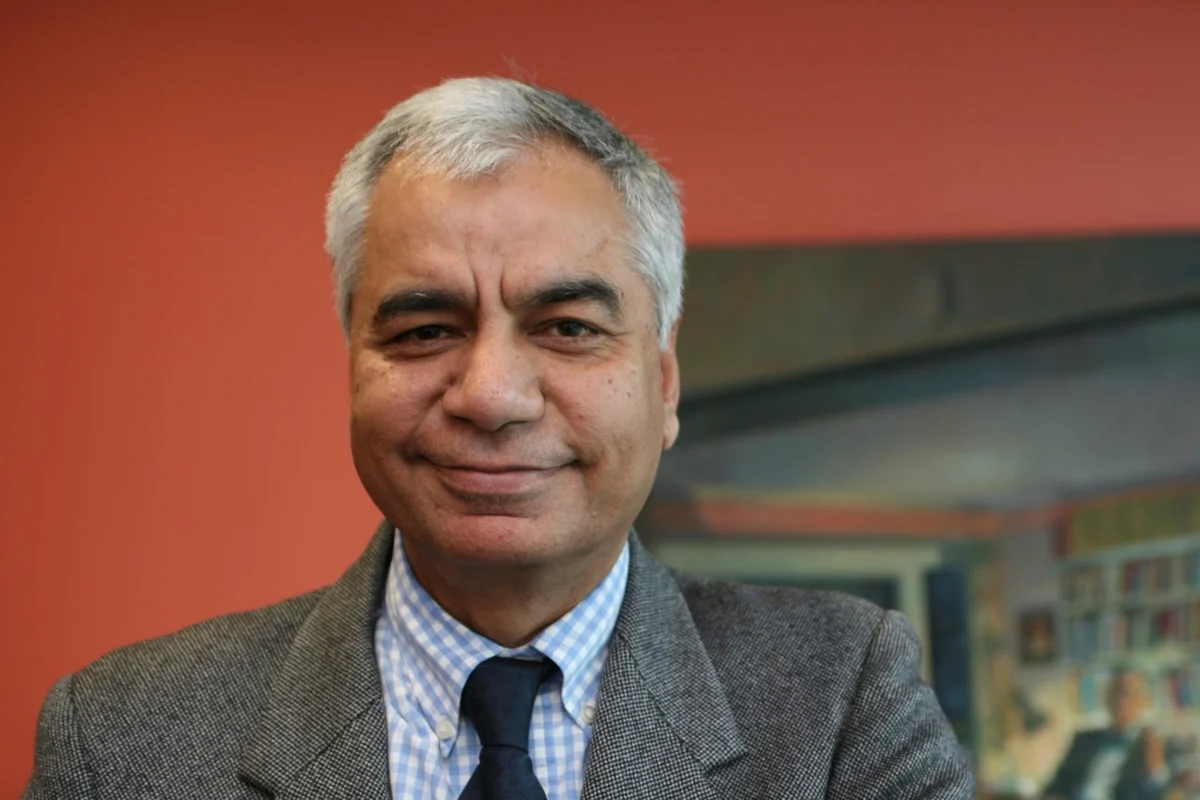
In the contemporary landscape of global health, few figures carry as much weight in the field of social and cultural psychiatry as Professor Dinesh Bhugra. As Emeritus Professor of Mental Health and Cultural Diversity at King’s College London, Bhugra’s resume reads like a history of modern medical leadership. He has served as the president of the Royal College of Psychiatrists, the British Medical Association, and the World Psychiatric Association. Despite these establishment credentials, Bhugra has spent much of his career as a constructive provocateur, challenging the psychiatric profession to look beyond the "brain-as-a-machine" model and confront the messy, external realities that shape human suffering.
In a comprehensive dialogue with Ayurdhi Dhar, Bhugra outlines a vision for public mental health that rejects the "individualization" of distress. He argues that the modern tendency to treat social problems—such as debt, displacement, and discrimination—with individual pharmaceutical interventions is not only a clinical failure but a systemic one.
Main Facts: A Holistic Re-evaluation of Mental Health
The core of Bhugra’s philosophy lies in the transition from a purely clinical model to a public mental health framework. Traditionally, psychiatry has focused on "symptom reduction"—the idea that if a patient stops hearing voices or feels less sad, the treatment is a success. Bhugra argues that this endpoint is insufficient.
The Multi-Layered Determinants
Bhugra identifies four primary "determinants" that dictate mental well-being, moving far beyond simple genetics:
- Social Determinants: These include housing, employment, poverty, and access to green spaces.
- Geopsychiatry: A term Bhugra champions to describe the mental health impacts of macro-events like climate change, war, natural disasters, and the resulting mass migrations.
- Political Determinants: The decisions made by governments regarding who is detained, how much funding is allocated to social care versus acute hospitals, and the legal frameworks of "normality."
- Commercial Determinants: The influence of powerful industries—particularly tobacco and ultra-processed food companies—on public health and the lobbying efforts that prevent regulation.
The "Psychiatrization" of Normalcy
A significant portion of Bhugra’s recent work focuses on the "psychiatrization of society." This phenomenon involves the medicalization of normal human emotions. By labeling everyday sadness as "depression" or situational stress as "PTSD," society risks two things: the dilution of care for those with severe, chronic illnesses like schizophrenia, and the creation of "micro-identities" where individuals see themselves primarily through the lens of their diagnosis rather than as a whole person.
Chronology: The Evolution of Cultural Psychiatry
The shift in Bhugra’s focus reflects a broader historical arc in global psychiatry. In the mid-20th century, the field was dominated by psychoanalysis and, later, the "biological revolution" that prioritized neurochemistry.
- The Late 20th Century: As psychiatry became increasingly standardized through manuals like the DSM (Diagnostic and Statistical Manual of Mental Disorders), Western categories of illness began to be exported globally. Bhugra was among the early voices warning that these categories often failed to translate across cultures.
- The 1990s and 2000s: Bhugra’s research in North India highlighted the "category fallacy." For instance, using the Canadian-developed EAT-26 (Eating Attitudes Test) on Indian schoolgirls resulted in a 29% "pathological" score—not because of an epidemic of anorexia, but because the questions (e.g., "Food controls my life") meant something entirely different to people living in poverty or eating with their hands.
- The Present Day: The rise of social media and the "loneliness epidemic" has ushered in a new era of "concept creep." Bhugra notes that as communities have fractured, the clinic has become the only place where people feel they have a "right to be heard," leading to a surge in diagnoses among the youth.
Supporting Data: Evidence from the Field
Bhugra points to several case studies and research models to support the shift toward community-based, culturally sensitive care.
The Zimbabwe "Friendship Benches"
One of the most successful examples of task-shifting in mental health comes from Zimbabwe. Due to a shortage of psychiatrists, the "Friendship Bench" program trained community grandmothers to sit on wooden benches outside clinics and listen to people’s problems using evidence-based talk therapy. This model proved that community members, when empowered, could provide more effective frontline support than distant specialists.
The Social Prescribing Model in the UK
In the United Kingdom, "social prescribing" has gained traction. Instead of a prescription for antidepressants, a GP might refer a patient to a gardening club, a photography group, or a walking circle. Data suggests that for many experiencing loneliness or mild-to-moderate distress, these social interventions provide a "balance" that eliminates the need for clinical psychotherapy.
The Commercial Parallel
Bhugra draws a startling parallel between the tobacco industry and modern ultra-processed food (UPF) companies. He notes that it took 60 years for political will to overcome tobacco lobbying. Today, the same strategies—addictive additives and political donations—are used by UPF manufacturers. The resulting obesity and chronic illness (diabetes, cancer) have a direct, scientifically documented correlation with increased psychiatric disorders.
Official Responses and Clinical Perspectives
While Bhugra’s views are widely respected, they exist in tension with the prevailing "Biopsychosocial" model, which many argue has become "Bio-Bio-Bio" in practice.
The Case for "Meaning-Making"
Bhugra recounts a case of a patient with schizophrenia whose family believed he was "possessed." Rather than dismissing the family’s belief as "ignorant" or "garbage," Bhugra facilitated a meeting with a hospital chaplain. By respecting the family’s "explanatory model," the patient remained compliant with his medication while the family found spiritual peace. The result was a functional life: marriage, children, and a job. This illustrates Bhugra’s point that "symptoms" are often livable if the social environment is supportive.
The Critique of "Task-Shifting"
The interview also addresses the "official" push for community mental health workers in rural areas of Ghana and India. While this looks good on paper, critics (and Bhugra himself) acknowledge the danger of "sites of disorder." If a community worker’s only tool is a pill, they may become a "policeman of medicine," threatening villagers with psychiatric intervention as a form of social control. Bhugra emphasizes that for a rural farmer, the sedation of an antipsychotic isn’t just a side effect—it’s a threat to their livelihood.
Implications: The Future of the Profession
The insights shared by Professor Bhugra have profound implications for how the next generation of doctors and psychologists should be trained.
Advocacy as a Clinical Skill
Bhugra argues that medical students must be taught "advocacy." If a patient’s depression is caused by moldy housing or debt, a doctor should feel empowered to advocate to local councils or policymakers. "The patient is at the core," Bhugra says, "but they are surrounded by family, community, and culture. If we are not looking at those factors, we are just treating the endpoint."
The Humility of Diagnosis
The "category fallacy" remains a warning for global health initiatives. Exporting Western diagnostic tools without cultural translation is a form of medical imperialism. Bhugra calls for a "humble" psychiatry that asks the patient: What do you think is happening to you? and What do you think will help?
Reclaiming "Normal"
Finally, the psychiatrization of society must be checked. By reclaiming the "right to have a bad day," society can reduce the stigma of severe mental illness while simultaneously addressing the loneliness and social fragmentation that drive people toward medical labels in search of an identity.
In conclusion, Dinesh Bhugra’s career serves as a bridge between the high-level halls of medical power and the lived realities of the world’s most vulnerable. His message is clear: mental health is not merely a matter of neurons and neurotransmitters; it is a reflection of our politics, our diets, our history, and our willingness to listen to one another’s stories.
This report is based on the scholarship and interviews of Professor Dinesh Bhugra and is intended for educational and journalistic purposes. It highlights the ongoing debate between individual clinical care and public mental health strategies.