









For millennia, human beings navigated the landscape of health and performance using a singular, sophisticated instrument: the self. We relied on the visceral feedback of our own biology—the heavy breath after a climb, the dull ache of muscle fatigue, the restorative clarity of deep sleep, and the internal signal of hunger. Today, that internal compass is increasingly being sidelined in favor of the "Quantified Self."
If you are curious enough, you can now measure your heart rate, step count, exercise intensity, and sleep architecture—often all from a single, sleek device strapped to your wrist. In the best-case scenarios, these tools serve as a vital bridge between subjective feeling and objective reality. They offer a window into our physiological state that our own fallible human brains sometimes miss. However, as our reliance on gadgets grows, we must ask: Are we becoming more in tune with our bodies, or are we slowly losing the ability to read them at all?
The Data Dilemma: Why Subjective Perception Fails
Our subjective assessments matter, but they are notoriously unreliable. Humans are not naturally gifted at quantifying our own behaviors with cold precision. We are prone to cognitive biases, memory lapses, and "optimism bias"—the tendency to overestimate our progress or underestimate our caloric intake.
Consider the classic example of a "hidden" calorie surplus. Many individuals believe they are eating within a precise caloric window, only to discover through rigorous tracking that they are consuming an extra 500 calories a day—often in the form of seemingly harmless condiments like barbecue sauce.
While some outliers, such as the Canadian sprinter Ben Johnson, reportedly possessed the uncanny ability to call out his 100-meter dash time within a tenth of a second, most of us lack this internal stopwatch. This brings us to a critical junction: How good are you really at assessing your own performance? And more importantly, how can you leverage technology to improve your accuracy without becoming a slave to the screen?
How Accurate Are These Trackers, Anyway?
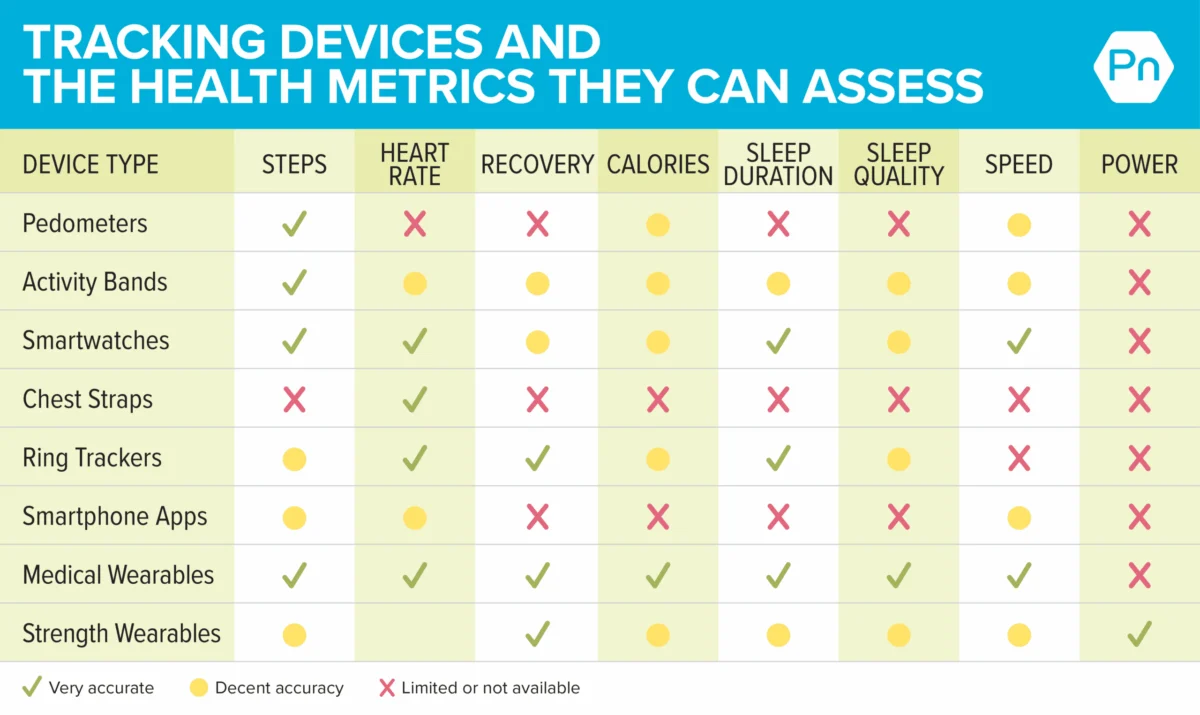
It is a common misconception that all data is created equal. The accuracy of a wearable is not just a product of its hardware; it is the culmination of its sensors, its proprietary software, and the quality of the datasets used to train its algorithms.

Generally speaking, metrics like step counts and heart rate are considered highly reliable. However, as we move into more complex outputs—such as "calories burned," "readiness scores," or "movement velocity"—the margin for error expands significantly.
The paradox of the modern fitness enthusiast is this: Too little detail makes it difficult to chart progress, but too much detail induces "analysis paralysis." As computer scientist Samantha Kleinberg, an expert in decision-making, notes, even a marginal amount of surplus information can have a measurable negative impact on our ability to make sound decisions. There is an inverted U-shaped curve to information: the "sweet spot" exists where you have enough data to inform action, but not so much that you are overwhelmed by white noise.
Signs You Are Using Tech the Right Way (and When to Walk Away)
To determine if your wearable is an asset or a liability, you must ask one fundamental question: Does this device increase my wellbeing and performance? If the answer is ambiguous, look for these three signposts.
1. Calibration and Validation
For many high-performers, the problem isn’t a lack of effort; it’s a lack of trust in the process. Take the case of an athlete told to perform "Zone 2" cardio. It feels too easy, and the athlete—who prides themselves on "the grind"—assumes it’s ineffective. However, when the data shows a consistent drop in resting heart rate and faster recovery times, the tracker serves as a validation tool. It provides the psychological security required to trust the training methodology. Conversely, if your tracker is reporting poor sleep quality scores while you feel rested, or low "recovery" scores when you feel energized, it can create unnecessary stress. If the data conflicts with your reality, it’s time to deprioritize the gadget.
2. Motivation vs. Burnout
Behavior change requires motivation, ability, and a prompt. Trackers are excellent at providing that prompt. A sleep tracker that highlights the direct correlation between a late-night glass of wine and poor recovery can be the specific catalyst needed to change a habit. Once you see the data, you often cannot "un-see" it. However, this becomes a "bad omen" when the pursuit of numbers eclipses the joy of movement. If an avid cyclist stops riding for the love of the trail and begins riding only to beat their previous digital records, they are on the fast track to burnout.
3. Understanding Your True Capacity
Many people chronically underestimate their potential, while others overestimate their ability to recover. Data can help bridge this gap. Heart rate variability (HRV) and real-time output metrics can help keep a trainee out of "junk volume"—the unproductive middle ground where fatigue accumulates but performance stagnates. However, the risk here is total dependency. The "Great My Fitness Pal Blackout" of 2019, where a popular tracking app went offline for a day, caused genuine panic for millions of users who had forgotten how to assess their own satiety and caloric needs without an app’s permission.

Reclaiming the "Felt Experience"
If you find yourself reliant on an app to tell you how you feel, it is time to recalibrate your relationship with your own senses. You possess an internal network of feedback—proprioception, interoception, and nervous system signaling—that technology cannot touch.
To use fitness trackers effectively, we propose a three-step integration strategy:
- The "Pre-Check" Method: Before you sync your device, take a moment to assess your state. How do you feel? How hard was that workout? How much energy do you have? Once you have formed a hypothesis, then check the data. Over time, you will train your brain to become more accurate in its self-assessments.
- Develop Mental Shortcuts: Use Rate of Perceived Exertion (RPE) as your primary tool. When you are in the middle of a set, ask yourself, "If I had to do this for a million dollars, how many more reps could I perform?" This forces an honest appraisal of your physical boundaries that no algorithm can replicate.
- Prioritize Sensory Literacy: Recognize that your body is a sophisticated machine equipped with gyroscopes, thermal sensors, and chemical monitors. By regularly checking in with your breath, your muscle tension, and your mood, you keep your "human" dashboard in working order.
Implications for the Future of Health
The future of fitness will not be decided by who has the most sensors, but by who has the highest level of "sensory intelligence." Technology should be used to educate our internal intuition, not replace it.
As we look ahead, the goal for any health-conscious individual should be to eventually reach a point where the wearable is no longer necessary. Like training wheels on a bicycle, these devices should provide the support needed to learn how to balance. Once you understand your body’s signals—once you know what "recovery" feels like in your bones rather than just on your screen—you become the master of your own physiology.
In the end, the most advanced tracker available is the one you were born with. Use your devices to calibrate your senses, not to override them. When the data eventually fades or the battery dies, you will still be left with the most important metric of all: your own lived experience.