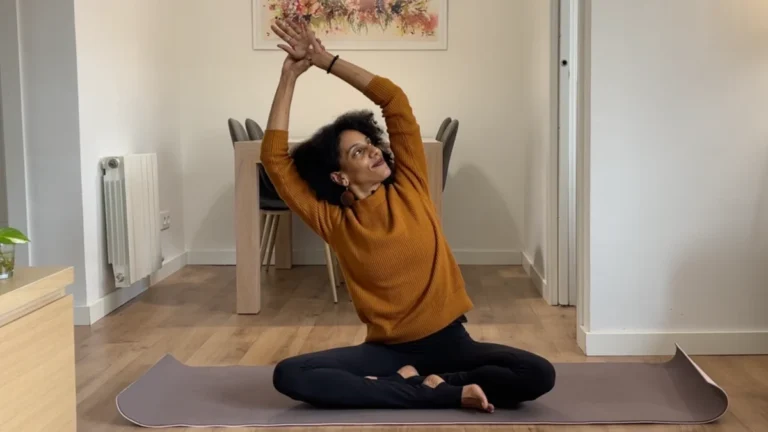











For many, the first few minutes of the morning are a litmus test for physical vitality. If you find yourself rolling out of bed with a stiff, aching, or "undertrained" lower back, you are certainly not alone. As we cross the threshold of 60, the musculoskeletal system undergoes natural changes that can make the spine feel less resilient. However, the narrative that back pain is an inevitable consequence of aging is increasingly challenged by modern sports science.
A structured, low-impact morning routine—focused on precision rather than intensity—can act as a catalyst for long-term spinal health. By targeting the posterior chain and the core muscles that stabilize the spine, you can transform your morning from a period of discomfort into a foundation of strength.
The Physiology of the Aging Spine
Understanding the "Stiff Morning" Phenomenon
As we age, the intervertebral discs lose hydration, and the supporting musculature around the lumbar region can become deconditioned if not regularly engaged. When the muscles responsible for bracing the spine—primarily the glutes, hamstrings, and the deep core—are weak, the lower back is forced to compensate, leading to chronic stiffness.
According to research published in the National Center for Biotechnology Information (NCBI), the key to mitigating this discomfort lies in "co-contraction." This is the practice of training the muscles of the spine and the hips simultaneously. By creating a collaborative system of support, you reduce the shear force on the lumbar vertebrae, effectively offloading the stress that usually triggers morning pain.
Chronology of Progress: A Strategic Approach
Building strength after 60 is not about "punishment" or pushing to failure; it is about "practice." When you approach these exercises as a ritual, you prime your nervous system for the day ahead.
The First Two Weeks: Establishing Neural Pathways
In the initial phase, the goal is not to lift heavy, but to learn the movement patterns. Prioritize bodyweight-only versions of the exercises listed below. Focus on the mind-muscle connection—feeling the glutes engage before the lower back compensates.
Weeks Three to Six: Incremental Loading
Once the form becomes second nature, begin introducing "light resistance." This could be a light kettlebell or a pair of small dumbbells. The objective is to create "tension," a vital component in spinal stability, without compromising your range of motion.
Long-Term Maintenance: The Routine as a Lifestyle
Consistency is the most important variable. Performing these movements three to five mornings a week provides enough stimulus to rebuild muscle density without causing the excessive fatigue that can lead to injury.
The Four Pillars of Back Strength
To build a resilient back, you must train the four movement patterns: bracing, hinging, extending, and creating tension.

1. The Goblet Hold Good Morning
The "Good Morning" is the gold standard for the hinge pattern. By holding a weight (like a kettlebell or small dumbbell) at your chest, you shift your center of gravity, forcing your glutes and hamstrings to do the work.
- The Science: This move teaches the spine to remain neutral while the hips move through a full range of motion, which is crucial for bending down to pick up groceries or children.
- Execution: Keep the weight pressed firmly against your sternum. Push your hips back as if trying to touch a wall behind you with your glutes, keeping a soft bend in the knees.
- Sets and Reps: 2–3 sets of 8–10 repetitions.
2. The Bodyweight Glute Bridge
Weak glutes are the silent culprit behind most lower back pain. When the glutes are dormant, the lower back muscles are recruited for hip extension, a task they are not designed to handle.
- The Science: The glute bridge isolates the hip extensors, relieving the lower back of its compensatory burden.
- Execution: Lie on your back, knees bent, feet flat. Drive through your heels to lift your hips. Stop at the point where your body forms a straight line from knees to shoulders. Do not over-arch the back.
- Sets and Reps: 2–3 sets of 10–15 repetitions.
3. Back Extensions
Often misunderstood, back extensions are not about bending the spine backward; they are about strengthening the erector spinae muscles that keep you standing tall.
- The Science: Strengthening the spinal extensors helps combat the "slumped" posture that often develops in the later decades, which puts unnecessary pressure on the lumbar discs.
- Execution: Use a stability ball or a dedicated hyperextension bench. Lift your chest only as high as your strength allows—avoid any sensation of pinching in the lumbar region.
- Sets and Reps: 2–3 sets of 8–12 repetitions.
4. The Dumbbell Hip Thrust
The hip thrust is the big brother of the glute bridge. It allows for higher levels of tension and muscle recruitment, which are essential for long-term strength.
- The Science: By adding a dumbbell across your lap, you increase the load on the gluteal muscles, building a stronger "posterior girdle" that stabilizes the pelvis.
- Execution: Sit on the floor with your upper back supported by a sturdy bench or couch. Place a dumbbell across your hips. Drive your hips upward, tucking your chin to ensure your spine remains neutral.
- Sets and Reps: 2–3 sets of 8–12 repetitions.
Expert Perspectives: Why "Morning Practice" Works
According to Jarrod Nobbe, a USAW National Coach and expert in sports performance, the efficacy of this program lies in its specificity. "We aren’t looking to create bodybuilders; we are looking to create durable, functional bodies," Nobbe explains. "When you train the lower back in the morning, you are essentially ‘turning on’ the muscles that you will rely on for every movement you make during the day. It is an investment in your independence."
Clinical Implications and Safety
While this routine is designed to be accessible, it is critical to consult with a physician or a physical therapist if you have a history of spinal stenosis, herniated discs, or acute sciatica.
Key Safety Guidelines:
- The "No-Pain" Rule: If you feel sharp, shooting, or radiating pain, stop immediately. Discomfort from muscle fatigue is normal; pain in the joints or nerves is not.
- The Rib-Cage Check: In movements like the hip thrust, keep your rib cage pulled down. Flaring the ribs often leads to an over-arched back, which shifts the pressure from the glutes to the lumbar vertebrae.
- Progressive Overload: Do not be tempted to jump to heavy weights. Strength in the lower back is built on the foundation of stability, not the amount of iron moved.
Conclusion: A New Morning Ritual
The "stiff mornings" that characterize life after 60 are often just a signal from your body asking for better engagement. By integrating these four movements into your early hours, you are doing more than just exercising; you are reclaiming your mobility and ensuring that your back remains a reliable partner for your daily activities.
Start slow, remain consistent, and focus on the quality of every repetition. In a few weeks, you may find that the stiffness has been replaced by a sense of readiness, allowing you to greet the day with the confidence that only a strong, supported back can provide.
References & Further Reading
- NCBI, "Lumbar Spine Stability and Muscle Activation Patterns": pmc.ncbi.nlm.nih.gov/articles/PMC4934575/
- NCBI, "Exercise Training for Lumbar Strength": pmc.ncbi.nlm.nih.gov/articles/PMC4395677/
- Expert insights provided by Jarrod Nobbe, MA, CSCS.