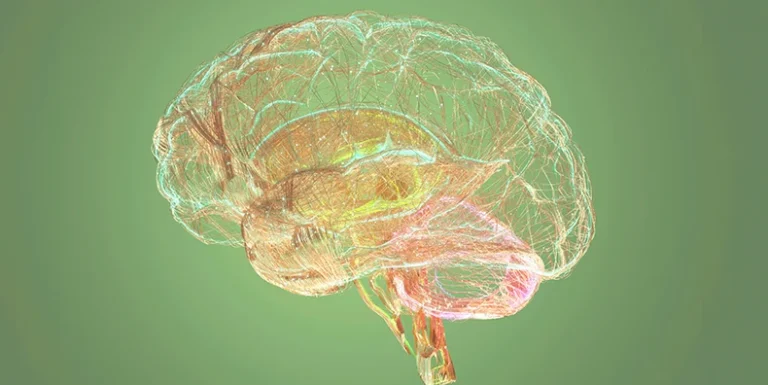












In the complex landscape of mental health, specifically within the management of bipolar disorder, words are often dismissed as mere abstractions. However, emerging psychological research and clinical practice suggest that the internal monologue—the silent, perpetual stream of self-talk—functions as a biological lever. Far from being "toxic positivity" or a form of self-deception, the strategic use of positive affirmations is increasingly recognized as a potent tool for interrupting negative cognitive cycles, mitigating the physiological effects of stress, and fostering a sustainable path toward emotional stability.
Main Facts: The Neurobiology of the Internal Monologue
At its core, bipolar disorder is characterized by dramatic shifts in mood, energy, and activity levels. While pharmacological interventions target the chemical imbalances associated with these shifts, cognitive interventions address the "internal navigation system" that guides a patient’s response to their symptoms.
Words, whether thought or spoken, carry significant neurochemical weight. The brain’s mood is regulated by a delicate balance of neurotransmitters, including dopamine, serotonin, and endorphins. Scientific inquiry suggests that self-talk can actually alter these chemical reactions. When an individual engages in repetitive, negative self-criticism, the brain may trigger a stress response, releasing cortisol and further destabilizing an already fragile emotional state.
Conversely, positive affirmations—defined as intentional, affirmative statements designed to challenge self-sabotaging thoughts—act as a corrective mechanism. According to Jill Sylvester, a licensed mental health counselor and author of Trust Your Intuition, self-talk is the "programming" for our internal GPS. If this programming is left on "autopilot," it often defaults to the critical "inner voice" that reinforces feelings of worthlessness during depressive episodes or impulsivity during mania. By consciously choosing affirmations, individuals can retake the controls of their cognitive "navigation system."
Chronology: From Autopilot to Intentional Regulation
The journey from being a victim of one’s thoughts to becoming an active participant in cognitive regulation typically follows a structured chronological progression in a therapeutic setting.
- Awareness and Identification: The first stage involves recognizing the "critical inner voice." Dr. Robert W. Firestone, a clinical psychologist, identifies this as the "enemy within." Patients must first learn to hear the autopilot thoughts that say, "I can’t do this" or "Everything is falling apart."
- The Interruption of the Cycle: Once the negative stream is identified, the patient must learn to "pause." This is often achieved through mindfulness or meditation. For Lorenzo L., a patient from New York City, this stage involved slowing his breathing to create a space between the emotion and the reaction.
- Active Reframing: In this stage, the individual replaces the negative thought with a pre-prepared affirmation. This is not about denying reality but about "recognizing the truth in situations," as Dr. Gregory L. Jantz, founder of the Center: A Place of Hope, explains. It is the transition from "I am a failure" to "I am facing a challenge, and I have the strength to navigate it."
- Consolidation through Repetition: Affirmations are most effective when they become a habit. Over time, the "new" voice becomes the default, effectively rewiring the brain’s response to mood shifts. This is the stage where stability is not just achieved but maintained.
Supporting Data: The Science of Self-Regulation
The efficacy of affirmations is supported by various psychological studies and clinical trials. A key area of research involves "self-distancing," or the practice of switching from first-person self-talk ("I am stressed") to third-person self-talk ("John is stressed").
A randomized controlled trial published in the journal Scientific Reports (and supported by earlier research in PubMed) found that using one’s own name during stressful periods fosters a sense of perspective. The results showed:
- Reduced Anxiety: Participants reported lower levels of subjective stress.
- Improved Performance: Third-person self-talk allowed for better focus on challenging tasks.
- Faster Recovery: Emotional recovery from negative stimuli was more complete when individuals viewed themselves from a distanced perspective.
Furthermore, a study published in PLOS ONE highlighted the relationship between self-affirmation and problem-solving under stress. The researchers found that individuals facing chronic stress experienced a significant decline in problem-solving abilities. However, those who engaged in a brief self-affirmation exercise before a task performed at the same level as those with low stress. This suggests that affirmations act as a "buffer," protecting the brain’s executive functions from being overwhelmed by emotional turbulence.
Official Responses: Expert Perspectives on Cognitive Healing
Mental health professionals emphasize that affirmations are a bridge between clinical treatment and daily lived experience.
Dr. Gregory L. Jantz argues that positive self-talk is an exercise in emotional health rather than a fantasy. In his work, Moving Beyond Depression, he notes that positive talk "allows you to discover the obscured optimism, hope, and joy in any given situation." He emphasizes that this is a search for truth—the truth being that the individual is more than their diagnosis.
Jill Sylvester highlights the importance of the "I am" prefix. By using the present tense, individuals affirm that their strength or capability is a current reality, not a distant goal. "Self-affirmations are positive statements that put a person in the driver’s seat of their life," Sylvester states. This sense of agency is often the first thing lost during a bipolar episode; reclaiming it is vital for recovery.
Dr. Robert W. Firestone warns that the "critical inner voice" is an adaptive mechanism that may have formed in response to past trauma. Therefore, affirmations must be used as a deliberate "counter-attack" against these deep-seated beliefs. The goal is to move from a reactive state (reacting to the mood) to a proactive state (responding with a chosen identity).
Implications: Tailoring Affirmations to the Bipolar Cycle
The most significant implication of this research is that affirmations cannot be "one size fits all." To be effective for bipolar disorder, they must be tailored to the specific phase of the illness.
1. Navigating the Depressive Trough
During depression, the brain is convinced of its own incapacity. Affirmations here must be gentle and focus on persistence.
- Example: "I am doing the best I can right now, and that is enough."
- Purpose: To reduce the shame that often accompanies the lack of productivity in depressive states.
2. Grounding the Manic Peak
During mania or hypomania, the challenge is racing thoughts and impulsivity. Affirmations serve as an anchor.
- Example: "I will use this energy for healthy, productive activities. I will pause before I act."
- Purpose: To channel high energy into safe outlets and maintain a connection to one’s wellness plan.
3. Reinforcing Stability
In periods of euthymia (stable mood), affirmations serve to build "cognitive reserve."
- Example: "I am capable of maintaining this balance. I have the tools to handle whatever comes next."
- Purpose: To solidify the individual’s identity as someone who is in control of their health.
Practical Implementation and Long-term Outlook
For affirmations to transition from a theory into a life-changing practice, experts suggest several integration techniques:
- Visual Cues: Placing affirmations on mirrors, as patient Kim S. does, ensures that the message is received during routine moments.
- Digital Integration: Using smartphone reminders to "ping" a positive thought during the day can interrupt the autopilot of a busy schedule.
- The "Rule of Five": Repeating a chosen phrase five times when a mood shift is detected helps to "lock in" the cognitive shift.
The implications for the future of bipolar management are clear: while medication manages the biological "floor" of the disorder, positive self-talk and affirmations build the "ceiling." By transforming the internal monologue from a critic into a coach, individuals with bipolar disorder can move toward a more stable, empowered, and hopeful future. The "enemy within" is powerful, but the "voice of the self," when trained and intentional, is ultimately more resilient.