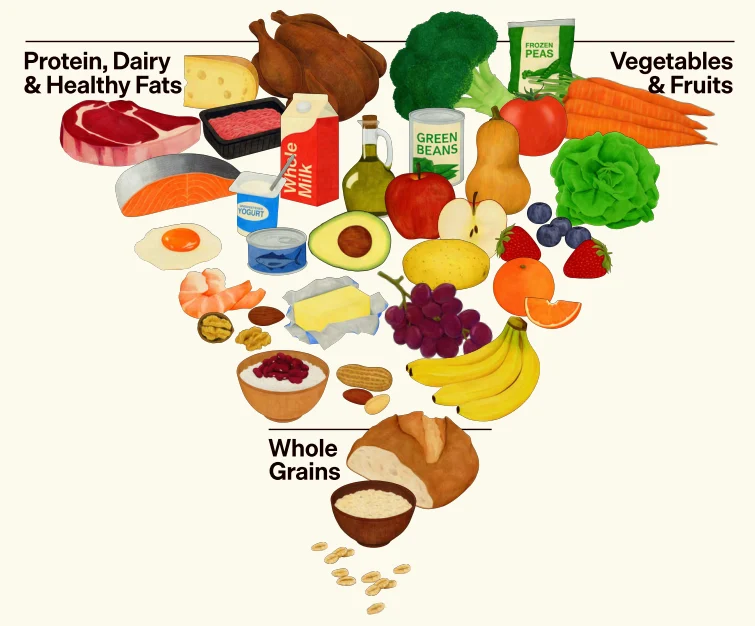












The World Health Organization (WHO) recently unveiled a comprehensive update to its global dietary guidelines, intended to serve as a blueprint for healthy eating for individuals aged two and older. While the international health body’s recommendations regarding sodium, added sugars, and trans fats have garnered broad consensus, a specific directive—capping total fat intake at 30% of daily caloric intake—has sparked a significant scientific dispute.
Leading researchers at the Harvard T.H. Chan School of Public Health have issued a strong rebuttal, arguing that the WHO’s focus on total fat is not only outdated but potentially harmful. By scrutinizing the evidence base behind these guidelines, Harvard experts contend that the WHO has ignored decades of robust research, inadvertently encouraging dietary patterns that may inadvertently increase the risk of chronic disease.
Main Facts: The Core of the Controversy
The WHO’s updated guidance aims to address the global burden of non-communicable diseases (NCDs) by refining what constitutes a "healthy" intake of macronutrients. The guidelines emphasize the importance of prioritizing unsaturated fats—found in plant-based oils, nuts, and seeds—over saturated and trans fats.
However, the inclusion of a universal cap on "total fat" has drawn the ire of the nutritional science community. Harvard researchers argue that the quality of fat is far more important than the quantity. According to their analysis, the WHO’s rigid 30% limit lacks a foundation in modern, high-quality clinical trials.
Key Points of Contention:
- The Quality over Quantity Argument: Harvard nutritionists emphasize that diets rich in healthy unsaturated fats, such as the Mediterranean diet, have been proven effective in reducing cardiovascular disease and diabetes, despite containing fat levels often exceeding 40% of total calories.
- The Carbohydrate Trade-off: By limiting healthy fats, the WHO’s recommendation may inadvertently push individuals toward increased consumption of refined carbohydrates and sugars. This substitution is linked to rising blood pressure, higher triglyceride levels, and poor glycemic control.
- Selective Evidence: Critics argue that the WHO’s meta-analyses relied on flawed, non-representative studies while ignoring large-scale, well-designed randomized controlled trials.
A Chronology of Nutritional Policy
To understand the friction between Harvard and the WHO, one must view the evolution of nutritional science over the last half-century.
1970s–1980s: The Low-Fat Era
Following early, often misinterpreted research regarding heart health, the global health community embraced the "low-fat" paradigm. Public health messaging largely equated fat consumption with weight gain and arterial clogging.
2000s–2010s: The Shift toward Quality
As longitudinal studies like the PREDIMED trial (Prevención con Dieta Mediterránea) emerged, the consensus began to shift. Researchers discovered that people who consumed higher amounts of monounsaturated fats—specifically from olive oil, nuts, and fatty fish—showed significantly lower rates of cardiovascular events compared to those on low-fat diets.
July 2023: The WHO Update
The WHO published its latest guidelines, consolidating existing advice on sugars and sodium while doubling down on the 30% total fat limit. This move was intended to standardize global nutritional standards, yet it reignited a long-standing debate that many scientists believed had been settled in favor of a more nuanced approach.
Supporting Data: What the Evidence Says
The Harvard critique rests on the premise that the WHO’s meta-analysis is methodologically compromised. Dr. Walter Willett, Professor of Epidemiology and Nutrition at the Harvard T.H. Chan School of Public Health, has been a vocal critic of the report’s reliance on selective data.
The PREDIMED Evidence
The PREDIMED trials remain the gold standard for comparing dietary fat compositions. Participants were assigned to either a Mediterranean diet—where fat accounted for 39% to 42% of daily calories—or a low-fat control diet. The results were clear: those on the higher-fat Mediterranean diet experienced a lower risk of type 2 diabetes and heart disease. These findings directly contradict the premise that total fat reduction is inherently beneficial.
Flaws in the Meta-Analysis
Harvard researchers identified several critical issues within the studies utilized by the WHO:
- Non-Representative Populations: Many of the studies cited in the WHO report included participants who already suffered from chronic conditions, such as cancer or advanced heart disease, making them poor benchmarks for general public health guidance.
- The "Intervention Bias": In many of the low-fat studies, the intervention group received intensive, personalized counseling, while the control group received little to no support. The weight loss observed in these studies was likely a result of the extra attention and behavioral coaching, rather than the reduction in fat itself.
- Statistical Insignificance: Even if the WHO’s data were accepted at face value, the actual weight difference between the low-fat and high-fat groups was approximately 0.9 kilograms (about two pounds). Experts argue this is a negligible metric upon which to build global policy.
Official Responses and Scientific Dissent
The discord between Harvard and the WHO highlights a broader tension within global health policy. While the WHO is tasked with providing simple, actionable guidance for diverse populations—including those in developing nations where obesity and malnutrition often coexist—critics like Dr. Willett argue that simplicity should not come at the expense of accuracy.
"The new WHO recommendation that intake of total fat be limited to 30% of calories is narrowly based on one deeply flawed meta-analysis of weight gain," Dr. Willett stated. "This ignores the last several decades of research on dietary fat and excludes the traditional Mediterranean diet, which has been widely recognized as a healthy model for eating."
The WHO, for its part, maintains that these guidelines are intended to reduce the consumption of harmful saturated fats. They argue that by setting a "ceiling" for total fat, they can effectively discourage the intake of processed foods that are typically high in both saturated and trans fats. However, Harvard’s experts suggest that this approach is blunt-force medicine in an age of precision nutrition.
Implications: What Should Consumers Do?
The disagreement between global policy makers and academic nutritionists presents a dilemma for the public. If the WHO’s guidelines are "best ignored" regarding total fat, how should a consumer approach their daily intake?
1. Focus on the Source, Not the Percentage
The consensus among researchers at Harvard is clear: the source of the fat is the primary factor in health outcomes. Consumers should prioritize monounsaturated and polyunsaturated fats. Sources include:
- Extra virgin olive oil
- Avocados
- Walnuts, almonds, and flaxseeds
- Fatty fish (salmon, sardines, mackerel)
2. Beware the "Refined Carbohydrate" Trap
The primary danger of the "low-fat" movement is the tendency to replace healthy fats with refined grains and added sugars. This leads to spikes in blood glucose and insulin, which are major drivers of obesity and metabolic syndrome. Consumers should remain wary of low-fat products that compensate for the lack of fat with high sugar content.
3. Adopt Sustainable Patterns
Rather than focusing on mathematical limits—like counting the percentage of calories from fat—Harvard experts recommend focusing on a consistent, sustainable diet pattern. The Mediterranean, DASH, and healthy plant-based diets remain the most heavily supported by longitudinal evidence. These diets are not low-fat; they are "right-fat" diets.
4. Look Beyond the Scale
The WHO’s focus on weight change as the primary outcome for fat intake is, according to Harvard researchers, a narrow view of health. Chronic disease prevention is a multifaceted goal. A diet that is slightly higher in fat but keeps inflammation low, blood pressure stable, and blood sugar in check is far more beneficial than a low-fat diet that fails to address these underlying metabolic markers.
Conclusion
The WHO’s updated guidelines provide a valuable service in highlighting the dangers of trans fats and the importance of limiting added sugars. However, the insistence on a universal 30% cap on total fat represents a divergence from contemporary nutritional science.
For the average consumer, the takeaway is one of nuance: dietary health is not a matter of simply cutting numbers, but of choosing the right ingredients. By focusing on whole foods and high-quality fats, individuals can support their long-term health in ways that a one-size-fits-all, low-fat mandate simply cannot capture. As the debate continues, the scientific community will likely continue to push for guidelines that reflect the complexity of human metabolism and the wealth of evidence collected over the past forty years.