By Sree Roy
The landscape of restless legs syndrome (RLS) management has undergone a seismic shift. For decades, the standard of care for this often-debilitating neurological condition remained static, dominated by a "reflexive" reliance on a specific class of medications. However, a new, comprehensive treatment algorithm published in May 2026 by the Restless Legs Syndrome (RLS) Foundation’s scientific and medical advisory board has effectively closed the book on that era.
Replacing the outdated 2021 standards, the new algorithm provides clinicians—ranging from primary care physicians to sleep medicine specialists—with a sophisticated, evidence-based roadmap for navigating the complexities of RLS. Published in Mayo Clinic Proceedings, this document represents a departure from traditional prescribing habits, favoring long-term patient safety and efficacy over the historical, short-term convenience of legacy therapies.
The Chronology of Change: From Guidelines to Clinical Practice
To understand the weight of this new guidance, one must look at the timeline of clinical evolution in sleep medicine. For nearly 20 years, dopamine agonists were the undisputed first-line therapy for RLS. However, clinical experience and longitudinal research began to reveal a darker side to these drugs: the phenomenon of "augmentation," a paradoxical worsening of symptoms that often occurs as a direct result of the medication itself.
In early 2025, the American Academy of Sleep Medicine (AASM) released a landmark clinical practice guideline. Using the rigid, evidence-heavy GRADE (Grading of Recommendations Assessment, Development and Evaluation) methodology, the AASM established a new baseline for treatment.
While the AASM guideline provided the scientific "gold standard," the RLS Foundation’s 2026 update—led by Dr. Michael H. Silber of the Mayo Clinic—serves as the necessary "practical companion." It bridges the gap between clinical trial data and the nuanced, often messy reality of the exam room. As Dr. John W. Winkelman, chief of the Sleep Disorders Clinical Research Program at Massachusetts General Hospital and a co-author on both papers, notes, the shift is absolute: clinicians must move away from knowledge even five years old to avoid outdated, potentially harmful practices.
Core Pillars of the New Algorithm: A Shift in Strategy
The updated algorithm is not merely a suggestion; it is a fundamental restructuring of how RLS is approached in modern medicine. The following five areas represent the most critical shifts for practitioners.
1. The Death of Reflexive Dopamine Agonist Use
The most consequential change is the demotion of dopamine agonists from their status as the default first-line treatment. The data is simply too compelling to ignore: research suggests that 42% to 70% of patients treated with dopamine agonists for eight to 10 years experience augmentation.
The new standard dictates that gabapentinoids (gabapentin, gabapentin enacarbil, and pregabalin) and targeted iron therapy should now lead the charge. Dopamine agonists are now reserved for cases where these primary agents have failed or caused intolerable side effects, and even then, only after a rigorous discussion of the long-term risks.
2. Expanding the Window for IV Iron Therapy
The 2026 algorithm broadens the therapeutic window for intravenous (IV) iron, challenging previous constraints. While the 2025 AASM guideline suggested IV iron for patients with a serum ferritin level up to 100 µg/L, the RLS Foundation now advises considering it for patients with chronic, persistent RLS whose serum ferritin levels reach up to 300 µg/L, provided the transferrin saturation (TSAT) remains below 45%.
The reasoning is rooted in the physiological reality that serum ferritin is an imperfect proxy for brain iron stores. Given that oral iron absorption plateaus once serum ferritin levels exceed 75 µg/L, the shift toward IV therapy for this broader cohort provides a powerful, underutilized tool for clinicians aiming to stabilize patients without resorting to higher-risk pharmacotherapy.
3. Mastering the Management of Augmentation
Perhaps the most significant gap in previous guidelines was the lack of a protocol for managing patients who have already developed augmentation. The new algorithm provides a clear, step-by-step diagnostic and therapeutic path.
The primary rule is absolute: Never increase the dose of a dopamine agonist to treat the symptoms of augmentation. Doing so is described as "digging a hole" that leads to even more severe paradoxical worsening. Instead, clinicians are urged to begin a slow, careful weaning process, ideally transitioning the patient to a gabapentinoid or, in selected cases, a low-dose opioid, while carefully managing the temporary symptom spikes that occur during withdrawal.
4. Re-evaluating Low-Dose Opioids
Once viewed exclusively as a "last resort" for highly refractory cases, low-dose opioids have been repositioned in the 2026 algorithm as a legitimate, viable option for patients who do not respond to or cannot tolerate first-line therapies.
This change reflects a move away from the stigma that has historically clouded opioid use in RLS. The algorithm highlights that, unlike the widespread augmentation seen with dopamine agonists, the risk of tolerance and dependence in the context of low-dose, stable-dose RLS treatment is remarkably low.
5. Integrating Non-Pharmacological Technology
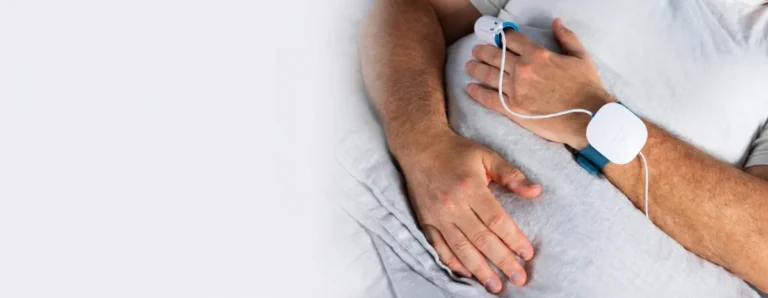
The inclusion of bilateral high-frequency peroneal nerve stimulation marks a modern, tech-forward approach to RLS. As an FDA-approved non-pharmacological treatment, this wearable technology acts as an adjunctive therapy for patients who have failed at least one medication.
Dr. Winkelman reports that approximately 50% of his patients find significant relief from the device, often using it in the middle of the night to manage breakthrough symptoms without the need for additional pills. It represents a shift toward a multi-modal, personalized treatment plan.
Supporting Data and Evidence-Based Decision Making
The rigor of these recommendations is supported by a dual-layered approach to evidence. The AASM’s focus on Randomized Controlled Trials (RCTs) ensures that the treatments suggested are proven to be effective. Conversely, the RLS Foundation’s consensus-based model incorporates years of longitudinal follow-up and the "clinical wisdom" of specialists who have observed the long-term trajectories of thousands of patients.
This combination of methodologies ensures that the algorithm is both scientifically sound and practically useful. By moving away from the "quick fix" mentality—where a simple prescription of a dopamine agonist is written to satisfy a patient’s immediate need for sleep—the medical community is finally prioritizing the long-term neurological health of the patient.
Official Responses and Clinical Implications
The implications for the medical community are profound. Primary care physicians, who treat the vast majority of RLS cases, are now equipped with a clear, hierarchical guide that discourages the reflexive prescribing that has led to a generation of patients suffering from the consequences of augmentation.
"The goal is a shared decision-making process," says Dr. Silber. This means that patients are no longer passive recipients of medication, but informed participants who understand why their physician may be choosing a gabapentinoid over a dopamine agonist, or why they are recommending an IV iron infusion over an oral supplement.
For the sleep medicine community, these guidelines serve as a call to action to review the status of every patient currently on long-term dopamine therapy. The message is clear: if a patient is currently taking a dopamine agonist, they should be screened for augmentation, and a long-term plan should be developed to transition them to a safer, more sustainable therapeutic regimen.
Conclusion: A More Informed Future
The release of the 2026 RLS Foundation algorithm is a milestone for sleep medicine. By synthesizing recent evidence with expert consensus, the foundation has created a document that moves the field away from the dangers of legacy treatments and toward a more nuanced, individualized approach.
As clinicians move forward, the emphasis on patient education, careful symptom monitoring, and the use of modern tools like peroneal nerve stimulation suggests that the future of RLS management is brighter—and significantly more stable—than its recent past. The "revolution" in RLS prescribing is here, and for patients living with the relentless, nocturnal struggle of this condition, it promises a much-needed path toward sustained relief.
References
- Silber MH, Berkowski JA, Buchfuhrer MJ, et al; Scientific and Medical Advisory Board of the Restless Legs Syndrome Foundation. "An Updated Algorithm for the Management of Restless Legs Syndrome." Mayo Clin Proc. 2026 May 26:S0025-6196(26)18546-2.
- Winkelman JW, Berkowski JA, DelRosso LM, et al. "Treatment of restless legs syndrome and periodic limb movement disorder: an American Academy of Sleep Medicine clinical practice guideline." J Clin Sleep Med. 2025 Jan 1;21(1):137-52.