







1 August 2026
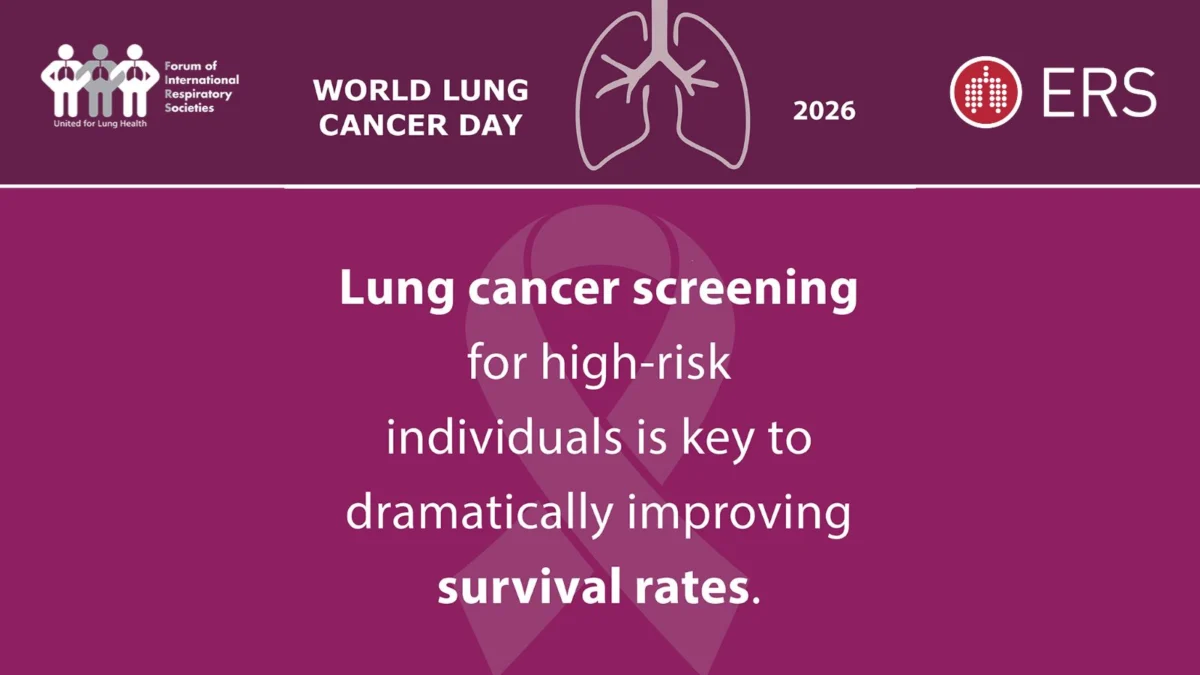
As the global medical community marks World Lung Cancer Day on August 1, 2026, a somber reality persists: despite unprecedented breakthroughs in precision oncology and targeted therapies, lung cancer remains the primary driver of cancer-related mortality across the globe. Today, the Forum of International Respiratory Societies (FIRS)—of which the European Respiratory Society (ERS) is a prominent founding member—has launched a coordinated global initiative to sound the alarm on a critical bottleneck in oncology: the persistent disparity in access to early screening.
While science has provided the tools to detect lung cancer before it becomes symptomatic, the systemic failures to deploy these tools equitably continue to cost millions of lives annually. This year’s campaign serves as a stark reminder that technology alone is insufficient; without political will and robust healthcare infrastructure, the promise of early detection will remain a privilege rather than a standard of care.
The Scale of the Crisis: Main Facts and Global Burden
The numbers behind lung cancer are as staggering as they are preventable. According to the latest comprehensive data from the World Health Organization (WHO), 2022 saw approximately 2.5 million new diagnoses of lung cancer worldwide. Even more devastating is the mortality rate, with the disease claiming an estimated 1.8 million lives in that same year.
Lung cancer is a silent predator; in its early stages, it often manifests no symptoms. By the time a patient experiences a persistent cough, hemoptysis (coughing up blood), or unexplained weight loss, the cancer has frequently metastasized, rendering curative surgery or localized radiotherapy impossible. This "late-stage diagnosis trap" is the single greatest obstacle to improving survival rates.
The current paradigm of care is shifting from reactive symptom management to proactive population health. The gold standard in this shift is low-dose computed tomography (LDCT) screening. Clinical trials have repeatedly demonstrated that LDCT screening for high-risk individuals—typically long-term smokers or those with significant occupational exposure—can identify malignancies at an early, localized stage. When caught early, the five-year survival rate increases exponentially. Yet, the implementation of these screening programs remains fragmented, creating a "postcode lottery" where a patient’s survival depends more on their geography and socioeconomic status than on the biological behavior of their tumor.
Chronology: The Evolution of Lung Cancer Detection
To understand the urgency of the 2026 call to action, one must look at the timeline of the fight against the disease:
- Pre-2000s: Lung cancer detection was almost exclusively reliant on symptomatic presentation and chest X-rays, both of which proved largely ineffective at reducing mortality in early-stage disease.
- 2011: The publication of the National Lung Screening Trial (NLST) results in the United States marked a watershed moment. It provided the first definitive evidence that LDCT screening could reduce lung cancer mortality by 20% in high-risk populations.
- 2015–2020: Global health bodies began integrating LDCT into clinical guidelines. However, uptake remained slow due to concerns over high false-positive rates and the logistical burden on radiology departments.
- 2022: The WHO solidified its data sets, confirming the 2.5 million annual diagnosis milestone, prompting a global reassessment of oncology priorities.
- 2024–2025: Advances in AI-assisted imaging began to alleviate the burden on radiologists, making large-scale screening more feasible.
- 1 August 2026: FIRS launches the current awareness campaign, shifting the focus from "is screening possible?" to "how do we make screening accessible to all?"
Supporting Data: The Disparity of Access
The data reveals a troubling bifurcation in global health. In high-income nations, screening programs are being integrated into national health systems. However, even within these countries, rural and marginalized urban populations face significant barriers.
The Barriers to Implementation
- Geographic Isolation: High-tech imaging centers are often concentrated in major metropolitan hubs, effectively excluding rural populations from routine screening.
- Financial Obstacles: Even where screening is medically indicated, the out-of-pocket costs or the indirect costs (time off work, transportation) act as a deterrent for low-income workers.
- Lack of Awareness: Many individuals in high-risk categories remain unaware that they are eligible for screening. Public health messaging has historically struggled to reach populations that are already distrustful of the medical establishment.
- Stigmatization: Lung cancer remains heavily stigmatized due to its association with tobacco use. This "blame culture" discourages patients from seeking screening and influences policymakers to prioritize other cancers with more public advocacy support.
Clinical models suggest that if screening coverage for high-risk populations reached 70% globally, mortality rates could potentially drop by as much as 15–20% over a decade. Currently, in many parts of the world, that coverage is in the low single digits.
Official Responses: FIRS and the Call to Action
The Forum of International Respiratory Societies (FIRS) has issued a manifesto for 2026, urging a multi-stakeholder approach to reform. Their position is clear: lung cancer screening must be treated as a fundamental component of universal health coverage.
The Call for Policy Reform
FIRS, alongside ERS and other global health partners, is urging governments to adopt the following measures:
- Integration into Primary Care: Move screening out of specialized oncology centers and into community health settings. Primary care physicians should be empowered to identify high-risk patients and issue screening referrals as a routine preventative measure.
- Investment in AI and Tele-radiology: Governments must invest in AI-driven diagnostic software to assist in the reading of LDCT scans. This would reduce the bottleneck of needing specialized thoracic radiologists in every corner of the world.
- Removing Financial Barriers: For screening to be effective, it must be free at the point of care. Cost-benefit analyses have shown that the cost of screening is vastly outweighed by the savings achieved by avoiding late-stage, high-intensity systemic treatments.
- Public Awareness Campaigns: Moving beyond the "quit smoking" narrative, campaigns must focus on the "get screened" narrative. By separating the screening process from the moral judgment of tobacco use, health systems can achieve higher participation rates.
"We have the technology to stop lung cancer from being a death sentence," stated a spokesperson for FIRS. "What we lack is the political courage to prioritize early detection in a way that is truly equitable. Today, we are asking governments to stop looking at lung cancer as a burden and start looking at it as a manageable condition through early, systemic intervention."
Implications: The Future of Respiratory Health
The implications of this year’s World Lung Cancer Day are profound. We are standing at a crossroads. If the international community continues to treat lung cancer screening as a luxury, we will remain trapped in a cycle of expensive, palliative, and ultimately failing treatment regimes.
Conversely, if we successfully implement the FIRS roadmap, we could see a fundamental transformation in global oncology.
Economic Implications
Early detection is not just a moral imperative; it is an economic necessity. Treating Stage IV lung cancer involves immunotherapy and targeted therapies that cost tens of thousands of dollars per patient per month. In contrast, early-stage detection allows for surgical resection or stereotactic body radiation therapy (SBRT), which, while requiring high-quality equipment, is exponentially less expensive than years of advanced systemic therapy. By investing in screening, health systems can reallocate billions of dollars from late-stage treatment to early-stage prevention and primary care infrastructure.
Societal and Human Impact
The loss of 1.8 million lives annually represents a catastrophic loss of human potential. Many of these individuals are in their peak productive years. The ripple effects of these deaths on families, economies, and social stability are incalculable.
Furthermore, by addressing the barriers to screening, we create a template for how to handle other chronic diseases. The infrastructure required for lung cancer screening—data registries, primary care engagement, and diagnostic capacity—can be leveraged to improve outcomes for other respiratory illnesses, such as Chronic Obstructive Pulmonary Disease (COPD) and interstitial lung diseases.
Conclusion: A Vision for 2030
As the sun sets on 1 August 2026, the respiratory community is looking toward 2030 with a sense of cautious optimism. The tools are in our hands. The LDCT scan is a proven, reliable, and life-saving instrument. The barrier is not medical; it is political, economic, and social.
The message from the global community today is unequivocal: survival should not be a matter of luck. It should be a matter of policy. By bridging the diagnostic gap, we do more than just save lives; we affirm the right of every individual to have their disease caught at a stage where it can be beaten. On this World Lung Cancer Day, the call is for governments and health systems to stop waiting for symptoms to appear and start building the systems that find the cancer before it finds the patient.
The path forward requires a global commitment to equity, a shift in funding priorities, and a sustained, loud, and uncompromising advocacy for the millions who are currently living with undiagnosed lung cancer. The time to act is not next year, or in the next decade; the time to act is now.
For more information on the initiatives led by the Forum of International Respiratory Societies, visit the official World Lung Cancer Day resources at WHO Lung Cancer Fact Sheets.