








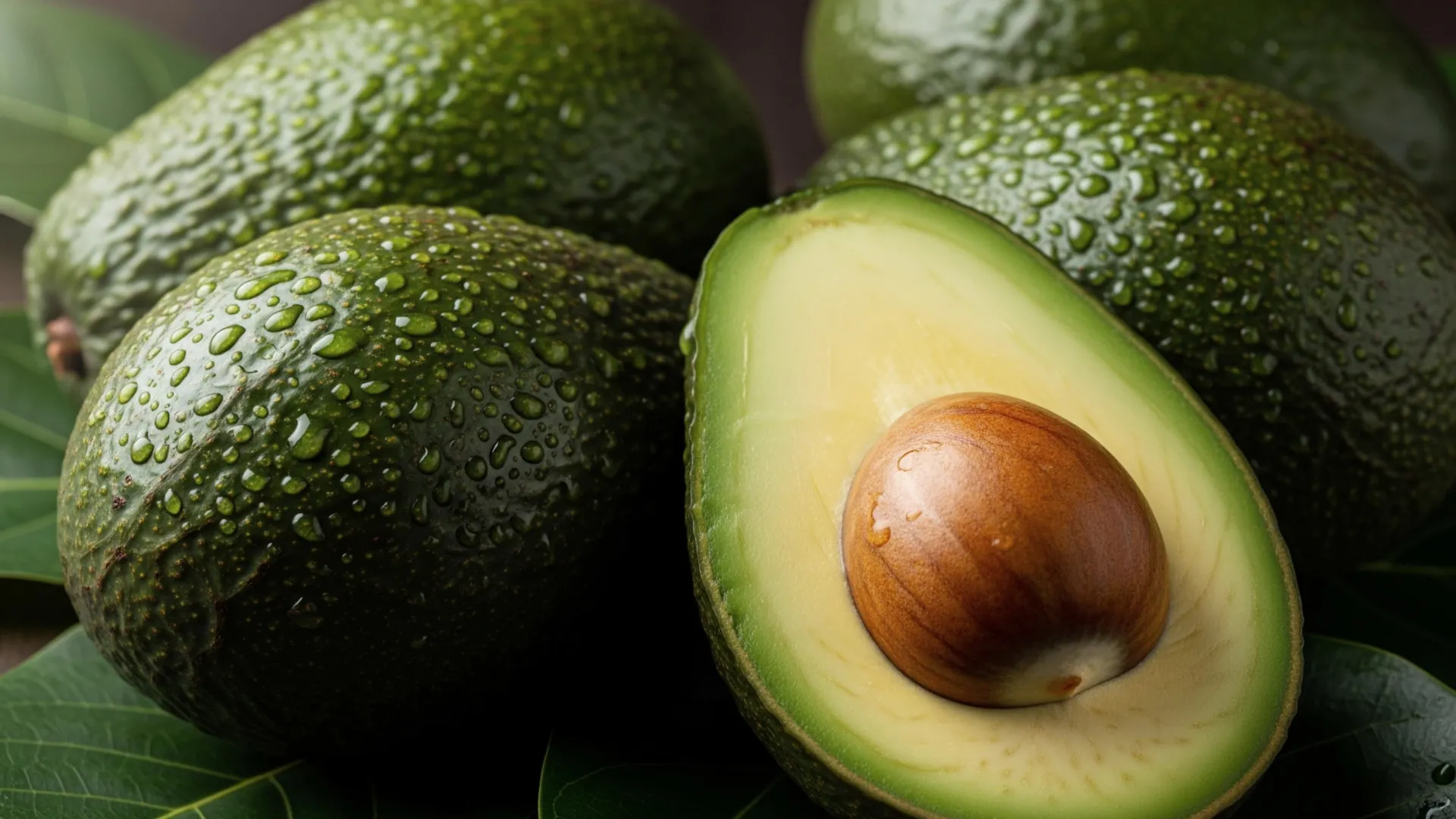
In the ongoing quest to combat the global rise of cardiovascular disease, researchers have often focused on radical lifestyle overhauls—demanding that patients abandon their favorite foods in favor of restrictive, high-effort diets. However, a groundbreaking study from the Penn State Department of Nutritional Sciences suggests a more pragmatic, sustainable approach: the simple, daily addition of a single avocado.
Published in the Journal of Clinical Lipidology, the research indicates that consuming one avocado every day can lead to a modest but statistically significant reduction in the concentration of low-density lipoprotein (LDL) particles in the blood of adults with obesity. This finding offers a glimmer of hope for millions struggling with weight-related cardiovascular risk, suggesting that dietary improvement does not always require an "all-or-nothing" approach.
Main Facts: The Power of the LDL Particle Count
The primary discovery of the study centers on the distinction between standard LDL cholesterol and LDL particle concentration. While most people are familiar with the "bad cholesterol" numbers on their standard lipid panels, this study focuses on the physical vehicles that transport that cholesterol.
LDL particles are essentially the "delivery trucks" of the bloodstream. When a person has a higher concentration of these particles, the risk of heart disease increases, even if their total LDL cholesterol level appears comparable to someone with fewer, larger particles. The researchers found that by consuming one avocado daily, participants experienced a reduction of 49 nanomoles per liter in LDL particle concentration. This reduction is estimated to lower the risk of heart disease by approximately 4%.
While a 4% reduction may seem modest compared to the 14–29% risk reduction associated with drastic, total-diet transformations, the study’s authors emphasize that this is a tangible, "step-in-the-right-direction" improvement that is significantly more achievable for the average person.
Chronology: From Controlled Labs to Real-World Diets
The journey to these findings began several years ago with a highly controlled clinical experiment, also conducted at Penn State. In that earlier study, researchers provided participants with strictly monitored meals to determine exactly how avocados affected lipid profiles. While the results were positive, they left a lingering question: Did the effect hold true in the messy, unpredictable landscape of real-world human behavior?
To answer this, researchers launched the Habitual Diet and Avocado Trial, a robust six-month study involving 786 participants aged 25 and older. Eligibility was determined by waist circumference—a key indicator of abdominal obesity—with men qualifying if their waist measured over 40 inches and women over 35 inches.
The study design was straightforward yet rigorous. Participants were split into two groups:
- The Control Group: Asked to maintain their normal, habitual diets and physical activity routines.
- The Intervention Group: Asked to maintain their normal routines but with the mandatory addition of one avocado per day.
By comparing blood samples taken at the beginning and the end of the six-month period, the team was able to isolate the effect of the avocado from other variables. The result? A consistent improvement in LDL particle profiles across the board, regardless of the participants’ sex, race, ethnicity, age, or baseline body mass index (BMI).
Supporting Data: Why "Particle Count" Matters
To understand the significance of this data, one must look at the mechanics of cardiovascular health. As lead author and postdoctoral scholar Janhavi Damani explains, LDL cholesterol cannot navigate the bloodstream solo; it requires protein particles to act as transport vessels.
The "Delivery Truck" Analogy
Damani uses a compelling analogy to explain why standard tests can be misleading. Imagine two individuals, Person A and Person B, both presenting with identical high levels of LDL cholesterol.
- Person A carries their cholesterol in a few, large "trucks."
- Person B carries their cholesterol in a high volume of small, compact "trucks."
Even though the total "cargo" (cholesterol) is the same, Person B is at a significantly higher risk for heart disease. The smaller particles can more easily penetrate the lining of the artery walls, leading to the accumulation of plaque. Over time, this plaque buildup narrows the arteries and reduces their flexibility, a condition often exacerbated by abdominal obesity.
When the heart is under stress—whether from exercise, high temperatures, or emotional pressure—these stiffened vessels cannot dilate to accommodate increased blood flow. This causes blood pressure to spike, significantly increasing the likelihood of a cardiac event, such as a heart attack. By reducing the number of these small, dangerous particles, the daily avocado serves as a defensive buffer for the vascular system.
Official Responses: Expert Insights on Dietary Strategy
The research team at Penn State is careful to frame these findings as a practical strategy rather than a "magic bullet."
"If people want to improve the quality of their diet, making one small change might be a more feasible strategy than attempting to change their entire diet," says Damani. "For people with obesity, including avocados in their daily diet might be a good starting place."
Dr. Kristina Petersen, associate professor of nutritional sciences and senior author of the study, highlights the difference between this trial and previous literature. "Penn State researchers demonstrated several years ago that avocado consumption could reduce LDL cholesterol and levels of LDL particles," Petersen notes. "But in that study, the researchers controlled participants’ entire diets throughout the experiment. This study demonstrated benefits in the real world, where people’s diets are much less predictable. In the course of people’s normal lives, avocado consumption still contributes to a healthier diet."
The researchers acknowledge that while the intervention did not lead to significant weight loss or changes in waist circumference, the metabolic benefits persisted regardless. They strongly advise that before making any dietary changes, individuals should consult with a registered dietitian or a primary care physician to ensure the change aligns with their unique health needs and caloric requirements.
Implications: A New Path for Nutritional Science
The implications of this study are profound, particularly for public health policy and individual preventative medicine.
1. Sustainability over Perfection
The most significant takeaway is the validation of "incrementalism" in nutrition. The modern obesity epidemic is often met with extreme dietary prescriptions that are difficult to maintain long-term. By identifying a single, nutrient-dense food that, when added to a routine, provides a measurable cardiovascular benefit, researchers have provided a tool that is easy to adopt and difficult to mess up.
2. Moving Beyond Total Cholesterol
The study reinforces the medical community’s shift toward more nuanced metrics. Relying solely on total LDL cholesterol may mask underlying risks, particularly in patients with abdominal obesity. By advocating for the consideration of LDL particle concentration, this research encourages doctors and patients to look deeper into the mechanics of their lipid profiles.
3. The Future of Preventive Nutrition
The success of the Habitual Diet and Avocado Trial suggests that future studies should focus on "additive" nutrition. Rather than focusing on what to remove from the diet, scientists are increasingly interested in what can be added to improve metabolic outcomes.
4. Broad Applicability
Because the benefits were consistent across various demographic groups, the findings suggest that the avocado intervention is broadly applicable. Whether a patient is 25 or 75, or of varying ethnic backgrounds, the physiological response to the healthy fats and fiber provided by the avocado appears to be universally beneficial for heart health.
Closing Thoughts
While the 4% reduction in risk is not a replacement for medical intervention, blood pressure medication, or regular exercise, it represents a meaningful, evidence-based improvement in a population that is often at high risk. As the researchers continue to analyze the data from the Habitual Diet and Avocado Trial, one thing is clear: simple, manageable dietary adjustments can—and do—make a difference in the long-term health of our cardiovascular systems.
This research was supported by the Avocado Nutrition Center. Additional contributors included experts from Tufts University, the University of California, Los Angeles, Loma Linda University, and the Wake Forest University School of Medicine.