








In a groundbreaking development for pediatric medicine, a new study has provided compelling evidence that integrating genomic testing into routine newborn screening could serve as a powerful tool in identifying children at a heightened risk for childhood cancers. By analyzing archived dried blood spots, researchers have demonstrated that a targeted panel of cancer-predisposition genes can effectively flag infants who may develop malignancies early in life, potentially transforming cancer from a traumatic, life-altering diagnosis into a manageable, preventative health journey.
The Dawn of Proactive Pediatric Oncology
For decades, newborn screening has been a cornerstone of public health, saving countless lives by detecting metabolic and genetic disorders shortly after birth. Now, researchers led by Lisa Diller, MD, of the Dana-Farber Cancer Institute, are advocating for the expansion of this infrastructure to include a select panel of genes linked to pediatric cancer predisposition syndromes.
The findings, published in Nature Communications, reveal that targeted sequencing of 11 specific genes identified pathogenic or likely pathogenic variants in 6.8% of children who later developed solid or brain tumors by age eight. This equates to a detection rate of approximately one in every 27,000 infants. While this number may seem small, it is statistically significant—the prevalence of these genetic risks is consistent with, or even exceeds, the frequency of many rare diseases currently included in standard newborn screening protocols, such as Pompe disease or severe combined immunodeficiency (SCID).
A Retrospective Analysis: The Michigan Study
To reach these conclusions, Dr. Diller and her colleagues conducted a massive, longitudinal analysis using data from Michigan’s Cancer Surveillance and Newborn Screening Programs. The study examined 1,948 children born in Michigan between 1987 and 2020 who had been diagnosed with a solid or central nervous system malignancy before their eighth birthday.
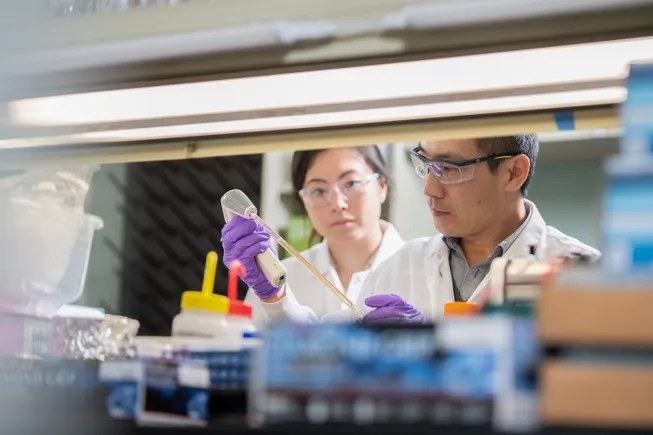
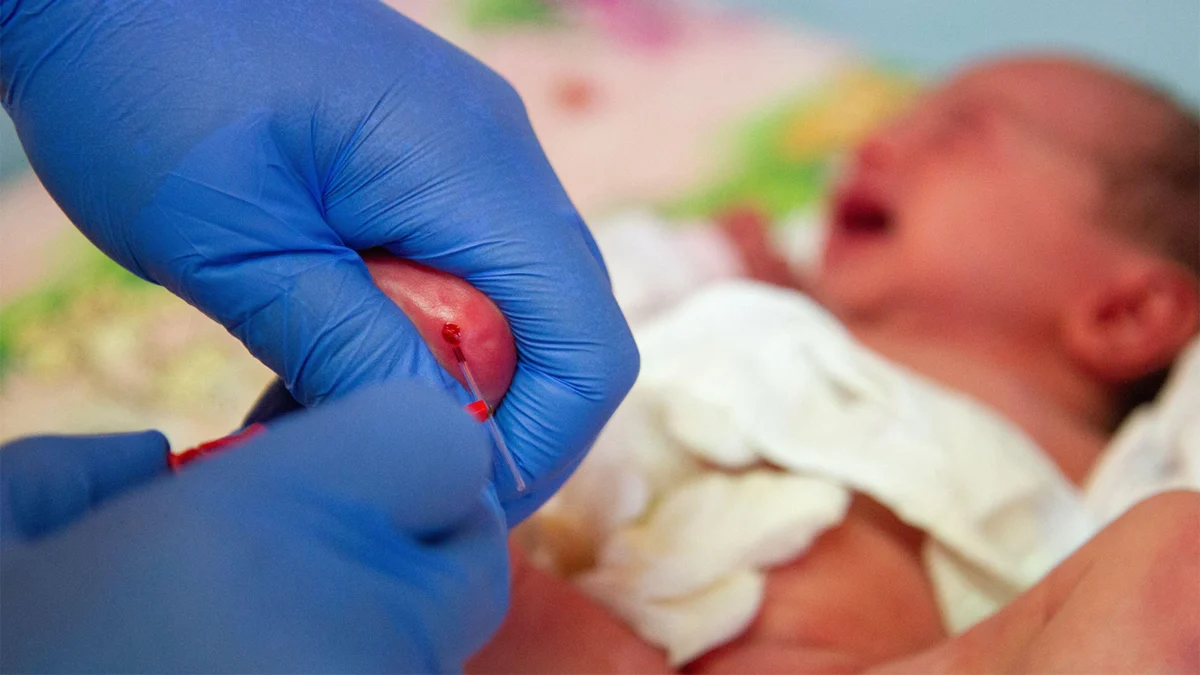
By accessing archived dried blood spots—the same tiny samples collected via heel prick in every nursery across the country—the researchers performed next-generation sequencing on 11 autosomal dominant cancer risk genes: RB1, TP53, SMARCB1, WT1, RET, SUFU, PTCH1, DICER1, APC, PHOX2B, and ALK.
The data revealed a clear pattern:
- RB1 was the most frequently mutated gene, found in 69 children.
- TP53 followed with 24 identified variants.
- SMARCB1 and WT1 were identified in eight and seven cases, respectively.
- Specific correlations: Every child in the study who developed medullary thyroid carcinoma carried a RET mutation, while 40% of children with retinoblastoma—a devastating eye cancer—showed a germline RB1 mutation.
The study underscored that in 130 out of the 132 cases where a mutation was found, the genetic variant was directly associated with the specific type of tumor that subsequently developed, validating the precision of the targeted panel approach.
Chronology of Clinical Implementation
The path toward universal genomic screening involves several distinct phases, from technical feasibility to ethical consensus.
Phase 1: Identifying the Target (1987–2020)
The study utilized decades of retrospective data to confirm that a high percentage of children with specific malignancies carry identifiable germline mutations. By correlating historical cancer registries with archived blood spots, the research team proved that the genetic "fingerprint" of these cancers is present at birth.
Phase 2: Evaluating Diagnostic Precision
The team focused on 11 genes known to drive aggressive, early-onset cancers. The goal was to prove that a small, targeted panel could offer high clinical utility without the "noise" and complexity of whole-genome sequencing. The result was a high success rate in identifying children who, had they been screened at birth, could have entered surveillance programs years before their diagnosis.
Phase 3: Scaling the Infrastructure (The Current Frontier)
The next phase involves integrating this process into existing state-run public health laboratories. According to co-author Richard Parad, MD, MPH, of Brigham and Women’s Hospital, the infrastructure is already largely in place. Labs currently perform high-throughput testing for metabolic disorders; adding genomic sequencing is a logical evolution.
The Clinical Implications: Shifting from Treatment to Surveillance
The most profound implication of this study is the potential to change the trajectory of childhood cancer treatment. Dr. Diller highlights the case of retinoblastoma. Currently, children are often diagnosed only after they begin losing sight, necessitating aggressive interventions such as eye removal or systemic chemotherapy.
"If children with an RB1 mutation were identified at birth, they could undergo regular eye exams to detect the tumor earlier," Dr. Diller explained. "They could be treated with laser therapy or cryotherapy, avoiding the need for surgery and radiation, and preserving sight."
Similarly, for children at risk for Wilms tumor (kidney cancer), early identification allows for quarterly ultrasounds. Detecting a tumor while it is still in its infancy allows for surgical intervention that spares the kidney and avoids the systemic toxicity of chemotherapy. In these scenarios, genomic screening is not just a diagnostic tool; it is a life-preserving intervention.
Official Responses and Ethical Considerations
While the medical community is largely optimistic, the implementation of such screening brings forward legitimate concerns regarding parental psychology and the risk of overdiagnosis.
Addressing the "Burden of Knowledge"
Critics and proponents alike acknowledge that informing parents that their child has a "cancer predisposition" can cause significant emotional distress. There is also the potential for "indeterminate findings"—variants of uncertain significance that may lead to unnecessary medical interventions or parental anxiety.
However, a secondary study published by the same team in the Journal of Pediatrics offers a unique perspective. By surveying parents who had already navigated the journey of a child with a cancer predisposition syndrome, researchers found that despite the emotional difficulty of the diagnosis, the vast majority of parents felt the information was invaluable. They overwhelmingly supported the expansion of newborn screening to include these genes, noting that the ability to monitor their children—rather than being blindsided by a sudden diagnosis—was a vital component of their care.
Technological and Economic Feasibility
Dr. Parad argues that the economic barrier to entry is lower than many assume. "The machines are expensive, but not out of the range of a tandem mass spectrometer that these labs buy now," he said. With the rise of AI-driven interpretation software, the bottleneck of manual data analysis is rapidly dissolving. Furthermore, by using a targeted panel of only 11 genes, the cost per test is kept manageable, making the prospect of universal screening a matter of policy rather than financial impossibility.
Looking Toward the Future
The research team is clear: the data supports a shift in clinical practice. The transition from reactive care to proactive, genetically informed surveillance is the next logical step in the evolution of pediatric medicine.
"It’s become clear that at least 10% or more of kids who develop cancer have a genetic predisposition," Dr. Diller stated. The clinical question is no longer whether we can identify these risks, but whether we will choose to implement the systems necessary to act on them.
As the technology continues to mature and the conversation expands to include policymakers, ethicists, and families, the prospect of "genomic newborn screening" appears increasingly inevitable. By leveraging the DNA already collected at birth, we may soon be able to offer a future where childhood cancer is not a sudden, traumatic crisis, but a managed risk, caught early enough to ensure that children can grow up healthy, sight-intact, and cancer-free.