









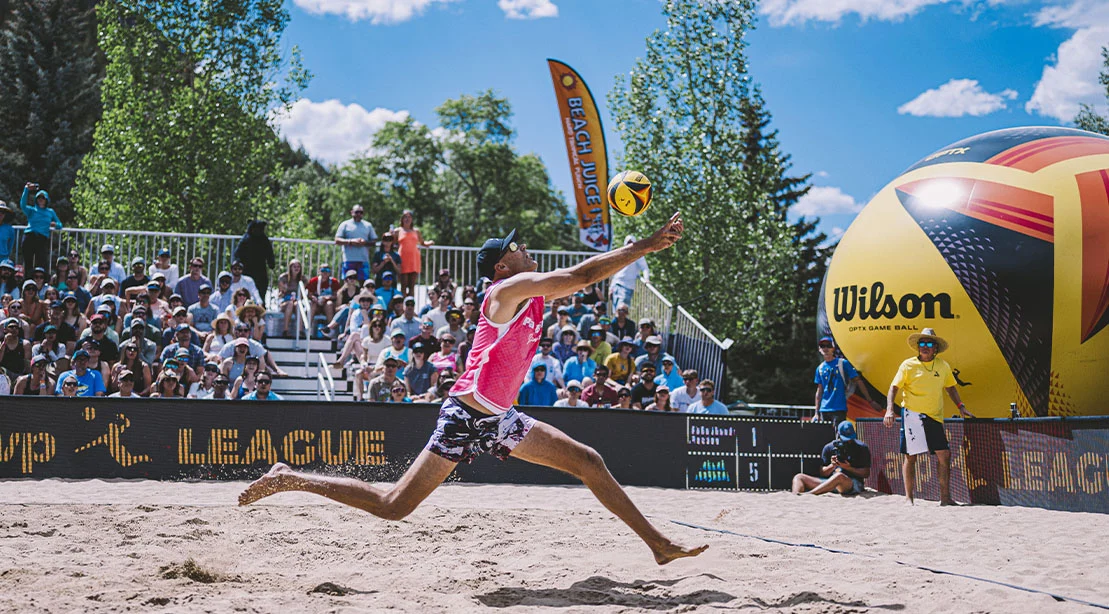
After nearly a quarter-century of dominating the world’s most grueling beach volleyball circuits, Olympic gold medalist Phil Dalhausser has arrived at a conclusion that defies the conventional "grind culture" of modern professional sports. For decades, athletes have been told that the path to greatness is paved with endless repetition, increasingly heavy iron, and the relentless pursuit of marginal gains. Dalhausser, standing at a commanding 6’9", has dismantled that narrative entirely.
At 44, the beach volleyball icon remains a fixture at the highest levels of competition. While his peers from his early years have long since retired, Dalhausser has cultivated a career trajectory defined not by how much he does, but by how little he wastes. His longevity is a testament to a shift in philosophy: athletic success at the highest level is not about constant output—it is about surgical precision in training and the mental fortitude to let go of what no longer serves the body.
The Evolution of a Champion: A Chronology of Success
Phil Dalhausser’s career is a study in evolution. His journey from a standout collegiate player to an international icon was marked by a steady ascent through the AVP (Association of Volleyball Professionals) and the FIVB World Tour.
- The Early Years (2000s): During his breakout years, Dalhausser adopted the standard, high-volume training regimen. He treated his body as an inexhaustible resource, pushing through heavy conditioning and intense daily court sessions that mirrored the workloads of the younger athletes he faced today.
- The Golden Era (2008): The pinnacle of his physical and competitive powers arrived at the 2008 Beijing Olympics, where he secured a gold medal. This period cemented his reputation as one of the most dominant blockers in the history of the sport.
- The Mid-Career Pivot (2012–2018): As the grind of international travel and the accumulation of minor injuries took their toll, Dalhausser began the transition from "work harder" to "work smarter." This era saw the introduction of yoga, a refined approach to lifting, and the early adoption of mindfulness practices.
- The Modern Era (2020–Present): Today, Dalhausser functions as a high-performance minimalist. He practices on the court roughly once a week, maintains his strength through purposeful, explosive movements in his garage gym, and treats every minor injury not as a disaster, but as a diagnostic tool for future optimization.
The Philosophy of Preservation: Training for Explosion, Not Exhaustion
For the veteran athlete, the gym is no longer a place to chase personal records or build hypertrophy; it is a laboratory for preserving "fast-twitch" functionality. Dalhausser understands that the primary requirement for a beach volleyball player is the ability to generate instantaneous, explosive force—the "pop" needed to rise above the net and cover the court with speed.
Quality Over Quantity
Dalhausser’s training regimen is intentionally sparse. He avoids the "junk volume" that plagues younger athletes—the extra reps that provide little performance benefit but tax the central nervous system. Instead, he prioritizes Olympic-style movements, specifically clean pulls, to maintain triple extension in the hips, knees, and ankles. By keeping the volume low and the intent high, he maintains the explosive power necessary for elite blocking and attacking without the systemic fatigue that leads to long-term wear and tear.
The "Garage Gym" Mentality
His training environment is intentionally humble. Located in his Orlando home, his gym is a non-climate-controlled garage where Florida’s sweltering humidity turns simple iron into a test of character. There are no fancy recovery pods or high-tech performance centers here. The heat serves as a forced adaptation, helping him acclimate to the brutal conditions of tournament play. It is a no-frills, high-stakes environment that mirrors the reality of the game: when the match is on the line, the athlete must be able to perform regardless of the comfort of the surroundings.
Recovery and the Myth of Data Dependency
Perhaps the most radical departure Dalhausser has made from the modern sports paradigm is his skepticism toward the wearable technology industry. In an age where athletes track their HRV (Heart Rate Variability), sleep cycles, and recovery scores with religious fervor, Dalhausser remains refreshingly analog.
He argues that the psychological burden of data is often more detrimental than the physical lack of sleep. "I don’t need some device to tell me if I slept well," he notes. "I know when I wake up if I’m tired or not." His concern is rooted in the "nocebo" effect: if a device tells an athlete their recovery score is poor, the athlete will subconsciously perform as if they are impaired, even if they feel fine.
For Dalhausser, recovery is about simple, consistent practices. A 45-minute vinyasa yoga flow after a weekend of competition is his gold standard. It addresses the physical tightness from the sand while providing the mental reset necessary to avoid burnout.
Mental Resilience: The Art of the Observer
If physical training is the foundation, mental discipline is the ceiling. Over the last decade, meditation has become the single most influential component of his career. Dalhausser views the mind as an entity to be observed rather than a master to be obeyed.
Setting the "Suffering Bar"
One of his most effective psychological techniques involves setting a high "suffering bar" before a match. By mentally preparing for extreme heat, exhaustion, and discomfort, he ensures that the reality of the game feels manageable by comparison. This cognitive reframing prevents him from spiraling when conditions become difficult.
The Lesson of Altitude and Partnership
Even after two decades, mistakes happen. A recent tournament in Aspen, Colorado, served as a humbling reminder that ego and assumptions can override even the best-laid plans. His failure to adjust his mental preparation for the altitude resulted in a poor showing on the first day. It was a lesson in humility: the process must be respected every single time.
Similarly, his approach to partnerships has shifted. He no longer views challenging teammates as obstacles; he views them as "spiritual teachers." This shift in perspective—finding the 0.1% of growth in even the most difficult interpersonal situations—has allowed him to remain productive long after others would have opted for retirement.
Implications for the Next Generation
Dalhausser’s legacy is already secured by his championship titles, but his current impact on the sport is arguably more significant. Through the junior beach volleyball club he runs with his wife in Orlando, he is actively shaping the future of the sport.
He approaches coaching with a nuanced understanding of psychology. With younger children, he keeps it light and "goofy" to foster a love for the game. With high schoolers aiming for collegiate programs, he brings the intense, focused feedback they need. His advice to them is universal: do not seek instant mastery.
"Every mistake, every error, is getting you one step closer," he tells his students. He encourages them to get curious about their own frustrations rather than letting those frustrations dictate their performance.
Conclusion: The Long Game
Phil Dalhausser’s career serves as a masterclass in sustainability. He has proven that the "all-or-nothing" mentality is not a requirement for elite success; rather, it is a barrier to it. By refining his training to focus on explosive preservation, rejecting the clutter of modern data tracking in favor of internal awareness, and utilizing meditation to manage the psychological demands of high-level competition, he has unlocked a level of longevity that is rare in any sport.
He remains a competitor because he is still a student. For Dalhausser, the sand is not just a place to play—it is a place to learn. As he continues to compete, he reminds us that the true measure of an athlete is not found in the weight room or on the podium, but in the wisdom gained from the thousands of matches played, the injuries weathered, and the steady, quiet realization that longevity is not about doing more—it is about knowing exactly what matters.