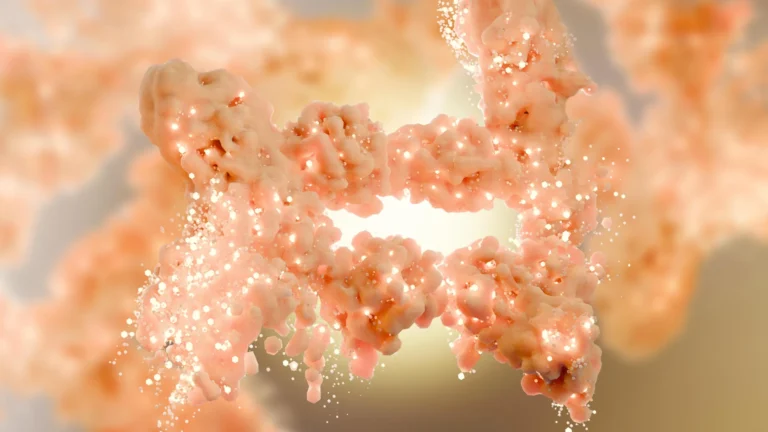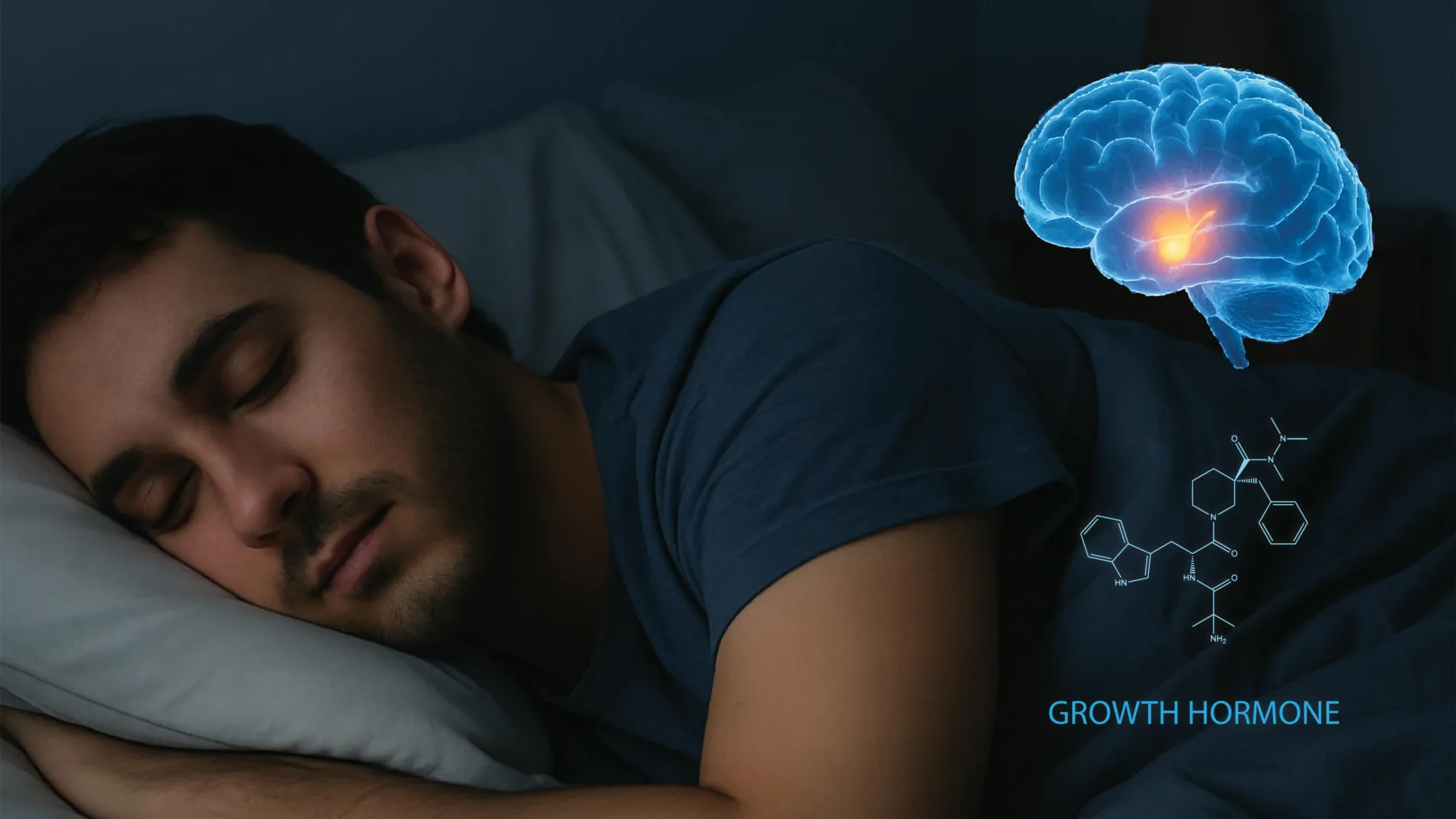
For decades, the medical community has operated on a foundational piece of wisdom: sleep is not merely a period of inactivity, but a vital biological "second shift" dedicated to restoration. While we rest, our bodies perform essential maintenance—repairing tissues, synthesizing proteins, and consolidating memories. Central to this process is the release of growth hormone (GH), a master regulator that builds muscle, fortifies bones, metabolizes fat, and facilitates physical development.
Until now, the exact "command center" governing this release remained a biological "black box." However, a groundbreaking study from the University of California, Berkeley, published in the journal Cell, has finally mapped the neural circuitry responsible for this process. By uncovering the intricate feedback loop between the brain’s hypothalamus and the brainstem, researchers have provided a roadmap that could revolutionize the treatment of metabolic and neurodegenerative diseases.
The Main Facts: Decoding the Sleep-Hormone Connection
The UC Berkeley research team, led by professor of neuroscience Yang Dan, has successfully identified the specific neurons and feedback mechanisms that trigger growth hormone secretion during sleep.
The process is governed by a delicate dance of peptides within the hypothalamus, an ancient, deep-brain structure common to all mammals. Two primary players dictate the flow of growth hormone:
- GHRH (Growth Hormone-Releasing Hormone): The stimulant that promotes the release of the hormone.
- Somatostatin: The inhibitory peptide that suppresses it.
The study found that these two peptides do not act in isolation. Instead, they shift their activity levels based on the specific stage of sleep—REM (Rapid Eye Movement) or non-REM. During REM sleep, both GHRH and somatostatin levels rise, resulting in a robust surge of growth hormone. Conversely, during non-REM sleep, the brain modulates these levels differently, prioritizing a sustained, moderate release. This discovery effectively demystifies the "when" and "how" of nocturnal hormonal regulation.
Chronology of Discovery: From Blood Draws to Neural Mapping
For years, the scientific understanding of growth hormone was limited by the methodology of the time. "People know that growth hormone release is tightly related to sleep, but only through drawing blood and checking growth hormone levels during sleep," explains Xinlu Ding, a postdoctoral fellow and the study’s first author. "We’re actually directly recording neural activity in mice to see what’s going on."
Phase 1: Observing the Laboratory Model
The researchers utilized mice as their primary model because of their unique sleep architecture. Unlike humans, who typically follow a monophasic sleep pattern, mice sleep in short, frequent bursts throughout the day and night. This high frequency of sleep-wake transitions allowed the UC Berkeley team to gather massive amounts of data, observing how the brain toggles hormone release across hundreds of cycles rather than just one or two per night.
Phase 2: Neural Stimulation and Tracing
Working within the laboratory of Yang Dan, the team utilized advanced circuit-tracing techniques combined with optogenetics—a method where light is used to stimulate specific neurons. By placing electrodes directly into the hypothalamus and the locus coeruleus (a brainstem region associated with alertness), the researchers were able to witness the "on-off" switching of hormone production in real-time.
Phase 3: Unveiling the Feedback Loop
The most startling realization of the study was the discovery of a "closed-loop" system. As growth hormone accumulates in the system, it doesn’t just circulate; it actively signals back to the brain. Specifically, the hormone stimulates the locus coeruleus to encourage wakefulness. However, the system has a "failsafe": if the activity in the locus coeruleus becomes too intense, it flips a switch and begins promoting sleepiness instead.
Supporting Data: The Metabolic and Cognitive Stakes
The implications of this research extend far beyond mere physical growth. Because growth hormone is a critical metabolic regulator, its disruption has profound consequences for human health.
Metabolic Health
Growth hormone is essential for the regulation of glucose and fat metabolism. The research highlights that chronic sleep deprivation—which disrupts the rhythm of GHRH and somatostatin—is not just an issue of feeling tired. It is a direct contributor to metabolic dysfunction. Consistently poor sleep patterns may heighten the risk of:
- Obesity: By interfering with the body’s ability to mobilize fat stores.
- Diabetes: By disrupting glucose regulation.
- Cardiovascular Disease: Stemming from chronic metabolic stress.
Cognitive Function and Alertness
The study also sheds light on the locus coeruleus, a region that plays a central role in attention, arousal, and response to novelty. The fact that growth hormone interacts directly with this region suggests that our nocturnal recovery has a direct impact on our daytime cognitive sharpness. As study author Xinlu Ding notes, "Growth hormone not only helps you build your muscle and bones… but may also have cognitive benefits, promoting your overall arousal level when you wake up."
Official Responses: The Future of Hormonal Therapy
The UC Berkeley team is optimistic that their discovery will translate into clinical applications. The research provides a "novel handle"—a specific target—for future pharmaceutical or gene-based interventions.
"Understanding the neural circuit for growth hormone release could eventually point toward new hormonal therapies to improve sleep quality or restore normal growth hormone balance," says study co-author Daniel Silverman.
Silverman points to the potential for experimental gene therapies that target specific cell types to modulate the excitability of the locus coeruleus. Currently, many treatments for sleep disorders rely on sedatives that can leave patients groggy or dependent. A circuit-based approach, by contrast, would aim to restore the natural rhythm of the brain, potentially offering a more physiological and sustainable solution.
Implications: A New Era for Neurodegenerative Treatment
Perhaps the most compelling aspect of this discovery lies in its potential to address neurodegenerative conditions. Problems affecting the locus coeruleus have long been linked to psychiatric and neurological disorders, including Parkinson’s and Alzheimer’s disease.
Addressing the Sleep-Disease Cycle
In many neurodegenerative diseases, sleep architecture is notoriously fractured. This study suggests that the breakdown in the "growth hormone-sleep-wake" feedback loop might not just be a symptom of these diseases, but an active participant in their progression. If the brain loses its ability to manage the delicate balance between growth hormone release and alertness, the resulting chronic stress on neural circuits could exacerbate the underlying pathology of Alzheimer’s and Parkinson’s.
Toward Precision Medicine
By identifying the specific neurons (GHRH neurons and somatostatin neurons) that govern this circuit, scientists can now begin to test whether stimulating or suppressing these cells could slow the degradation of the locus coeruleus. This is a significant pivot from broad-spectrum hormonal supplementation—which carries the risk of side effects—toward precision medicine that restores the body’s own regulatory systems.
A Holistic View of Human Performance
For athletes, teenagers, and anyone concerned with longevity, this research underscores that sleep is a non-negotiable physiological requirement. It confirms that the "refreshed" feeling after a good night’s sleep is the result of a highly sophisticated, brain-wide orchestration.
As the research team continues their work, the scientific community expects that the "basic circuit" they have mapped will serve as a foundational reference for years to come. By providing the first clear map of how the brain talks to the endocrine system during the deepest hours of the night, UC Berkeley researchers have moved us one step closer to unlocking the full potential of human recovery—and perhaps, one day, reversing the damage of a life lived in the wake of chronic sleep loss.
The research was supported by the Howard Hughes Medical Institute (HHMI) and the Pivotal Life Sciences Chancellor’s Chair fund. Additional contributors included researchers from Stanford University, highlighting the interdisciplinary collaborative effort required to map the most complex organ in the human body.