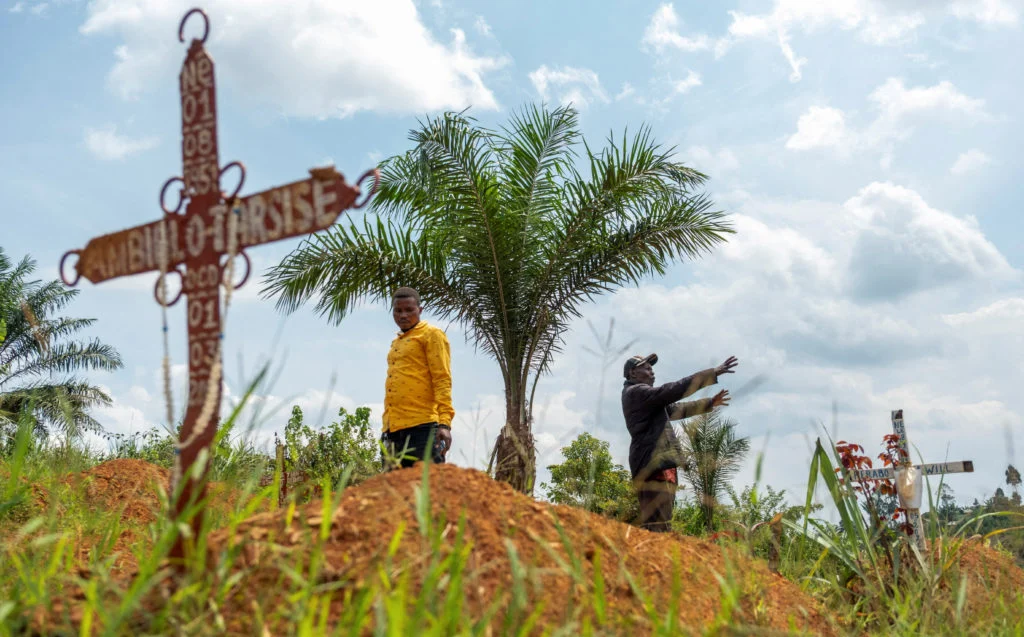
ABUJA, Nigeria — A grave public health crisis is unfolding in the heart of Central Africa as an Ebola outbreak in the Democratic Republic of the Congo (DRC) has officially surpassed 5,000 confirmed cases. This milestone cements the current epidemic as one of the largest and most challenging in the history of the disease. Health officials are now grappling with a strain of the virus that has thus far proven resistant to established medical countermeasures, raising alarms across the global health community.
As of Sunday, the DRC Ministry of Health reported 5,021 confirmed cases, with a staggering death toll of 2,378. The outbreak, primarily concentrated in the northeastern Ituri province, has become the deadliest manifestation of the Bundibugyo virus on record. Unlike the more common Zaire ebolavirus, the Bundibugyo strain presents a unique hurdle: there are currently no approved vaccines or targeted antibody treatments to neutralize it.
The Nature of the Threat: Understanding the Bundibugyo Virus
Ebola is a severe, often fatal, hemorrhagic fever characterized by sudden onset of symptoms including fever, fatigue, muscle pain, and sore throat. While the Zaire strain has dominated headlines in previous years—most notably during the 2014-2016 West African epidemic—the Bundibugyo virus is a rarer, yet equally lethal, variant.
First identified during a 2007 outbreak in western Uganda that claimed 37 lives, the virus has appeared only sporadically since. Its emergence in the DRC in 2012 was contained relatively quickly, but the current surge has far outstripped those historical precedents. The biological reality of this strain remains a major barrier; because medical research has historically prioritized the Zaire strain due to its higher frequency, there is a significant gap in pharmaceutical readiness for Bundibugyo. Patients are currently receiving only "supportive care," which involves the administration of fluids and symptom management, leaving the body’s immune system to fight the virus without the aid of specialized antivirals.
Chronology of a Spreading Epidemic
The path of this outbreak has been marked by geographic complexity and a delayed initial response. The first index case was detected in late April, when a patient died in Bunia, the capital of the Ituri province. This region is notoriously difficult for health workers to navigate, characterized by persistent insecurity, armed conflict, and large-scale population displacements.
By early May, health officials received reports of a cluster of mysterious deaths in the vicinity of Mongbwalu, a bustling gold-mining hub. The high level of human mobility in the area—driven by both commerce and the search for safety—likely facilitated the silent spread of the virus for weeks before the formal declaration of an outbreak on May 15.
- Late April: Initial index patient dies in Bunia, Ituri province.
- Early May: Health authorities receive alerts regarding unexplained clusters of illness in the mining region of Mongbwalu.
- May 15: The Democratic Republic of the Congo officially declares an Ebola outbreak after laboratory tests confirm the presence of the Bundibugyo virus.
- June: A confirmed case is identified in a physician who traveled from the DRC to France; the patient recovered, and the international transmission chain was successfully severed.
- Ongoing: The virus has spread to six provinces, with persistent transmission cycles emerging in areas where local infrastructure and conflict impede humanitarian access.
Data and Disparities: Analyzing the Fatality Rates
The current outbreak serves as a grim case study in how geographic and social factors influence survival rates. While the national average case fatality rate (CFR) stands at approximately 47.4%, this figure masks a harrowing reality at the local level. In provinces such as North Kivu, where medical facilities are overwhelmed and security concerns hinder the deployment of specialized teams, the fatality rate has climbed as high as 70%.
These data points underscore the vulnerability of rural and unstable environments. In contrast, urban centers with better-equipped treatment centers have seen higher rates of recovery, suggesting that the "deadliness" of Ebola is not merely a function of the virus’s biology, but also of the speed and quality of the medical intervention received.
Official Responses and Global Implications
In response to the rapid escalation, the World Health Organization (WHO) declared the outbreak a "Public Health Emergency of International Concern" in May. This designation is the highest level of alert the agency can issue. While it does not trigger a global travel ban—which the WHO advises against due to the risk of crippling essential supply chains—it serves as a mandate for coordinated global action.
The Challenge of Contact Tracing
The primary strategy for curbing Ebola remains the same: identify, isolate, and trace. However, the current outbreak is proving difficult to manage. Health officials report that between 60% and 70% of new cases are identified in individuals who were not previously under surveillance. This indicates a high number of "hidden" transmission chains where the virus is jumping between households before medical responders can intervene.
The "West Africa" Shadow
The spectre of the 2014-2016 West African outbreak, which claimed over 11,000 lives across Guinea, Liberia, and Sierra Leone, looms large over current strategy sessions. WHO experts have cautioned that if the transmission chains in the DRC are not broken, the current outbreak has the potential to mirror or exceed the scale of that devastating event. The crucial difference remains the speed of intervention; in 2014, the response was marked by international hesitation, whereas the DRC has decades of experience fighting Ebola. However, that institutional memory is currently being tested by the unique challenges of the Bundibugyo virus.
Future Outlook: A Race Against Time
The road ahead is fraught with challenges. The intersection of a rare, untreatable virus and a region plagued by political instability creates a perfect storm for public health failure.
Preventing Further Spread
Beyond the DRC’s borders, the international community is maintaining a high state of vigilance. While Uganda successfully contained a spillover event early in the cycle, the risk of re-introduction remains high. The case of the doctor who traveled to France highlighted that in an interconnected world, the risk of international transmission is always present, though the ability of developed nations to contain such cases is significantly higher than that of regions currently lacking basic sanitation and healthcare infrastructure.
The Call for Innovation
The medical community is now under immense pressure to accelerate clinical trials for Bundibugyo-specific treatments. While vaccines for the Zaire strain are highly effective, the current lack of cross-protection means that the most vulnerable populations in Ituri and North Kivu remain effectively unprotected against this specific threat.
As the death toll continues to rise, the global health response must shift from reactive monitoring to aggressive, resource-heavy engagement. The success of this effort will depend on two factors: the ability of aid organizations to operate safely in conflict-ridden zones, and the sustained commitment of the international community to fund the necessary research and logistical support required to stop the virus in its tracks.
For now, the focus remains on the basics: breaking the chain of infection. Every person identified, every patient isolated, and every burial conducted safely is a victory against an invisible, relentless adversary. The world is watching closely, hoping that the lessons learned from previous outbreaks will be enough to prevent this one from writing the darkest chapter in the history of the disease yet.