Executive Summary: A Presidential Shell Game
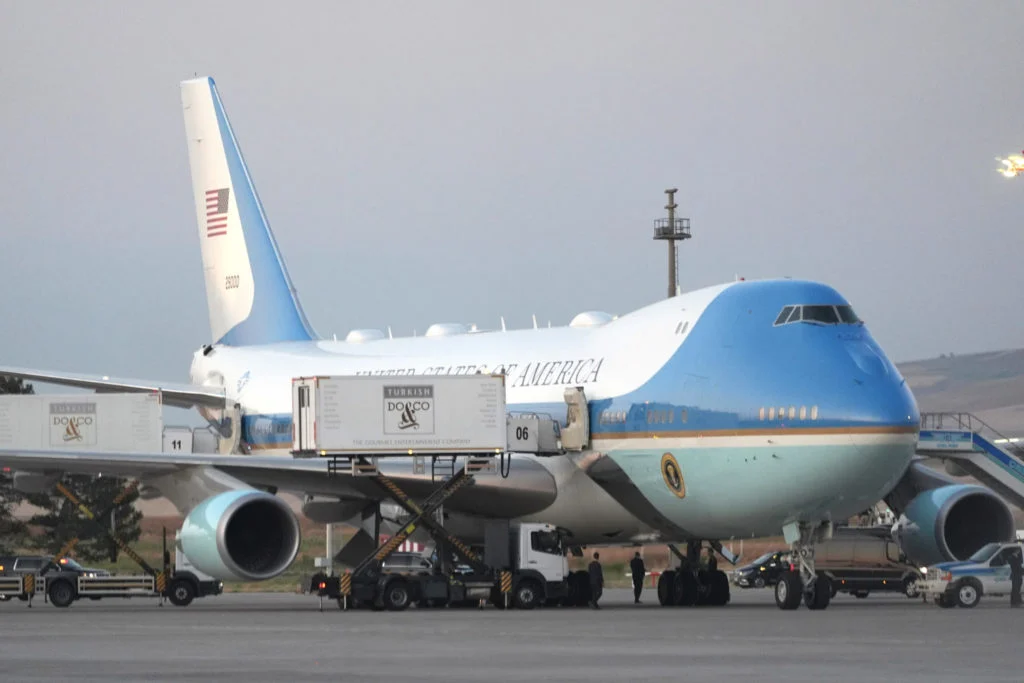
In a revelation that highlights the volatile security landscape surrounding the American presidency, it has been confirmed that President Donald Trump was subject to an elaborate "decoy" operation during his departure from a NATO summit in Turkey last month. Facing what intelligence officials deemed a credible and imminent threat, the United States Secret Service executed a high-stakes maneuver: they utilized a legacy Air Force One as a tactical feint, while the President was surreptitiously moved onto a secondary aircraft via a catering vehicle.
This operation, first reported by The Washington Post and confirmed by The News Hour, underscores the persistent, multi-year shadow cast by Iranian threats against senior U.S. officials. While the President publicly downplayed the security concerns, the logistical lengths taken by the Secret Service indicate a level of risk assessment rarely seen in modern presidential travel.
Chronology of a Ruse: The Turkey Departure
The events unfolded on the evening of the President’s departure from Ankara. To the casual observer—and the assembled press corps—the departure appeared to follow the standard, rigid protocol of presidential movement.
8:24 p.m. (Local Time): President Trump walked toward the legacy Air Force One, waving to the cameras in a broadcasted departure. He ascended the stairs, entered the cabin, and the heavy doors were sealed.
8:25 p.m. – 8:30 p.m.: While cameras zoomed out to capture the departure, they failed to focus on a service vehicle parked on the opposite side of the fuselage. Under the cover of a catering truck—typically used for logistics—the President was quietly extracted from the aircraft. He was moved to an unmarked Air Force C-32A, a plane typically reserved for Cabinet-level officials, hidden behind the primary aircraft.
8:44 p.m.: The legacy Air Force One departed for the United Kingdom’s Mildenhall Royal Air Force Base. On board were White House staff and members of the traveling press, all operating under the assumption that the President was in the front cabin.
The Arrival: Upon landing in the United Kingdom, the decoy plane remained on the tarmac for approximately 40 minutes. This delay allowed the President’s actual aircraft to land, position itself, and facilitate a secret transfer. The President then boarded the legacy plane to emerge down the steps, maintaining the illusion of a seamless journey.
The Iranian Threat: A Multi-Year Powder Keg
The impetus for this deception traces back to the January 2020 targeted killing of Qasem Soleimani, the commander of the Islamic Revolutionary Guard Corps’ Quds Force. Since that event in Baghdad, Iranian state actors have consistently voiced intent to retaliate against President Trump and other former senior officials involved in the operation.
The Secret Service’s decision to employ a decoy is not merely a reaction to a singular event in Turkey, but a response to an ongoing, "well-sourced" stream of intelligence. Former officials describe the threat landscape as a "powder keg," where intelligence regarding assassination attempts has remained high-priority through both the Biden and Trump administrations.
While the specific intelligence regarding the Turkish summit remains classified, experts suggest that such extreme measures are only authorized when the threshold for "imminent, credible, and specific" danger is met. Michael Matranga, a former Secret Service agent and current CEO of M6 Global Defense, noted that the Secret Service and Department of Defense (DOD) deemed the threat significant enough to justify the risks involved in moving the President in such a clandestine manner.
The Ethics of the Decoy: Protecting the Commander-in-Chief
The use of the press corps and staff as "unwitting passengers" on a decoy flight has sparked debate regarding the ethics of such operations. By placing the President on a separate, more secure or less conspicuous vessel, the Secret Service effectively diverted any potential threat toward the decoy plane.
When asked about the risk to those left on the primary plane, Matranga was candid. "I don’t think that anybody intentionally put the anchors or anyone else… in harm’s way, but that was a risk that had to be weighed," he stated. He emphasized that the primary directive of the Secret Service is the "continuity of American government," and in the eyes of the agency, the President’s survival remains the absolute priority above all other individuals on the flight.
Historical precedent for such ruses is sparse but significant. In 2000, President Bill Clinton utilized a similar tactic in Islamabad, arriving in an unmarked plane while a body double departed from the official Air Force One. These operations are rare, reserved only for when the intelligence community believes the danger to the head of state exceeds the operational risks of a public deception.
Humanitarian Developments: The Release of Robert Gilman
In a separate but notable international development, the broadcast also confirmed the release of Marine veteran Robert Gilman from Russian detention. Gilman, who had been held for 1,666 days, was released on humanitarian grounds.
Gilman’s case had become a focal point for human rights advocates, who noted his deteriorating health and reported inability to interact or walk. The circumstances of his release—which the Trump administration insists did not involve a prisoner swap or concessions—followed a quiet, late-stage declaration by U.S. officials that Gilman was "wrongfully detained." This designation was kept private until his release to avoid jeopardizing negotiations. Gilman is currently being transported to a U.S. military hospital in Texas for long-term medical assessment.
Implications for Future Presidential Security
The Turkey incident signals a hardening of security protocols that may define the remainder of the current term. As the threat from Iranian-backed actors continues to be assessed by the intelligence community, the use of decoys, feints, and clandestine transport may become a normalized aspect of presidential travel.
The revelation also highlights the fragile relationship between the Executive Branch and the press. While the decoy operation successfully protected the President, it relied on the intentional deception of the media. As the Secret Service continues to balance transparency with the necessity of survival, the "Turkey Ruse" will likely serve as a case study in the extreme measures required to maintain the safety of the Commander-in-Chief in a volatile global environment.
The Secret Service, for its part, maintains that every measure taken was "absolutely appropriate" given the nature of the intelligence provided. As tensions with regional adversaries remain high, the American public is left with a stark reminder: the normalcy of presidential travel is an illusion, supported by a vast, often invisible, and highly secretive security apparatus.
Correction: An earlier version of this report misstated the year Major General Qasem Soleimani was killed. The event occurred in 2020.