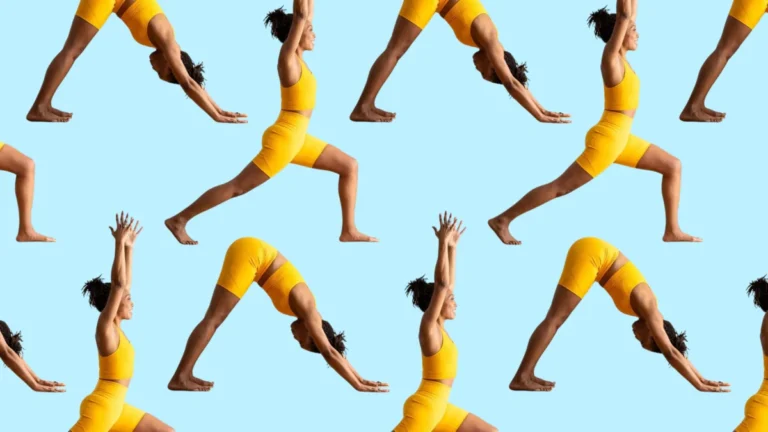









In the quiet, rhythmic architecture of a yoga class, consistency is often celebrated as the bedrock of progress. We crave the familiar comfort of our nervous system settling as we hit our stride: the same bedtime, the same morning commute, and the inevitable, grounding transition from a deep Low Lunge into the classic, restorative stretch of Downward-Facing Dog. There is, undeniably, a profound solace in these predictable patterns.
However, as yoga teacher and practitioner Jordan Baggot suggests, the true evolution of a practice—and perhaps even the human spirit—often lies in the deliberate disruption of the familiar. By introducing unexpected transitions into our sequences, we do more than just refine our physical form; we challenge our mental rigidity, spark renewed curiosity, and uncover dormant strength.
The Philosophy of the "Different Route"
To understand the importance of movement variation, one must consider the brain’s relationship with habitual action. When we perform the same sequences day after day, our bodies enter a state of "autopilot." While this efficiency allows for deep meditation, it can also lead to stagnation.
Think of mixing up your transitions as the on-the-mat equivalent of taking a different route home from work. Suddenly, you notice the architecture of a building you’ve driven past a thousand times; you see a tree in a new light. On the mat, this shift in perspective forces the muscles to stabilize in novel ways, demands increased proprioceptive awareness, and prevents the repetitive strain that can occur when we favor the same linear paths for years. Whether you are an instructor looking to breathe life into a stale class or a student hoping to reignite your passion, the decision to pivot—literally—can catalyze a new level of zest for your practice.
Chronology of a Sequence Shift
For most, the Low Lunge is a foundational pillar of any Vinyasa practice. It opens the hip flexors, stretches the psoas, and provides a stable base for deeper exploration. Conventionally, we use this pose as a gateway to standing splits, warrior variations, or the standard retreat to a plank.
However, the "chronology" of a movement can be rewritten. By viewing the Low Lunge not as a destination, but as a crossroads, practitioners can tap into a variety of energetic pathways. Below, we explore seven innovative transitions that challenge standard movement patterns, transforming a single lunge into an expansive exploration of the body’s potential.
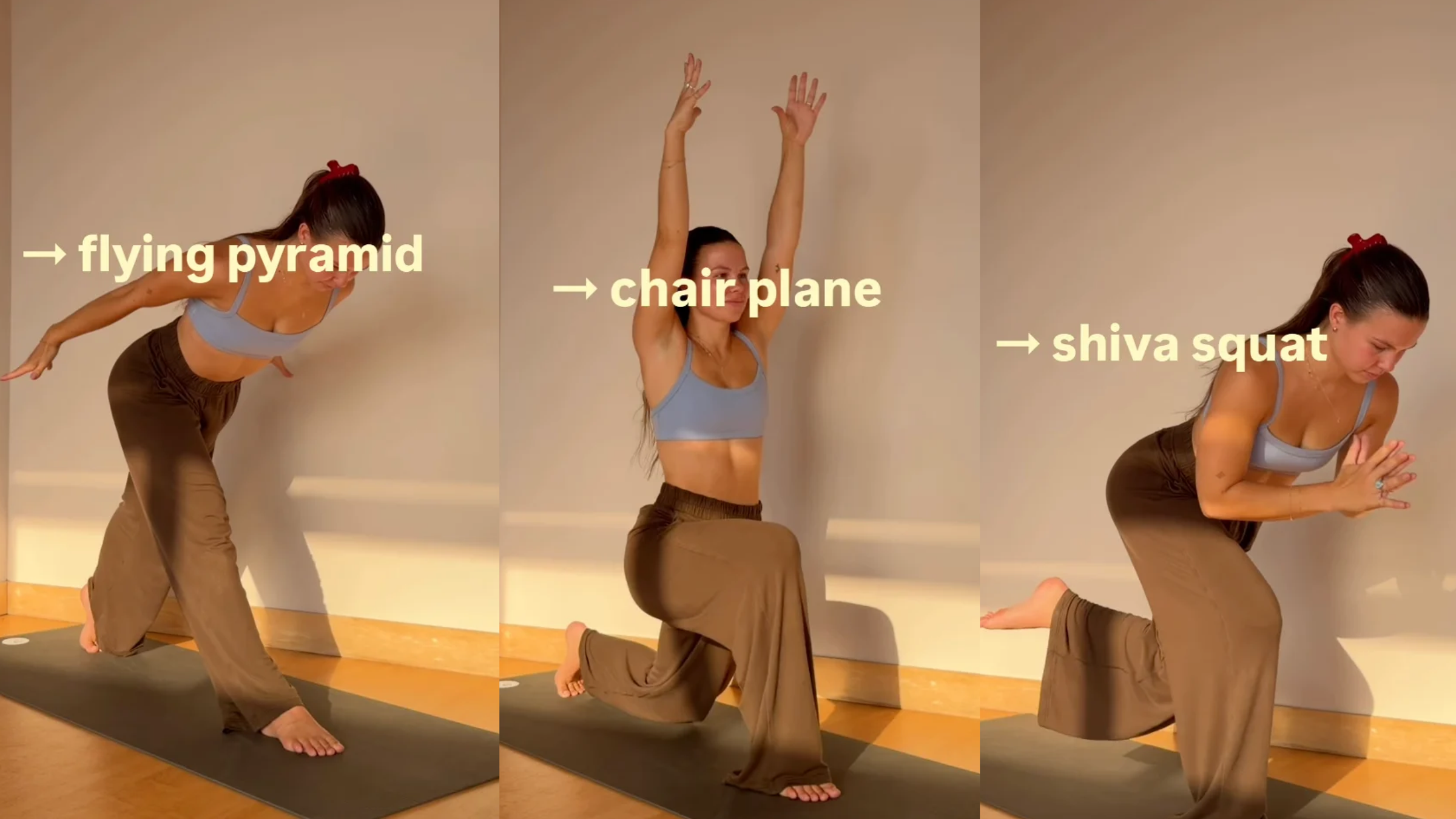
7 Surprising Transitions to Take From Low Lunge
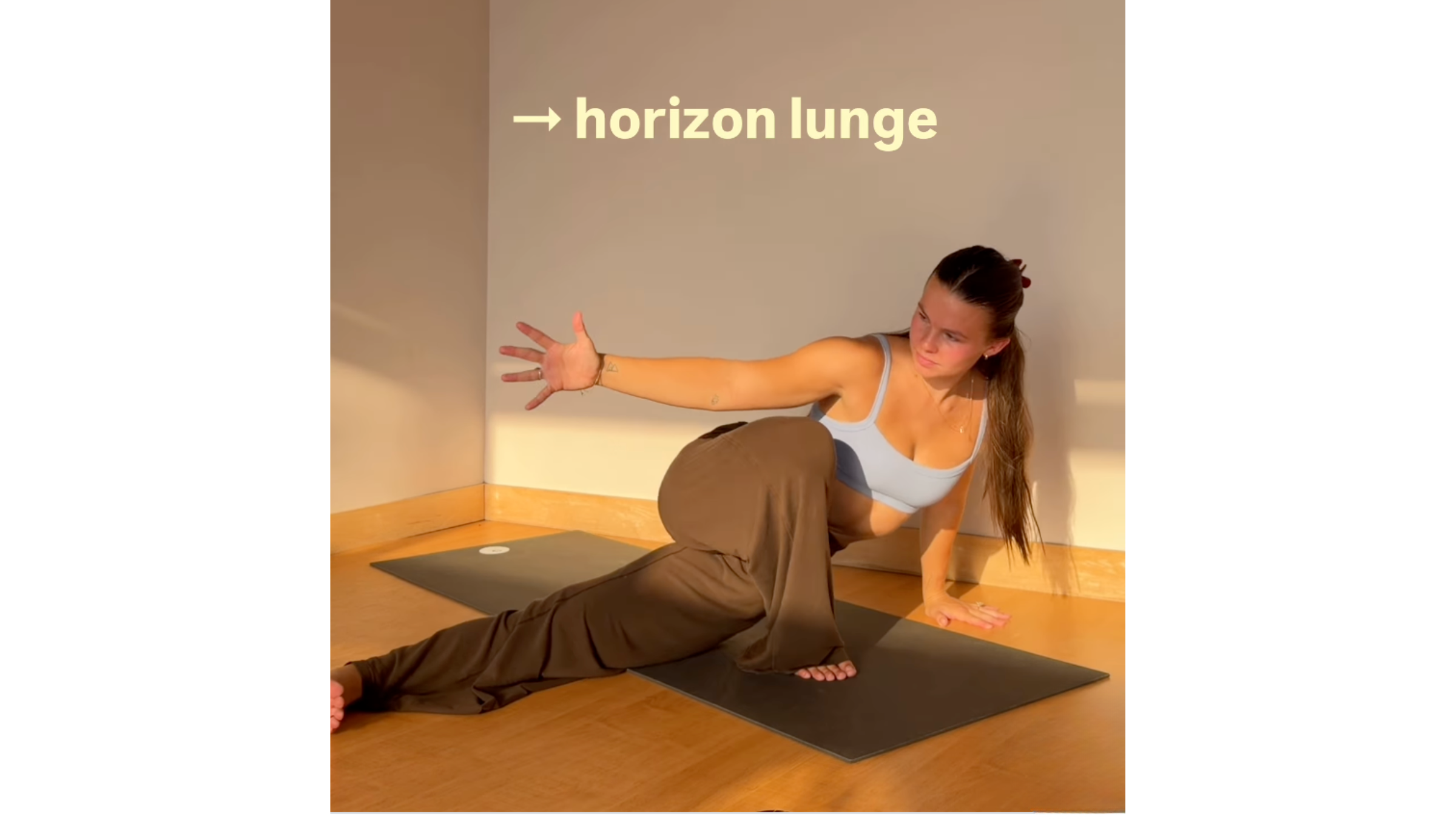
1. Horizon Lunge: Opening the Lateral Plane
The Horizon Lunge is an exquisite transition for those seeking to release tension in the outer hips and the obliques.
- The Movement: From your Low Lunge, shift your weight into your right foot. Lower your left hand to the mat directly beneath your shoulder. Sweep your left leg behind and to the outside of your right foot, planting the outer edge of the foot firmly against the floor.
- The Nuance: As you straighten the left leg, reach your right arm out to the side. By shifting weight into that grounded left hand, you allow the hips to sink toward the mat, creating a deep, therapeutic stretch in the lateral chain. It is a lesson in letting go of the forward-facing ego and embracing the periphery.
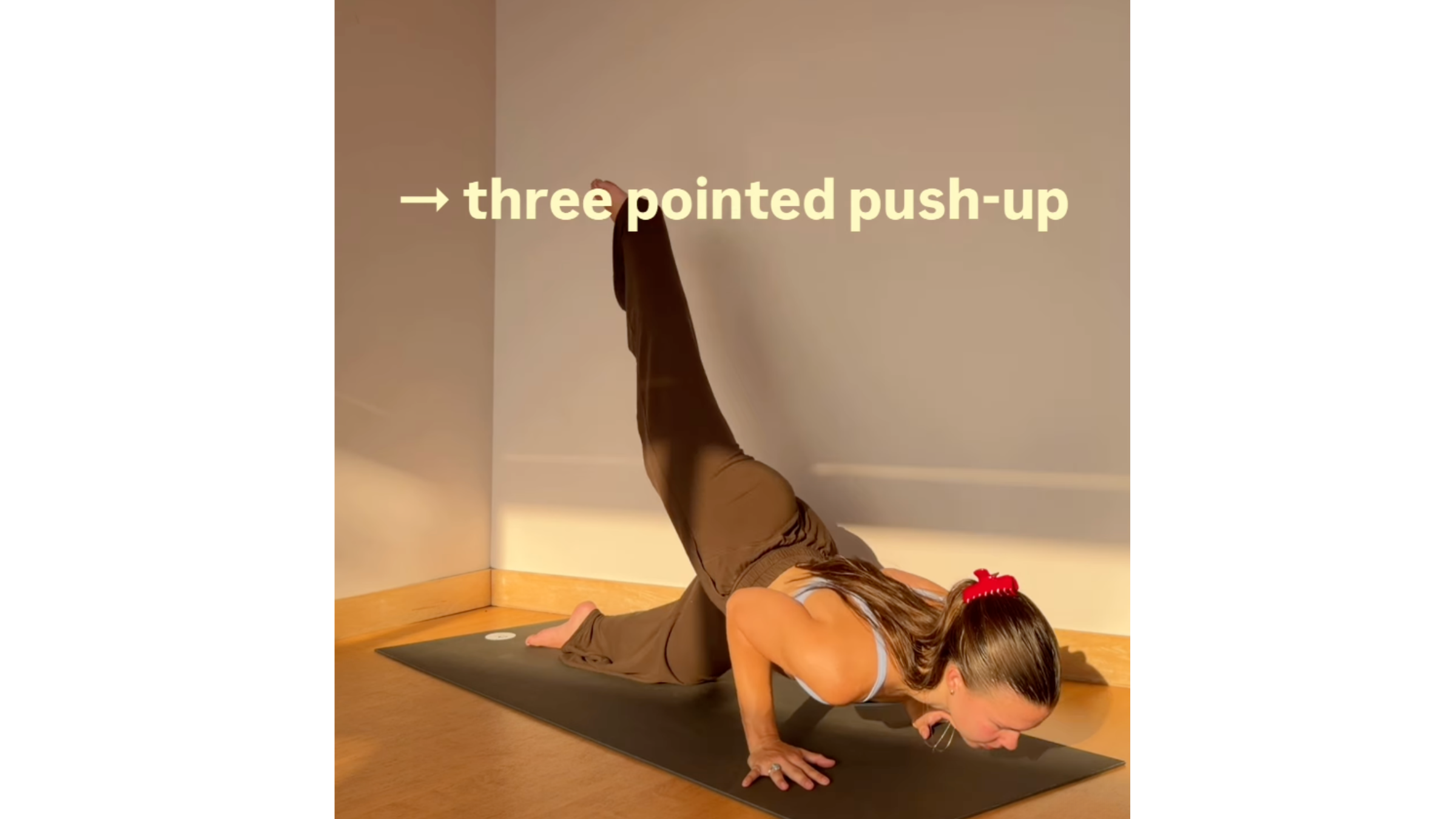
2. Three-Pointed Push-Up: Integrating Core Stability
This transition shifts the focus from deep stretching to high-intensity stabilization, turning a static lunge into a dynamic strength-builder.
- The Movement: Plant both hands on the mat, framing your right foot. As you lift your right foot off the mat and straighten the leg behind you, maintain the lift while bending your elbows to lower your chest halfway down.
- The Nuance: This requires significant core engagement. It prevents the common "sagging" of the lumbar spine, forcing the practitioner to utilize the serratus anterior and the deep abdominal wall to maintain the "three-pointed" suspension.
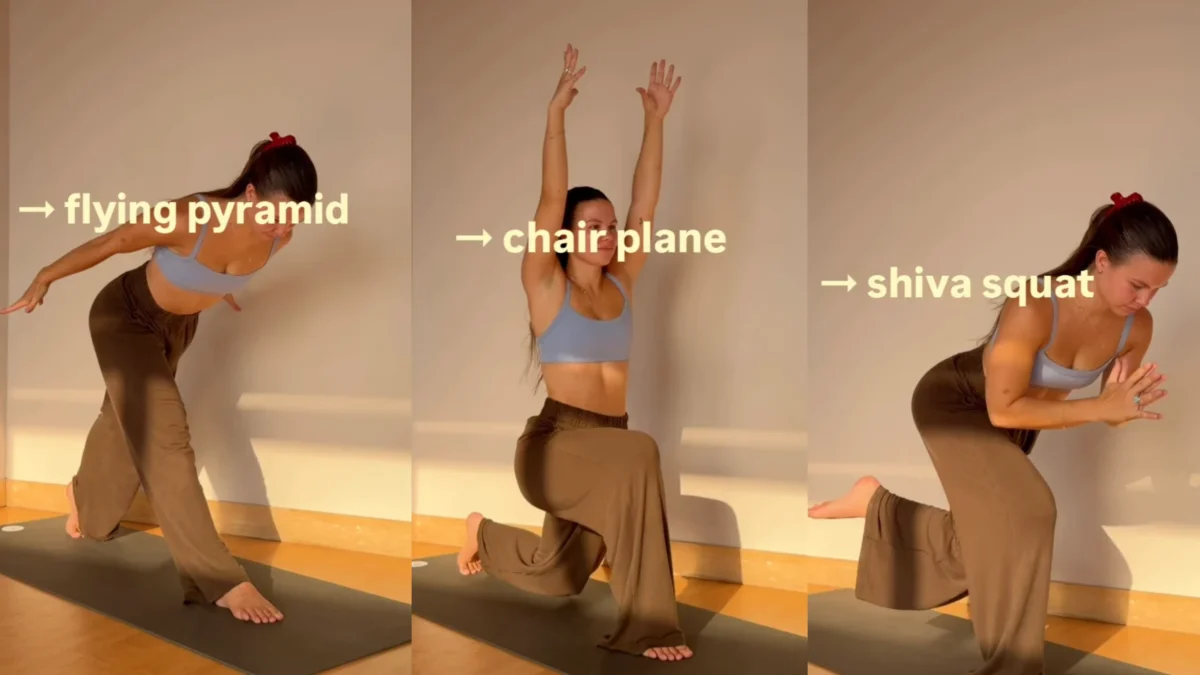
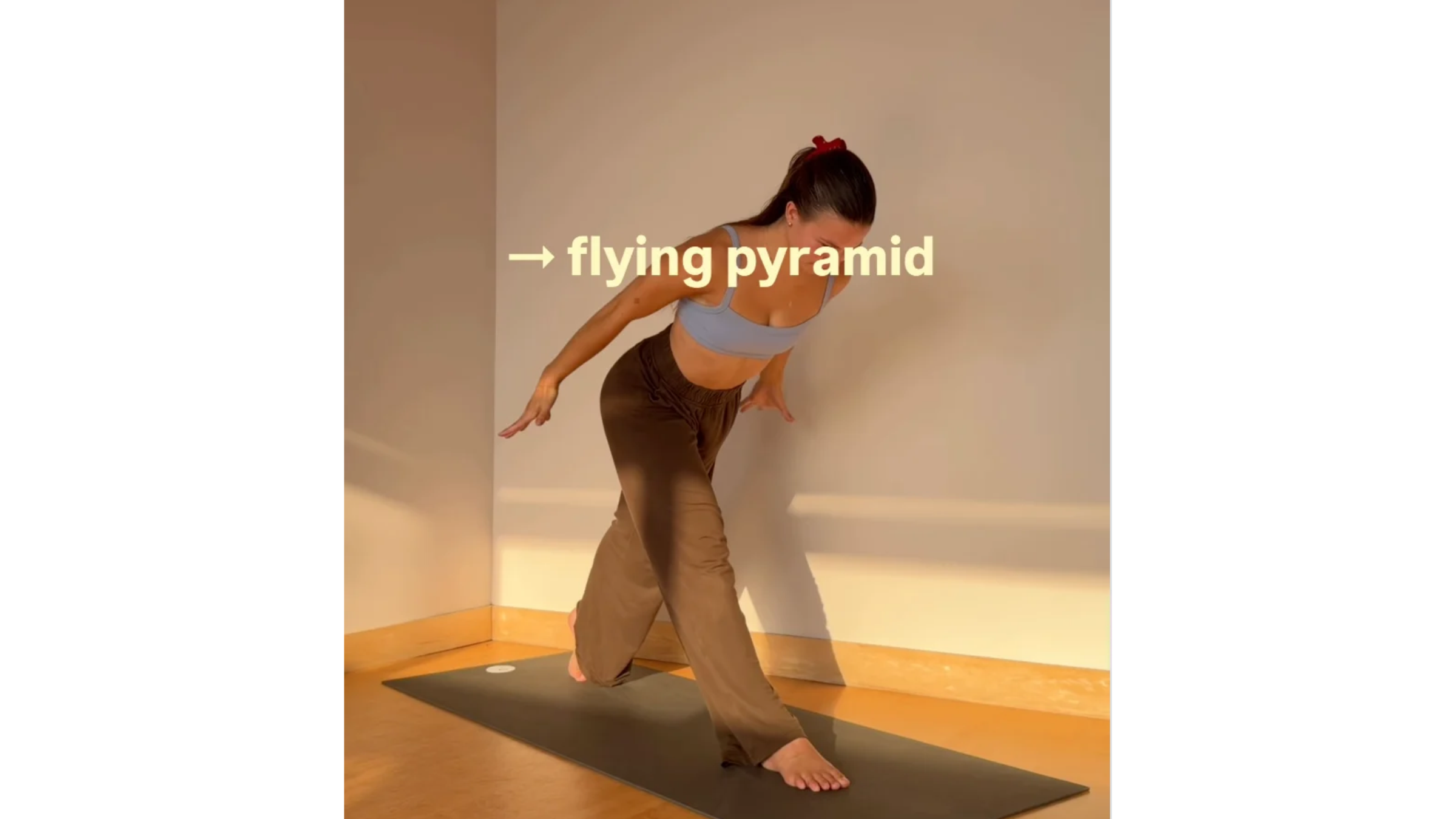
3. Flying Pyramid: Cultivating Length and Grace
Flying Pyramid is a masterclass in balance and hamstring elongation, perfect for transitioning into a more grounded, yet active, phase of a flow.
- The Movement: Tuck your back toes and lift the back knee, straightening both legs to create a strong foundation. Lengthen your spine, folding your chest over the front leg. Instead of keeping your hands on blocks or the floor, sweep your arms back behind you with palms facing the floor.
- The Nuance: The act of reaching the arms behind the body pulls the shoulder blades into the spine, encouraging an open chest and an active, lengthened posture that challenges your center of gravity.
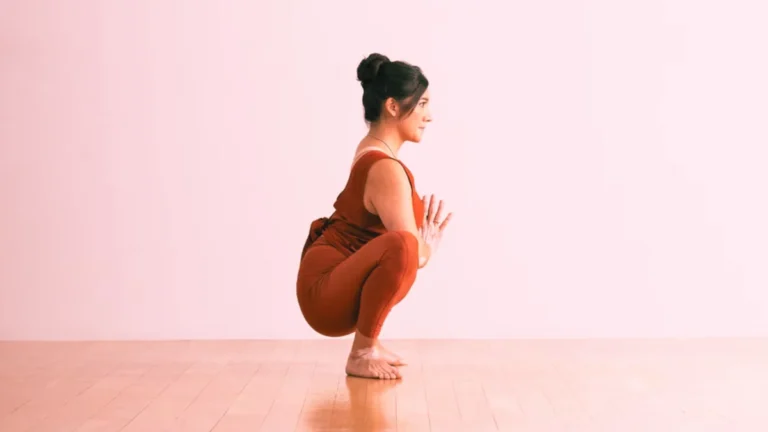
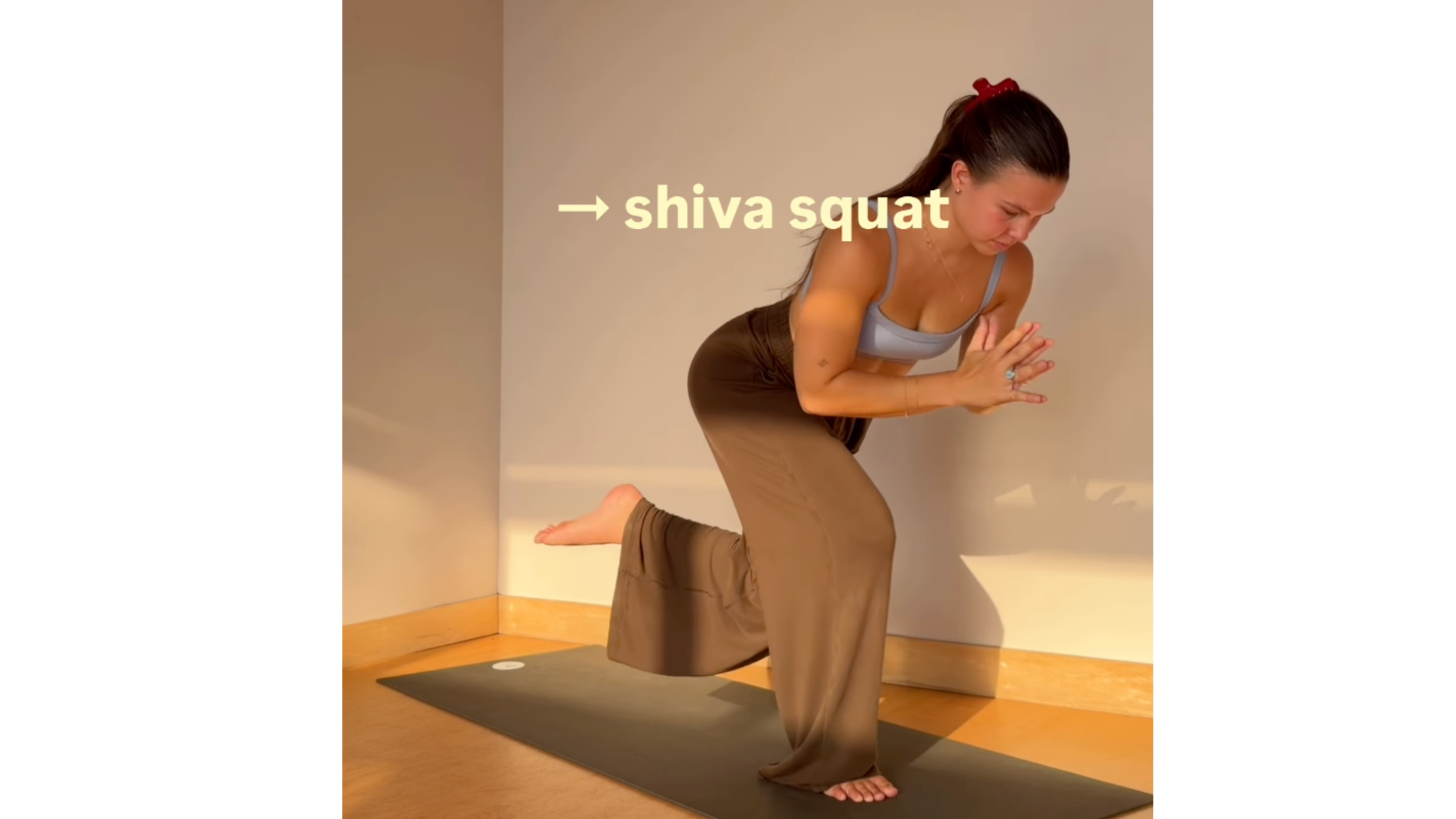
4. Shiva Squat: Building Dynamic Power
Shiva Squat is perhaps the most unconventional transition on this list, requiring grace, balance, and a sense of play.
- The Movement: From the lunge, stand up while keeping both knees bent. Cross your left knee behind the right, lifting the left foot off the floor. Squeeze the inner thighs together and bring your hands to Anjali Mudra (prayer position) at the heart.
- The Nuance: As you sink your hips and reach your chest toward the mat, you engage the gluteus medius, a crucial muscle for hip stability. It’s a moment of compact, concentrated energy that demands total presence.
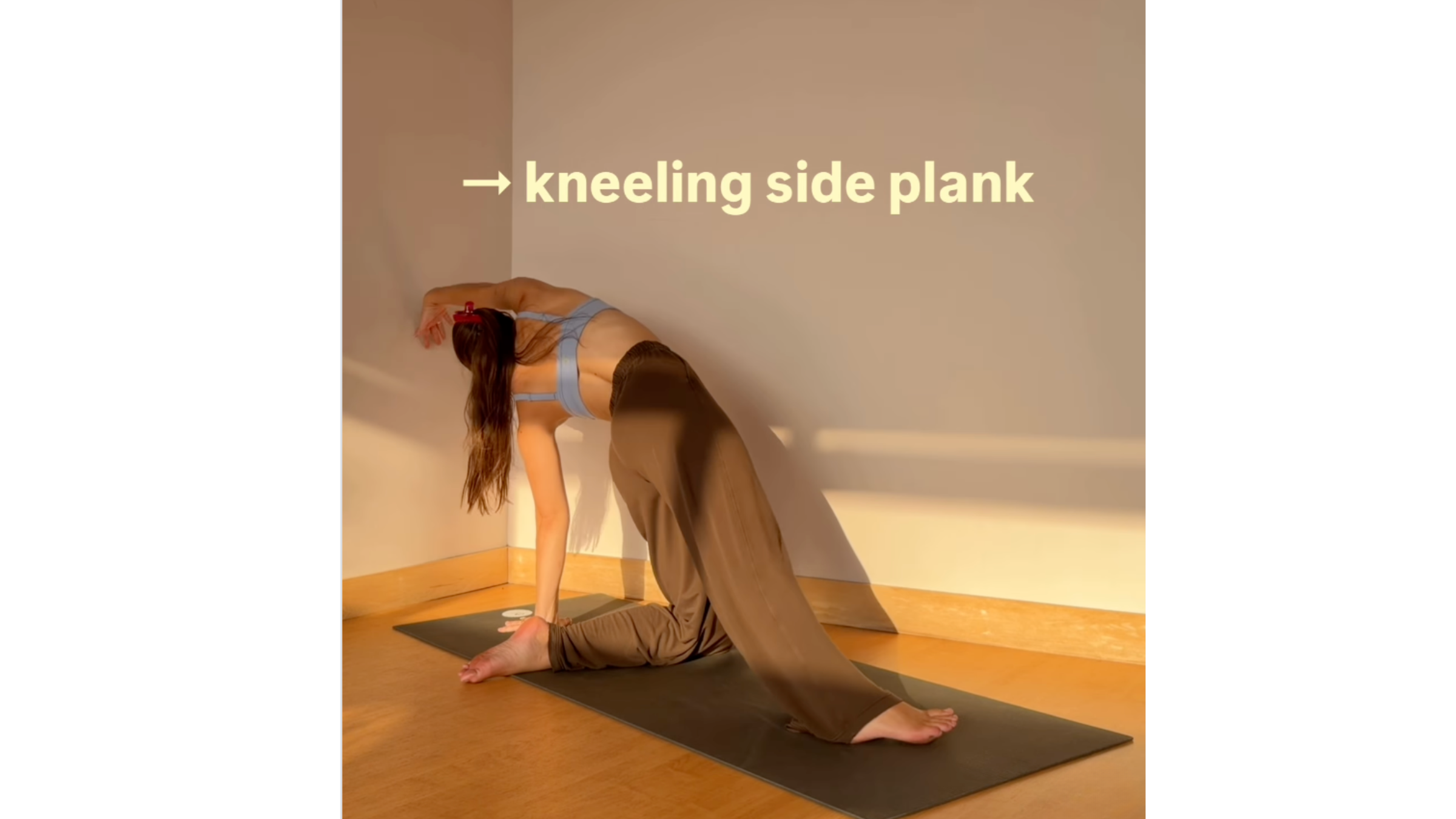
5. Kneeling Side Plank: A New Perspective on Balance
This transition deconstructs the traditional Side Plank, making it accessible while still providing a deep challenge to the lateral abdominal muscles.
- The Movement: From Low Lunge, turn your chest toward the left side of the mat. Reach your left hand behind your left foot, planting it firmly. Shift your weight into the left hand and knee, extending the right leg long and reaching the right arm overhead toward the back wall.
- The Nuance: By grounding the knee, you can focus more on the arc of the spine and the expansion of the rib cage, allowing for a deeper opening than might be possible in a full-balance side plank.
6. Seated Twist: The Transition to Stillness
Sometimes the most powerful transition is one that leads you away from the intensity of the flow and toward the introspective nature of the ground.
- The Movement: Lift the back foot and sweep it to the outside of your front foot. Lower yourself into a seated position, with the right foot resting outside the left thigh.
- The Nuance: This fluid move from a high-energy lunge into a seated, twisted pose encourages a shift in the nervous system from sympathetic (fight or flight) to parasympathetic (rest and digest) dominance.
7. Chair Plane: The Final Act of Strength
Chair Plane is a test of endurance and focus, serving as a perfect transition back to the top of the mat.
- The Movement: Tuck your back toes and step your left foot to meet your right. Bend your knees, sink your hips into a chair, and sweep your arms back past your hips.
- The Nuance: The "plane" arm variation forces the practitioner to keep the chest lifted and the heart open, even as the legs begin to fatigue.
Implications for Practice and Life
Integrating these seven transitions carries implications that extend far beyond the rubber mat. When we train our brains to be comfortable with "non-linear" movement, we increase our cognitive flexibility. We learn that there is no single "right" way to get from one point to another, and that the path we choose is often just as valuable as the destination itself.
By introducing these micro-decisions—choosing a Shiva Squat over a standard step-back, or opting for a Horizon Lunge instead of a simple twist—we cultivate a state of "active mindfulness." We stop sleepwalking through our practice. We begin to listen to what our body actually needs in the moment, rather than what the script of a standard class dictates.
Expert Perspectives on Movement Diversity
Industry experts and physical therapists have long advocated for "variability in training." Research suggests that repetitive, non-varying movement patterns can lead to overuse injuries, as the same tissues are loaded in the exact same vector repeatedly. By incorporating the transitions described by Jordan Baggot, practitioners can distribute stress more evenly across the joints.
Furthermore, from a neurological perspective, movement variability is key to neuroplasticity. When we perform novel movements, we force the brain to form new neural pathways. This is why a challenging yoga class can leave a student feeling mentally refreshed; it is, quite literally, a workout for the mind.
Conclusion: Finding Inspiration in the Small Things
The beauty of yoga lies in its accessibility and its infinite capacity for reinvention. While there is comfort in the familiar, there is growth in the departure. The next time you find yourself in a Low Lunge, take a breath. Instead of rushing to the next expected pose, consider the options. Could a Horizon Lunge offer a better release for your tight hip? Might a Three-Pointed Push-Up provide the exact strength challenge you need today?
Your yoga practice is a living, breathing laboratory. By making small, intentional decisions to move differently, you are not just changing a sequence—you are cultivating a mindset of openness, adaptability, and enduring curiosity that will serve you long after you roll up your mat. Embrace the transition, and you may find that the journey becomes the most inspiring part of your practice.