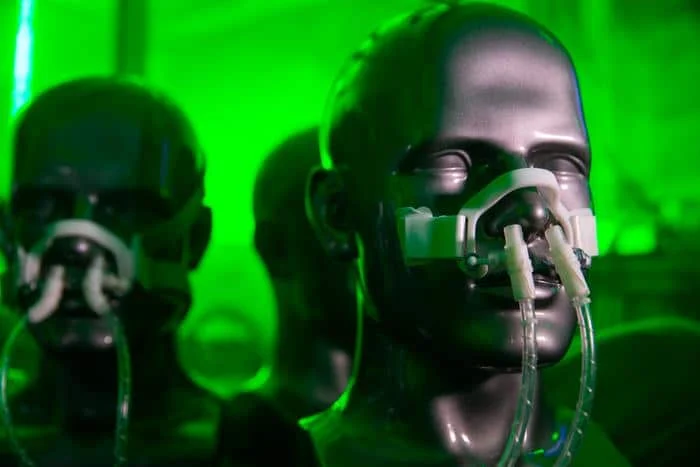
AcouFlow Therapeutics, a pioneering medical technology startup born from the laboratories of the University of Cincinnati, has reached a critical juncture in the evolution of sleep apnea treatment. The company recently announced it has secured a prestigious grant from the National Institutes of Health (NIH), a move that marks the transition of its flagship technology, the VortexPAP, from clinical environments to the patient’s bedside.
This funding is earmarked for a singular, ambitious objective: the design and manufacturing of a simplified, user-friendly, at-home version of the VortexPAP device. By moving away from the tethered, technician-heavy requirements of sleep lab environments, the team aims to prove that aerospace-inspired physics can solve the decades-old problem of CPAP intolerance.
The Core Innovation: Aerospace Engineering Meets Sleep Medicine
To understand the significance of this development, one must look at the traditional limitations of Continuous Positive Airway Pressure (CPAP) therapy. For millions of patients diagnosed with Obstructive Sleep Apnea (OSA), the "gold standard" of treatment—a mask that creates an airtight seal over the nose or mouth—is often a point of failure.
CPAP compliance rates have historically struggled, with many patients abandoning treatment due to claustrophobia, skin irritation, air leaks, and the discomfort of high-pressure air forced into the airway.
The VortexPAP, developed by a cross-disciplinary team of aerospace and biomedical engineers, flips this script entirely. By leveraging the principles of fluid dynamics—specifically, the control of vortex airflow—the device creates a stabilized column of air that effectively splints the airway open without the need for a physical, pressurized seal against the face.
By utilizing these unique aerodynamic properties, the VortexPAP can maintain airway patency at lower overall pressures. This reduction in pressure is expected to drastically lower the incidence of "aerophagia" (swallowing air), a common and distressing side effect of traditional CPAP machines.
A Chronology of Development
The journey of the VortexPAP is a testament to the power of interdisciplinary research.
- Initial Concept Phase: The collaboration began at the University of Cincinnati, where engineers specializing in flow control (typically reserved for aviation and automotive aerodynamics) were introduced to the clinical challenges of sleep medicine.
- Proof of Concept: Early prototypes focused on proving that "seal-less" technology could generate sufficient pressure to counteract airway collapse in a controlled, laboratory setting.
- Clinical Validation: The device moved into formal sleep study environments. Under the supervision of trained sleep technicians, patients were monitored as they tested the device. These studies confirmed that the vortex technology could indeed maintain the necessary therapeutic pressure without a face mask.
- The NIH Grant: With the initial clinical data providing a "proof of efficacy," the NIH grant serves as the catalyst for the "industrialization" phase—taking a complex research tool and refining it into a consumer-facing, robust, and intuitive medical device.
Official Responses and Strategic Vision
Liran Oren, PhD, a research associate professor in the Department of Otolaryngology, Head & Neck Surgery at the University of Cincinnati College of Medicine, has been the public face of this project. His perspective bridges the gap between the complex physics of the device and the daily reality of the patient.
"It’s an important milestone toward our next goal," Dr. Oren shared via professional communication following the funding announcement. "We are moving toward testing VortexPAP with many people, at multiple locations, and over a longer period of time. Our ultimate goal is to demonstrate how well it works in everyday life, outside the highly controlled environment of a sleep clinic."
The sentiment from the broader clinical community is one of cautious optimism. Sleep specialists have long sought a "middle ground" between oral appliances—which are often ineffective for severe apnea—and the rigid constraints of traditional CPAP masks. If the VortexPAP can achieve the same therapeutic outcomes as a CPAP without the "strapping-in" experience, it could represent the most significant shift in sleep apnea management in over thirty years.
Implications for Patients and the Healthcare Market
The implications of this funding go beyond a single piece of hardware; they represent a potential shift in how sleep medicine is delivered.
Improving Adherence
The primary obstacle to sleep apnea treatment is not the diagnosis, but the long-term adherence to therapy. If a patient finds a device comfortable and unobtrusive, they are exponentially more likely to use it every night. The minimalistic interface of the VortexPAP is designed specifically to mitigate the psychological barrier of "mask anxiety," potentially opening treatment to a massive demographic of patients who have previously refused CPAP therapy.
Economic and Logistical Efficiency
Currently, CPAP therapy requires extensive education on mask fitting, pressure settings, and humidification. The shift to a "simplified" at-home version implies a device that is easier to set up, maintain, and troubleshoot. This could reduce the burden on sleep labs and home-care providers, potentially lowering the total cost of ownership for patients and insurers alike.
A Multidisciplinary Paradigm
The success of this project serves as a case study for the importance of "crosspollination" in academia. By involving aerospace engineers in the design of medical equipment, the University of Cincinnati has unlocked a solution that traditional biomedical engineers—who might have remained focused on improving mask seals—might never have considered. The VortexPAP is essentially a "fluidic" solution to a biological problem.
Supporting Data and the Path Forward
While the VortexPAP has shown great promise in clinical settings, the upcoming phase of development is crucial. The transition to at-home testing involves challenges that the lab does not present: varying bedroom environments, different sleep positions, and the lack of a technician to adjust the device in real-time.
The NIH funding will support:
- Human Factors Engineering: Refining the device interface to ensure that even non-technical users can achieve the correct "vortex" flow alignment without assistance.
- Long-Term Reliability Testing: Ensuring that the airflow mechanisms can function consistently over thousands of hours of use in uncontrolled environments.
- Expanded Real-World Trials: Gathering data from a diverse cohort of patients to measure AHI (Apnea-Hypopnea Index) reduction in the home setting.
The Future of Sleep Apnea Therapy
As the population continues to age and the prevalence of obesity-related sleep disorders rises, the demand for effective, tolerable CPAP alternatives has never been higher. The VortexPAP stands at the intersection of high-level aerospace engineering and essential human healthcare.
If the at-home testing phase confirms what the clinical trials suggested—that we can effectively treat sleep apnea without the physical burden of a traditional mask—the VortexPAP could soon become the new standard. For the millions who dread the "hose and mask" ritual of their current CPAP devices, this project offers the promise of a quiet, comfortable, and effective night’s sleep.
As AcouFlow Therapeutics begins this next chapter, the medical community will be watching closely. The success of this device would not only validate the specific technology behind the vortex airflow, but it would also prove that the most persistent medical problems can often be solved by looking outside the standard clinical playbook and into the world of pure physics.
The grant from the NIH is more than just financial support; it is a signal that the research community is ready to embrace a new, less invasive, and more patient-centric future for sleep medicine. The journey from a university lab to the bedside of the American patient is complex, but with the backing of federal resources and a team of interdisciplinary experts, the VortexPAP is well-positioned to change the narrative of sleep apnea treatment for good.