











Just as the alphabet serves as the foundational architecture for language, communication, and knowledge acquisition, so too must we develop a foundational understanding of our internal emotional landscape. Most individuals are taught to read, write, and calculate from a tender age, yet a profound deficit exists in our collective education: the lack of a standardized framework for identifying, processing, and regulating anxiety.
Anxiety, in its evolutionary context, is not an enemy. It is a vital, hardwired survival mechanism designed to alert us to environmental dangers. However, in the complexities of the modern world, this alarm system often malfunctions, misinterpreting mundane stress as existential threat. When we lack the vocabulary—the "Anxiety ABCs"—to articulate these feelings, we become hostages to our own biology. To bridge this gap, the ABCtracker™ framework has emerged, offering a structured, evidence-based methodology to transform how we navigate our psychological health.
Main Facts: The Anatomy of the ABCtracker™
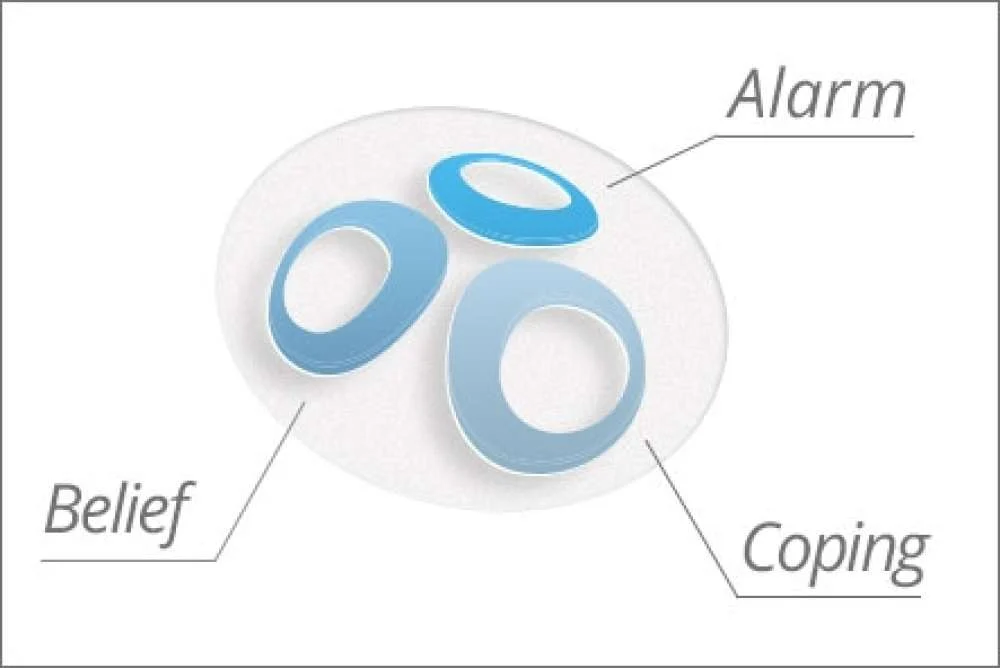
The ABCtracker™ is an acronym-based cognitive tool designed to decode the tripartite nature of an anxiety episode: Alarm (A), Belief (B), and Coping (C). By breaking down an overwhelming emotional wave into these three distinct segments, the framework allows users to move from a reactive, panicked state to a proactive, analytical one.
At its core, the tracker serves as a digital or analog diary that forces the user to pause at the moment of discomfort. By systematically logging the initial physiological trigger, the subsequent cognitive interpretation, and the resulting behavioral output, the user effectively creates a "data map" of their anxiety. This map is essential for clinical discussions, providing physicians and psychologists with empirical data rather than vague descriptions of "feeling stressed."
Chronology: From Evolutionary Instinct to Modern Dysfunction
To understand why the ABCtracker™ is necessary, one must look at the timeline of human stress responses.
1. The Evolutionary Era (Pre-Modernity)
For our ancestors, the "Alarm" system was a life-saving asset. If a predator was present, the body triggered a fight-or-flight response. This was a direct, linear process: danger appeared, the body reacted, and the organism survived. There was little room for "Belief" or complex psychological processing; the priority was immediate physical preservation.
2. The Cognitive Shift (The Rise of Civilization)
As human society evolved, our threats shifted from physical predators to psychological and social stressors—deadlines, financial instability, and social rejection. Our biological alarm system, however, did not evolve at the same pace. It began to treat abstract, non-lethal threats with the same biological intensity as a predator attack.
3. The Digital Age and the Need for Intervention
In the contemporary era, the sheer volume of stimuli has pushed many individuals into a state of chronic, low-grade anxiety. The emergence of cognitive-behavioral interventions, such as the ABCtracker™, marks a pivotal shift in the 21st century. It represents a transition from "suffering in silence" to "managing through data," allowing individuals to reclaim agency over their nervous systems.
Supporting Data: Why "Belief" is the Bottleneck
The effectiveness of the ABCtracker™ is supported by psychological research into Cognitive Behavioral Therapy (CBT). The framework highlights that the "B" (Belief) is often where the most significant interventions occur.
- The Misinterpretation Loop: Studies indicate that individuals with generalized anxiety disorders often process information through a filter of catastrophic thinking. When the "Alarm" sounds, the brain initiates a split-second assessment. For the anxious individual, this assessment is frequently biased toward the worst-case scenario.
- False Alarm Frequency: Clinical data suggests that those with pervasive anxiety experience a "hyper-sensitive alarm." Where a neurotypical person might rate a social awkwardness as a "1" on a threat scale, an anxious individual may perceive it as an "8."
- The Impact of Tracking: By recording these beliefs, patients have demonstrated a statistically significant reduction in "false alarms" over a six-month period. When one sees the patterns of their own faulty logic written on paper, the brain’s prefrontal cortex—the seat of rational thought—can begin to override the reactive limbic system.
Official Responses: The Clinical Perspective
Mental health professionals have increasingly endorsed the use of structured trackers as a "bridge" between therapy sessions.
"The difficulty with treating anxiety," notes Dr. Elena Vance, a clinical psychologist specializing in stress disorders, "is that the patient is often in a state of high arousal when they are struggling. They cannot easily explain their thought processes to me in real-time. The ABCtracker™ acts as an objective observer. When a patient brings me their logged ‘Beliefs,’ we aren’t talking about hypothetical feelings anymore—we are looking at the specific cognitive distortions that drive their anxiety."
Healthcare providers emphasize that while the ABCtracker™ is not a replacement for professional intervention, it serves as a critical diagnostic tool. It empowers the patient to become an active partner in their treatment, transforming the therapeutic relationship from a top-down instruction model to a collaborative data-analysis project.
Implications: The Path Toward Adaptive Coping
The final, and perhaps most critical, component of the framework is "Coping." The way we respond to our anxiety dictates whether that anxiety remains a temporary state or develops into a chronic disorder.
The Duality of Coping Strategies
- Adaptive Coping: These are mechanisms that promote safety and genuine resolution. They include techniques like mindfulness, box breathing, cognitive reframing, and seeking social support. These strategies soothe the nervous system and deactivate the alarm.
- Maladaptive Coping: These are avoidant or destructive behaviors—substance use, isolation, excessive reassurance-seeking, or procrastination. While these provide temporary relief, they ultimately reinforce the "Belief" that the world is a dangerous place, effectively trapping the user in a vicious cycle.
Long-term Implications for Public Health
If the population were to adopt the "ABC" mindset as a standard health practice, the implications for public health would be profound. By teaching children and adolescents to recognize their "Alarms" and challenge their "Beliefs," we could theoretically reduce the incidence of anxiety disorders before they become deeply ingrained personality traits.
The ABCtracker™ is more than a simple log; it is a pedagogical shift. It treats the human mind as a system that can be optimized. In an era where burnout and anxiety are reaching epidemic proportions, the ability to decode one’s own reactions is a fundamental life skill—as essential as literacy, and perhaps even more vital for long-term well-being.
Conclusion: Starting the Journey
Mastering your ABCs is not a destination; it is a continuous practice. Just as one does not stop using the alphabet after learning to read, one does not stop using the ABCtracker™ after a week of success. It is a lifelong toolkit for maintaining emotional equilibrium.
To begin, start small. When you feel that familiar spike of adrenaline or dread, stop. Ask yourself:
- What is the Alarm? (What is the physical sensation?)
- What is the Belief? (What is the story I am telling myself about this situation?)
- What is my Coping mechanism? (Am I reacting in a way that helps me, or a way that hides me?)
By turning the lights on in the dark corners of our anxiety, we strip the monsters of their power. We learn that we are not the alarm; we are the ones listening to it. And once we are the ones in charge of the signal, we can finally begin to live with peace, clarity, and intent.
As we move forward into a future that shows no signs of slowing down, the ability to cultivate this internal stillness is not just a luxury—it is the ultimate form of self-care. The ABCtracker™ is your first step in that transformation. Whether you use it with a professional or as a self-guided practice, it is a testament to the fact that while we cannot always control the world around us, we can certainly master the world within.