Jacksonville, FL – [Current Date] – In a landmark move poised to redefine the landscape of inpatient rehabilitation, Brooks Rehabilitation, a nationally recognized leader in physical rehabilitation, has announced its pioneering adoption of Lite Run™’s FDA-registered anti-gravity mobility technology. This strategic integration positions Brooks Rehabilitation as the first nationwide inpatient rehabilitation hospital to implement such advanced anti-gravity systems, offering an unprecedented pathway to earlier, safer patient mobilization while significantly mitigating the physical strain on clinical staff.
The introduction of Lite Run technology underscores Brooks Rehabilitation’s unwavering commitment to innovation and its relentless pursuit of superior patient outcomes. By enabling patients to begin weight-bearing and functional therapy sooner, even those with severe impairments, Brooks is setting a new standard for recovery, aiming to reduce complications associated with immobility, enhance patient endurance, and accelerate the journey toward independence.
Main Facts: A New Frontier in Rehabilitation
Brooks Rehabilitation, celebrated for its top-tier physical rehabilitation services and its proactive Center for Innovation, has taken a monumental step forward by becoming the inaugural inpatient rehabilitation provider across the nation to fully integrate Lite Run Inc.’s cutting-edge anti-gravity mobilization technology. This revolutionary system, which has garnered FDA registration, is engineered to facilitate earlier and safer patient mobilization, addressing a critical need in complex rehabilitation protocols.
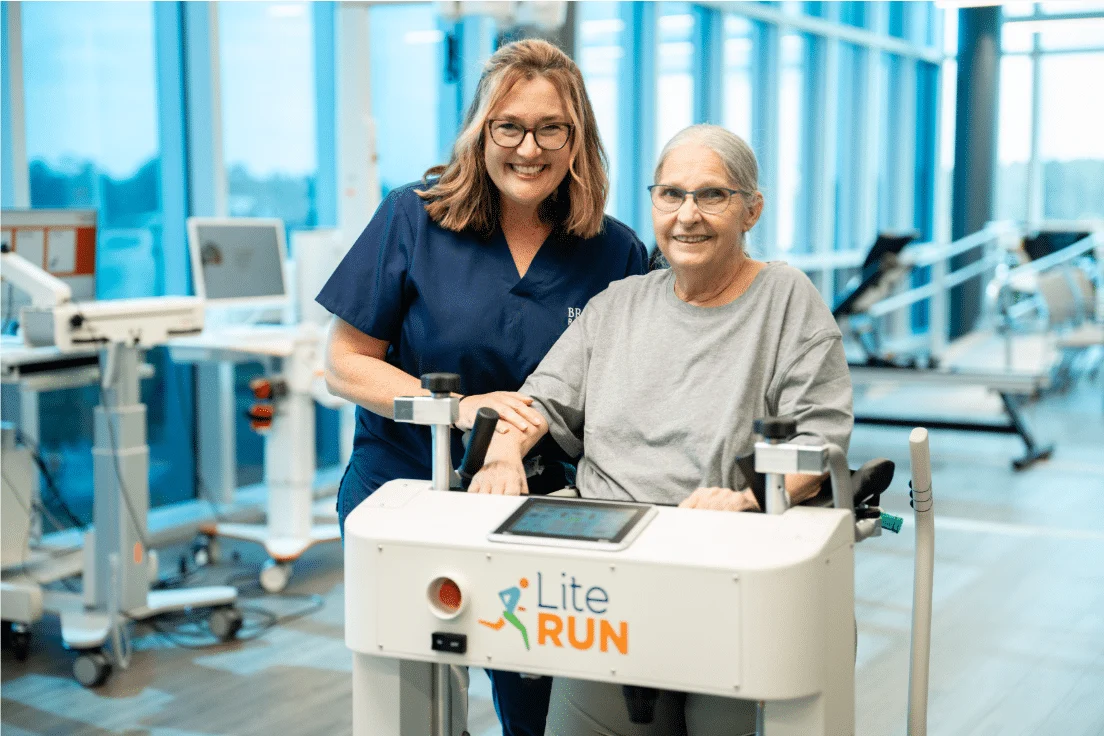
The core promise of the Lite Run platform lies in its ability to offload up a significant portion of a patient’s body weight—up to 150 pounds—through a patented wearable Exosuit and sophisticated low-pressure air technology. This ingenious design empowers patients to engage in upright, active therapy with drastically reduced risk of falls, thereby fostering a sense of security and confidence crucial for effective recovery. Simultaneously, it drastically lessens the physical burden on therapists, allowing them to focus more on therapeutic guidance and less on manual support, a critical advantage in an era of increasing staffing challenges.
Initially, Brooks Rehabilitation has strategically deployed three Lite Run devices to serve a diverse patient population grappling with conditions such as stroke, spinal cord injury, traumatic brain injury, various neurological disorders, and complex orthopedic injuries. Two of these innovative units are already operational at Brooks’ distinguished Jacksonville, Florida, hospitals, immediately benefiting patients in the region. A third device is slated for deployment at Brooks’ highly anticipated new facility in Phoenix, Arizona, situated on the prestigious Mayo Clinic campus, signaling a broader vision for technological integration across its expanding national footprint.
This proactive adoption is a testament to Brooks’ dedication to not only evaluating but also implementing technologies that demonstrably enhance patient recovery trajectories and improve the overall efficacy of rehabilitation services. The Lite Run system’s capacity to support natural movement across a spectrum of rehabilitation activities, including walking, balance training, weight shifting, strengthening, and endurance exercises, marks a significant paradigm shift from traditional, often more restrictive, therapeutic approaches. By making these activities accessible to patients earlier in their recovery, Brooks Rehabilitation is not just treating conditions but actively restoring quality of life with unparalleled efficiency and dignity.
Chronology of Innovation and Adoption
The journey to integrating Lite Run technology at Brooks Rehabilitation is a testament to a meticulous, evidence-based approach to innovation, rooted in the institution’s renowned Center for Innovation. This dedicated hub serves as the crucible where emerging technologies are rigorously evaluated and tested against the stringent benchmarks of patient benefit and clinical applicability.
The genesis of this adoption began with a recognition by Brooks’ leadership of a critical "gap" in existing mobilization strategies for certain patient populations. While traditional methods of patient mobilization are effective, they often present limitations for individuals with severe neurological or orthopedic impairments, where early weight-bearing and upright mobility are challenging due to weakness, balance deficits, or the sheer physical demands on therapeutic staff. Brooks’ Center for Innovation, under the guidance of experts like Mark Bowden, PhD, PT, Vice President for Clinical Integration and Research, embarked on a comprehensive, months-long evaluation process of various technologies.
This extensive assessment period involved in-depth trials, patient feedback, and detailed analysis of clinical outcomes, all aimed at determining which solutions could most effectively and safely enable earlier mobilization. The Lite Run system emerged as a frontrunner due to its unique combination of safety features, patient comfort, and its ability to reduce therapist strain without compromising the therapeutic intensity. Dr. Bowden articulated the thoroughness of this process, stating, “After a months-long evaluation, Brooks was able to make an educated decision and determine that Lite Run filled a gap in helping specific patients safely and comfortably mobilize earlier with less staff assistance.” This statement underscores the strategic and data-driven nature of Brooks’ decision-making.
Following this rigorous evaluation, Brooks Rehabilitation made the strategic investment to acquire three Lite Run devices. The initial deployment saw two units integrated into the existing infrastructure of its Jacksonville, Florida, hospitals, swiftly making the technology accessible to a wide range of inpatient rehabilitation patients. This phased introduction allowed for immediate clinical application and further refinement of best practices for its use.
Looking ahead, the third Lite Run device is earmarked for the highly anticipated new hospital in Phoenix, Arizona, a significant expansion project for Brooks Rehabilitation located on the Mayo Clinic campus. This forward-looking deployment strategy reflects Brooks’ commitment to ensuring that its state-of-the-art facilities across the nation are equipped with the most advanced tools available to optimize patient recovery. The chronological progression from identifying a clinical need, through rigorous evaluation, to strategic acquisition and phased deployment, highlights Brooks Rehabilitation’s leadership in translating innovative concepts into tangible improvements in patient care and rehabilitation efficacy.
Supporting Data and Technological Underpinnings
The integration of Lite Run’s anti-gravity mobility technology into Brooks Rehabilitation’s clinical practice is not merely an adoption of new equipment; it represents a profound understanding of the scientific principles underpinning effective rehabilitation and a strategic response to evolving healthcare challenges. The efficacy of the Lite Run system is rooted in its sophisticated design, which directly addresses the physiological and logistical hurdles often encountered in early patient mobilization.
The Science Behind Anti-Gravity Mobility
At the heart of the Lite Run system is its patented wearable Exosuit, a meticulously engineered garment that, in conjunction with low-pressure air technology, creates a dynamic anti-gravity environment for the patient. This innovative mechanism allows for precise offloading of body weight, up to an impressive 150 pounds, effectively reducing the gravitational forces acting on a patient’s joints and muscles. By selectively diminishing the impact of gravity, the system empowers individuals with significant weakness, pain, or balance impairments to experience the sensation of walking and weight-bearing in a controlled and supportive manner.
The anti-gravity effect is crucial for several reasons. Firstly, it significantly mitigates the risk of falls, a pervasive concern in rehabilitation settings that often dictates the pace and intensity of therapy. By providing a secure, upright environment, Lite Run instills confidence in both patients and therapists, encouraging more active and exploratory movement. Secondly, it allows patients to maintain an upright posture, which is vital for physiological well-being, including respiratory function, circulation, and digestive health, all of which can be compromised by prolonged bed rest. Lastly, by reducing the perceived effort of movement, the system enables patients to focus on motor learning and pattern re-education, facilitating more natural and effective neurological and muscular retraining. This technological marvel supports a wide array of activities, from simple standing and weight shifting to complex gait training and balance exercises, all performed overground, mimicking real-world mobility.
The Critical Role of Early Mobilization
The prevailing consensus in modern rehabilitation medicine unequivocally champions early mobilization as a cornerstone of optimal patient recovery. Prolonged immobility is well-documented to lead to a cascade of detrimental complications, including muscle atrophy, bone demineralization, cardiovascular deconditioning, pressure ulcers, respiratory complications such as pneumonia, and psychological impacts like depression and delirium.
Lite Run directly addresses these risks by making early, upright, and functional therapy not just possible but practical for a broader spectrum of patients. By enabling individuals to stand and walk sooner, even if only with partial weight-bearing support, the technology actively combats the negative sequelae of bed rest. Early mobilization is proven to improve patient endurance, maintain muscle mass, enhance cardiovascular health, and crucially, accelerate the restoration of functional independence. For patients recovering from stroke, spinal cord injury, or traumatic brain injury, where neuroplasticity and motor re-learning are paramount, early, repetitive, and task-specific practice facilitated by Lite Run can significantly enhance recovery trajectories and improve long-term outcomes. The ability to engage in these activities outside the confines of a traditional treadmill, allowing for varied terrains and natural environmental interaction, further enhances the therapeutic benefit.
Addressing Clinical Challenges
The contemporary healthcare landscape is marked by increasing pressures, including persistent staffing shortages and a growing population of medically complex patients requiring intensive, individualized care. These challenges place immense physical and logistical demands on rehabilitation clinicians, who often bear the brunt of manually assisting patients with mobility, leading to high rates of work-related injuries and burnout.
Lite Run offers a transformative solution by drastically reducing the physical burden on clinical staff. By providing the primary support for a patient’s body weight, the technology frees therapists to concentrate their efforts on guiding movement, providing verbal cues, and facilitating complex motor tasks, rather than expending energy on physical lifting and fall prevention. This not only enhances therapist safety and longevity in their careers but also significantly improves clinical efficiency. Therapists can potentially treat more patients per day or dedicate more focused, quality time to each patient, leading to better outcomes. Gregg Smith, CEO of Lite Run, aptly notes, “Our technology was specifically designed to help therapists divide and conquer in safely supporting specific patients earlier in their recovery. Lite Run reduces the physical burden on clinicians to help more patients each day in ways not possible before.” This shift empowers clinicians, fosters greater job satisfaction, and ultimately contributes to a more sustainable and effective rehabilitation workforce.
Patient Experience and Outcomes
Beyond the clinical and operational advantages, the Lite Run system fundamentally re-envisions the patient experience. For individuals navigating the arduous path of rehabilitation, comfort, dignity, and a sense of progress are paramount. The wearable Exosuit is designed for comfort, and the freedom from being confined to a treadmill allows patients to engage in overground therapies that more closely mimic real-life scenarios. This natural movement fosters a greater sense of autonomy and dignity, which are crucial for psychological well-being during recovery.
The ability to move earlier and with less fear of falling instills confidence in patients, encouraging them to push their boundaries and actively participate in their recovery journey. This renewed confidence, coupled with the physiological benefits of early mobilization, directly translates into tangible improvements in patient outcomes. Studies and clinical observations consistently show that earlier movement correlates with reduced hospital lengths of stay, a critical metric for both patient well-being and healthcare system efficiency. For aging populations, patients with severe neurological conditions, and those with complex recovery needs, the ability to safely and comfortably mobilize earlier is not just an advantage—it is a game-changer, accelerating their return to functional independence and an improved quality of life. The featured image of a patient walking for the first time in three years vividly encapsulates the profound impact this technology can have on individual lives, turning previously unattainable milestones into achievable realities.
Official Responses and Vision
The integration of Lite Run technology at Brooks Rehabilitation has been met with enthusiastic endorsement from key leadership figures within both organizations, reflecting a shared vision for advancing patient care through innovation. Their official responses provide invaluable insights into the strategic thinking behind this adoption and the profound implications for the future of rehabilitation.
Perspectives from Brooks Rehabilitation
Mark Bowden, PhD, PT, Vice President for Clinical Integration and Research at Brooks Rehabilitation, emphasized the institution’s commitment to evidence-based innovation. Dr. Bowden highlighted the rigorous process undertaken by the Center for Innovation, stating, “Through our Center for Innovation, Brooks evaluates and tests new and emerging technologies to determine their potential benefits for improving patient outcomes.” This statement underscores Brooks’ methodical approach to technology adoption, ensuring that only solutions with proven efficacy and clear patient advantages are integrated into their practice. His further elaboration, “After a months-long evaluation, Brooks was able to make an educated decision and determine that Lite Run filled a gap in helping specific patients safely and comfortably mobilize earlier with less staff assistance,” clearly articulates the strategic rationale. It reveals that Lite Run wasn’t merely an upgrade but a targeted solution to a specific clinical challenge, allowing Brooks to extend its therapeutic reach to patients who might otherwise face significant delays in upright mobility, thereby significantly enhancing their potential for recovery.
Kathryn Swanson, PT, DPT, NCS, Inpatient Clinical Technology and Programmatics Coordinator at Brooks Rehabilitation, provided a clinician’s perspective, highlighting the practical benefits and expanded possibilities that Lite Run offers. Swanson remarked, “After a lengthy evaluation period, Brooks Rehabilitation continues to add advanced technologies for patient recovery with the Lite Run platform, which opens many possibilities for our patients and our clinicians as we expand nationwide.” Her statement speaks to the versatility of the technology and its alignment with Brooks’ broader expansion strategy, particularly with the new Phoenix hospital. She further detailed the immediate impact on therapy teams, noting, “Our therapy teams gain an additional tool to safely mobilize patients earlier. Patients appreciated the comfort and ability to use the technology in multiple, overground therapies without being confined to a treadmill.” This direct feedback from both therapists and patients is crucial. It confirms that the technology is not only effective but also user-friendly and preferred, enhancing both the clinician’s toolkit and the patient’s therapeutic experience by promoting more natural, dignified movement outside the constraints of traditional equipment.
Insights from Lite Run Inc.
Gregg Smith, CEO of Lite Run, articulated the broader industry context and the foundational philosophy behind the development of his company’s technology. Smith acknowledged the significant pressures faced by rehabilitation providers, stating, “We know that rehabilitation providers face increasing pressure to improve outcomes, mobilize patients earlier and support those more medically complex conditions with fewer clinical staff.” This candid assessment highlights the urgent need for innovative solutions that can bridge the gap between escalating patient needs and resource constraints. He then positioned Lite Run as a direct answer to these challenges: “Our technology was specifically designed to help therapists divide and conquer in safely supporting specific patients earlier in their recovery. Lite Run reduces the physical burden on clinicians to help more patients each day in ways not possible before.” This statement from the CEO confirms that Lite Run was developed with a dual focus: optimizing patient recovery and empowering clinicians, recognizing that these two objectives are intrinsically linked to achieving sustainable and high-quality rehabilitation services.
Future of Rehabilitation Technology: Smith also offered a forward-looking perspective on the trajectory of rehabilitation care. He expressed a strong belief that as hospitals, inpatient rehabilitation facilities, and other providers continue to grapple with staffing constraints and increasingly complex patient populations, technologies that support safer, earlier mobility will transcend their current innovative status to become a “standard of care.” This vision suggests that anti-gravity mobility will not remain a niche solution but will evolve into an indispensable component of comprehensive rehabilitation protocols, fundamentally reshaping expectations for patient recovery and clinician support. This perspective underscores the transformative potential of Lite Run and its capacity to drive systemic improvements across the entire rehabilitation sector.
Broader Implications and Future Outlook
The adoption of Lite Run anti-gravity mobility technology by Brooks Rehabilitation represents more than just a single institutional enhancement; it heralds a series of profound implications for the entire field of rehabilitation medicine, promising to reshape established paradigms, yield significant economic and operational benefits, and foster a truly patient-centric future.
Reshaping Rehabilitation Paradigms
Brooks Rehabilitation’s pioneering move sets a new benchmark for what is achievable in inpatient rehabilitation. By demonstrating the tangible benefits of early, safe, and comfortable mobilization for even the most challenging cases, this initiative challenges conventional rehabilitation protocols that often delay aggressive mobility training due to safety concerns or staffing limitations. The success stories emanating from Brooks will inevitably serve as a powerful catalyst, encouraging other rehabilitation facilities nationwide to re-evaluate their current practices and consider integrating similar advanced technologies. This could lead to a widespread shift in clinical guidelines, where early anti-gravity supported mobilization becomes a standard component of care plans for a broader spectrum of neurological and orthopedic conditions. The ripple effect could transform patient recovery trajectories, leading to a higher quality of life post-discharge and potentially reducing long-term disability rates across various conditions.
Economic and Operational Benefits
The integration of Lite Run technology carries substantial economic and operational advantages that extend beyond immediate patient care. By enabling earlier and more efficient mobilization, the technology has the potential to significantly reduce hospital lengths of stay. Shorter inpatient durations translate directly into lower healthcare costs for patients, insurers, and the healthcare system at large. Furthermore, improved patient outcomes, including enhanced functional independence, can lead to reduced rates of readmission, alleviating further financial burdens and improving overall system efficiency.
Operationally, the reduction in physical strain on clinicians is a critical benefit. The physical demands of manually assisting patients often contribute to high rates of musculoskeletal injuries among therapists, leading to lost workdays, increased workers’ compensation claims, and therapist burnout. By mitigating these risks, Lite Run can contribute to improved staff retention, reduced recruitment costs, and a healthier, more motivated workforce. This creates a virtuous cycle where healthier staff can provide higher quality care, further enhancing patient outcomes and solidifying Brooks’ reputation as an innovative and supportive employer.
The Road Ahead: Expansion and Research
The planned deployment of a Lite Run device at Brooks’ new Phoenix, Arizona, hospital signifies a strategic intent to integrate this advanced technology into its expanding national footprint. This expansion is not merely about increasing capacity but about standardizing a high level of innovative care across all Brooks facilities. The Phoenix location, situated on the Mayo Clinic campus, offers a unique opportunity for collaborative research and further validation of Lite Run’s efficacy in diverse patient populations and clinical settings.
Future research initiatives could focus on quantifying the long-term functional outcomes, cost-effectiveness, and patient satisfaction levels associated with anti-gravity mobilization. Such studies would provide robust evidence to support broader adoption and potentially influence healthcare policy regarding technology reimbursement. As the healthcare landscape continues to evolve, characterized by an aging population and a rising prevalence of chronic conditions, technologies like Lite Run will become increasingly vital in meeting the complex needs of patients while optimizing resource utilization.
A Patient-Centric Revolution
Ultimately, the most profound implication of Brooks Rehabilitation’s leadership in adopting Lite Run technology is the profound shift towards a truly patient-centric revolution in rehabilitation. This innovation places the patient’s ability to move, engage, and recover at the forefront, fostering independence and dignity earlier in their journey. The image of a patient walking for the first time in years is not merely a testament to technological prowess but a powerful symbol of restored hope and autonomy.
By empowering patients to regain control over their bodies and participate actively in their recovery from the earliest stages, Brooks Rehabilitation is not just treating injuries or conditions; it is facilitating a holistic healing process that addresses physical, emotional, and psychological well-being. This forward-thinking approach ensures that rehabilitation is not just about recovery, but about maximizing human potential, enabling individuals to return to their lives with greater strength, confidence, and independence than ever before possible. This marks a significant stride towards a future where advanced technology serves as a compassionate extension of human care, transforming lives one step at a time.